What is the primary function of a laboratory automatic vibratory sieve shaker in Bond grinding? Determine d80 & Work Index
Updated 5 months ago
The primary function of a laboratory automatic vibratory sieve shaker in Bond grinding experiments is the precise physical classification of ore particles to determine the 80% passing size ($d_{80}$) for both feed and discharge materials. By applying standardized vibration and amplitude, the equipment ensures that material is stratified across a stack of test sieves, providing the accurate cumulative passing data required to calculate the Bond Work Index.
The vibratory sieve shaker serves as the essential diagnostic tool for quantifying grinding efficiency. It transforms raw bulk samples into discrete size fractions, enabling the calculation of the $d_{80}$ parameter which is the fundamental metric used to predict the energy requirements for industrial-scale comminution.
The Role in Bond Work Index Methodology
Defining the $d_{80}$ Parameter
The Bond Work Index requires knowing the specific aperture size through which 80% of a sample passes. The vibratory sieve shaker provides the empirical data needed to plot a particle size distribution curve, allowing for the mathematical interpolation of this $d_{80}$ value.
Standardizing Feed and Discharge Analysis
In a Bond experiment, both the material entering the mill (feed) and the material exiting (discharge) must be characterized. The shaker ensures that these two distinct stages of the grinding process are measured using identical mechanical forces, maintaining experimental consistency across the test.
Achieving Statistical Accuracy
By separating multi-component ores into specific mass percentages based on sieve apertures, the shaker removes human error from the grading process. This high-frequency motion ensures that every particle has multiple opportunities to present itself to the sieve mesh, resulting in highly repeatable data.
Mechanics of Vibratory Particle Separation
The 3D Throwing Motion
Modern vibratory shakers utilize an electromagnetic drive to create a controlled three-dimensional throwing motion. This combines vertical acceleration with a slight circular movement, ensuring the sample is evenly distributed over the entire sieving surface rather than blinding the mesh in one spot.
Constant State Mass
To ensure accuracy, the shaker typically operates until the sample mass on each sieve reaches a constant state, usually within 5 to 10 minutes. This duration is critical to ensure that finer particles have fully migrated downward through progressively smaller mesh openings.
Physical Stratification
The equipment utilizes mechanical vibration or tapping forces to induce particle stratification. This process layers coarser particles on the upper sieves while allowing the fine "undersize" particles to penetrate the wire woven meshes until they reach their representative size fraction.
Understanding the Trade-offs and Limitations
Limitations with Ultra-Fine Particles
While highly effective for coarse and medium materials, vibratory sieving becomes less efficient for particles smaller than 50 μm. At these sizes, electrostatic forces or air humidity can cause particles to agglomerate, potentially requiring wet sieving methods instead of dry analysis.
Impact of Vibration Amplitude
Incorrect amplitude settings can lead to "bouncing," where particles spend too much time in the air rather than contacting the mesh. Conversely, insufficient amplitude prevents the material from stratifying correctly, leading to incomplete separation and an inaccurate $d_{80}$ calculation.
Material Attrition
High-intensity vibration over extended periods can cause "secondary grinding," where fragile particles break down further simply by the action of the shaker. This can artificially shift the particle size distribution toward the finer end, skewing the final Work Index result.
Optimizing Results for Your Grinding Project
How to Apply This to Your Project
To ensure the highest level of accuracy in your particle size characterization, consider the following recommendations based on your specific testing requirements:
- If your primary focus is high reproducibility: Standardize your vibration amplitude and time settings (typically 5-10 minutes) to ensure that every sample batch is treated with identical mechanical energy.
- If your primary focus is moisture-sensitive ores: Utilize a dry sieving protocol with an integrated pulse or tapping feature to prevent mesh blinding and ensure fine particles pass through the lower sieves.
- If your primary focus is ultra-fine mineral characterization: Supplement your vibratory sieve analysis with wet sieving or laser diffraction if your expected $d_{80}$ falls near or below the 45-50 μm range.
By precisely controlling the separation of feed and discharge materials, the vibratory sieve shaker provides the foundational data necessary for reliable comminution circuit design.
Summary Table:
| Key Feature | Role in Bond Grinding Experiments | Primary Benefit |
|---|---|---|
| d80 Determination | Identifies the 80% passing size for feed/discharge | Vital for calculating the Bond Work Index |
| 3D Throwing Motion | Distributes particles evenly across the sieve surface | Prevents mesh blinding & ensures accuracy |
| Standardization | Applies consistent mechanical force/amplitude | Delivers highly repeatable & statistical data |
| Stratification | Layers particles by size through high-frequency vibration | Precise physical classification of ore fractions |
Optimize Your Material Characterization Workflow
Achieving an accurate Bond Work Index starts with precision equipment. We provide complete laboratory sample preparation solutions tailored for material science and mining research.
Whether you need to reduce raw ore with our jaw and roll crushers, achieve ultra-fine particle sizes with our planetary ball, jet, or cryogenic grinders, or ensure flawless classification using our vibratory and air-jet sieve shakers, we have the expertise to support your lab. We also specialize in advanced powder compaction, offering a full spectrum of hydraulic presses, including Cold/Warm Isostatic Presses (CIP/WIP), vacuum hot presses, and XRF pellet presses.
Ready to enhance your grinding efficiency and data reliability?
Contact our experts today to find the perfect equipment solution!
References
- E. O. Oji, Y. H. Onymisi. Ddetermination of bond work index of Bagega gold mineral deposit of Zamfara State, Nigeria. DOI: 10.4314/njt.v42i2.12
Mentioned Products
- Laboratory Vibratory Test Sieve Shaker for Precision Particle Size Analysis and Powder Grading
- Vibratory Sieve Shaker Electromagnetic 3D Motion Powder Particle Size Analyzer for Dry and Wet Sieving
- Small Laboratory Vibratory Sieve Shaker for Powder Gradation and Particle Size Analysis
- Stainless Steel Laboratory Vibratory Test Sieve Shaker
- Laboratory Dry and Wet Three Dimensional Vibratory Sieve Shaker for Particle Analysis
People Also Ask
- What role does a laboratory sieve shaker play in determining PDI? Achieve Precision in Biomass Quality Testing
- What are the functions of sieve shakers for coconut shell powder? Achieve Precise Particle Size & Quality Control.
- What function does a laboratory sieve shaker perform in the PSD analysis of residual soil? Ensure Precise Grading
- What is the role of a laboratory sieve shaker in the preparation of plantain peel adsorbents? Standardize Particle Size
- What is the function of a laboratory vibratory sieve shaker? Enhance Coal Particle Size Distribution (PSD) Analysis

Tech Team · PowderPreparation
Last updated on May 14, 2026
Related Products

Laboratory Vibratory Test Sieve Shaker for Precision Particle Size Analysis and Powder Grading

Vibratory Sieve Shaker Electromagnetic 3D Motion Powder Particle Size Analyzer for Dry and Wet Sieving

Small Laboratory Vibratory Sieve Shaker for Powder Gradation and Particle Size Analysis

Stainless Steel Laboratory Vibratory Test Sieve Shaker
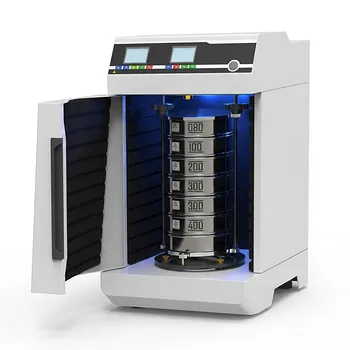
Laboratory Dry and Wet Three Dimensional Vibratory Sieve Shaker for Particle Analysis

Small Laboratory Vibrating Sieve Shaker for Precise Particle Size Analysis

High Frequency Wet Three-Dimensional Vibrating Sieve Shaker for Dry and Wet Particle Size Analysis
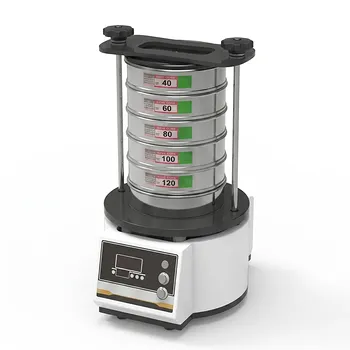
Dry Three Dimensional Vibratory Sieve Shaker

Heavy Duty Dry Three Dimensional Vibratory Sieve Shaker for Particle Separation
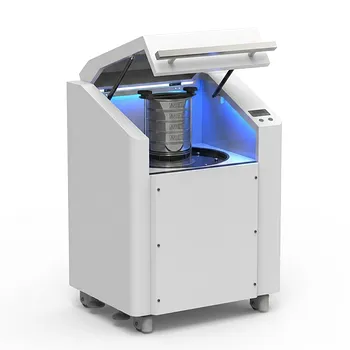
High Frequency Cabinet Type Three-Dimensional Rotary Vibrating Sieve Shaker for Dry Sieving and Particle Classification
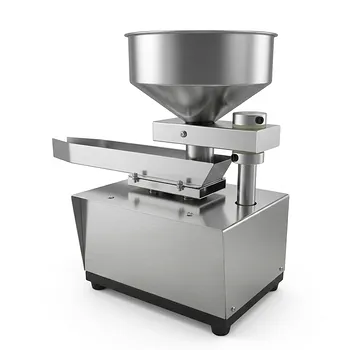
Automatic Vibrating Powder Feeder for Laboratory Material Processing Precision Vibratory Hopper Feeder for Granular and Powder Material Handling Industrial Grade Vibrating Tray Feeder for Consistent Material Sample Preparation

三维电磁微量振动筛分仪
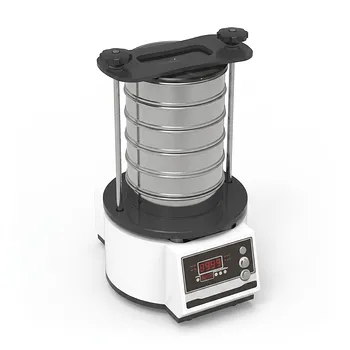
Tapping Oscillating Sieve Shaker for Dry and Wet Particle Size Analysis

Stainless Steel Rotary Vibrating Sieve High Precision Circular Vibratory Separator Industrial Powder Grading Machine Multi Layer Sifting Equipment
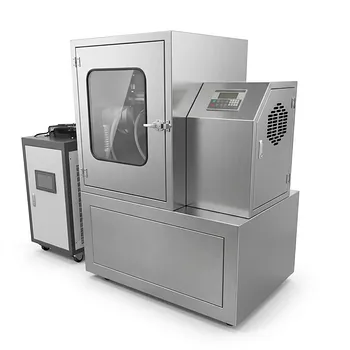
Vibratory Superfine Grinder for Ultra Fine Laboratory Powder Milling

Three Dimensional Rotary Vibrating Sieve
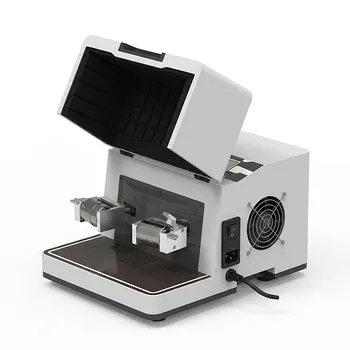
High Energy Hybrid Vibratory Ball Mill for Grinding Mixing and Cell Disruption
Vibratory Disc Mill for Rapid Fine Grinding and High Throughput Sample Preparation of Hard and Brittle Materials
Small High-Speed Swing Grinder for Laboratory Sample Preparation