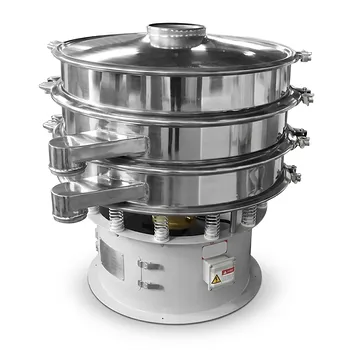
Why Use Sieve Shakers for Gangue Slurry Experiments? Optimize Particle Grading for Superior Results
Updated 4 months ago
Precision particle size classification is the cornerstone of effective gangue slurry proportioning. By using sieve shakers and standard test sieves, researchers can physically segregate crushed gangue into discrete size intervals, which is an absolute prerequisite for applying mathematical models like Talbot grading theory. This controlled separation allows for the deliberate adjustment of material proportions to analyze how specific particle size distributions influence the fluidity, stability, and reactivity of the slurry.
The integration of sieve shakers and standard sieves transforms raw, heterogeneous gangue into a calibrated experimental variable. This allows researchers to manipulate gradation indices precisely, ensuring that slurry mixtures meet the strict requirements for transportability and structural performance.
Precise Physical Classification as an Experimental Prerequisite
Segregating Gangue into Discrete Fractions
Sieve shakers provide the mechanical force necessary to drive material through a stack of standard sieves with decreasing aperture sizes. This process allows for the precise classification of crushed gangue into specific ranges, such as 0–0.3 mm up to 5–6 mm.
Enabling the Application of Talbot Grading Theory
Without physical separation, it is impossible to accurately adjust material proportions at various grading indices. Precise classification ensures that researchers can reconstruct a specific particle distribution to investigate how different "blends" of sizes impact the overall slurry behavior.
Controlling Specific Surface Area
Using fine meshes (such as a 45-micron sieve) allows for monitoring the sieve residue of ground materials. Controlling the percentage of fine residue ensures the raw materials achieve a sufficient specific surface area, which is critical for the reactivity and physicochemical reactions during subsequent processing or sintering.
Impact on Slurry Rheology and Performance
Optimizing Fluidity and Stability
The distribution of particle sizes directly dictates the packing density and flow characteristics of the slurry. By using sieving data to find the optimal gradation, researchers can maximize fluidity for easier transport while maintaining the stability required to prevent particle settling.
Determining Filling Efficiency
The particle size distribution range determines how well particles fit together, which affects the filling efficiency of the mixture. In practical applications, this grading confirms whether the aggregate meets the proportioning requirements for high-performance materials or construction standards like ASTM or BS.
Providing Data for High-Fidelity Simulations
The mass percentage of each grade recorded during the sieving process provides the foundational data for Discrete Element Method (DEM) simulations. These simulations require accurate diameter and distribution ratios to build high-fidelity soil and slurry models that behave like their real-world counterparts.
Understanding the Trade-offs and Limitations
Mechanical Interference and Mesh Blindness
While vibratory shakers are efficient, excessive vibration can sometimes lead to particle degradation, where softer gangue fragments break down further during the test. Additionally, "blinding" occurs when particles become wedged in the mesh, potentially skewing the recorded weight of specific fractions.
Resolution Limits of Dry Sieving
Standard mechanical sieving is highly effective for coarse to medium aggregates but faces challenges with ultra-fine particles. For materials significantly smaller than 45 or 75 micrometers, dry sieving may become inaccurate due to electrostatic forces or agglomeration, necessitating alternative methods like wet sieving or laser diffraction.
How to Apply These Findings to Your Project
To achieve the best results in your slurry experiments, choose your sieving strategy based on your primary operational goal:
- If your primary focus is Slurry Transportability: Prioritize the use of a full stack of sieves to calculate the fineness modulus and ensure the gradation aligns with optimal fluidity requirements.
- If your primary focus is Chemical Reactivity: Focus on the finer end of the spectrum (e.g., No. 200 mesh) to monitor the specific surface area and ensure the gangue is sufficiently ground for chemical bonding.
- If your primary focus is Computational Modeling: Ensure meticulous recording of the mass percentage of every size fraction to provide the necessary inputs for high-fidelity DEM simulations.
Mastering the physical classification of gangue ensures that your slurry proportions are backed by repeatable data and sound theoretical principles.
Summary Table:
| Key Function | Impact on Slurry Experiment | Primary Benefit |
|---|---|---|
| Particle Classification | Segregates gangue into discrete size intervals | Enables application of Talbot grading theory |
| Surface Area Control | Monitors sieve residue of fine ground materials | Ensures chemical reactivity and bonding efficiency |
| Rheology Optimization | Determines packing density and flow behavior | Improves slurry fluidity and transport stability |
| Data Generation | Provides accurate mass percentage for every fraction | Supplies high-fidelity data for DEM simulations |
Achieve Unmatched Precision in Your Material Experiments!
Success in material science begins with flawless sample preparation. At [Your Brand Name], we provide complete laboratory sample preparation solutions specializing in high-performance powder processing and compaction equipment. Whether you are classifying gangue with our advanced vibratory or air-jet sieve shakers, or preparing structural samples using our Cold/Warm Isostatic Presses (CIP/WIP), we ensure your results are repeatable and accurate.
Our extensive product line includes:
- Crushing & Grinding: Jaw/roll crushers, liquid nitrogen cryogenic grinders, and planetary ball, jet, and rotor mills.
- Sieving & Mixing: Precision sieve shakers, test meshes, powder mixers, and vacuum defoaming mixers.
- Advanced Pressing: Manual and automatic hydraulic presses, XRF pellet presses, and vacuum hot presses.
Ready to optimize your slurry performance and streamline your workflow? Contact our experts today to find the perfect equipment configuration for your laboratory needs!
References
- Yingbo Wang, Mengxin Xu. Experimental Optimization Study on Pumping Pipeline Transportation Performance of Pure Gangue Slurry Filling Material. DOI: 10.3390/ma18204788
Mentioned Products
- Vibratory Sieve Shaker Electromagnetic 3D Motion Powder Particle Size Analyzer for Dry and Wet Sieving
- 三维电磁微量振动筛分仪
- Stainless Steel Laboratory Vibratory Test Sieve Shaker
- Small Laboratory Vibrating Sieve Shaker for Precise Particle Size Analysis
- Heavy Duty Dry Three Dimensional Vibratory Sieve Shaker for Particle Separation
People Also Ask
- How does a vibratory sieve shaker contribute to optimizing the performance of activated carbon? Enhance Adsorption Precision
- Why is a laboratory vibratory sieve shaker necessary for processing magnesium-based borate precursor powders? Boost Activity
- Why use a vibratory sieve shaker to verify coarse aggregate grading in rubberized concrete? Ensure Structural Integrity
- What function do vibratory sieve shakers and standard test sieves serve in the preparation of adsorbents? Key Guide
- What role does a vibratory sieve shaker play in the particle size analysis of ground corn products? Enhance QC Precision

Tech Team · PowderPreparation
Last updated on Jun 03, 2026
Related Products
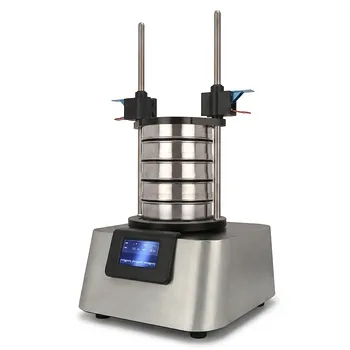
Vibratory Sieve Shaker Electromagnetic 3D Motion Powder Particle Size Analyzer for Dry and Wet Sieving
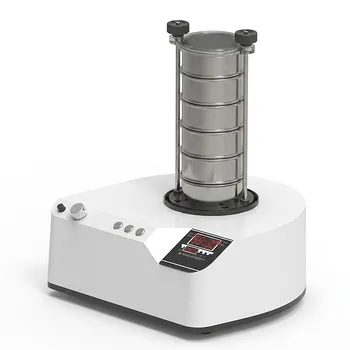
三维电磁微量振动筛分仪
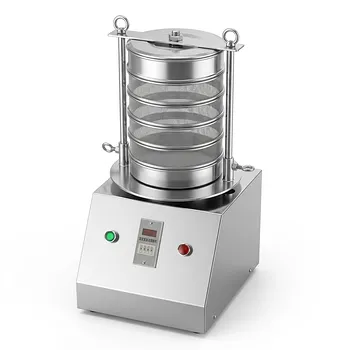
Stainless Steel Laboratory Vibratory Test Sieve Shaker
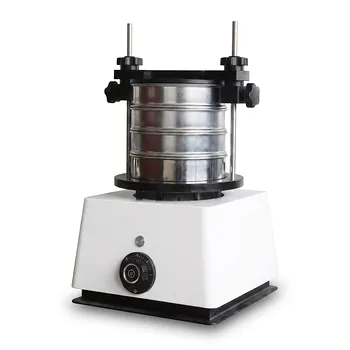
Small Laboratory Vibrating Sieve Shaker for Precise Particle Size Analysis
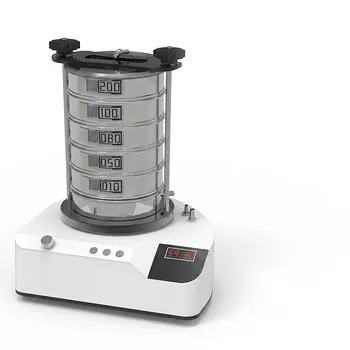
Heavy Duty Dry Three Dimensional Vibratory Sieve Shaker for Particle Separation
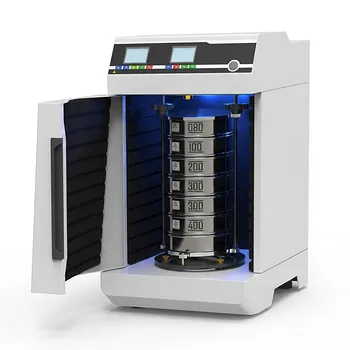
Laboratory Dry and Wet Three Dimensional Vibratory Sieve Shaker for Particle Analysis
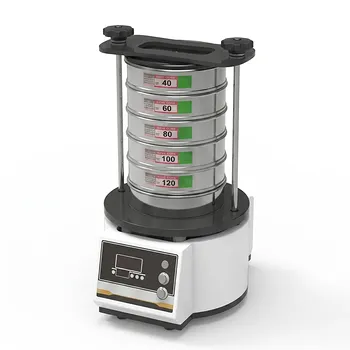
Dry Three Dimensional Vibratory Sieve Shaker
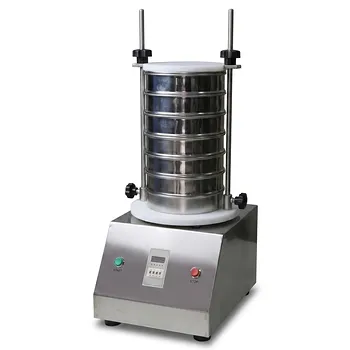
Laboratory Vibratory Test Sieve Shaker for Precision Particle Size Analysis and Powder Grading
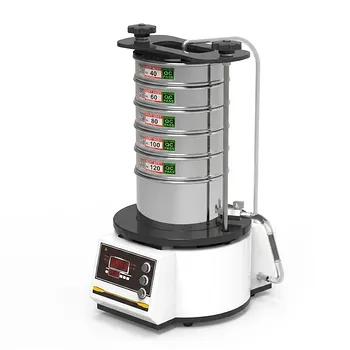
High Frequency Wet Three-Dimensional Vibrating Sieve Shaker for Dry and Wet Particle Size Analysis
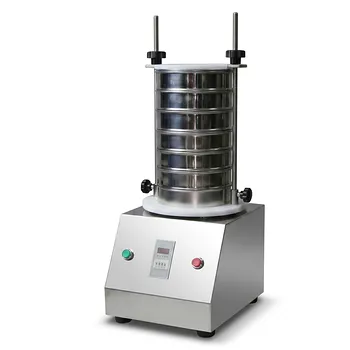
Small Laboratory Vibratory Sieve Shaker for Powder Gradation and Particle Size Analysis
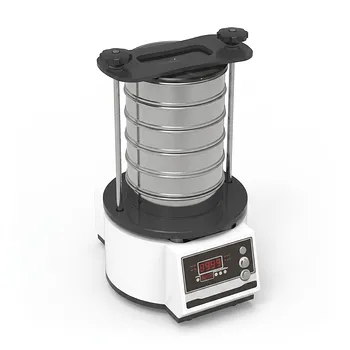
Tapping Oscillating Sieve Shaker for Dry and Wet Particle Size Analysis
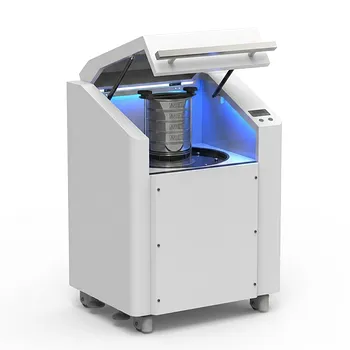
High Frequency Cabinet Type Three-Dimensional Rotary Vibrating Sieve Shaker for Dry Sieving and Particle Classification

Stainless Steel Rotary Vibrating Sieve High Precision Circular Vibratory Separator Industrial Powder Grading Machine Multi Layer Sifting Equipment
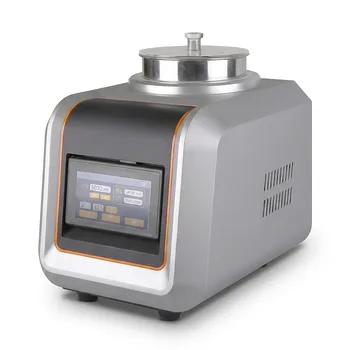
Laboratory Air Jet Sieving Machine for Fine Powder Particle Size Analysis and Deagglomeration