Why use argon in As4Se3 nano-milling? Protect chemical integrity and prevent oxidation in high-energy processing.
Updated 3 months ago
The use of a protective argon environment is critical to maintaining the chemical integrity of arsenic selenide ($As_4Se_3$) during high-energy milling. This inert atmosphere prevents the rapid oxidation and oxidative loss of arsenic and selenium that occur when these elements are exposed to oxygen and moisture. Without this protection, the extreme localized heat and increased surface area generated during the process would lead to significant chemical deviations and structural degradation.
Core Takeaway: Argon serves as an essential inert barrier that isolates reactive arsenic and selenium surfaces from atmospheric contaminants. By preventing oxidation during high-energy impacts, it ensures the material maintains its precise chemical composition and successfully undergoes the desired re-amorphization transition.
The Thermal Dynamics of Nano-Milling
Impact of Localized Heat Spikes
During high-energy milling, the mechanical impact between grinding media and the powder generates significant local temperature increases. These instantaneous "hot spots" can reach temperatures far higher than the average temperature of the grinding jar.
In the presence of oxygen, these thermal spikes act as catalysts for rapid oxidation. Arsenic and selenium are particularly sensitive to these temperatures, leading to the formation of unwanted oxides rather than the intended alloy structure.
Thermal Volatility and Elemental Loss
Because arsenic and selenium have specific volatility profiles, oxidation can lead to the oxidative loss of these elements. This loss shifts the stoichiometry of the material away from $As_4Se_3$.
Maintaining an argon environment ensures that even when local temperatures rise, there is no reactive oxygen available to bond with the elements. This preserves the original elemental ratios required for the experiment or application.
Surface Area and Chemical Reactivity
The Creation of Fresh Surfaces
The milling process works by continuously fracturing particles to achieve a nano-scale powder. This fracture process creates a massive amount of fresh, "virgin" surfaces that have never been exposed to the environment.
These newly exposed surfaces possess high surface energy and are chemically hyper-reactive. If exposed to air, they will immediately undergo oxidation or hydrolysis, contaminating the powder at the atomic level.
Impact of Specific Surface Area
As the particle size decreases to the nano-scale, the specific surface area increases exponentially. This means a much larger percentage of the material's atoms are located on the surface, where they are vulnerable to environmental interaction.
An argon atmosphere effectively "passivates" the environment around these surfaces. It ensures that the high surface energy of the nano-powder is not expended on forming oxide layers, but is instead used for the intended re-amorphization transition.
Maintaining Structural and Chemical Accuracy
Accuracy of the Re-Amorphization Process
The primary goal of nano-milling $As_4Se_3$ is often to induce a transition in the material's network structure. For this transition to be accurate, the chemical purity of the precursor must be maintained throughout the entire mechanical activation.
If oxygen atoms are incorporated into the glass network, they create defects and alter the coordination numbers of the arsenic and selenium atoms. This results in a material that does not reflect the true properties of pure arsenic selenide.
Prevention of Hydrolysis
Beyond oxygen, moisture in the air can cause hydrolysis of chalcogenide semiconductor powders. Water vapor reacts with the fine powder to produce oxy-compounds and potentially toxic gases like hydrogen selenide.
Using high-purity argon in a sealed environment or glove box isolates the powder from moisture. This protects the equipment, ensures researcher safety, and maintains the stability of the material's chemical evolution.
Understanding the Trade-offs and Limitations
The Risk of Impure Argon
The effectiveness of the protection is entirely dependent on the purity of the argon gas. If the argon contains trace amounts of oxygen or water vapor, the high-energy milling process will still drive oxidation over long milling durations.
Researchers must ensure that the gas is of high-purity (99.999%) and that the grinding jars are properly vacuum-sealed before filling. A minor leak can compromise an entire multi-hour milling run.
Material Contamination from Grinding Media
While argon prevents atmospheric contamination, it cannot prevent mechanical contamination from the grinding jars and balls. Elements like iron, chromium, or ceramic fragments can still wear off and enter the $As_4Se_3$ powder.
Argon only addresses the chemical stability of the powder relative to its environment. It does not eliminate the need for selecting high-quality, wear-resistant grinding media to ensure total material purity.
How to Apply Argon Protection to Your Process
Implementation Guidelines
To achieve the best results when milling sensitive chalcogenides, consider the following tactical recommendations:
- If your primary focus is Chemical Stoichiometry: Ensure the grinding jar is purged at least three times with high-purity argon to remove all residual oxygen before beginning the milling cycle.
- If your primary focus is Nano-scale Purity: Use a glove box for both the loading and unloading phases to prevent the reactive "fresh" surfaces from oxidizing once the jar is opened.
- If your primary focus is Structural Research: Monitor the pressure seals of your grinding jars regularly, as the vibrations of high-energy milling can cause seal failure and subsequent air ingress.
Utilizing a controlled argon environment transforms the milling process from a destructive oxidative reaction into a precise tool for structural engineering at the nano-scale.
Summary Table:
| Factor | Risk Without Argon Protection | Benefit of Argon Environment |
|---|---|---|
| Thermal Dynamics | Localized heat spikes cause rapid oxidation | Prevents reactive bonding during impacts |
| Surface Area | "Fresh" nano-surfaces react with air/moisture | Passivates surfaces to ensure re-amorphization |
| Stoichiometry | Elemental loss shifts chemical composition | Preserves original As-Se elemental ratios |
| Safety/Purity | Hydrolysis creates toxic gases and defects | Isolates material from moisture and oxygen |
Master Your Material Preparation with Professional Lab Solutions
At [Brand Name], we provide complete laboratory sample preparation solutions for material science, specializing in powder processing and high-performance compaction equipment. Whether you are milling sensitive chalcogenides like $As_4Se_3$ or developing advanced ceramics, our equipment ensures the chemical integrity of your samples.
Our Extensive Product Lines Include:
- Advanced Milling: Planetary ball mills, jet mills, rotor mills, and liquid nitrogen cryogenic grinders for nano-scale precision.
- Hydraulic Presses: A full spectrum of Cold/Warm Isostatic Presses (CIP/WIP), vacuum hot presses, and XRF pellet presses.
- Processing Tools: Jaw/roll crushers, sieve shakers (vibratory/air-jet), and high-efficiency powder/defoaming mixers.
Looking for reliable equipment to handle reactive materials? Contact us today to discuss your specific application and discover how our solutions can enhance your research outcomes.
References
- O. Shpotyuk, A. Kovalskiy. Molecular-Network Transformations in Tetra-Arsenic Triselenide Glassy Alloys Tuned within Nanomilling Platform. DOI: 10.3390/molecules29143245
Mentioned Products
- Mass Production Nano Sand Mill for Industrial Nanomaterial Grinding and Dispersion
- Laboratory Nano High Energy Ball Mill Ultrafine Grinding Mechanical Alloying
- Laboratory Small Horizontal Sand Mill for Nano Materials Wet Grinding
- Laboratory Horizontal Pin Nano Sand Mill
- Vertical Nano Bead Mill for Ceramic Materials with Permanent Magnet Motor and High Efficiency Grinding
People Also Ask
- What is the significance of the stirring speed in Budesonide nano-milling? Master Kinetic Energy for Drug Refinement
- How does an industrial grinding mill contribute to groundnut shell powder preparation? Enhance Polymer Filler Performance
- Why is a sand mill used to process solid carbon-forming agents like PPVA and PER? Enhance Dispersion & Flame Retardancy
- Why Silicon Nitride Media is Superior to Zirconia for Si-B-C-N Ceramics? Ensure Purity & Nanostructure Integrity
- What is the purpose of using a 50 µm fine nylon sieve to filter ceramic slurries? Optimize Your DLP 3D Printing Results

Tech Team · PowderPreparation
Last updated on Jun 03, 2026
Related Products
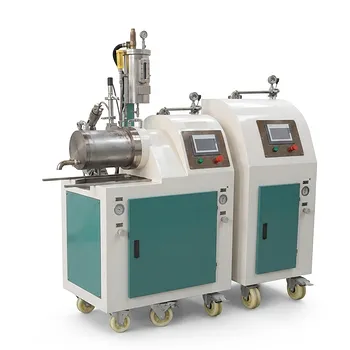
Mass Production Nano Sand Mill for Industrial Nanomaterial Grinding and Dispersion
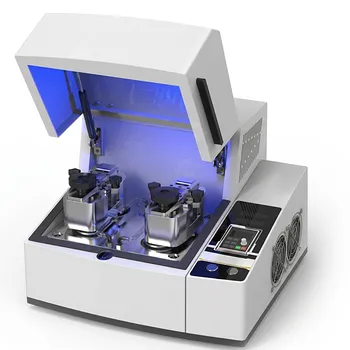
Laboratory Nano High Energy Ball Mill Ultrafine Grinding Mechanical Alloying
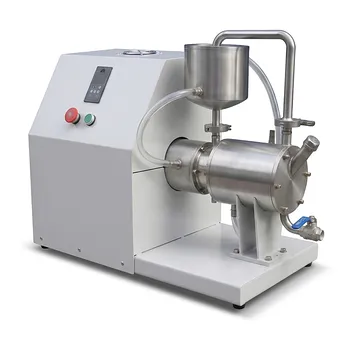
Laboratory Small Horizontal Sand Mill for Nano Materials Wet Grinding
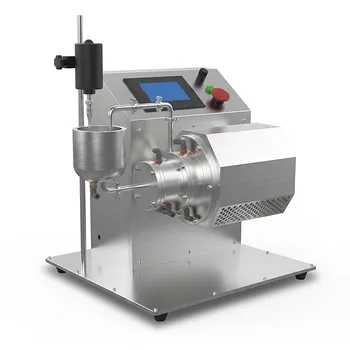
Laboratory Horizontal Pin Nano Sand Mill
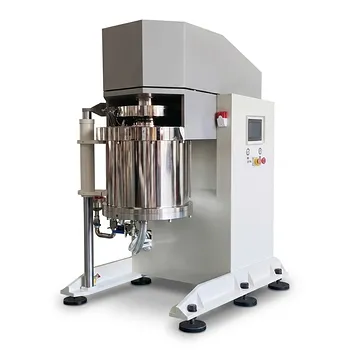
Vertical Nano Bead Mill for Ceramic Materials with Permanent Magnet Motor and High Efficiency Grinding

High Energy Laboratory Planetary Ball Mill for Nano Grinding and Material Science Sample Preparation
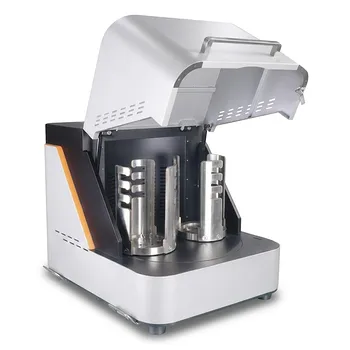
High Energy Laboratory Planetary Ball Mill for Nano Grinding and Colloidal Mixing of Hard and Brittle Materials
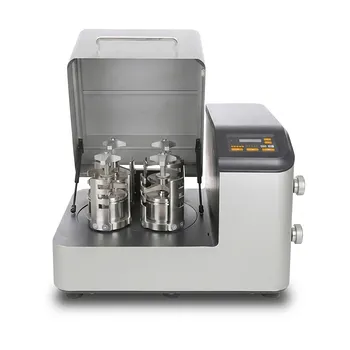
High Energy Planetary Ball Mill for Nano Scale Grinding and Colloidal Mixing in Material Science Research
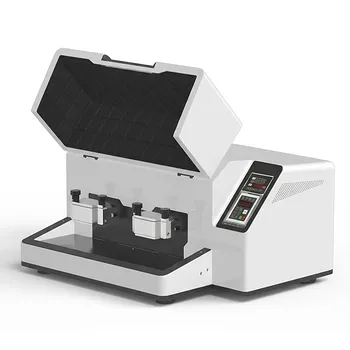
Nanoscale High-Energy Vibratory Ball Mill for Laboratory Sample Preparation, Mechanochemistry, and Mechanical Alloying

Nano High Energy Vibratory Ball Mill for Laboratory Sample Preparation
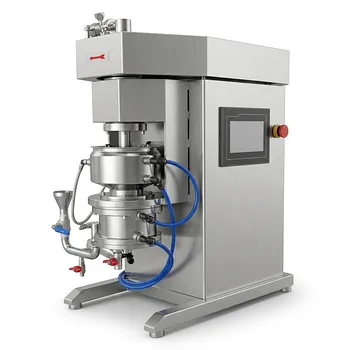
Small Ceramic Structure Laboratory Sand Mill Nanoscale Grinding Dispersion Equipment Seal-less Screen-less Design

Vertical Square Planetary Ball Mill for Laboratory Sample Preparation and Nanoscale Grinding
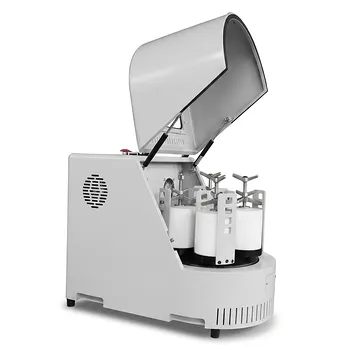
Vertical Semi Circular Planetary Ball Mill for Laboratory Precision Grinding
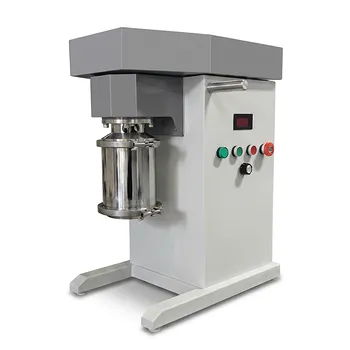
Nano Laboratory Bead Mill Desktop Sub Micron Sand Mill Screenless Seal Less Powder Grinder
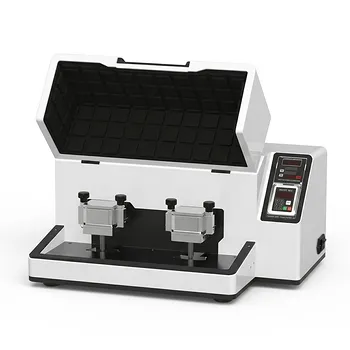
Nanoscale High Energy Vibratory Ball Mill Low Temperature

High Energy Planetary Ball Mill for Nano Scale Grinding and Mechanical Alloying

Nano High Energy Vibratory Ball Mill with Heating and Temperature Control

Multi-Platform Nanoscale High-Energy Vibratory Ball Mill