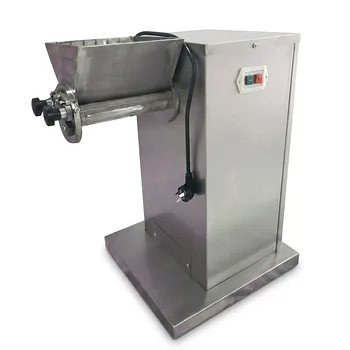
What is the function of vibratory sieve shakers and standard test sieves in GAC prep? Control Particle Size & Adsorption
Updated 4 months ago
Vibratory sieve shakers and standard test sieves are the fundamental instruments used to classify and control the particle size distribution (PSD) of Granular Activated Carbon (GAC).
By mechanically separating carbon particles into specific mesh ranges, these tools ensure a uniform specific surface area and predictable adsorption kinetics. This precision is essential for maintaining consistency during the activation process and ensuring that experimental or industrial adsorption data is both reliable and repeatable.
The primary function of these tools is to eliminate particle size variability, which directly dictates the surface area availability and the rate at which contaminants are adsorbed. Without this standardization, the performance of the activated carbon would be unpredictable across different batches.
The Role of Mechanical Sieving in GAC Quality
Controlling Specific Surface Area
Vibratory sieve shakers isolate carbon particles into strict size fractions, such as 16 x 25 mesh or ranges between 840μm and 1400μm.
This uniformity ensures that the specific surface area—the total area available for adsorption per unit of mass—remains constant throughout a batch.
A consistent surface area is the baseline requirement for establishing standardized experimental conditions in batch adsorption studies.
Standardizing Adsorption Kinetics
Particle size significantly influences diffusion kinetics, or the speed at which molecules move into the carbon's pore structure.
Using standard test sieves to achieve a uniform size allows for predictable heat and mass transfer during the preparation phase.
This leads to a final product with consistent kinetic performance, preventing "fast" or "slow" zones within an adsorption column.
Enhancing the Carbonization and Activation Process
Optimizing Heat and Mass Transfer
During the hydrothermal carbonization of precursors like acacia wood or peanut shells, uniform particle sizes ensure that heat is distributed evenly.
If particles vary too much in size, smaller fragments may over-carbonize while larger pieces remain under-processed.
Mechanical sieving ensures the material entering the activation stage falls within a strict target range, optimizing the efficiency of the entire thermal process.
Consistency in Pore Development
The physical size of the precursor particles directly impacts the resulting pore distribution characteristics.
Uniform screening facilitates the formation of consistent microporous structures, which are vital for high-efficiency adsorption of ions like nickel or manganese.
By controlling the input size, manufacturers can better predict the final packing density and porosity of the GAC.
Understanding the Trade-offs and Limitations
Physical Attrition and Degradation
Vibratory shakers subject carbon particles to mechanical stress, which can cause attrition or the breaking down of granules into fines.
Over-sieving or using excessive vibration intensity can inadvertently change the particle size distribution you are trying to measure.
It is critical to balance the duration of the shaking cycle to achieve separation without degrading the structural integrity of the activated carbon.
Sieve Blinding and Accuracy
Granular carbon can often lodge itself in the sieve openings, a phenomenon known as blinding, which reduces screening accuracy.
This is particularly common with irregular or angular grains produced during the crushing of coal or coconut shells.
Regular cleaning and the use of de-blinding accessories (like sieve brushes or balls) are necessary to maintain the integrity of the gradation analysis.
How to Apply These Tools Effectively
To achieve the highest quality GAC preparation, your approach to sieving should be dictated by your end-use requirements.
- If your primary focus is experimental research: Use high-precision standard test sieves to isolate a very narrow mesh range (e.g., 70-80 mesh) to ensure your kinetic data is not skewed by size variations.
- If your primary focus is industrial adsorption efficiency: Focus on achieving a consistent 16 x 25 mesh distribution to balance optimal packing density with acceptable pressure drop in flow-through systems.
- If your primary focus is carbonization optimization: Screen your raw precursors (like wood or shells) before activation to ensure uniform heat penetration and consistent pore development across the entire batch.
Precise particle size classification is the technical foundation upon which the chemical and physical reliability of activated carbon is built.
Summary Table:
| Key Function | Role in GAC Preparation | Impact on Performance |
|---|---|---|
| Particle Size Control | Isolates carbon into specific mesh ranges (e.g., 16 x 25). | Ensures uniform specific surface area and predictable adsorption kinetics. |
| Process Optimization | Screens precursors (wood/shells) before activation. | Promotes even heat/mass transfer and prevents over-carbonization. |
| Quality Assurance | Standardizes gradation analysis. | Guarantees repeatable experimental data and consistent pore development. |
| Attrition Monitoring | Measures mechanical durability. | Identifies potential degradation or "fines" generation during processing. |
Master Your Material Characterization with Precision Equipment
Achieving the perfect particle size distribution is the foundation of high-performance Granular Activated Carbon. At [Your Brand Name], we provide complete laboratory sample preparation solutions for material science, specializing in high-precision powder processing and compaction equipment.
Our extensive product line is designed to streamline your GAC research and production:
- Classification & Analysis: Vibratory and air-jet sieve shakers with a full range of standard test sieves and meshes.
- Size Reduction: Industrial-grade jaw/roll crushers and versatile mills (planetary ball, jet, sand/bead, disc, rotor) for precursor preparation.
- Advanced Compaction: A full spectrum of hydraulic presses, including Cold/Warm Isostatic Presses (CIP/WIP), vacuum hot presses, and XRF pellet presses.
- Mixing & Processing: High-efficiency powder and defoaming mixers for uniform material blending.
Whether you are optimizing adsorption kinetics or refining carbonization parameters, our tools ensure accuracy and repeatability. Contact our technical experts today to find the ideal solution for your laboratory's needs!
References
- S. R. Trivedi and R. U. Khope S. R. Trivedi and R. U. Khope, ijrbat. A SIMULATION STUDY OF THE REMOVAL EFFICIENCY OF GRANULAR ACTIVATED CARBON ON CADMIUM.. DOI: 10.29369/ijrbat.2018.01.i.0050
Mentioned Products
- Vibratory Sieve Shaker Electromagnetic 3D Motion Powder Particle Size Analyzer for Dry and Wet Sieving
- Small Laboratory Vibratory Sieve Shaker for Powder Gradation and Particle Size Analysis
- Laboratory Vibratory Test Sieve Shaker for Precision Particle Size Analysis and Powder Grading
- Three Dimensional Rotary Vibrating Sieve
- Stainless Steel Laboratory Vibratory Test Sieve Shaker
People Also Ask
- How does a vibratory sieve shaker contribute to optimizing the performance of activated carbon? Enhance Adsorption Precision
- Why is a laboratory vibratory sieve shaker necessary for processing magnesium-based borate precursor powders? Boost Activity
- Why use a vibratory sieve shaker to verify coarse aggregate grading in rubberized concrete? Ensure Structural Integrity
- What function do vibratory sieve shakers and standard test sieves serve in the preparation of adsorbents? Key Guide
- What role does a vibratory sieve shaker play in the particle size analysis of ground corn products? Enhance QC Precision

Tech Team · PowderPreparation
Last updated on Jun 03, 2026
Related Products
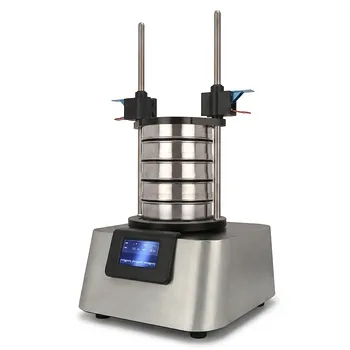
Vibratory Sieve Shaker Electromagnetic 3D Motion Powder Particle Size Analyzer for Dry and Wet Sieving
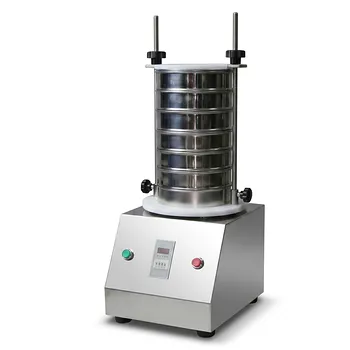
Small Laboratory Vibratory Sieve Shaker for Powder Gradation and Particle Size Analysis

Laboratory Vibratory Test Sieve Shaker for Precision Particle Size Analysis and Powder Grading
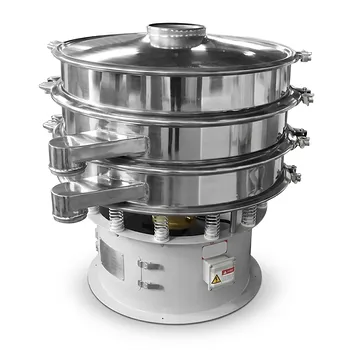
Three Dimensional Rotary Vibrating Sieve
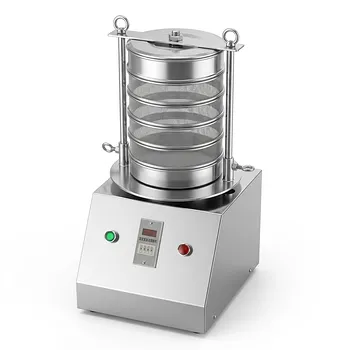
Stainless Steel Laboratory Vibratory Test Sieve Shaker

Heavy Duty Dry Three Dimensional Vibratory Sieve Shaker for Particle Separation

Dry Three Dimensional Vibratory Sieve Shaker
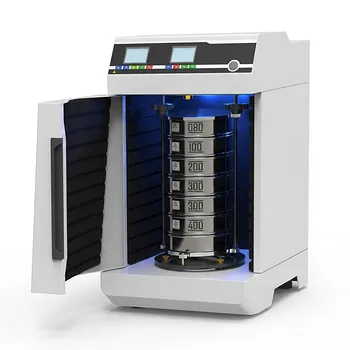
Laboratory Dry and Wet Three Dimensional Vibratory Sieve Shaker for Particle Analysis
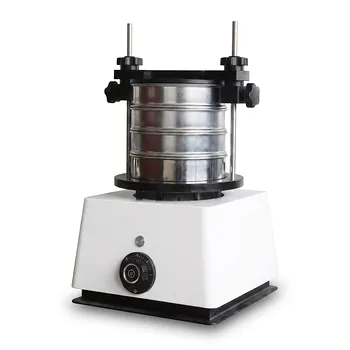
Small Laboratory Vibrating Sieve Shaker for Precise Particle Size Analysis
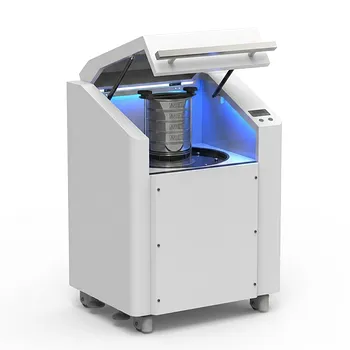
High Frequency Cabinet Type Three-Dimensional Rotary Vibrating Sieve Shaker for Dry Sieving and Particle Classification
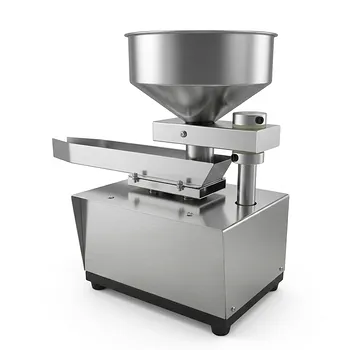
Automatic Vibrating Powder Feeder for Laboratory Material Processing Precision Vibratory Hopper Feeder for Granular and Powder Material Handling Industrial Grade Vibrating Tray Feeder for Consistent Material Sample Preparation
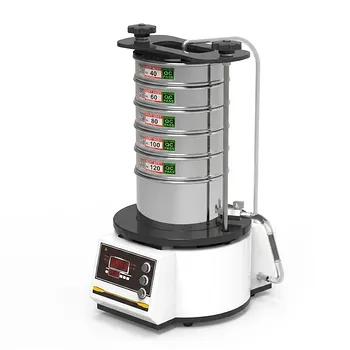
High Frequency Wet Three-Dimensional Vibrating Sieve Shaker for Dry and Wet Particle Size Analysis

Stainless Steel Rotary Vibrating Sieve High Precision Circular Vibratory Separator Industrial Powder Grading Machine Multi Layer Sifting Equipment
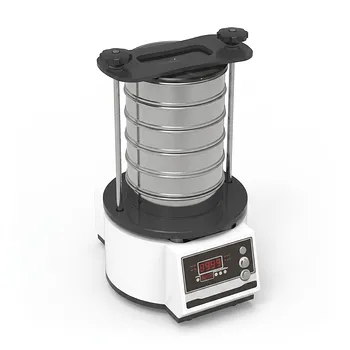
Tapping Oscillating Sieve Shaker for Dry and Wet Particle Size Analysis
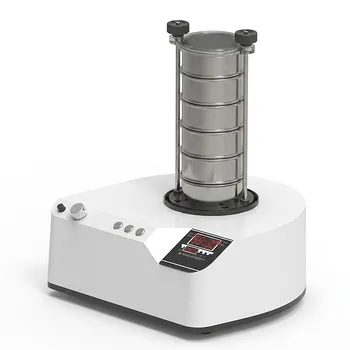
三维电磁微量振动筛分仪
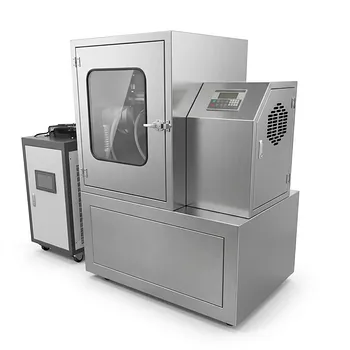
Vibratory Superfine Grinder for Ultra Fine Laboratory Powder Milling
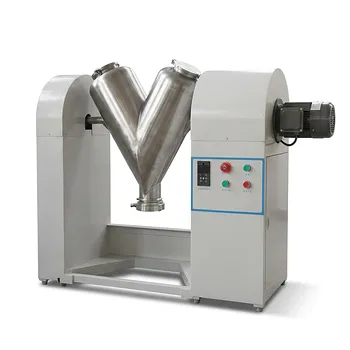
V-Type Powder Mixer for Uniform Blending of Dry Powders and Granules