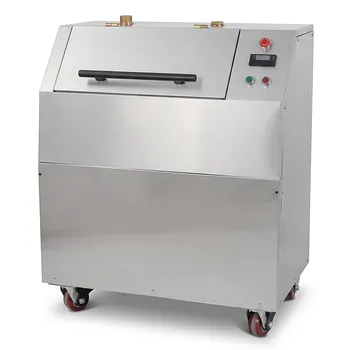
How do vibratory sieve shakers and test sieves contribute to sediment analysis? Ensure Data Precision & Reliability
Updated 5 months ago
Vibratory sieve shakers and high-standard test sieves automate the physical classification of sediment by size through standardized mechanical oscillation. By driving dry samples through a series of precision mesh apertures—typically ranging from 2,000 μm to 45 μm—these tools generate the precise distribution curves required for geological and environmental modeling. This process provides the foundational "ground truth" data used to calculate statistical parameters like median grain size, sorting, and skewness.
These tools transform raw sediment samples into quantifiable data by replacing manual inconsistency with repeatable mechanical force and standardized mesh. This precision is essential for mapping environmental risks, designing engineering infrastructure, and validating advanced analytical models.
Precision Classification and Statistical Reliability
Standardizing Mechanical Force
Vibratory sieve shakers utilize high-frequency mechanical vibrations, often in a three-dimensional motion, to ensure every particle has the opportunity to pass through the mesh. This automation removes the human error inherent in manual sieving, providing consistent power and preset durations that ensure repeatability across different laboratories.
Defining Sedimentological Parameters
By capturing the weight of sediment retained on each sieve, researchers can calculate essential statistical characteristics such as D10, D50, and D90. These values allow for the determination of the sorting degree, kurtosis, and mean grain size, which are critical for identifying the hydrodynamic conditions of the environment where the sediment was deposited.
Providing Ground Truth for AI
In modern research, the precise data obtained from physical sieving serves as the label data for training deep learning models. These models use image recognition to estimate particle size; however, their accuracy depends entirely on the high-standard "ground truth" provided by the vibratory shaker process.
Environmental and Engineering Implications
Assessing Adsorption and Contamination
There is a direct correlation between fine particle distribution and the storage of organic carbon or heavy metals. Fine fractions (often those below 63 μm or 45 μm) have higher surface areas, making them primary sites for the adsorption and enrichment of contaminants, which is vital for environmental impact assessments.
Calculating Physical Permeability
Sediment grain size distribution is the most critical factor in determining permeability. In engineering applications, such as air injection systems, this data is fundamental for calculating the Radius of Influence (ROI), ensuring the system is designed to handle the specific flow characteristics of the site.
Analyzing Hydrodynamic Energy
The presence and proportion of specific grain sizes, such as sand versus silt or clay, reflect the energy levels of the transport medium (water or wind). Consistent sieving allows geologists to reconstruct historical environmental conditions based on the textural parameters of the seabed or riverbed samples.
Understanding the Trade-offs and Limitations
Dry vs. Wet Sieving Challenges
While vibratory shakers are highly efficient for dry sediment, very fine particles (clay and silt) can often clump together due to electrostatic forces or moisture. In these cases, dry sieving may inaccurately report larger grain sizes unless a wet sieving procedure or chemical dispersant is utilized.
Mesh Blinding and Maintenance
High-standard test sieves are precision instruments that are susceptible to "blinding," where near-sized particles become wedged in the mesh. Regular cleaning via ultrasonic baths and periodic calibration are required to ensure that the aperture integrity remains within standard specifications.
Sample Volume Sensitivity
Overloading a sieve stack can lead to "cushioning," where a thick layer of material prevents smaller particles from reaching the mesh surface. To maintain accuracy, users must balance the sample mass with the diameter of the sieves to ensure every particle interacts with the screen.
Making the Right Choice for Your Goal
How to Apply This to Your Project
- If your primary focus is Environmental Risk Assessment: Prioritize the analysis of the fine fractions (below 63 μm) to accurately map the potential for heavy metal adsorption and organic carbon storage.
- If your primary focus is Engineering and Infrastructure: Use the distribution curves (specifically D10 and D50) to calculate permeability and the Radius of Influence for air or fluid injection systems.
- If your primary focus is Geological Reconstruction: Focus on the statistical skewness and sorting parameters to determine the historical hydrodynamic energy of the depositional environment.
- If your primary focus is Model Training: Ensure the use of high-precision, calibrated sieves to provide the most accurate "ground truth" labels for your deep learning or image recognition algorithms.
By utilizing standardized vibratory shakers, you ensure that your sediment data is not just a measurement, but a reliable foundation for critical decision-making.
Summary Table:
| Feature/Application | Contribution to Sediment Analysis | Key Outcomes/Parameters |
|---|---|---|
| Mechanical Vibration | Eliminates manual error via high-frequency 3D motion. | Repeatable, consistent results |
| Statistical Modeling | Captures precise weight distribution across mesh sizes. | D10, D50, D90, Sorting, Skewness |
| Environmental Risk | Identifies fine fractions (silt/clay) where toxins adsorb. | Contamination & heavy metal mapping |
| Engineering Design | Determines physical permeability and flow characteristics. | Radius of Influence (ROI) calculation |
| AI & Deep Learning | Provides high-standard physical "ground truth" labels. | Training accurate image recognition |
| Hydrodynamics | Analyzes energy levels of transport mediums (water/wind). | Geological reconstruction |
Elevate Your Material Analysis with Precision Lab Solutions
Accurate sediment analysis starts with superior sample preparation. At [Our Brand], we provide complete laboratory solutions tailored for material science, specializing in high-performance powder processing and compaction equipment.
From generating the "ground truth" for geological models to preparing advanced materials, our extensive product lines are designed for precision and durability:
- Sieving & Milling: Vibratory and air-jet sieve shakers, planetary ball mills, jet mills, and liquid nitrogen cryogenic grinders.
- Crushing & Mixing: Industrial-grade jaw/roll crushers and advanced powder/defoaming mixers.
- Compaction Excellence: A full spectrum of hydraulic presses, including Cold/Warm Isostatic Presses (CIP/WIP), XRF pellet presses, and vacuum hot presses.
Whether you are a researcher needing repeatable data or a distributor seeking reliable OEM/ODM support, we deliver the tools you need to succeed.
Ready to optimize your lab workflow? Contact us today to request a quote or consultation!
References
- B. R. R. Seshan, S. Aruna Deepthi. Geochemical and statistical approach for evaluation of heavy metal pollution in core sediments in southeast coast of India. DOI: 10.1007/bf03326139
Mentioned Products
- Vibratory Sieve Shaker Electromagnetic 3D Motion Powder Particle Size Analyzer for Dry and Wet Sieving
- Laboratory Dry and Wet Three Dimensional Vibratory Sieve Shaker for Particle Analysis
- Dry Three Dimensional Vibratory Sieve Shaker
- Stainless Steel Laboratory Vibratory Test Sieve Shaker
- Heavy Duty Dry Three Dimensional Vibratory Sieve Shaker for Particle Separation
People Also Ask
- How does a vibratory sieve shaker contribute to optimizing the performance of activated carbon? Enhance Adsorption Precision
- Why is a laboratory vibratory sieve shaker necessary for processing magnesium-based borate precursor powders? Boost Activity
- Why use a vibratory sieve shaker to verify coarse aggregate grading in rubberized concrete? Ensure Structural Integrity
- What function do vibratory sieve shakers and standard test sieves serve in the preparation of adsorbents? Key Guide
- What role does a vibratory sieve shaker play in the particle size analysis of ground corn products? Enhance QC Precision

Tech Team · PowderPreparation
Last updated on May 14, 2026
Related Products
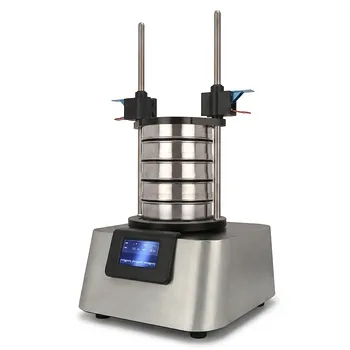
Vibratory Sieve Shaker Electromagnetic 3D Motion Powder Particle Size Analyzer for Dry and Wet Sieving
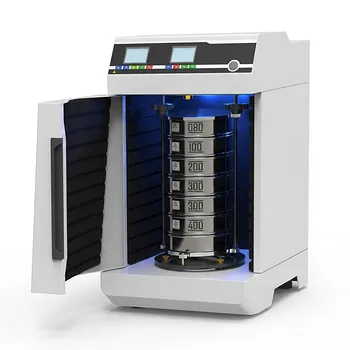
Laboratory Dry and Wet Three Dimensional Vibratory Sieve Shaker for Particle Analysis
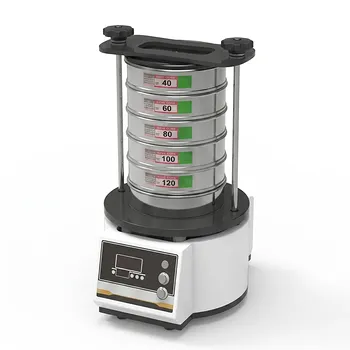
Dry Three Dimensional Vibratory Sieve Shaker
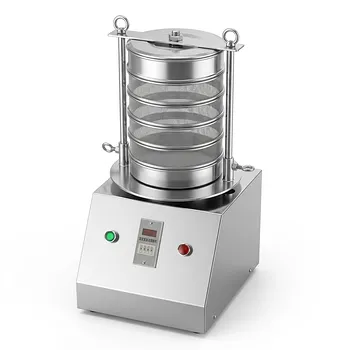
Stainless Steel Laboratory Vibratory Test Sieve Shaker
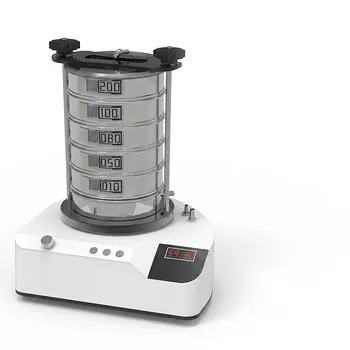
Heavy Duty Dry Three Dimensional Vibratory Sieve Shaker for Particle Separation
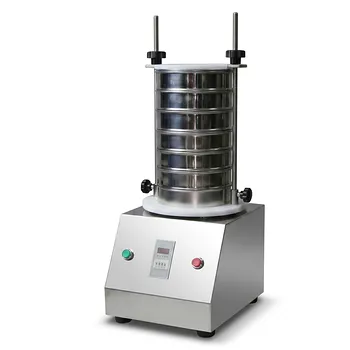
Small Laboratory Vibratory Sieve Shaker for Powder Gradation and Particle Size Analysis

Small Laboratory Vibrating Sieve Shaker for Precise Particle Size Analysis
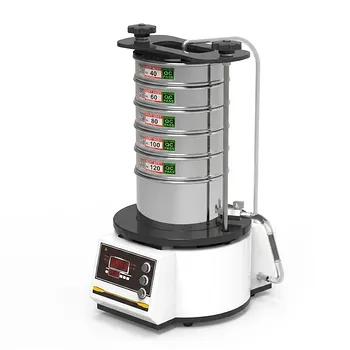
High Frequency Wet Three-Dimensional Vibrating Sieve Shaker for Dry and Wet Particle Size Analysis
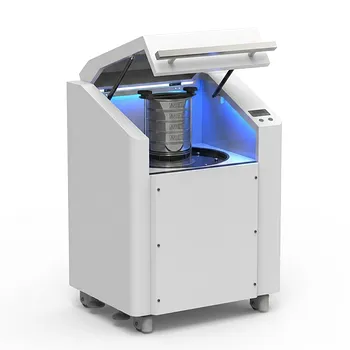
High Frequency Cabinet Type Three-Dimensional Rotary Vibrating Sieve Shaker for Dry Sieving and Particle Classification

Laboratory Vibratory Test Sieve Shaker for Precision Particle Size Analysis and Powder Grading
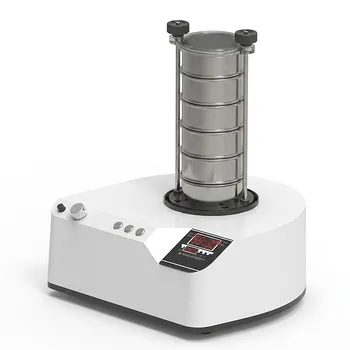
三维电磁微量振动筛分仪

Stainless Steel Rotary Vibrating Sieve High Precision Circular Vibratory Separator Industrial Powder Grading Machine Multi Layer Sifting Equipment
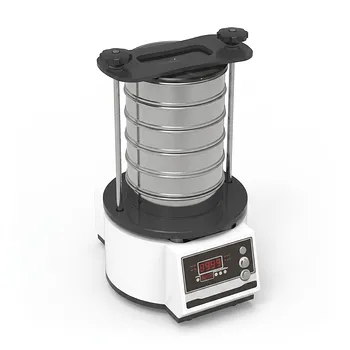
Tapping Oscillating Sieve Shaker for Dry and Wet Particle Size Analysis
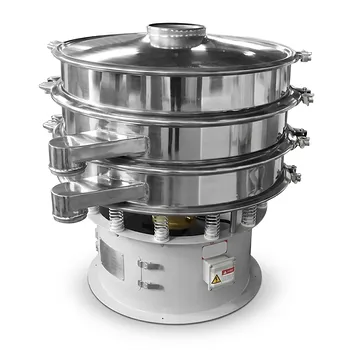
Three Dimensional Rotary Vibrating Sieve
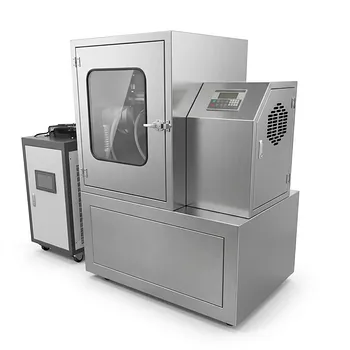
Vibratory Superfine Grinder for Ultra Fine Laboratory Powder Milling
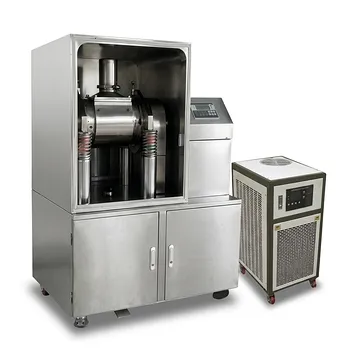
Small Vibrating Ultrafine Grinder for Traditional Chinese Medicine

Automatic Vibrating Powder Feeder for Laboratory Material Processing Precision Vibratory Hopper Feeder for Granular and Powder Material Handling Industrial Grade Vibrating Tray Feeder for Consistent Material Sample Preparation