What is the function of a vibratory sieve shaker in MCC preparation? Master Particle Size for Superior Tablet Quality
Updated 3 months ago
The vibratory sieve shaker serves as a critical mechanical screening tool in the pretreatment and analysis of Microcrystalline Cellulose (MCC). Its primary function is to strictly control and classify particle size distribution (PSD) by passing raw powder through a stack of standardized mesh layers, typically ranging from 20 µm to several millimeters. This ensures the physical consistency required for accurate porosity control, moisture transfer, and tablet tensile strength during pharmaceutical manufacturing.
Core Takeaway: A vibratory sieve shaker is indispensable for achieving high-precision particle size uniformity in MCC, which directly influences the powder’s flowability, compressibility, and the kinetic behavior of the final pharmaceutical product.
Precision Control in Pretreatment
Managing Particle Size Distribution (PSD)
In the pretreatment stage, the shaker utilizes mechanical vibration to separate MCC powder into specific size fractions, such as 90μm to 150μm. This strict classification is a prerequisite for ensuring that the raw material behaves predictably during subsequent tableting processes.
Removing Agglomerates and Impurities
The mechanical action of the shaker effectively removes polymers and agglomerates from the powder before mixing. By eliminating these larger clusters, the equipment ensures a more homogeneous blend, which prevents defects in the final dosage form.
Standardizing Material Consistency
By utilizing a timed and standardized screening process, the shaker eliminates experimental errors caused by uneven particle sizes. This creates a reliable baseline for researchers to evaluate how specific particle size ranges, such as 25-75 micrometers, influence capillary absorption and wetting kinetics.
Analytical Role in Quality Control
Determining Fineness Modulus and D-Values
The shaker is a core detection method for calculating the D10, D50, and D90 values of MCC. These metrics are essential for understanding the fineness of the powder and how different drying or manufacturing processes have altered its physical properties.
Quantifying Uniformity and Curvature
Based on the sample weight retained on each sieve, technicians can calculate the uniformity coefficient and the curvature coefficient. These mathematical values provide an objective measure of the powder's quality and its suitability for high-speed pharmaceutical production lines.
Evaluating Flowability and Extraction
The data gathered during sieve analysis allows for the assessment of powder flowability and extraction efficiency. Consistent particle size distribution is a major factor in ensuring that the powder flows evenly into tablet dies, preventing weight variation in the final product.
The Impact on Downstream Tableting
Optimizing Porosity and Moisture Transfer
Controlled particle size is critical for maintaining accurate porosity control within a tablet. This directly impacts the moisture transfer coefficient, which determines how a tablet will disintegrate or release its active ingredients when exposed to fluid.
Enhancing Tablet Tensile Strength
By separating MCC granules into distinct grades (such as G1, G2, and G3), researchers can independently evaluate the contribution of each size fraction to the tensile strength of the final tablet. This allows for the "engineering" of tablets with specific mechanical properties.
Improving Direct Compression Performance
For pharmaceutical manufacturers using direct compression, the vibratory sieve shaker ensures that the excipients have the ideal particle size reduction ratio. This leads to better bonding between particles and a more stable tablet structure.
Understanding the Trade-offs and Pitfalls
Limitations of Sieve Analysis
While highly effective, sieve analysis assumes that particles are spherical, which is not always the case with needle-like or irregular MCC fibers. Particles may pass through the mesh "end-on," potentially leading to a slight underestimation of the actual particle volume.
The Impact of Static Electricity
Fine MCC powders are prone to static charge accumulation during high-frequency vibration. If not managed, this can cause particles to stick to the sieve mesh or to each other, leading to "blinding" (clogged openings) and inaccurate distribution data.
Standardizing Sieve Duration
Operating the shaker for too short a duration prevents the mass on each sieve from reaching a constant state. Conversely, excessive sieving time can cause mechanical degradation of fragile MCC granules, artificially inflating the percentage of "fines" in the sample.
How to Apply This to Your Process
When integrating a vibratory sieve shaker into your MCC preparation workflow, your approach should be dictated by your specific manufacturing or research objectives.
- If your primary focus is Quality Assurance: Use a multi-layer stack of standard test sieves to calculate D50 and uniformity coefficients for every batch to ensure consistency across the supply chain.
- If your primary focus is R&D and Formulation: Separate MCC into narrow fractions (e.g., 75-125μm) to study the specific impact of particle size on the dissolution rate and tensile strength of new drug formulations.
- If your primary focus is Production Efficiency: Utilize the shaker as a pretreatment step to remove large agglomerates, which will improve the flowability of the powder and reduce downtime caused by "bridging" in the hopper.
The precise mechanical screening provided by a vibratory sieve shaker is the foundation of predictable and high-quality pharmaceutical powder processing.
Summary Table:
| Stage | Key Function | Impact on Pharmaceutical Quality |
|---|---|---|
| Pretreatment | Particle Size Distribution (PSD) Control | Ensures consistent flowability and removes large agglomerates. |
| Quality Analysis | D-Value Calculation (D10, D50, D90) | Quantifies powder fineness and predicts manufacturing behavior. |
| Formulation R&D | Grading (e.g., 25-75µm fractions) | Optimizes tablet porosity, moisture transfer, and tensile strength. |
| Manufacturing | Direct Compression Optimization | Improves bonding between particles for stable, defect-free dosage forms. |
Elevate Your Pharmaceutical Research with Precision Powder Solutions
Achieving the perfect Microcrystalline Cellulose (MCC) consistency requires more than just a shaker—it requires an integrated approach to sample preparation. As specialists in material science, we provide complete laboratory sample preparation solutions designed to optimize your powder processing and compaction workflows.
Our extensive equipment line includes:
- Precision Screening: Vibratory and air-jet sieve shakers with a full range of standardized test sieves and meshes.
- Advanced Milling & Grinding: Planetary ball mills, jet mills, and liquid nitrogen cryogenic grinders for ultimate particle size reduction.
- Homogeneous Mixing: High-efficiency powder mixers and defoaming mixers.
- Professional Compaction: A full spectrum of hydraulic presses, including Cold/Warm Isostatic Presses (CIP/WIP), XRF pellet presses, and vacuum hot presses for high-performance tableting.
Whether you are refining R&D formulations or ensuring production-line reliability, our equipment delivers the accuracy you need. Contact us today to find the perfect solution for your lab!
References
- Komlan Koumbogle, Nicolas Abatzoglou. Moisture Transport Coefficients Determination on a Model Pharmaceutical Tablet. DOI: 10.3390/pr10020254
Mentioned Products
- Vibratory Sieve Shaker Electromagnetic 3D Motion Powder Particle Size Analyzer for Dry and Wet Sieving
- 三维电磁微量振动筛分仪
- Small Laboratory Vibratory Sieve Shaker for Powder Gradation and Particle Size Analysis
- Laboratory Vibratory Test Sieve Shaker for Precision Particle Size Analysis and Powder Grading
- Stainless Steel Laboratory Vibratory Test Sieve Shaker
People Also Ask
- How does a vibratory sieve shaker contribute to optimizing the performance of activated carbon? Enhance Adsorption Precision
- Why is a laboratory vibratory sieve shaker necessary for processing magnesium-based borate precursor powders? Boost Activity
- Why use a vibratory sieve shaker to verify coarse aggregate grading in rubberized concrete? Ensure Structural Integrity
- What function do vibratory sieve shakers and standard test sieves serve in the preparation of adsorbents? Key Guide
- What role does a vibratory sieve shaker play in the particle size analysis of ground corn products? Enhance QC Precision

Tech Team · PowderPreparation
Last updated on Jun 03, 2026
Related Products
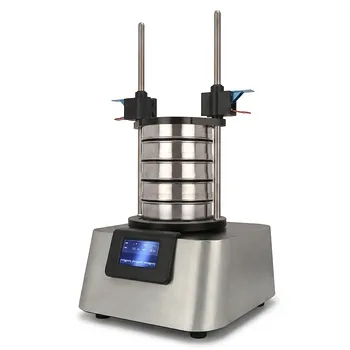
Vibratory Sieve Shaker Electromagnetic 3D Motion Powder Particle Size Analyzer for Dry and Wet Sieving
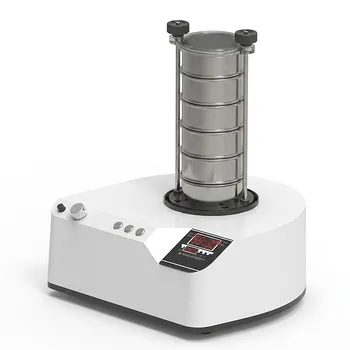
三维电磁微量振动筛分仪
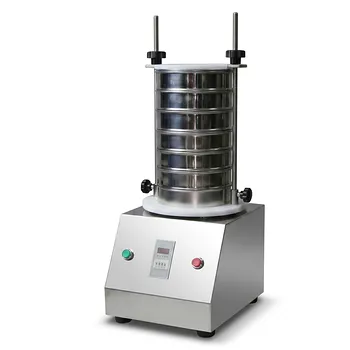
Small Laboratory Vibratory Sieve Shaker for Powder Gradation and Particle Size Analysis

Laboratory Vibratory Test Sieve Shaker for Precision Particle Size Analysis and Powder Grading
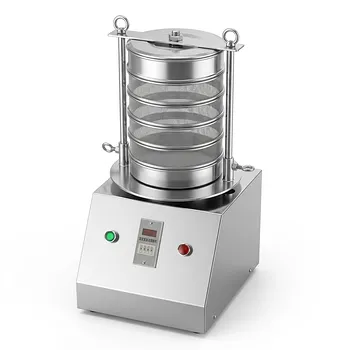
Stainless Steel Laboratory Vibratory Test Sieve Shaker
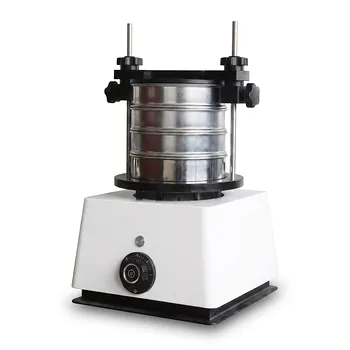
Small Laboratory Vibrating Sieve Shaker for Precise Particle Size Analysis
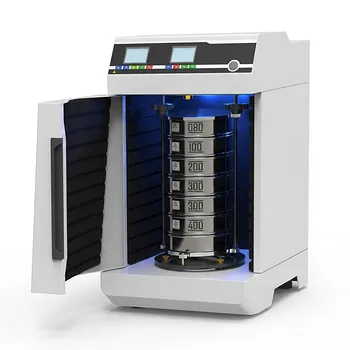
Laboratory Dry and Wet Three Dimensional Vibratory Sieve Shaker for Particle Analysis

Heavy Duty Dry Three Dimensional Vibratory Sieve Shaker for Particle Separation
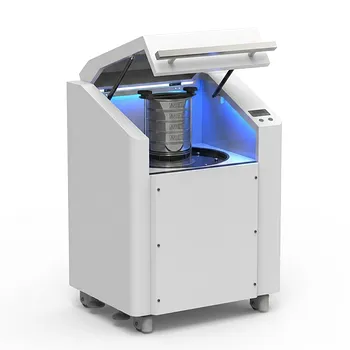
High Frequency Cabinet Type Three-Dimensional Rotary Vibrating Sieve Shaker for Dry Sieving and Particle Classification

Dry Three Dimensional Vibratory Sieve Shaker
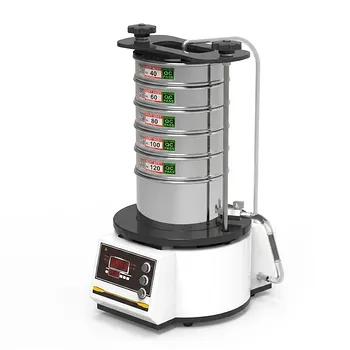
High Frequency Wet Three-Dimensional Vibrating Sieve Shaker for Dry and Wet Particle Size Analysis
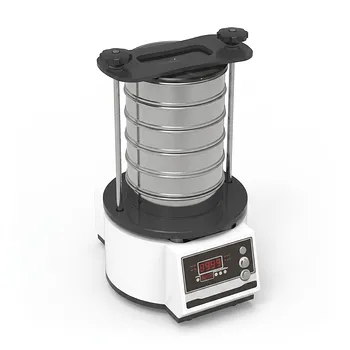
Tapping Oscillating Sieve Shaker for Dry and Wet Particle Size Analysis
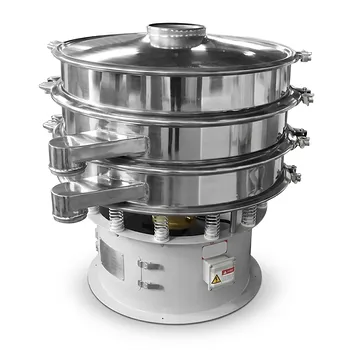
Three Dimensional Rotary Vibrating Sieve

Stainless Steel Rotary Vibrating Sieve High Precision Circular Vibratory Separator Industrial Powder Grading Machine Multi Layer Sifting Equipment
High Energy Hybrid Vibratory Ball Mill for Grinding Mixing and Cell Disruption
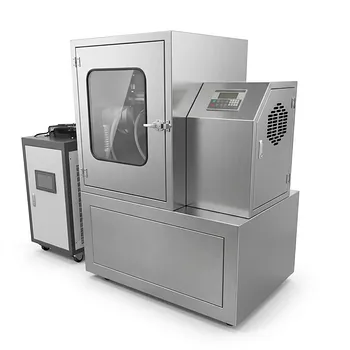
Vibratory Superfine Grinder for Ultra Fine Laboratory Powder Milling
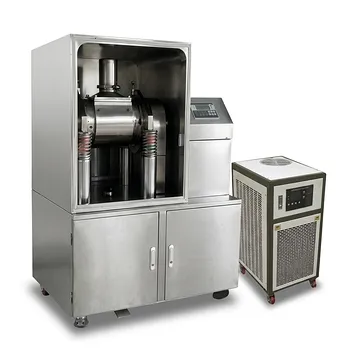
Small Vibrating Ultrafine Grinder for Traditional Chinese Medicine
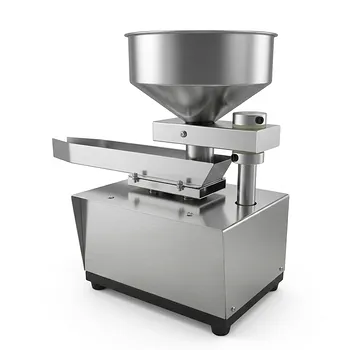
Automatic Vibrating Powder Feeder for Laboratory Material Processing Precision Vibratory Hopper Feeder for Granular and Powder Material Handling Industrial Grade Vibrating Tray Feeder for Consistent Material Sample Preparation
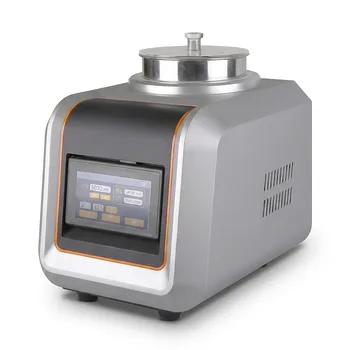
Laboratory Air Jet Sieving Machine for Fine Powder Particle Size Analysis and Deagglomeration