What is the function of a standard test sieve set in the particle size distribution analysis of lead-zinc metallurgical slag?
Updated 3 months ago
The primary function of a standard test sieve set in the analysis of lead-zinc metallurgical slag is to mechanically separate raw slag samples into discrete particle size fractions. This process allows engineers to accurately quantify the material's particle size distribution (PSD), determine critical parameters like the $d_{50}$ and $d_{80}$ diameters, and assess the slag's suitability for industrial reuse or further metallurgical processing.
By transforming a bulk, heterogeneous waste product into a series of precisely graded fractions, test sieves provide the foundational data required to optimize grinding efficiency and evaluate the slag's performance as a construction aggregate.
Mechanical Grading and Size Classification
Precise Fraction Separation
A standard test sieve set utilizes a series of stacked metal meshes with precision apertures to physically grade slag particles. By arranging sieves from the largest opening at the top to the smallest at the bottom, the set isolates specific size ranges from the bulk sample.
Achieving Uniformity for Analysis
This mechanical classification ensures that researchers can obtain uniform fillers or specific grain sizes for testing. This level of precision is essential for maintaining the repeatability of experimental data when studying the thermomechanical properties of materials derived from slag.
Defining Material Characteristics and Processing Needs
Determining $d_{50}$ and $d_{80}$ Parameters
Sieve analysis is the standard method for calculating the average particle diameter, specifically the $d_{50}$ (median size) and $d_{80}$ (80% passing size). These metrics are vital for understanding the physical makeup of the lead-zinc slag and how it will behave under mechanical stress.
Optimizing Downstream Grinding
The data gathered from the sieve set provides critical insights for subsequent grinding processes. By knowing the initial size distribution, facilities can calibrate their equipment to reduce energy consumption while achieving the specific fineness required for mineral liberation.
Analyzing Metallic Element Distribution
Beyond simple sizing, separating slag into fractions allows for a detailed analysis of how metallic elements are distributed across different size ranges. This helps in determining mineral liberation characteristics, which is essential for maximizing the recovery of residual lead or zinc.
Evaluating Suitability for Construction and Infrastructure
Assessing Aggregate Suitability
Lead-zinc slag is frequently evaluated for use as a construction aggregate or road base material. Standard test sieves determine if the slag's grading complies with engineering standards, such as those used in AASHTO soil classification.
Improving Structural Density
Optimal grading, verified through sieve analysis, ensures that slag particles pack tightly when used in concrete or backfill. High packing density reduces the volume of cement mortar required and significantly increases the structural density of the final product.
Understanding the Trade-offs and Limitations
The Impact of Irregular Particle Shapes
Metallurgical slag often consists of irregularly shaped aggregates that may not pass through apertures as easily as spherical particles. This can lead to minor inaccuracies in size classification if the sieving duration or vibration intensity is not correctly calibrated.
Sieve Blinding and Mesh Wear
Fine slag particles can become lodged in the mesh, a phenomenon known as blinding, which restricts the flow of material and skews results. Additionally, the abrasive nature of metallurgical slag can cause physical wear on the precision apertures over time, necessitating regular calibration of the sieve set.
How to Apply This to Your Project
Standard test sieves are the baseline tool for turning lead-zinc slag from a waste product into a valuable resource. Your approach to using them should depend on your ultimate operational goal.
- If your primary focus is mineral recovery: Use the sieve set to identify which size fractions contain the highest concentration of lead and zinc to optimize your leaching or flotation circuits.
- If your primary focus is grinding efficiency: Prioritize the calculation of $d_{80}$ values to set the feed rate and power requirements for your ball mills or crushers.
- If your primary focus is construction applications: Focus on achieving a continuous grading curve that meets specific infrastructure standards to ensure maximum structural density and stability.
By mastering the use of standard test sieves, you gain the technical clarity needed to transform lead-zinc slag into a high-performance industrial material.
Summary Table:
| Function | Key Objective | Industrial Benefit |
|---|---|---|
| Mechanical Grading | Separate slag into discrete fractions | Ensures repeatability and uniform filler sizes |
| Parameter Analysis | Calculate $d_{50}$ and $d_{80}$ diameters | Defines material physical makeup and stress behavior |
| Process Optimization | Calibrate grinding & crushing equipment | Reduces energy consumption and improves fineness |
| Element Mapping | Analyze metallic distribution per fraction | Maximizes recovery of residual lead and zinc |
| Quality Control | Verify grading for construction standards | Increases structural density in concrete & backfill |
Optimize Your Slag Analysis with Precision Equipment
Are you looking to transform metallurgical waste into high-value resources? Contact us today to discover how our professional laboratory solutions can enhance your material science research.
At the core of powder processing and sample preparation, we specialize in:
- Particle Size Analysis: Advanced vibratory and air-jet sieve shakers with a full range of precision test sieves and meshes.
- Size Reduction: High-performance jaw and roll crushers, planetary ball mills, jet mills, and cryogenic grinders.
- Material Compaction: A complete spectrum of hydraulic presses, including Cold/Warm Isostatic Presses (CIP/WIP), vacuum hot presses, and XRF pellet presses.
- Mixing Solutions: Professional powder and defoaming mixers for uniform material preparation.
Whether you are focusing on mineral recovery or optimizing construction aggregates, we provide the technical expertise and equipment reliability you need to succeed. Inquire now to get a tailored solution for your lab!
References
- Dragan Radulović, Branislav Ivošević. Reapplication Potential of Historic Pb–Zn Slag with Regard to Zero Waste Principles. DOI: 10.3390/su16020720
Mentioned Products
- Laboratory Vibratory Test Sieve Shaker for Precision Particle Size Analysis and Powder Grading
- Small Laboratory Vibrating Sieve Shaker for Precise Particle Size Analysis
- 三维电磁微量振动筛分仪
- Laboratory Dry and Wet Three Dimensional Vibratory Sieve Shaker for Particle Analysis
- Vibratory Sieve Shaker Electromagnetic 3D Motion Powder Particle Size Analyzer for Dry and Wet Sieving
People Also Ask
- What role does a laboratory sieve shaker play in determining PDI? Achieve Precision in Biomass Quality Testing
- What are the functions of sieve shakers for coconut shell powder? Achieve Precise Particle Size & Quality Control.
- What function does a laboratory sieve shaker perform in the PSD analysis of residual soil? Ensure Precise Grading
- What is the role of a laboratory sieve shaker in the preparation of plantain peel adsorbents? Standardize Particle Size
- What is the function of a laboratory vibratory sieve shaker? Enhance Coal Particle Size Distribution (PSD) Analysis

Tech Team · PowderPreparation
Last updated on Jun 03, 2026
Related Products

Laboratory Vibratory Test Sieve Shaker for Precision Particle Size Analysis and Powder Grading

Small Laboratory Vibrating Sieve Shaker for Precise Particle Size Analysis

三维电磁微量振动筛分仪

Laboratory Dry and Wet Three Dimensional Vibratory Sieve Shaker for Particle Analysis

Vibratory Sieve Shaker Electromagnetic 3D Motion Powder Particle Size Analyzer for Dry and Wet Sieving

Tapping Oscillating Sieve Shaker for Dry and Wet Particle Size Analysis

High Frequency Wet Three-Dimensional Vibrating Sieve Shaker for Dry and Wet Particle Size Analysis

Dry Three Dimensional Vibratory Sieve Shaker
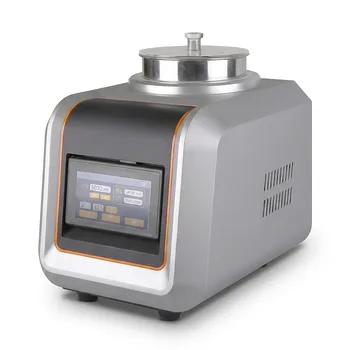
Laboratory Air Jet Sieving Machine for Fine Powder Particle Size Analysis and Deagglomeration

Three Dimensional Rotary Vibrating Sieve

Heavy Duty Dry Three Dimensional Vibratory Sieve Shaker for Particle Separation

Stainless Steel Rotary Vibrating Sieve High Precision Circular Vibratory Separator Industrial Powder Grading Machine Multi Layer Sifting Equipment
