What is the function of a standard analysis sieve in the pretreatment of wood sawdust? Achieve Particle Uniformity
Updated 4 months ago
Standard analysis sieves serve as the critical gatekeeper for particle uniformity during the pretreatment of wood sawdust. By utilizing a specific mesh—most commonly a 200-mesh screen—technicians can ensure the raw material is reduced to a fine, consistent size. This physical standardization is essential for maximizing the specific surface area of the sawdust, which directly influences the success of subsequent chemical extraction and bleaching steps.
The primary function of a standard analysis sieve is to create a homogenous starting material with a high surface-area-to-volume ratio. This ensures that chemical reagents penetrate the wood fibers evenly, resulting in a more efficient and complete conversion into crystalline cellulose.
The Role of Surface Area in Chemical Extraction
Optimizing Reagent Penetration
In the preparation of crystalline cellulose, the wood sawdust must undergo intense chemical treatment to remove lignin and hemicellulose. A 200-mesh sieve ensures that the particles are small enough for reagents to reach the core of every fragment simultaneously. Without this uniformity, larger particles would remain under-processed while smaller ones might over-react, leading to an inconsistent final product.
Increasing Reaction Completeness
Fine particles produced through standardized sieving provide a significantly larger specific surface area for chemical contact. This increased exposure allows the bleaching and extraction agents to work more efficiently across the entire sample. The result is a higher yield of purified cellulose with fewer residual impurities from the original wood matrix.
Maintaining Process Consistency and Quality
Removing Structural Irregularities
Raw sawdust often contains irregular fragments or oversized "slivers" that can disrupt the flow of a chemical reaction. Using a standard test sieve allows for the mechanical removal of these outliers, which would otherwise lead to uneven heat transfer or localized concentration gradients. This step is vital for ensuring that the physical properties of the cellulose remain stable throughout the transition from raw biomass to refined crystal.
Ensuring Uniform Fiber Distribution
Beyond the initial extraction, sieving plays a role in the mechanical refining of the resulting pulp. By intercepting coarse particles that have not fully dissociated, the sieve ensures the final functional cellulose has a uniform texture. This consistency is critical for the material’s eventual dispersibility and its performance in technical applications, such as the creation of amorphous cellulose or high-strength films.
Understanding the Trade-offs and Challenges
The Risk of Sieve Clogging (Blinding)
When working with wet or resinous wood sawdust, fine meshes like the 200-mesh can easily become "blinded" or clogged. This prevents effective separation and can lead to an inaccurate particle size distribution if not managed with mechanical sieve shakers or ultrasonic cleaners.
Material Loss and Processing Time
Achieving a very fine particle size through extensive sieving increases the mechanical energy required for grinding and results in the loss of "oversized" material that must be re-processed. While finer particles improve chemical efficiency, the time and energy costs must be balanced against the required purity level of the final crystalline cellulose.
Applying Sieving Standards to Your Project
Recommendations for Effective Pretreatment
To achieve the best results in crystalline cellulose preparation, your sieving strategy should align with your specific purity and yield requirements:
- If your primary focus is Maximum Chemical Purity: Utilize a 200-mesh (75 μm) sieve to maximize the surface area, ensuring that every fiber is fully exposed to the bleaching agents.
- If your primary focus is High Throughput and Yield: Consider a slightly larger aperture, such as a 100-mesh screen, to reduce grinding time and sieve clogging while still maintaining acceptable uniformity for bulk reactions.
- If your primary focus is Analytical Consistency: Use a multi-layered mechanical sieve shaker to separate sawdust into specific fractions (e.g., 300 µm, 600 µm, and 850 µm) to study how particle size specifically influences your extraction kinetics.
By strictly controlling particle size through standardized sieving, you transform inconsistent raw sawdust into a high-performance precursor optimized for chemical synthesis.
Summary Table:
| Feature | Function in Cellulose Preparation | Key Benefit |
|---|---|---|
| Particle Uniformity | Acts as a gatekeeper for consistent size | Prevents under/over-processing of fibers |
| Surface Area | Maximizes contact with chemical reagents | Ensures efficient lignin and hemicellulose removal |
| Sieve Selection | Typically uses 200-mesh (75 μm) screens | High-purity extraction and better reaction kinetics |
| Quality Control | Removes oversized slivers and irregularities | Stable physical properties in the final crystal |
| Process Stability | Ensures uniform fiber distribution | Improves dispersibility in technical applications |
Optimize Your Material Preparation with Precision Equipment
Achieving high-purity crystalline cellulose requires meticulous control over particle size. As experts in complete laboratory sample preparation solutions for material science, we specialize in the powder processing and compaction equipment you need for consistent results.
Our extensive product line includes:
- Sieving Solutions: Vibratory and air-jet sieve shakers with a wide range of precision test sieves and meshes.
- Milling & Grinding: Planetary ball mills, jet mills, and cryogenic grinders for superior sawdust reduction.
- Crushing: Industrial-grade jaw and roll crushers.
- Compaction & Pressing: A full spectrum of hydraulic presses, including Cold/Warm Isostatic Presses (CIP/WIP), XRF pellet presses, and vacuum hot presses.
Whether you are refining biomass or developing high-strength films, our equipment ensures the chemical and physical consistency your research demands. Contact our specialists today to find the perfect solution for your lab!
References
- Neng Ayu Arini, Dwiria Wahyuni. Analisis Pengaruh Waktu Hidrolisis Terhadap Sifat Mekanis Selulosa Kristalin Dari Campuran Serbuk Gergaji Kayu Belian, Bengkirai, Jati dan Meranti. DOI: 10.26418/positron.v5i2.12136
Mentioned Products
- Vibratory Sieve Shaker Electromagnetic 3D Motion Powder Particle Size Analyzer for Dry and Wet Sieving
- Laboratory Dry and Wet Three Dimensional Vibratory Sieve Shaker for Particle Analysis
- Laboratory Vibratory Test Sieve Shaker for Precision Particle Size Analysis and Powder Grading
- Laboratory Air Jet Sieving Machine for Fine Powder Particle Size Analysis and Deagglomeration
- Tapping Oscillating Sieve Shaker for Dry and Wet Particle Size Analysis
People Also Ask
- How does a vibratory sieve shaker contribute to optimizing the performance of activated carbon? Enhance Adsorption Precision
- Why is a laboratory vibratory sieve shaker necessary for processing magnesium-based borate precursor powders? Boost Activity
- Why use a vibratory sieve shaker to verify coarse aggregate grading in rubberized concrete? Ensure Structural Integrity
- What function do vibratory sieve shakers and standard test sieves serve in the preparation of adsorbents? Key Guide
- What role does a vibratory sieve shaker play in the particle size analysis of ground corn products? Enhance QC Precision

Tech Team · PowderPreparation
Last updated on Jun 03, 2026
Related Products

Vibratory Sieve Shaker Electromagnetic 3D Motion Powder Particle Size Analyzer for Dry and Wet Sieving

Laboratory Dry and Wet Three Dimensional Vibratory Sieve Shaker for Particle Analysis

Laboratory Vibratory Test Sieve Shaker for Precision Particle Size Analysis and Powder Grading
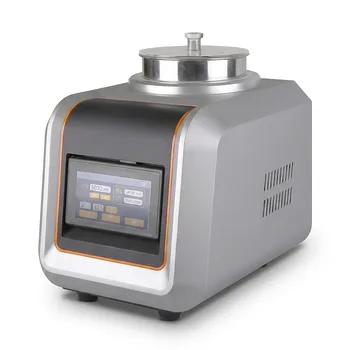
Laboratory Air Jet Sieving Machine for Fine Powder Particle Size Analysis and Deagglomeration

Tapping Oscillating Sieve Shaker for Dry and Wet Particle Size Analysis

Small Laboratory Vibrating Sieve Shaker for Precise Particle Size Analysis

Small Laboratory Vibratory Sieve Shaker for Powder Gradation and Particle Size Analysis

High Frequency Wet Three-Dimensional Vibrating Sieve Shaker for Dry and Wet Particle Size Analysis

Stainless Steel Laboratory Vibratory Test Sieve Shaker

Dry Three Dimensional Vibratory Sieve Shaker

三维电磁微量振动筛分仪

High Frequency Cabinet Type Three-Dimensional Rotary Vibrating Sieve Shaker for Dry Sieving and Particle Classification

Heavy Duty Dry Three Dimensional Vibratory Sieve Shaker for Particle Separation

Stainless Steel Rotary Vibrating Sieve High Precision Circular Vibratory Separator Industrial Powder Grading Machine Multi Layer Sifting Equipment
