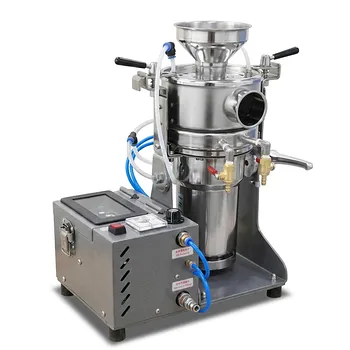
What is the role of a pin mill in the raw material pretreatment stage of modified glutinous rice starch? Key Benefits
Updated 3 months ago
The pin mill serves as the critical mechanical bridge between whole-grain glutinous rice and a reactive powder substrate. It uses high-speed impact to pulverize the rice into a fine powder, drastically increasing its specific surface area. This physical transformation ensures uniform moisture absorption and creates the necessary structural state for successful thermoplasticization and gelatinization during the subsequent extrusion process.
By refining the particle size of glutinous rice, the pin mill optimizes the raw material's reactivity and moisture distribution. This pretreatment is essential for achieving a consistent molecular transformation in high-quality modified starch production.
The Mechanics of Particle Reduction
High-Speed Impact Pulverization
The pin mill utilizes internal rotors equipped with pins to strike the rice grains at extreme velocities. This mechanical energy shatters the rice into a fine powder, transitioning the material from a bulk grain to a high-surface-area medium.
Increasing Specific Surface Area
Reducing the grain size exponentially increases the total surface area available for chemical and physical interactions. This increased area is the fundamental requirement for the efficiency of every subsequent step in the modification process.
Optimizing Moisture and Reaction Conditions
Facilitating Uniform Water Penetration
Smaller particles allow moisture to penetrate to the core of the material more rapidly and evenly during the water regulation phase. Consistent moisture distribution is vital to prevent "dry pockets" that could lead to incomplete reactions during processing.
Preparing for Thermoplasticization
The fine particles created by the pin mill provide the physical foundation required for thermoplasticization. Under heat and pressure, these refined particles melt and flow more predictably than coarse fragments, ensuring a stable melt in the extruder.
Promoting Consistent Gelatinization
Gelatinization requires the simultaneous application of heat, water, and mechanical shear to the starch granules. The pin mill ensures that these granules are accessible and ready to react, leading to a more uniform final product.
Understanding the Trade-offs
Mechanical Heat Generation
High-speed impact generates significant friction and heat within the milling chamber. If not monitored, this excessive heat can cause premature starch degradation or unintended structural changes before the material even reaches the extruder.
Particle Size Distribution
While a pin mill is effective, it can produce a range of particle sizes if the feed rate is inconsistent. An uneven particle distribution can lead to "surging" in the extruder, where different-sized particles react at different rates, compromising the texture of the modified starch.
How to Optimize Your Pretreatment Strategy
To achieve the best results in your modified starch production, consider these strategic adjustments:
- If your primary focus is moisture uniformity: Calibrate the pin mill to produce the finest feasible particle size to ensure rapid and even hydration across the entire batch.
- If your primary focus is extrusion stability: Prioritize a tight particle size distribution to ensure consistent pressure and flow characteristics within the extrusion barrel.
- If your primary focus is preventing starch damage: Implement cooling systems or regulate feed rates to manage the heat generated during the high-speed milling process.
Mastering the milling stage allows you to precisely control the physical properties of the raw material, ultimately unlocking the full functional potential of modified glutinous rice starch.
Summary Table:
| Key Function | Mechanical Impact | Impact on Modified Starch Quality |
|---|---|---|
| Particle Reduction | High-speed rotor impact | Increases specific surface area for better reactivity |
| Moisture Regulation | Uniform fine powder creation | Ensures rapid, core-to-surface water penetration |
| Structural Prep | Physical refinement | Facilitates stable thermoplasticization & flow |
| Process Efficiency | Optimized particle distribution | Prevents 'surging' and ensures consistent gelatinization |
Elevate Your Powder Processing with Precision Equipment
At Our Advanced Laboratory Solutions, we specialize in providing complete sample preparation solutions for material science. Whether you are refining glutinous rice starch or processing advanced ceramics, our equipment is designed for consistency and reliability.
Our extensive product line includes:
- Milling & Grinding: High-performance rotor mills (pin mills), planetary ball mills, jet mills, and cryogenic grinders.
- Crushing & Sieving: Jaw/roll crushers and vibratory/air-jet sieve shakers.
- Compaction & Pressing: A full spectrum of hydraulic presses, including Cold/Warm Isostatic Presses (CIP/WIP), vacuum hot presses, and XRF pellet presses.
- Mixing: Powder and defoaming mixers for uniform material blending.
Ready to optimize your production workflow and achieve superior material characteristics? Contact our technical experts today to find the perfect equipment for your laboratory or industrial application.
References
- Jomjai Peerapattana, Voranuch Srijesdaruk. Modified Glutinous Starch as a Hydrophilic Matrix Substance(แปงขาวเหนยวดดแปรเพอใชเปนสารเมทรกซชนดชอบนำ). DOI: 10.56808/3027-7922.2246
Mentioned Products
- Laboratory Horizontal Pin Nano Sand Mill
- Laboratory Disc Mill for Fine Sample Preparation of Hard and Brittle Materials
- Small Ceramic Structure Laboratory Sand Mill Nanoscale Grinding Dispersion Equipment Seal-less Screen-less Design
- Heavy Duty Horizontal Planetary Ball Mill for Efficient Industrial Grinding and Sample Preparation
- Portable Cutting Mill for Laboratory Sample Preparation and RoHS WEEE Compliance Testing
People Also Ask
- What is the significance of the stirring speed in Budesonide nano-milling? Master Kinetic Energy for Drug Refinement
- How do precision stainless steel molds help form Strontium Titanate green bodies? Boost Density and Uniformity.
- What is the function of a planetary centrifugal mixer in NiMnO3/rGO preparation? Optimize Your Hybrid Electrodes
- Why is the ball milling of MWCNTs conducted under wet conditions? Optimize Dispersion and Prevent Agglomeration
- What are the advantages of a micron-scale mill with IPA wet-grinding for geopolymer analysis? Protect Sample Integrity

Tech Team · PowderPreparation
Last updated on Jun 03, 2026
Related Products
Laboratory Horizontal Pin Nano Sand Mill
Laboratory Disc Mill for Fine Sample Preparation of Hard and Brittle Materials
Small Ceramic Structure Laboratory Sand Mill Nanoscale Grinding Dispersion Equipment Seal-less Screen-less Design
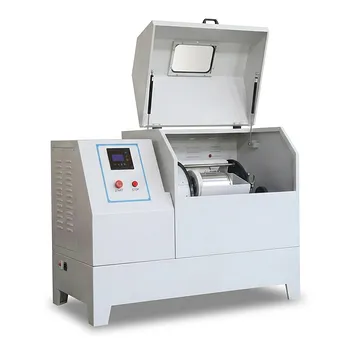
Heavy Duty Horizontal Planetary Ball Mill for Efficient Industrial Grinding and Sample Preparation
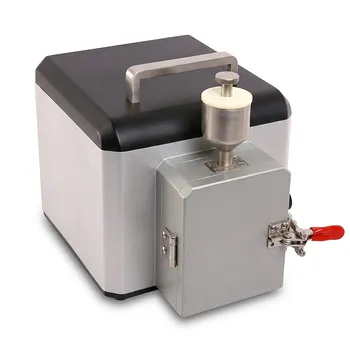
Portable Cutting Mill for Laboratory Sample Preparation and RoHS WEEE Compliance Testing
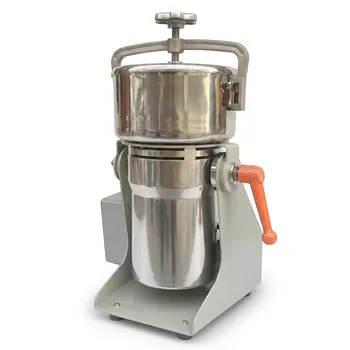
High Speed Laboratory Grinder Efficient Stainless Steel Powder Pulverizer Universal Material Science Mill for Sample Preparation
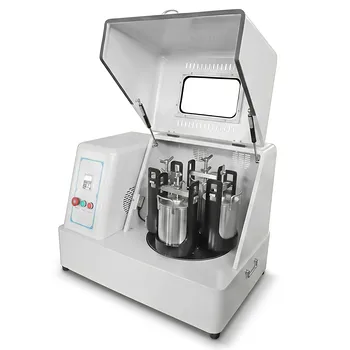
Vertical Square Planetary Ball Mill for Laboratory Sample Preparation and Nanoscale Grinding
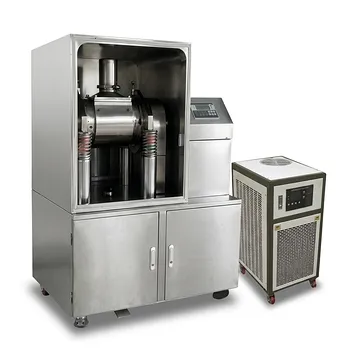
Small Vibrating Ultrafine Grinder for Traditional Chinese Medicine
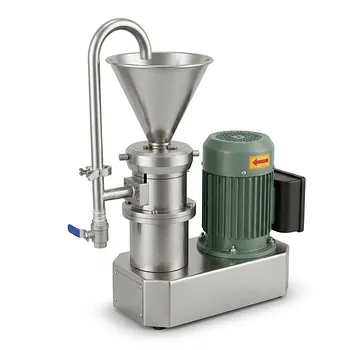
Small Laboratory Colloid Mill for Ultra-Fine Wet Grinding and Emulsification
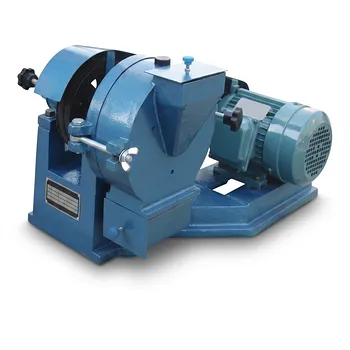
Laboratory Disc Mill for Ore and Mineral Sample Preparation
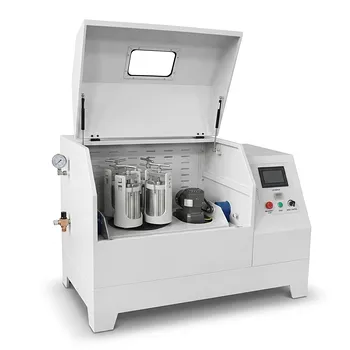
Vertical Production Planetary Ball Mill for High Throughput Powder Processing
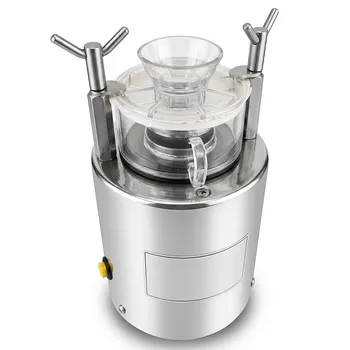
Laboratory Desktop Ultra Fine Powder Grinder High Speed Micronizing Pulverizer
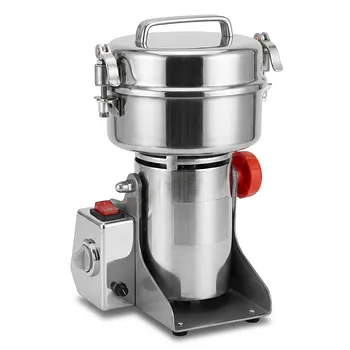
High Speed Laboratory Powder Grinder Small Batch Sample Preparation Mill
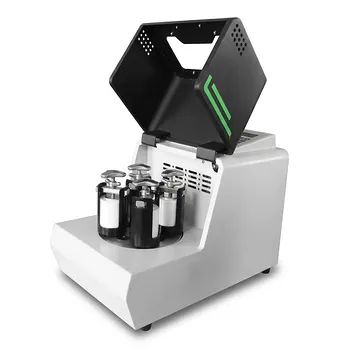
Miniature Planetary Ball Mill with Vacuum Grinding and High Efficiency for Laboratory Sample Preparation
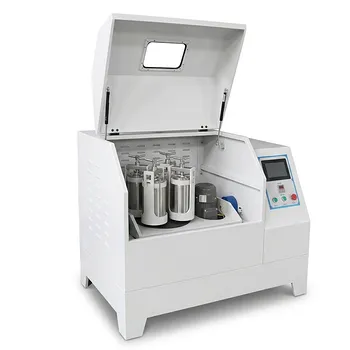
360° Rotating Omnidirectional Laboratory Planetary Ball Mill for Homogeneous Ultra-Fine Grinding and Mixing
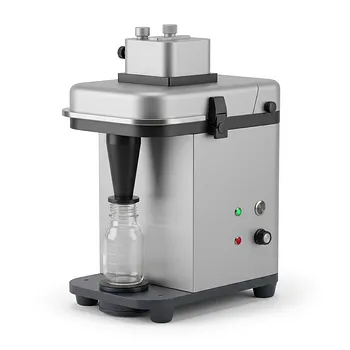
Cyclonic Laboratory Mill for NIR Spectroscopy Sample Preparation Food and Feed Grinding
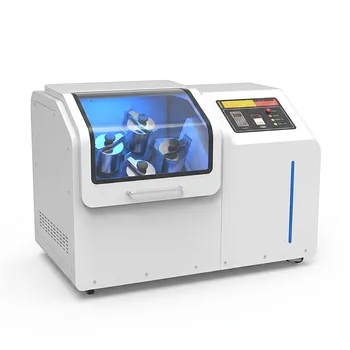
High Energy Omnidirectional Planetary Ball Mill 16L
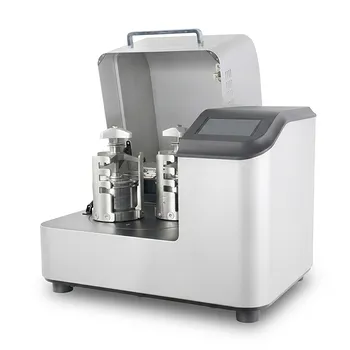
High Energy Planetary Ball Mill for Nano Scale Grinding and Mechanical Alloying
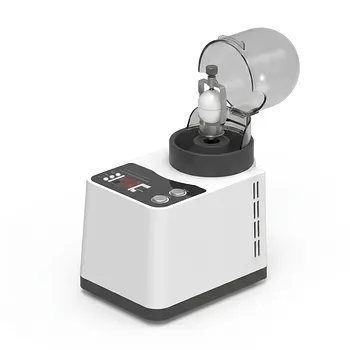
Laboratory Micro Vibration Grinding Mill for Trace Sample Preparation