What are the advantages of a micron-scale mill with IPA wet-grinding for geopolymer analysis? Protect Sample Integrity
Updated 4 months ago
The use of a micron-scale mill with isopropyl alcohol (IPA) wet-grinding ensures high-fidelity mineral analysis of geopolymers by preserving crystalline integrity. This specialized method reduces samples to ultra-fine powders—often below 45 micrometers—in approximately two minutes. By utilizing IPA as a lubricant and thermal buffer, the process prevents the mechanical heat and stress that typically cause structural collapse or amorphization in sensitive geopolymer components.
Core Takeaway: Wet-grinding with isopropyl alcohol in a micronizing mill is the definitive method for geopolymer analysis because it achieves extreme particle uniformity while protecting the sample's internal crystal lattice from heat-induced damage.
Preservation of Micro-Crystalline Structures
Thermal Buffering and Lubrication
Isopropyl alcohol acts as a critical thermal buffer during the high-energy grinding process. It absorbs and dissipates the heat generated by the grinding media, preventing the sample from reaching temperatures that could alter its chemical state.
Without this liquid medium, the friction from dry grinding can lead to localized "hot spots." These spots often trigger the dehydration or phase transformation of sensitive minerals within the geopolymer matrix.
Prevention of Amorphization
High-energy dry grinding often results in amorphization, where the organized crystal structure of a mineral is ground into a disordered, non-crystalline state. This is particularly problematic for phyllosilicates and clay-like minerals often found in geopolymer precursors.
Using a micron-scale mill with IPA maintains the lattice integrity of the minerals. This ensures that the samples analyzed represent the true state of the material rather than a version degraded by the preparation process itself.
Optimization for X-Ray Diffraction (XRD)
Uniformity and Particle Size
Achieving a uniform particle size, typically less than 10 to 45 micrometers, is essential for high-quality XRD data. A micronizing mill uses high-frequency vibrations to ensure the powder is homogenous and free of large aggregates.
Uniformity reduces preferred orientation effects, where crystals align in a way that biases the diffraction results. This leads to more reliable and reproducible data across different sample batches.
Enhancing Peak Resolution
Preserving the crystal lattice directly translates to sharper and more intense diffraction peaks. When the lattice is distorted by improper grinding, peaks become broad and weak, making it difficult to identify trace phases.
High-resolution peaks allow for the accurate quantitative analysis of complex mineral components, such as illite-smectite, quartz, and pyrite. This precision is vital for researchers calculating the reaction efficiency of geopolymerization.
Understanding the Trade-offs
Process Limitations and Maintenance
While wet-grinding is superior for accuracy, it introduces the need for solvent management. Isopropyl alcohol is flammable and volatile, requiring proper ventilation and storage protocols within the laboratory environment.
The mill must also be thoroughly cleaned between runs to prevent cross-contamination. Because the powder is ultra-fine, it can adhere to the grinding chamber walls, necessitating a careful recovery process using additional solvent.
Potential Chemical Interactions
In rare cases, the choice of solvent may interact with specific organic additives in a geopolymer. While IPA is generally chemically inert regarding mineral structures, users must verify that it will not dissolve or react with non-mineral components in specialized formulations.
How to Apply This to Your Project
Selecting a Grinding Strategy
To achieve the best results for your geopolymer mineralogical characterization, align your preparation method with your ultimate analytical goals.
- If your primary focus is quantitative mineralogy (XRD): Use a micronizing mill with IPA to ensure the sharpest peaks and minimal lattice distortion.
- If your primary focus is rapid phase identification: Limit grinding time to exactly two minutes to maximize throughput without risking any heat-induced phase changes.
- If your primary focus is preserving clay-like structures: Prioritize the wet-grinding method over manual mortar-and-pestle grinding to avoid structural collapse of phyllosilicates.
By prioritizing the preservation of crystalline integrity through wet-grinding, you ensure that your analytical data reflects the true chemical nature of your geopolymer samples.
Summary Table:
| Feature | Advantage of IPA Wet-Grinding | Impact on Mineral Analysis |
|---|---|---|
| Thermal Control | Acts as a buffer to dissipate mechanical heat | Prevents dehydration and phase transformations |
| Structural Care | Reduces stress to prevent amorphization | Maintains lattice integrity of clay-like minerals |
| Particle Size | Achieves uniform powders (< 45 micrometers) | Reduces preferred orientation for better XRD data |
| Data Quality | Enhances diffraction peak resolution | Allows accurate quantitative analysis of trace phases |
Optimize Your Material Analysis with Precision Preparation
Achieving high-fidelity geopolymer analysis requires more than just a standard grind—it demands equipment that preserves the structural truth of your samples. At our facility, we provide complete laboratory sample preparation solutions tailored for the rigorous demands of material science.
Our extensive range of equipment is designed to handle every stage of powder processing:
- Advanced Milling: From specialized micronizing mills and planetary ball mills to jet and rotor mills, we ensure your samples reach the perfect uniformity without heat damage.
- Sample Compaction: A full spectrum of hydraulic presses, including Cold/Warm Isostatic Presses (CIP/WIP), vacuum hot presses, and XRF pellet presses for flawless analytical presentation.
- Sizing & Mixing: High-precision sieve shakers and advanced defoaming mixers for homogeneous material preparation.
Whether you are a researcher focused on crystalline integrity or a distributor looking for reliable, high-performance OEM/ODM lab solutions, we bring the expertise to enhance your lab's efficiency and accuracy.
Ready to elevate your powder processing results?
Contact our technical team today to find the ideal solution for your geopolymer and mineralogical projects.
References
- Xiaonan Ge, Guoping Zhang. Characteristics of underwater cast and cured geopolymers. DOI: 10.5281/zenodo.7942362
Mentioned Products
- Nano Laboratory Bead Mill Desktop Sub Micron Sand Mill Screenless Seal Less Powder Grinder
- High Throughput Micro Ball Mill for Cryogenic Grinding and Laboratory Cell Disruption
- Laboratory Micro Vibration Grinding Mill for Trace Sample Preparation
- Small Ceramic Structure Laboratory Sand Mill Nanoscale Grinding Dispersion Equipment Seal-less Screen-less Design
- Laboratory Desktop Ultra Fine Powder Grinder High Speed Micronizing Pulverizer
People Also Ask
- How does the bead filling rate affect the grinding performance and equipment wear in a bead mill? Optimization Guide
- Why is it necessary to precisely control the grinding media loading ratio? Master Nanosuspension Yield & API Stability
- What is the significance of the stirring speed in Budesonide nano-milling? Master Kinetic Energy for Drug Refinement
- What role does a laboratory mill play in the study of lignite coal co-combustion? Optimizing Fuel Blends and Reactivity
- What is the function of a laboratory mill in Cassia tora L. seed analysis? Master Precision Thermal Data Prep.

Tech Team · PowderPreparation
Last updated on Jun 03, 2026
Related Products
Nano Laboratory Bead Mill Desktop Sub Micron Sand Mill Screenless Seal Less Powder Grinder
High Throughput Micro Ball Mill for Cryogenic Grinding and Laboratory Cell Disruption
Laboratory Micro Vibration Grinding Mill for Trace Sample Preparation
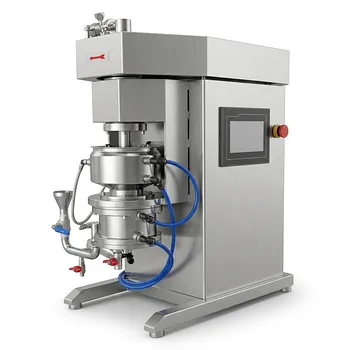
Small Ceramic Structure Laboratory Sand Mill Nanoscale Grinding Dispersion Equipment Seal-less Screen-less Design
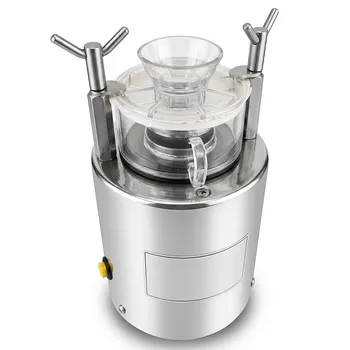
Laboratory Desktop Ultra Fine Powder Grinder High Speed Micronizing Pulverizer
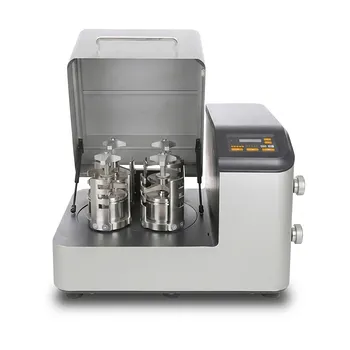
High Energy Planetary Ball Mill for Nano Scale Grinding and Colloidal Mixing in Material Science Research

Miniature Planetary Ball Mill with Vacuum Grinding and High Efficiency for Laboratory Sample Preparation

High Energy Planetary Ball Mill for Nano Scale Grinding and Mechanical Alloying
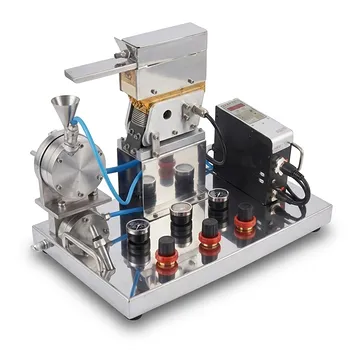
Benchtop Micro Air Jet Mill for Ultrafine Grinding of High Value Powders

Vertical Square Planetary Ball Mill for Laboratory Sample Preparation and Nanoscale Grinding
Multi-Platform Nanoscale High-Energy Vibratory Ball Mill
Laboratory Small Horizontal Sand Mill for Nano Materials Wet Grinding
Mass Production Nano Sand Mill for Industrial Nanomaterial Grinding and Dispersion
Water Cooled Pulse Jet Ultrafine Grinder
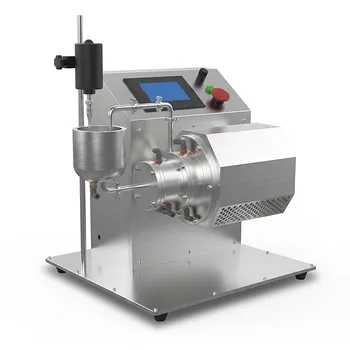
Laboratory Horizontal Pin Nano Sand Mill
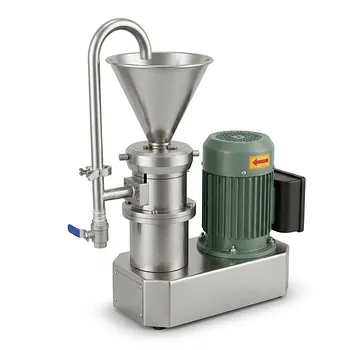
Small Laboratory Colloid Mill for Ultra-Fine Wet Grinding and Emulsification
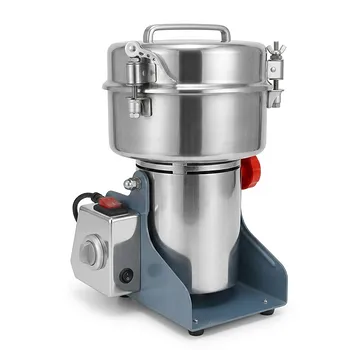
Small High-Speed Grinder for Efficient Laboratory Sample Preparation
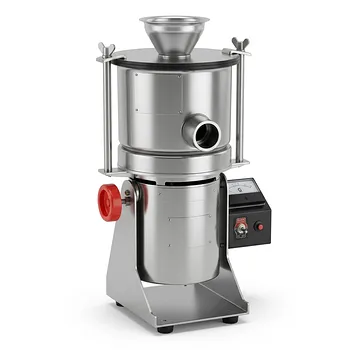
Laboratory Ultrafine Impact and Airflow Grinder for Precise Particle Size Control
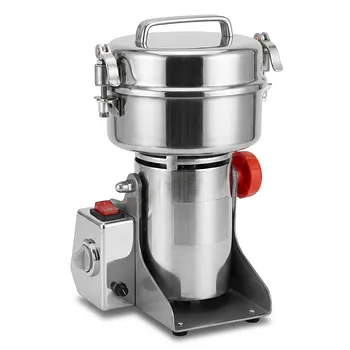
High Speed Laboratory Powder Grinder Small Batch Sample Preparation Mill