What is the function of a planetary ball mill in the synthesis of LSiPSCl electrolytes? Optimize Ionic Conductivity
Updated 5 months ago
The planetary ball mill acts as a high-energy reactor that facilitates the mechanochemical synthesis of Li-Si-P-S-Cl (LSiPSCl) solid electrolytes through intense mechanical forces. By utilizing high-speed rotation to generate impact and shear, the mill breaks down the crystal structures of raw materials like $Li_2S$, $P_2S_5$, and $SiS_2$. This process results in an atom-level uniform mixture and the formation of an amorphous precursor, which is essential for developing high ionic conductivity in the final crystalline product.
The planetary ball mill is the critical tool for transforming discrete chemical precursors into a homogenous, amorphous solid-state electrolyte precursor. It utilizes mechanical energy to drive solid-state reactions at the molecular level, establishing the necessary structural foundation for subsequent thermal processing.
Driving the Mechanochemical Reaction
High-Energy Impact and Shear
The primary function of the planetary ball mill is to convert rotational kinetic energy into mechanical work. High-speed rotation causes the milling media to collide with the raw material powders ($Li_2S$, $P_2S_5$, $SiS_2$, and chloride sources) with extreme force. These impact and shear forces are sufficient to break original chemical bonds without the need for external heat.
Atomic-Level Homogenization
Unlike standard mixing, planetary milling achieves molecular-level dispersion of the components. This ensures that silicon, phosphorus, sulfur, and chlorine are distributed uniformly throughout the lithium matrix. This level of homogenization is vital for preventing localized phase separation, which can degrade the performance of the solid electrolyte.
Room-Temperature Solid-State Reaction
The mill functions as a non-thermal processing method to induce chemical reactions. By providing localized energy at the contact points of the particles, it drives a mechanochemical reaction between the various sulfides and chlorides. This allows for the synthesis of complex sulfide systems at room temperature, avoiding the volatile loss of components like sulfur.
Creating the Amorphous Foundation
Destruction of Crystal Lattices
As the milling progresses, the intense mechanical energy destroys the long-range order of the raw materials' crystal structures. The rigid lattices of the starting powders are broken down into a disordered state. This structural degradation is a prerequisite for forming the desired electrolyte phase.
Formation of Amorphous Precursors
The result of the milling process is a uniform amorphous sulfide glass. This amorphous precursor acts as a "blank slate" for the material's final architecture. It contains all the necessary elements in a highly reactive state, ready for organized rearrangement.
Foundation for High Ionic Conductivity
The amorphous state produced by the mill is essential for the subsequent thermal treatment. During heating, this precursor transitions into a specific crystalline structure (such as an argyrodite-type) that allows for rapid lithium-ion transport. Without the initial milling stage, the final material would lack the structural integrity required for high ionic conductivity.
Understanding the Trade-offs
Mechanical Heat and Material Stability
While planetary milling is considered a "cold" process, the friction between beads and powder generates internal heat. Excessive temperatures within the milling jar can lead to premature crystallization or the decomposition of sensitive sulfide components. Controlling the rotation speed and implementing "rest periods" during milling is often necessary to maintain material stability.
Contamination from Milling Media
The high-energy nature of the process causes wear and tear on the milling jars and balls. Small amounts of material from the media (typically zirconia or hardened steel) can leach into the LSiPSCl powder. These impurities can act as grain boundary resistances or electronic pathways, potentially compromising the electrolyte's electrochemical window.
Energy Efficiency vs. Processing Time
Achieving an amorphous state requires significant time—often ranging from 10 to 40 hours—and high energy consumption. There is a diminishing return where over-milling can lead to excessive particle agglomeration or the formation of undesirable secondary phases. Balancing the milling duration is critical to optimizing the balance between reactivity and purity.
How to Apply This to Your Project
To successfully synthesize LSiPSCl solid electrolytes, your milling strategy must align with your specific performance requirements.
- If your primary focus is maximizing ionic conductivity: Prioritize high rotational speeds (e.g., 500-600 rpm) to ensure the complete destruction of raw material lattices and the formation of a fully amorphous precursor.
- If your primary focus is material purity for long-cycle life: Utilize high-quality zirconia milling media and implement lower speeds with longer durations to minimize contamination from jar wear.
- If your primary focus is scalability and throughput: Optimize the ball-to-powder ratio to maximize impact frequency, reducing the total milling time required to reach the mechanochemical reaction threshold.
Mastering the mechanical energy input of the planetary ball mill is the first and most critical step in unlocking the full potential of sulfide-based solid-state electrolytes.
Summary Table:
| Key Function | Mechanism | Impact on LSiPSCl Electrolyte |
|---|---|---|
| High-Energy Impact | Intense shear & collision | Drives solid-state reactions at room temperature |
| Atomic Homogenization | Molecular-level dispersion | Prevents phase separation for uniform performance |
| Amorphous Formation | Crystal lattice destruction | Creates the reactive precursor for high conductivity |
| Thermal Control | Non-thermal synthesis | Avoids volatile loss of sulfur or chlorine components |
Elevate Your Solid-State Battery Research with Precision Equipment
Achieving superior ionic conductivity in LSiPSCl electrolytes requires the perfect balance of mechanical energy and material purity. [Your Brand Name] provides complete laboratory sample preparation solutions for material science, specializing in high-performance powder processing and compaction equipment.
Our extensive product line is designed to meet the rigorous demands of solid-state chemistry:
- Advanced Milling: High-energy planetary ball mills, jet mills, and cryogenic grinders for perfect amorphous precursors.
- Precision Compaction: A full spectrum of hydraulic presses, including Cold/Warm Isostatic Presses (CIP/WIP), vacuum hot presses, and XRF pellet presses.
- Sizing & Mixing: Sieve shakers (vibratory/air-jet) and specialized mixers for consistent material distribution.
For Researchers: Unlock the full potential of your materials with our precision-engineered tools.
For Distributors: We offer robust OEM/ODM support, certified reliability, and excellent profit margins to grow your business.
Ready to optimize your laboratory workflow? Contact our experts today to find the ideal solution for your specific application!
References
- Kazuhiro Hikima, Atsunori Matsuda. Rapid Synthesis of Li<sub>10</sub>GeP<sub>2</sub>S<sub>12</sub>-type Li-Si-P-S-Cl Solid Electrolytes via a Solution Method. DOI: 10.5796/electrochemistry.25-71029
Mentioned Products
- Vertical Semi Circular Planetary Ball Mill for Laboratory Precision Grinding
- High Energy Planetary Ball Mill for Nano Scale Grinding and Mechanical Alloying
- Heavy Duty Horizontal Planetary Ball Mill for Efficient Industrial Grinding and Sample Preparation
- Vertical Production Planetary Ball Mill for High Throughput Powder Processing
- 360° Rotating Omnidirectional Laboratory Planetary Ball Mill for Homogeneous Ultra-Fine Grinding and Mixing
People Also Ask
- What role does a planetary ball mill play in the synthesis of Li6PS5Cl (LPSCl)? Unlock High Ionic Conductivity
- Why is a planetary ball mill essential for SiBCN-rGO wet-spinning? Achieve Superior Dispersion and Spinnability
- Why is an intermittent grinding process required for perovskites in a planetary ball mill? Ensure Stability & Purity
- Why is a planetary ball mill required for PET micronization? Ensure Accurate Chemical Analysis of Reprocessed PET
- How does mechanized planetary ball milling compare to manual agate grinding? Optimize sulfide standard material precision.

Tech Team · PowderPreparation
Last updated on May 14, 2026
Related Products
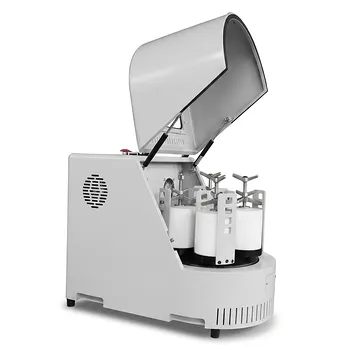
Vertical Semi Circular Planetary Ball Mill for Laboratory Precision Grinding
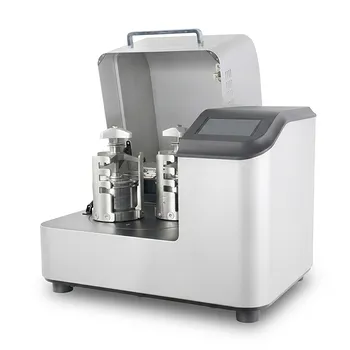
High Energy Planetary Ball Mill for Nano Scale Grinding and Mechanical Alloying
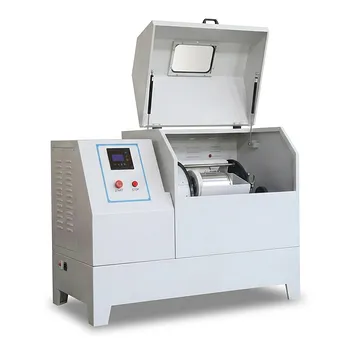
Heavy Duty Horizontal Planetary Ball Mill for Efficient Industrial Grinding and Sample Preparation
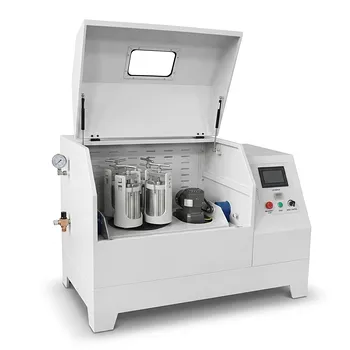
Vertical Production Planetary Ball Mill for High Throughput Powder Processing
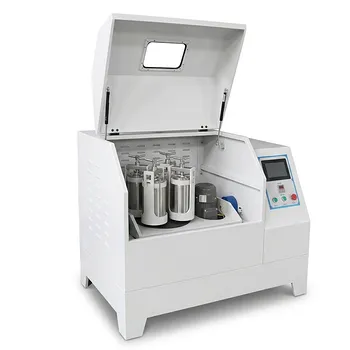
360° Rotating Omnidirectional Laboratory Planetary Ball Mill for Homogeneous Ultra-Fine Grinding and Mixing

Vertical Square Planetary Ball Mill for Laboratory Sample Preparation and Nanoscale Grinding
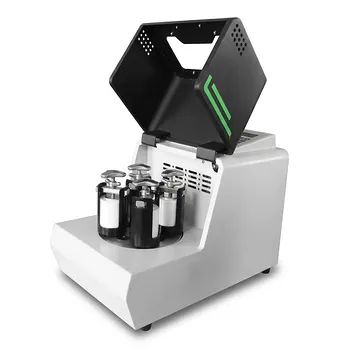
Miniature Planetary Ball Mill with Vacuum Grinding and High Efficiency for Laboratory Sample Preparation
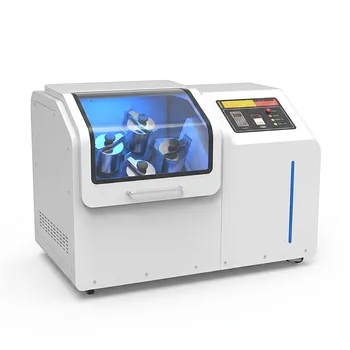
High Energy Omnidirectional Planetary Ball Mill 16L

High Energy Laboratory Planetary Ball Mill for Nano Grinding and Material Science Sample Preparation
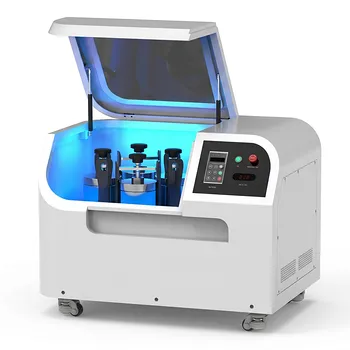
Planetary Ball Mill 12L
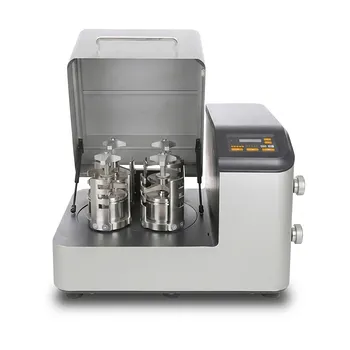
High Energy Planetary Ball Mill for Nano Scale Grinding and Colloidal Mixing in Material Science Research
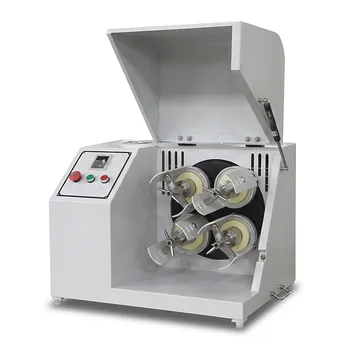
Horizontal Light Duty Planetary Ball Mill for Laboratory Sample Preparation
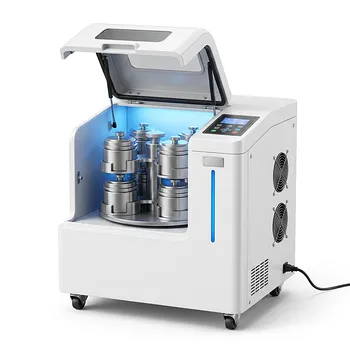
High Energy Omnidirectional Planetary Ball Mill 20L
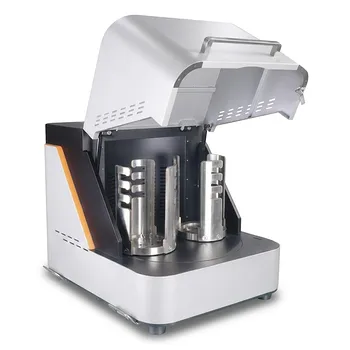
High Energy Laboratory Planetary Ball Mill for Nano Grinding and Colloidal Mixing of Hard and Brittle Materials

8L Planetary Ball Mill for Laboratory Grinding and Sample Preparation
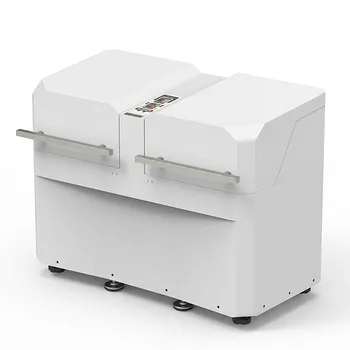
Dual Station Planetary Ball Mill 24L

Multi-Platform Nanoscale High-Energy Vibratory Ball Mill

Nano High Energy Vibratory Ball Mill for Laboratory Sample Preparation
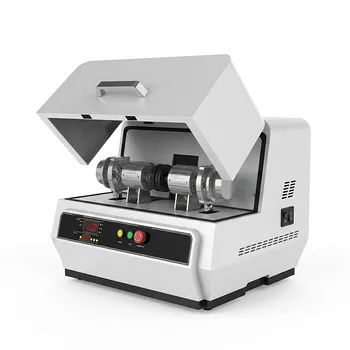
Dual Jar High Energy Vibratory Ball Mill