What is the function of a planetary ball mill during the mixing stage of NiCrBSi(Nb) alloy powders? Ensure Uniformity
Updated 5 months ago
The primary function of a planetary ball mill during the mixing stage of NiCrBSi(Nb) alloy powders is to achieve a highly uniform distribution of niobium (Nb) particles within the NiCrBSi matrix. By leveraging high-speed rotation and intense mechanical forces, the mill ensures that the 10 wt.% niobium powder is dispersed at a microscopic level. This homogeneity is a critical prerequisite for forming composite coatings with consistent chemical compositions and stable performance during subsequent laser cladding processes.
The planetary ball mill transforms a physical mixture of separate powders into a uniform composite through high-energy mechanical forces. This process ensures that the final coating possesses a predictable microstructure and optimized mechanical properties.
Achieving Micro-Scale Homogeneity
Overcoming Particle Agglomeration
Niobium and NiCrBSi powders often possess different densities and particle sizes, which can lead to natural segregation or "clumping." The planetary ball mill generates powerful centrifugal forces and mechanical impacts that break up these initial powder agglomerates, forcing a thorough dispersion of the alloying elements.
Preparing the Foundation for Laser Cladding
In laser cladding, the quality of the molten pool depends entirely on the uniformity of the feed material. By ensuring the Nb is evenly distributed throughout the NiCrBSi matrix, the mill prevents "rich" or "lean" zones in the cladding layer, which would otherwise lead to cracks or inconsistent hardness.
Microscopic Composition Stability
The high-speed collision of grinding media ensures that even small weight percentages of additives, like the 10 wt.% niobium, are integrated into the matrix at the micro-scale. This level of precision is necessary to ensure that precipitation-strengthening phases distribute evenly during the cooling phase of the alloy formation.
Mechanical Energy and Powder Transformation
Surface Activation and Grain Refinement
Beyond simple mixing, the high-energy impact and shear forces induce severe plastic deformation in the powder particles. This physical processing refines the grain structure of the niobium and NiCrBSi, increasing the specific surface area and the number of active contact sites for future thermal reactions.
Promoting Mechanical Alloying
The repeated compression and collision forces can cause niobium atoms to begin dissolving into the NiCrBSi lattice. This mechanical alloying can lead to the formation of supersaturated solid solutions, which increases the reactivity of the powder and facilitates better bonding during the melting process.
Improving Powder Fluidity
The milling process can modify the morphology of the powder particles, often leading to a more uniform particle size distribution. This consistency improves the fluidity of the composite powder, which is essential for steady feeding in automated laser cladding systems.
Understanding the Trade-offs
Risk of Material Contamination
The high-energy environment required for effective mixing can cause wear on the grinding balls and the internal jar lining. If the milling duration is excessive or the media material is not matched to the alloy, impurities from the equipment can be introduced into the NiCrBSi(Nb) mixture.
Heat Accumulation and Phase Changes
Intense mechanical processing generates significant internal heat, which can trigger unintended phase transformations or premature oxidation. It is often necessary to balance the rotation speed and milling time to prevent the powder from reaching temperatures that compromise its metallurgical integrity.
Balancing Processing Time and Refinement
While longer milling times increase homogeneity and grain refinement, they also increase energy consumption and the risk of over-refinement. Excessive milling can lead to complete amorphization or the formation of brittle phases that may be detrimental to the specific requirements of the final Ni-based coating.
How to Apply This to Your Project
When utilizing a planetary ball mill for NiCrBSi(Nb) mixtures, your operational parameters should be dictated by your specific performance requirements for the final cladding layer.
- If your primary focus is chemical consistency in the coating: Prioritize a rotation speed that ensures thorough dispersion without necessarily seeking extreme grain refinement.
- If your primary focus is increasing the hardness of the final alloy: Utilize higher-energy settings to promote grain refinement and the initial stages of mechanical alloying.
- If your primary focus is preventing oxygen pickup: Utilize a dry-milling environment with an inert gas shield or a controlled ball-to-material ratio to minimize processing time.
Properly calibrated planetary ball milling ensures that your raw materials are no longer just a mixture, but a refined, high-reactivity composite ready for advanced manufacturing.
Summary Table:
| Key Function | Primary Benefit | Critical Operational Factor |
|---|---|---|
| Micro-Scale Mixing | Ensures uniform Nb distribution | Prevents particle segregation |
| Grain Refinement | Increases hardness & reactivity | Balanced milling time to avoid brittleness |
| Surface Activation | Enhances bonding during cladding | Controlled atmosphere to prevent oxidation |
| Fluidity Control | Improves automated powder feeding | Monitoring media wear and contamination |
Elevate Your Alloy Development with Precision Engineering
Achieving the perfect micro-scale distribution in NiCrBSi(Nb) alloys requires more than just mixing—it requires the right high-energy processing technology. We provide complete laboratory sample preparation solutions for material science, specializing in high-performance powder processing and compaction equipment.
Whether you need to refine grains using our planetary ball mills, jet mills, or cryogenic grinders, or require advanced compaction via Cold Isostatic Presses (CIP), vacuum hot presses, or XRF pellet presses, our equipment is designed to ensure consistency and stability in your materials.
Ready to optimize your powder metallurgy workflow? Contact our technical experts today to find the ideal solution for your laboratory needs.
References
- Iosif Hulka, Dan-Cristian Cuculea. Effect of Laser Power on the Microstructure and Corrosion Resistance of NiCrBSi(Nb) Laser Clad Coatings. DOI: 10.3390/cryst15090759
Mentioned Products
- Vertical Semi Circular Planetary Ball Mill for Laboratory Precision Grinding
- High Energy Planetary Ball Mill for Nano Scale Grinding and Mechanical Alloying
- Heavy Duty Horizontal Planetary Ball Mill for Efficient Industrial Grinding and Sample Preparation
- Vertical Production Planetary Ball Mill for High Throughput Powder Processing
- 360° Rotating Omnidirectional Laboratory Planetary Ball Mill for Homogeneous Ultra-Fine Grinding and Mixing
People Also Ask
- What role does a planetary ball mill play in the synthesis of Li6PS5Cl (LPSCl)? Unlock High Ionic Conductivity
- Why is a planetary ball mill essential for SiBCN-rGO wet-spinning? Achieve Superior Dispersion and Spinnability
- Why is an intermittent grinding process required for perovskites in a planetary ball mill? Ensure Stability & Purity
- Why is a planetary ball mill required for PET micronization? Ensure Accurate Chemical Analysis of Reprocessed PET
- How does mechanized planetary ball milling compare to manual agate grinding? Optimize sulfide standard material precision.

Tech Team · PowderPreparation
Last updated on May 14, 2026
Related Products

Vertical Semi Circular Planetary Ball Mill for Laboratory Precision Grinding

High Energy Planetary Ball Mill for Nano Scale Grinding and Mechanical Alloying
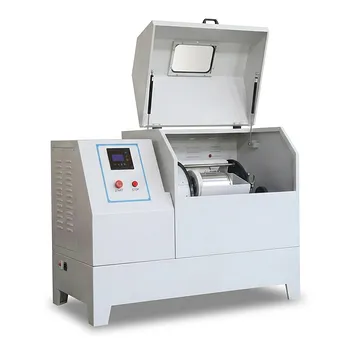
Heavy Duty Horizontal Planetary Ball Mill for Efficient Industrial Grinding and Sample Preparation
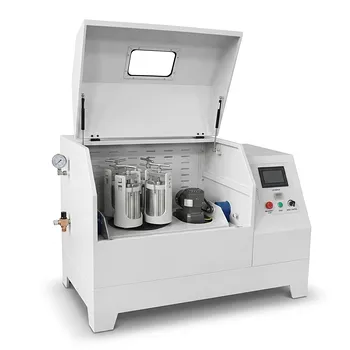
Vertical Production Planetary Ball Mill for High Throughput Powder Processing
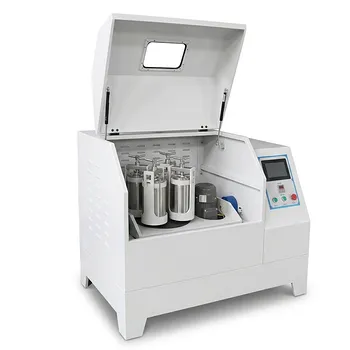
360° Rotating Omnidirectional Laboratory Planetary Ball Mill for Homogeneous Ultra-Fine Grinding and Mixing
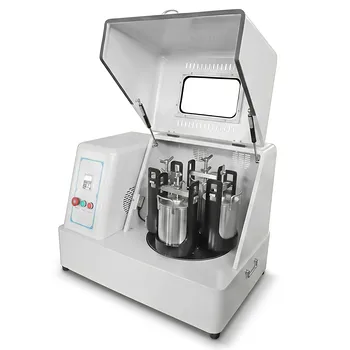
Vertical Square Planetary Ball Mill for Laboratory Sample Preparation and Nanoscale Grinding
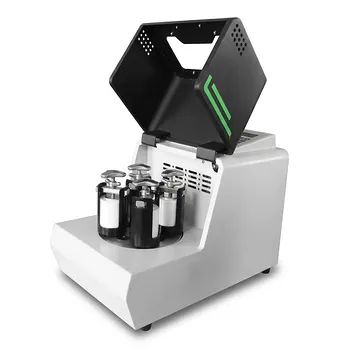
Miniature Planetary Ball Mill with Vacuum Grinding and High Efficiency for Laboratory Sample Preparation
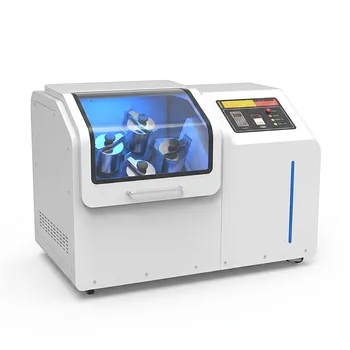
High Energy Omnidirectional Planetary Ball Mill 16L

High Energy Laboratory Planetary Ball Mill for Nano Grinding and Material Science Sample Preparation
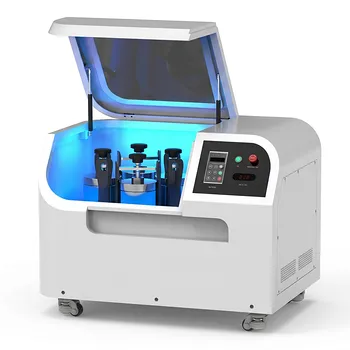
Planetary Ball Mill 12L
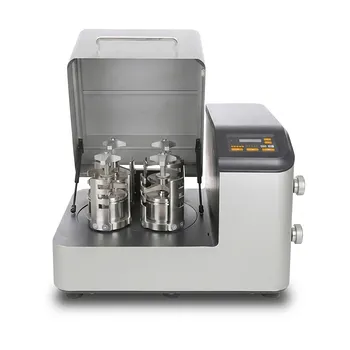
High Energy Planetary Ball Mill for Nano Scale Grinding and Colloidal Mixing in Material Science Research
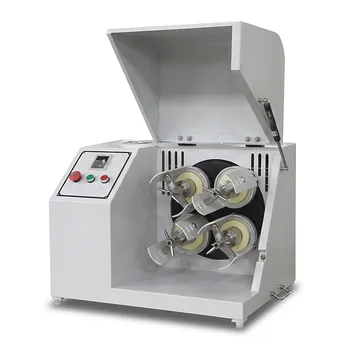
Horizontal Light Duty Planetary Ball Mill for Laboratory Sample Preparation

High Energy Omnidirectional Planetary Ball Mill 20L

High Energy Laboratory Planetary Ball Mill for Nano Grinding and Colloidal Mixing of Hard and Brittle Materials

8L Planetary Ball Mill for Laboratory Grinding and Sample Preparation
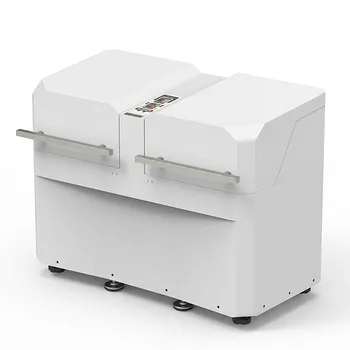
Dual Station Planetary Ball Mill 24L

Multi-Platform Nanoscale High-Energy Vibratory Ball Mill

Nano High Energy Vibratory Ball Mill for Laboratory Sample Preparation

Dual Jar High Energy Vibratory Ball Mill