What is the function of a laboratory hydraulic press in the fabrication of pyrrhotite standard material pellets? Key Role
Updated 4 months ago
High-pressure compaction is the definitive function. In the fabrication of pyrrhotite standard materials, a laboratory hydraulic press applies intense pressure—typically up to 2 Kbar—to transform mechanically homogenized powder into high-density pellets. This process ensures that powder particles are tightly bonded, creating the structural integrity required for subsequent high-temperature annealing, mounting, and polishing.
The laboratory hydraulic press serves as the critical bridge between loose powder and a solid-state specimen. By mechanically forcing particles into close contact and eliminating internal porosity, it establishes the physical foundation necessary for chemical stability and accurate analytical measurements.
The Role of Compaction in Material Integrity
Achieving High Density and Low Porosity
The primary objective of the hydraulic press is to reduce the internal porosity of the pyrrhotite powder. By applying pressures up to 2 Kbar, the press forces the particles to rearrange and fill voids, resulting in a dense, 5 mm diameter pellet. This density is crucial because high porosity can lead to sample contamination or structural failure during sensitive analytical procedures.
Establishing Structural Integrity for Processing
Pyrrhotite standards must undergo rigorous downstream processing, including high-temperature annealing and physical mounting. The hydraulic press provides the "green strength" necessary for the pellet to survive these stages without crumbling. Without this initial high-pressure molding, the material would lack the cohesion required for the precise grinding and polishing needed for mineralogical standards.
Facilitating Atomic Diffusion and Sintering
Beyond simple shaping, the press facilitates atomic diffusion by establishing close contact between individual powder particles. This physical interlocking is the precursor to effective densification during the sintering or annealing phase. By maximizing the contact surface area, the press ensures that the subsequent thermal treatments can uniformly transform the powder into a homogenized solid.
Technical Precision and Sample Consistency
Ensuring Geometric Accuracy
A laboratory hydraulic press uses specialized dies to produce pellets with specific geometric shapes. This consistency is vital for standard reference materials, as it ensures that every sample has a uniform thickness and diameter. Such uniformity allows for repeatable results when the pellets are used in physical property testing or spectroscopy.
Eliminating Density Gradients
Precise control over the applied force helps to eliminate density gradients within the pellet. If a pellet has inconsistent density, it may react unevenly during chemical analysis or exhibit varied mechanical hardness. The hydraulic press provides a constant, measurable pressure that ensures the sample is representative of the bulk material.
Improving Surface Flatness
The high-pressure environment of the press creates a preliminary surface that is conducive to ion implantation or high-resolution imaging. By compressing the powder against the smooth surfaces of a hardened steel die, the press minimizes surface irregularities. This reduces the amount of material that must be removed during the final polishing stages, preserving the integrity of the standard.
Understanding the Trade-offs
Pressure Limits and Material Deformation
While high pressure is necessary for density, exceeding the material's limits can cause plastic deformation or internal micro-cracking. If the pressure is released too quickly, "springback" can occur, where the material expands and compromises the structural bonds just formed. Operators must balance the need for density with the mechanical characteristics of the specific pyrrhotite mixture.
The Impact of Particle Homogenization
The effectiveness of the hydraulic press is heavily dependent on the homogeneity of the starting powder. If the powder is not properly mechanically homogenized before pressing, the resulting pellet may contain "clumps" of varying density. This inconsistency can lead to uneven annealing and localized structural weaknesses within the final standard material.
How to Apply This to Your Project
Making the Right Choice for Your Goal
To achieve the best results in pyrrhotite standard fabrication, align your pressing strategy with your final analytical requirements:
- If your primary focus is analytical precision: Use the maximum recommended pressure (up to 2 Kbar) to ensure the lowest possible porosity and the highest structural stability for polishing.
- If your primary focus is thermal stability during annealing: Ensure the powder is perfectly homogenized before pressing to facilitate uniform atomic diffusion and grain rearrangement.
- If your primary focus is high-throughput sample prep: Utilize a hydraulic press with a calibrated pressure gauge to maintain exact consistency across multiple batches of pellets.
The laboratory hydraulic press is the indispensable tool that converts loose pyrrhotite powder into a robust, high-density standard capable of withstanding rigorous scientific analysis.
Summary Table:
| Key Function | Benefit to Pellet | Impact on Analysis |
|---|---|---|
| High-Pressure Compaction | Reduces porosity & increases density | Ensures chemical stability & measurement accuracy |
| Structural Integrity | Provides necessary "green strength" | Allows for rigorous annealing, mounting, and polishing |
| Atomic Diffusion | Maximizes particle contact area | Facilitates uniform sintering and homogenization |
| Geometric Precision | Consistent shape and thickness | Ensures repeatable results in spectroscopy and testing |
| Density Gradient Control | Eliminates internal inconsistencies | Provides a representative sample of the bulk material |
Elevate Your Material Research with Precision Engineering
Achieving the perfect pyrrhotite standard requires more than just pressure; it requires technical precision. At [Company Name], we provide complete laboratory sample preparation solutions for material science, specializing in high-performance powder processing and compaction equipment.
Whether you are fabricating mineralogical standards or developing new alloys, our extensive product line supports every stage of your workflow:
- Powder Processing: Advanced crushers (jaw/roll), liquid nitrogen cryogenic grinders, and high-efficiency mills (planetary ball, jet, sand/bead, disc, rotor).
- Sizing & Mixing: Precision sieve shakers (vibratory/air-jet) and high-homogeneity powder and defoaming mixers.
- Compaction Excellence: A full spectrum of hydraulic presses, including Cold/Warm Isostatic Presses (CIP/WIP), standard lab presses, XRF pellet presses, and high-temperature vacuum hot presses.
Ready to optimize your pellet fabrication process? Contact our experts today to find the ideal compaction solution tailored to your specific material requirements.
References
- К. А. Кох. Contribution of Planetary Ball Milling to the Homogeneity of Pyrrhotite Reference Material for LA-ICP-MS. DOI: 10.46770/as.2025.145
Mentioned Products
- Enhanced 9 Punch Rotary Tablet Press for Powder Compaction
- Manual Tablet Press with Dual Scale Pressure Gauge for Pharmaceutical Food Chemical Laboratory Sample Preparation
- 6-Ton Small Single-Punch Tablet Press — Laboratory Powder & Granule Tableting Equipment / Tablet Forming Machine
- Miniature Planetary Ball Mill with Vacuum Grinding and High Efficiency for Laboratory Sample Preparation
- Laboratory Benchtop Jaw Crusher for Hard Brittle Materials Primary Size Reduction and Sample Preparation
People Also Ask
- What is the purpose of adding lubricants like zinc stearate during Al-Al2O3 powder pressing? Achieve Superior Density
- Why is a laboratory hydraulic press required for FT-IR KBr pellets? Achieve Precise Sample Clarity for ZrC–SiC Analysis
- What role does a high-strength stainless steel mold kit play in the uniaxial die compaction process? Ensuring Precision
- Why is a laboratory hydraulic press required to compress oyster shell powder before XRF analysis? Improve Data Accuracy.
- Why is vacuum sealing and flexible packaging necessary for Aluminum Titanate powders during CIP? Ensure Peak Density

Tech Team · PowderPreparation
Last updated on Jun 03, 2026
Related Products
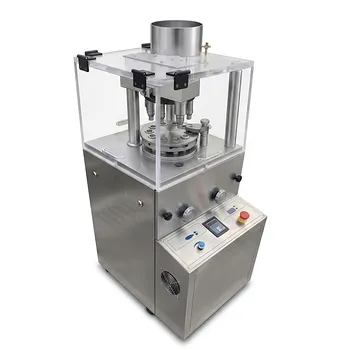
Enhanced 9 Punch Rotary Tablet Press for Powder Compaction
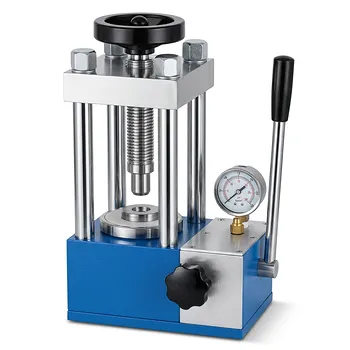
Manual Tablet Press with Dual Scale Pressure Gauge for Pharmaceutical Food Chemical Laboratory Sample Preparation
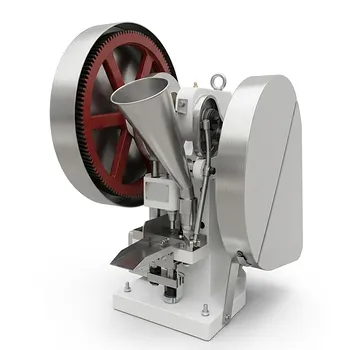
6-Ton Small Single-Punch Tablet Press — Laboratory Powder & Granule Tableting Equipment / Tablet Forming Machine
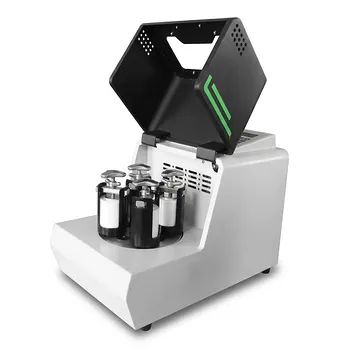
Miniature Planetary Ball Mill with Vacuum Grinding and High Efficiency for Laboratory Sample Preparation
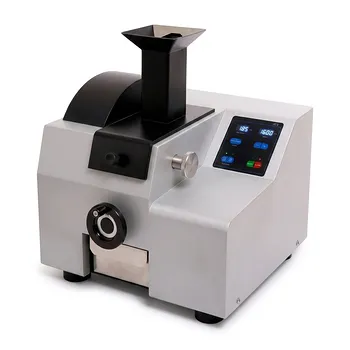
Laboratory Benchtop Jaw Crusher for Hard Brittle Materials Primary Size Reduction and Sample Preparation
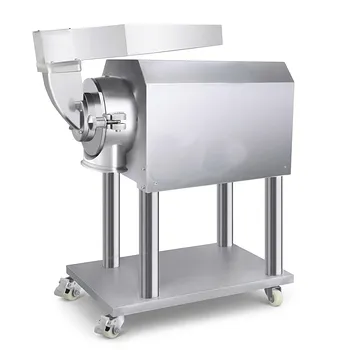
High Speed Small Laboratory Crusher for Dry Material Sample Preparation
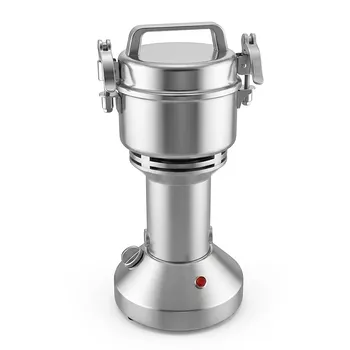
Small High Speed Upright Grinder for Laboratory Sample Preparation