What is the function of a laboratory ball mill in Rice Husk Ash preparation? Enhance Reactivity & Concrete Strength
Updated 4 months ago
In the production of high-performance concrete, a laboratory ball mill is the critical tool for transforming raw rice husk ash into a reactive mineral admixture. It uses high-energy grinding to reduce particle size and increase Specific Surface Area (SSA), allowing the ash to match or exceed the fineness of cement. This mechanical refinement enables the ash to fill microscopic voids and react chemically to form additional strengthening gels within the concrete matrix.
The laboratory ball mill functions as a mechanical activator that optimizes Rice Husk Ash (RHA) for concrete applications. By increasing the surface area and reducing particle size, it converts a porous byproduct into a high-performance filler and pozzolan that significantly improves concrete density and strength.
Enhancing Physical and Chemical Properties
Achieving Micron-Level Particle Reduction
A laboratory ball mill utilizes high-speed impact and shear forces from grinding media to break down the macroscopic structure of Rice Husk Ash. This process reduces the particle size to the micrometer level, ensuring the ash is fine enough to integrate seamlessly with cementitious materials.
Increasing Specific Surface Area (SSA)
By grinding the ash into an ultrafine powder, the ball mill dramatically increases its Specific Surface Area. This increased area is vital because it provides more contact points for chemical reactions, directly influencing how the ash behaves when mixed with water and cement.
Facilitating Mechanical Activation
Mechanical milling goes beyond simple size reduction by inducing mechanical activation in the ash. This process can disrupt the internal structure of the material, making it more chemically "eager" to react during the hydration process of concrete.
The Role of Refined RHA in the Concrete Matrix
Promoting the Micro-Filling Effect
Refined RHA particles are small enough to occupy the microscopic spaces between larger cement grains. This micro-filling effect increases the overall density of the concrete, leading to a less porous structure that is more resistant to water and chemical penetration.
Accelerating the Pozzolanic Reaction
The high surface area of milled RHA allows it to react more efficiently with calcium hydroxide, a byproduct of cement hydration. This chemical reaction generates additional Calcium Silicate Hydrate (C-S-H) gel, which is the primary compound responsible for the strength and durability of concrete.
Ensuring Uniform Distribution
The fine particle size achieved through ball milling is essential for preventing agglomeration during the mixing stage. When particles are uniform and fine, they distribute more evenly throughout the cement paste, providing consistent strength across the entire concrete structure.
Understanding the Trade-offs
Milling Duration vs. Energy Efficiency
While longer milling times generally produce finer particles and higher reactivity, there is a point of diminishing returns. Excessive milling consumes significant energy and can lead to the "caking" of powders on the grinding media, which actually reduces grinding efficiency.
Handling and Agglomeration Risks
Ultrafine RHA powders produced by ball milling are highly prone to agglomeration if not stored or mixed correctly. These fine particles can clump together, which may negate the benefits of the micro-filling effect if the mixing process is not controlled with high-shear mixers.
Impact on Water Demand
Because milled RHA has a very high surface area, it can increase the water demand of the concrete mix. This often requires the use of superplasticizers to maintain workability without compromising the water-to-cement ratio and the final strength of the concrete.
How to Apply This to Your Project
Optimal use of a laboratory ball mill depends on the specific performance requirements of your concrete mix.
- If your primary focus is maximum compressive strength: Aim for a milling duration that produces an RHA fineness exceeding that of your cement to maximize the pozzolanic reaction and C-S-H gel production.
- If your primary focus is durability and low permeability: Prioritize achieving a specific particle size distribution that optimizes the micro-filling effect to close off capillary pores in the matrix.
- If your primary focus is cost-effective soil or concrete enhancement: Utilize the ball mill to reach a "threshold fineness" where reactivity is significantly improved without the excessive energy costs of creating an ultrafine powder.
Optimizing the ball milling process is the definitive step in unlocking the full engineering potential of Rice Husk Ash for advanced construction materials.
Summary Table:
| Function | Key Mechanism | Concrete Performance Benefit |
|---|---|---|
| Size Reduction | High-energy impact & shear | Promotes micro-filling effect to increase density |
| Surface Activation | Increasing Specific Surface Area (SSA) | Accelerates pozzolanic reaction for higher strength |
| Mechanical Activation | Structural disruption of RHA particles | Enhances chemical reactivity with calcium hydroxide |
| Homogenization | Uniform particle distribution | Prevents agglomeration and ensures consistent durability |
Unlock the Full Potential of Your Materials with Expert Preparation Solutions
Achieving the perfect particle size and reactivity is essential for high-performance material science. We provide complete laboratory sample preparation solutions tailored for research and industrial applications. Our specialized equipment includes:
- Advanced Milling: Planetary ball mills, jet mills, and cryogenic grinders for precise particle size control.
- Crushing & Sieving: Jaw/roll crushers and vibratory/air-jet sieve shakers for consistent feedstock.
- Powder Processing: High-efficiency powder and defoaming mixers.
- Advanced Compaction: A full spectrum of hydraulic presses, including Cold/Warm Isostatic Presses (CIP/WIP), hot presses, and vacuum hot presses.
Whether you are optimizing Rice Husk Ash for concrete or developing new ceramics, our equipment ensures accuracy and repeatability. Contact our technical team today to discuss your specific requirements and find the ideal solution for your lab.
References
- Muhammad Nasir Amin, Tayyaba Bibi. Pozzolanic Reactivity and the Influence of Rice Husk Ash on Early-Age Autogenous Shrinkage of Concrete. DOI: 10.3389/fmats.2019.00150
Mentioned Products
- Single Tank High Energy Vibratory Ball Mill for Laboratory Grinding and Mixing
- 360° Rotating Omnidirectional Laboratory Planetary Ball Mill for Homogeneous Ultra-Fine Grinding and Mixing
- 8L Planetary Ball Mill for Laboratory Grinding and Sample Preparation
- High Energy Hybrid Vibratory Ball Mill for Grinding Mixing and Cell Disruption
- Laboratory Nano High Energy Ball Mill Ultrafine Grinding Mechanical Alloying
People Also Ask
- What is the primary purpose of using a vibratory ball mill in the preparation of respirable carbon fiber fragments?
- What is the purpose of using a vibratory ball mill for Al-Ni-Fe alloy ribbons? Achieve High Catalytic Activity
- Why is a vibratory ball mill preferred over a planetary ball mill for rapid powder particle refinement? High-Speed Impact
- How does a high-energy vibratory ball mill improve the performance of MgH2? Optimize Hydrogen Storage Kinetics
- What role do high-energy ball mills play in the preparation of reinforcements for hybrid metal matrix composites?

Tech Team · PowderPreparation
Last updated on Jun 03, 2026
Related Products
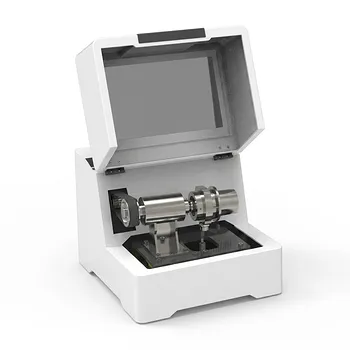
Single Tank High Energy Vibratory Ball Mill for Laboratory Grinding and Mixing
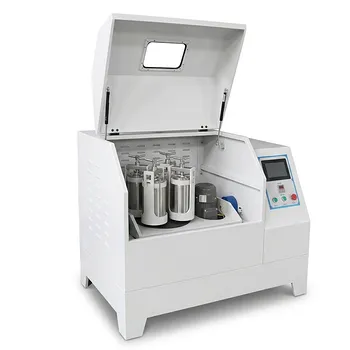
360° Rotating Omnidirectional Laboratory Planetary Ball Mill for Homogeneous Ultra-Fine Grinding and Mixing
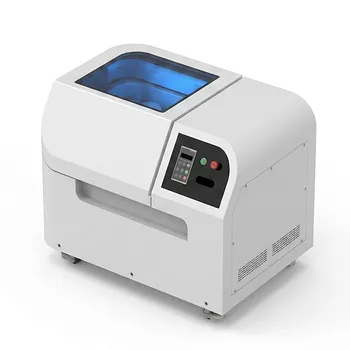
8L Planetary Ball Mill for Laboratory Grinding and Sample Preparation
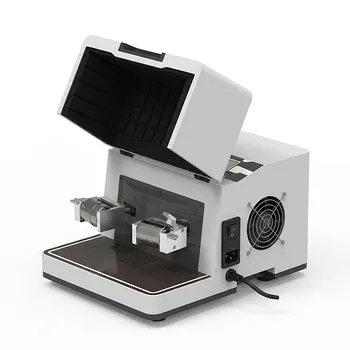
High Energy Hybrid Vibratory Ball Mill for Grinding Mixing and Cell Disruption
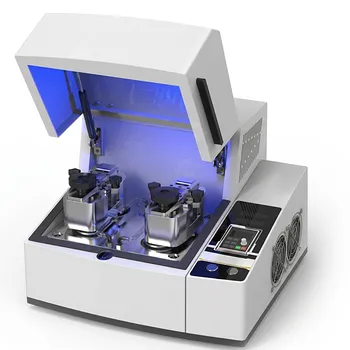
Laboratory Nano High Energy Ball Mill Ultrafine Grinding Mechanical Alloying
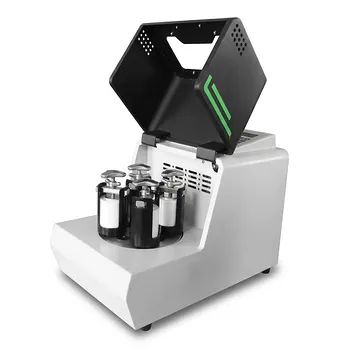
Miniature Planetary Ball Mill with Vacuum Grinding and High Efficiency for Laboratory Sample Preparation

High Throughput Micro Ball Mill for Cryogenic Grinding and Laboratory Cell Disruption

Vertical Production Planetary Ball Mill for High Throughput Powder Processing
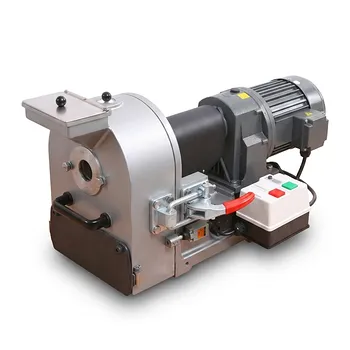
Laboratory Disc Mill for Fine Sample Preparation of Hard and Brittle Materials
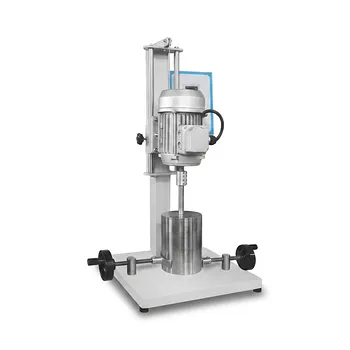
Laboratory Basket Sand Mill for Wet Grinding and Dispersion of Viscous Slurries
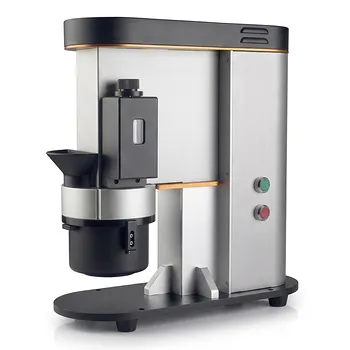
Precision Soil Disc Mill for Laboratory Fine Grinding and Environmental Sample Preparation
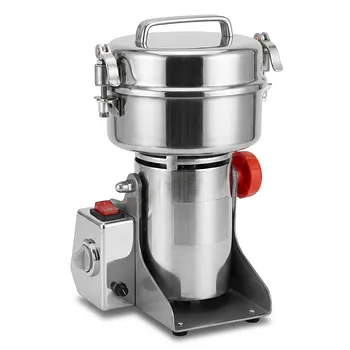
High Speed Laboratory Powder Grinder Small Batch Sample Preparation Mill

Small High Speed Grinder for Laboratory Sample Preparation
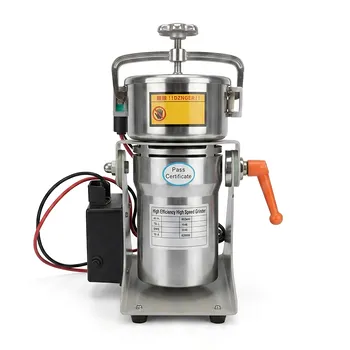
High Efficiency High Speed Grinder Laboratory Mill 1300W 25000rpm

High Energy Planetary Ball Mill for Nano Scale Grinding and Mechanical Alloying
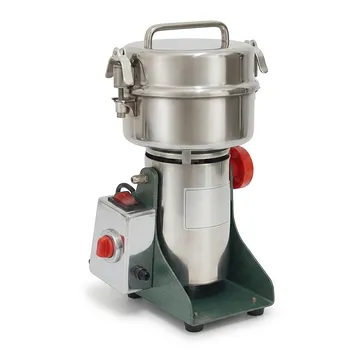
Small High Speed Grinder for Laboratory Sample Preparation
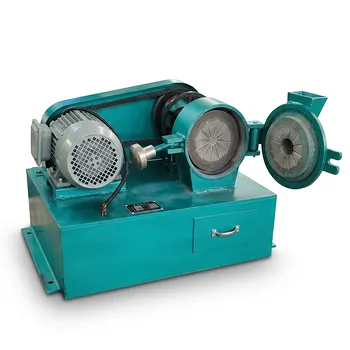
Laboratory Disc Mill Medium Hard Material Grinding Coal Coke Ore Pulverizer
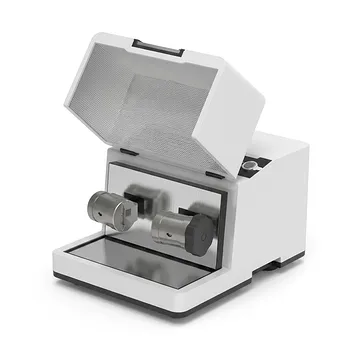
Heating Temperature Controlled High Energy Vibratory Ball Mill
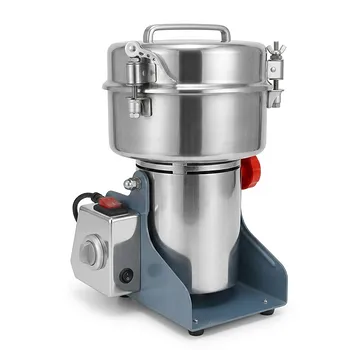
Small High-Speed Grinder for Efficient Laboratory Sample Preparation