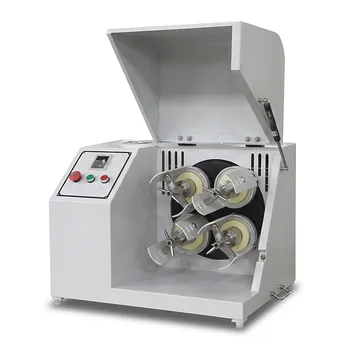
What is the function of a high-intensity planetary ball mill in the synergistic wet carbonation process of steel slag?
Updated 5 months ago
The function of a high-intensity planetary ball mill is to serve as a mechanochemical reactor that accelerates mineral transformation. In the synergistic wet carbonation of steel slag, it provides the high-energy impact and compressive forces necessary to reduce particle size while simultaneously stripping away inert product layers. This continuous mechanical action ensures that fresh silicate surfaces are always exposed to carbon dioxide, preventing the reaction from stalling.
Core Takeaway: The planetary ball mill breaks the "diffusion limit" of carbonation by physically removing the protective silica and carbonate shells that form around slag particles, allowing for significantly higher carbon dioxide uptake and faster reaction kinetics.
Overcoming the Shell-Layer Diffusion Limit
Continuous Stripping of Inert Coatings
During wet carbonation, a layer of amorphous silica (SiO2) and calcium carbonate naturally forms on the surface of steel slag particles. This "shell" acts as a physical barrier that prevents carbon dioxide from reaching the unreacted core of the mineral.
The planetary ball mill uses high-energy collisions to in-situ strip these inert layers. By constantly removing the reaction products, the mill ensures the chemical process does not reach a premature plateau.
Exposing Fresh Silicate Surfaces
As the mill disrupts the outer coatings, it continuously exposes fresh silicate surfaces to the aqueous carbon dioxide environment. This keeps the reaction interface active throughout the entire process rather than just at the beginning.
This exposure is critical for maintaining high reaction kinetics. Without this mechanical intervention, the carbonation rate would drop significantly as the product layer thickens.
Mechanochemical Activation of Minerals
Increasing Reactive Specific Surface Area
The high-intensity grinding reduces coarse steel slag into ultrafine powders, often reaching sizes below 106 microns or even 200 mesh. This massive increase in specific surface area provides more contact points for the liquid-solid reaction to occur.
Higher surface area directly correlates to faster dissolution of calcium ions. This acceleration is a primary driver behind achieving high theoretical carbonation efficiency in timeframes as short as 10 minutes.
Inducing Lattice Defects and Amorphization
Beyond simple physical crushing, the planetary ball mill causes mechanical activation by breaking down the crystalline structure of the slag minerals. The intense impact energy introduces lattice defects and promotes material amorphization.
These structural disruptions lower the energy barrier for chemical reactions. By inhibiting the slag's tendency to recrystallize, the mill keeps the material in a high-energy, highly reactive state.
Enhancing Liquid-Phase Interaction
Accelerating CO2 Dissolution
The planetary ball mill doubles as a high-efficiency mixing vessel. The centrifugal forces and turbulence generated within the grinding jars significantly accelerate the dissolution of carbon dioxide into the liquid phase.
This ensures that the concentration of reactive carbonate species in the water remains high. A steady supply of dissolved CO2 is essential for maintaining the speed of the liquid-solid carbonation reaction.
Synergistic Chemical Interaction
When used with chemical grinding aids or alkaline solutions, the mill facilitates a deep composite interaction. The mechanical energy works synergistically with chemical agents to further enhance the reactivity of the slag.
This synergy is particularly useful in specialized applications, such as preparing slag for geopolymer production or recovery of specific minerals like graphite or titanium.
Understanding the Trade-offs and Limitations
Energy Consumption vs. Reaction Yield
While high-intensity milling dramatically increases carbonation efficiency, it is an energy-intensive process. The electrical cost of operating a planetary mill must be balanced against the value of the captured CO2 and the resulting mineral products.
In industrial scaling, the "diminishing returns" point must be identified. Excessive milling beyond the point of maximum carbonation yield leads to unnecessary operational costs.
Equipment Wear and Material Contamination
The high-energy impact required to break steel slag also causes significant wear on the grinding media and jar liners. This can introduce trace amounts of the milling material (such as steel or zirconia) into the final carbonated product.
For high-purity applications, the choice of milling media is critical. Users must account for the maintenance cycles of the mill to ensure consistent particle size distribution over time.
How to Apply This to Your Process
Making the Right Choice for Your Goal
- If your primary focus is maximizing CO2 sequestration: Use high-intensity settings to ensure the complete stripping of the silica shell, which allows the reaction to reach its full theoretical capacity.
- If your primary focus is rapid processing speed: Prioritize the mechanochemical activation aspect to achieve peak carbonation within the first 10 to 15 minutes of the reaction cycle.
- If your primary focus is downstream material utility (e.g., geopolymers): Focus on inducing lattice defects and amorphization to enhance the chemical reactivity of the slag in alkaline environments.
- If your primary focus is particle uniformity for membranes or flotation: Utilize the mill specifically to reach sub-75 micron thresholds, ensuring the slag can be uniformly dispersed in polymer solutions or chemical reagents.
By integrating high-intensity planetary milling, you transform steel slag from a slow-reacting byproduct into a highly reactive feedstock for carbon capture and mineral recovery.
Summary Table:
| Function | Impact on Carbonation | Key Benefit |
|---|---|---|
| Shell Stripping | Removes inert silica/carbonate layers | Prevents reaction stalling; exposes fresh surfaces |
| Mechanical Activation | Increases surface area & induces lattice defects | Accelerates kinetics; peak reaction in 10 mins |
| High-Energy Mixing | Speeds up CO2 dissolution in liquid phase | Ensures constant supply of reactive carbonate species |
Optimize Your Material Research with Expert Sample Prep Solutions
Unlock the full potential of your carbon sequestration and mineral recovery projects with high-performance laboratory equipment. We provide complete sample preparation solutions for material science, specializing in advanced powder processing and compaction.
Our extensive range includes planetary ball mills, jet mills, and cryogenic grinders designed for high-intensity mechanochemical activation, as well as a full spectrum of hydraulic presses (CIP/WIP, hot presses, and XRF pellet presses) and sieve shakers to ensure precise particle control.
Whether you are refining steel slag or developing new composites, we bring the reliability and technical expertise your workflow demands.
Contact Our Specialists Today to Find Your Solution
References
- Anthony de Schutter, Tom Van Gerven. Improving the Carbonation of Steel Slags Through Concurrent Wet Milling. DOI: 10.1007/s40831-024-00895-2
Mentioned Products
- High Energy Planetary Ball Mill for Nano Scale Grinding and Mechanical Alloying
- High Energy Omnidirectional Planetary Ball Mill 16L
- High Energy Laboratory Planetary Ball Mill for Nano Grinding and Colloidal Mixing of Hard and Brittle Materials
- High Energy Planetary Ball Mill for Nano Scale Grinding and Colloidal Mixing in Material Science Research
- High Energy Omnidirectional Planetary Ball Mill 20L
People Also Ask
- Why is a high-energy planetary ball mill used for nano-milling As4Se3? Achieve Expert Structural Transformation
- What role do high-energy planetary ball mills play in FDM composite filament preparation? Optimize Material Performance
- What is the role of a high-energy planetary ball mill in the exfoliation of modified WSe2? Achieve Nano-Precision
- What is the function of a planetary ball mill in glass-ceramic sintering? Optimize Reactivity and Uniformity
- What is the role of a high-energy planetary ball mill in the preparation of high-performance nano-ceramics? Key Guide

Tech Team · PowderPreparation
Last updated on May 14, 2026
Related Products

High Energy Planetary Ball Mill for Nano Scale Grinding and Mechanical Alloying

High Energy Omnidirectional Planetary Ball Mill 16L

High Energy Laboratory Planetary Ball Mill for Nano Grinding and Colloidal Mixing of Hard and Brittle Materials

High Energy Planetary Ball Mill for Nano Scale Grinding and Colloidal Mixing in Material Science Research

High Energy Omnidirectional Planetary Ball Mill 20L

High Energy Laboratory Planetary Ball Mill for Nano Grinding and Material Science Sample Preparation

Vertical Production Planetary Ball Mill for High Throughput Powder Processing

Vertical Square Planetary Ball Mill for Laboratory Sample Preparation and Nanoscale Grinding
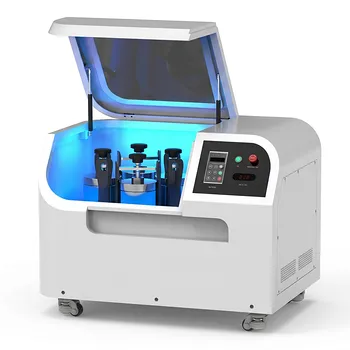
Planetary Ball Mill 12L

8L Planetary Ball Mill for Laboratory Grinding and Sample Preparation

Miniature Planetary Ball Mill with Vacuum Grinding and High Efficiency for Laboratory Sample Preparation

Dual Station Planetary Ball Mill 24L

Heavy Duty Horizontal Planetary Ball Mill for Efficient Industrial Grinding and Sample Preparation

Multi-Platform Nanoscale High-Energy Vibratory Ball Mill
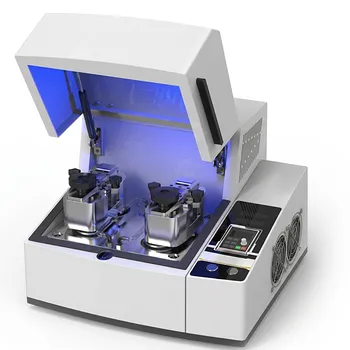
Laboratory Nano High Energy Ball Mill Ultrafine Grinding Mechanical Alloying

360° Rotating Omnidirectional Laboratory Planetary Ball Mill for Homogeneous Ultra-Fine Grinding and Mixing

Vertical Semi Circular Planetary Ball Mill for Laboratory Precision Grinding

Nano High Energy Vibratory Ball Mill with Heating and Temperature Control

High Energy Hybrid Vibratory Ball Mill for Grinding Mixing and Cell Disruption