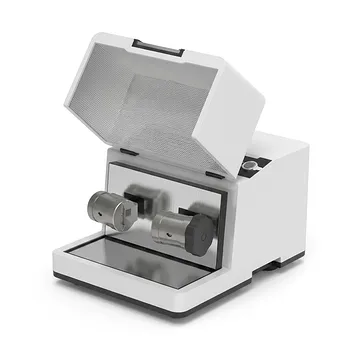
What is the function of a high-hardness zirconia ball mill in the preparation of bioactive glass raw materials? Ensure Purity
Updated 5 months ago
The primary function of a high-hardness zirconia ball mill is to mechanically refine quenched glass frit into high-purity, micron-scale powders while preventing material contamination. By utilizing high-density grinding media, the system generates the impact and shear forces necessary to achieve a uniform particle size distribution essential for bioactive applications.
Core Takeaway: High-hardness zirconia ball milling serves as a critical bridge between bulk synthesis and final powder processing, ensuring that bioactive glass maintains its chemical integrity and high specific surface area through efficient, wear-resistant particle size reduction.
Achieving Precision Particle Refinement
Micron-Scale Powder Synthesis
The ball mill utilizes high-speed rotation to generate strong impact and shear forces that crush quenched glass blocks into specific micron-sized powders. This mechanical action is necessary to transform the raw, brittle frit into a workable form for downstream manufacturing.
Increasing Specific Surface Area
Refining the material to the micron level significantly increases its specific surface area, which directly enhances the subsequent reaction activity of the bioactive glass. This refinement is vital for processes like flame spheroidization, where uniform particles are required to produce high-quality glass microspheres.
Breaking Down Hard Agglomerates
During the preparation of raw materials, ball milling effectively breaks down hard agglomerates that often form during high-temperature treatments or quenching. This ensures a consistent particle size distribution, which is a prerequisite for creating photocurable slurries with high solid content and low viscosity.
Safeguarding Material Purity
Minimizing Media Contamination
The superior wear resistance of zirconia grinding media ensures that minimal material is lost from the balls themselves during the grinding cycle. This prevents the introduction of unwanted elements, such as alumina or metallic impurities, which could compromise the final biological evaluation of the bioactive glass.
Maintaining Chemical Precision
In complex formulations like CaO-SiO2-B2O3 glass, the mill ensures that high-purity raw materials remain chemically precise. Because the zirconia media does not react with the glass components, the strict stoichiometric ratios required for bioactivity are preserved.
Atomic-Level Uniform Distribution
Extended milling cycles, often lasting up to 24 hours, allow for the deep mixing of chemical components like calcium carbonate, silica, and boric oxide. This establishes a kinetic foundation for complete reactions during subsequent sintering or calcination stages.
Operational Efficiency and Mechanical Force
High-Density Kinetic Energy
Zirconia is selected for its high density, which provides the necessary kinetic energy to fracture hard ceramic and glass particles quickly. This high-energy input allows for a significantly shortened milling cycle compared to lower-density media like alumina or porcelain.
Mechanical Stability in Various Media
These mills are highly effective in both dry and wet milling environments, such as ethanol mediums used for ceramic core preparation. The chemical stability of zirconia ensures it does not degrade or react with the solvent, maintaining a clean processing environment.
Understanding the Trade-offs
The Cost of High Performance
While zirconia media offers superior wear resistance, it represents a higher initial capital investment compared to traditional steel or alumina media. However, this is typically offset by the longer lifespan of the media and the reduced risk of rejected batches due to contamination.
Heat Generation and Management
The high-energy impact required for micron-scale refinement can generate significant internal heat during long processing cycles. If the temperature is not monitored, it can lead to the unwanted aggregation of fine powders or minor alterations in the glass transition phases.
Media Sizing and Scaling
Choosing the incorrect size of zirconia balls can lead to inefficient grinding or "dead zones" within the mill. Smaller balls provide more contact points for fine polishing, while larger balls are required for the initial breakdown of large frit fragments.
How to Apply This to Your Project
Recommendations for Implementation
- If your primary focus is biological safety: Prioritize high-purity Yttria-stabilized zirconia media to ensure zero alumina contamination, which is critical for clinical-grade bioactive glass.
- If your primary focus is high-speed production: Utilize high-density zirconia balls in a high-energy planetary mill to reduce the milling cycle while maintaining the micron-level refinement required for flame spheroidization.
- If your primary focus is complex chemical mixing: Employ an extended 24-hour wet milling cycle in an ethanol medium to achieve an atomic-level uniform distribution of silica and calcium components.
By leveraging the mechanical properties of zirconia, manufacturers can produce bioactive glass powders that meet the rigorous standards of chemical purity and particle uniformity required for advanced medical applications.
Summary Table:
| Key Function | Primary Benefit | Technical Advantage |
|---|---|---|
| Particle Refinement | Achieves micron-scale powders | High impact and shear forces for frit reduction |
| Purity Assurance | Prevents alumina/metal contamination | Superior wear resistance of zirconia media |
| Kinetic Efficiency | Shortens processing cycles | High-density media provides maximum kinetic energy |
| Chemical Uniformity | Ensures stoichiometric precision | Stable, non-reactive grinding in dry or wet media |
Elevate Your Material Science Research with Precision Solutions
At [Your Brand Name], we provide complete laboratory sample preparation solutions for material science, specializing in high-performance powder processing and compaction equipment. Whether you are refining bioactive glass or developing advanced ceramics, our equipment is designed to ensure the highest levels of purity and particle uniformity.
Our extensive product lines include:
- Advanced Milling: Planetary ball mills, jet mills, and liquid nitrogen cryogenic grinders for ultra-fine refinement.
- Preparation & Sizing: Jaw/roll crushers, sieve shakers (vibratory/air-jet), and high-efficiency mixers.
- Compaction Excellence: A full spectrum of hydraulic presses, including Cold/Warm Isostatic Presses (CIP/WIP), XRF pellet presses, and vacuum hot presses.
Ready to optimize your powder processing workflow? Contact us today to discuss how our specialized equipment can enhance your laboratory's capabilities!
References
- Jacopo Barberi, Francesco Baino. Mechanical characterization of pore-graded bioactive glass scaffolds produced by robocasting. DOI: 10.1515/bglass-2019-0012
Mentioned Products
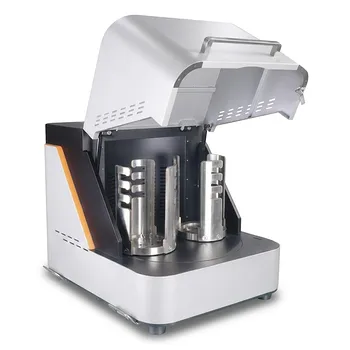
- High Energy Laboratory Planetary Ball Mill for Nano Grinding and Colloidal Mixing of Hard and Brittle Materials
- Vertical Square Planetary Ball Mill for Laboratory Sample Preparation and Nanoscale Grinding
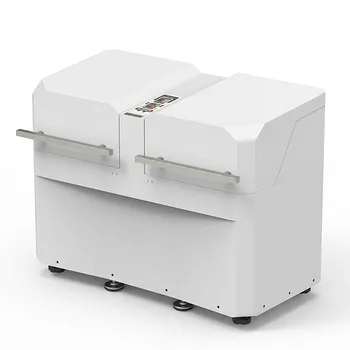
- Dual Station Planetary Ball Mill 24L
- High Energy Laboratory Planetary Ball Mill for Nano Grinding and Material Science Sample Preparation
- Miniature Planetary Ball Mill with Vacuum Grinding and High Efficiency for Laboratory Sample Preparation
People Also Ask
- What role does a high-energy planetary ball mill play in processing quenched bioactive glass? Achieve Nano-Scale Precision
- What role does a high-energy planetary ball mill play in magnesium-based hydrogen storage alloy preparation?
- What is the primary function of a high-energy planetary ball mill in Ni2MnSn synthesis? Optimize Solid-State Alloying.
- What role does a planetary ball mill play in nano-mineral filler prep? Achieve Sub-100nm Precision & Performance
- What is the role of a high-energy planetary ball mill in Li2ZrO3 and LBS prep? Achieve Superior Electrolyte Density

Tech Team · PowderPreparation
Last updated on May 14, 2026
Related Products
High Energy Laboratory Planetary Ball Mill for Nano Grinding and Colloidal Mixing of Hard and Brittle Materials

Vertical Square Planetary Ball Mill for Laboratory Sample Preparation and Nanoscale Grinding
Dual Station Planetary Ball Mill 24L

High Energy Laboratory Planetary Ball Mill for Nano Grinding and Material Science Sample Preparation

Miniature Planetary Ball Mill with Vacuum Grinding and High Efficiency for Laboratory Sample Preparation

High Energy Planetary Ball Mill for Nano Scale Grinding and Mechanical Alloying
High Energy Planetary Ball Mill for Nano Scale Grinding and Colloidal Mixing in Material Science Research
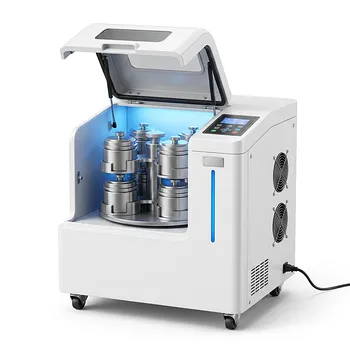
High Energy Omnidirectional Planetary Ball Mill 20L

Vertical Production Planetary Ball Mill for High Throughput Powder Processing

8L Planetary Ball Mill for Laboratory Grinding and Sample Preparation

High Energy Omnidirectional Planetary Ball Mill 16L

High Throughput Micro Ball Mill for Cryogenic Grinding and Laboratory Cell Disruption
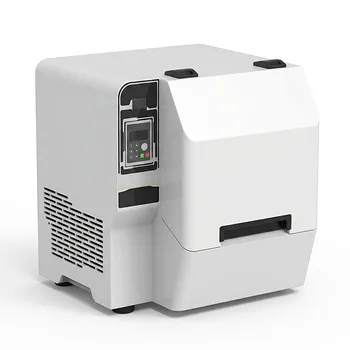
Nano High Energy Vibratory Ball Mill for Laboratory Sample Preparation
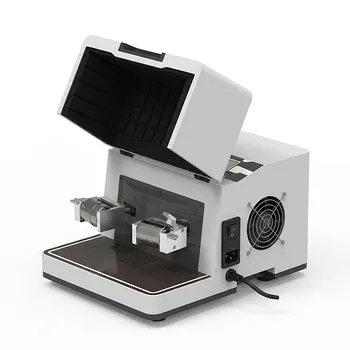
High Energy Hybrid Vibratory Ball Mill for Grinding Mixing and Cell Disruption
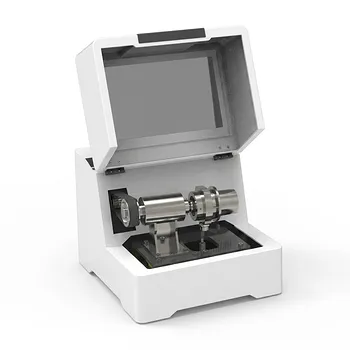
Single Tank High Energy Vibratory Ball Mill for Laboratory Grinding and Mixing
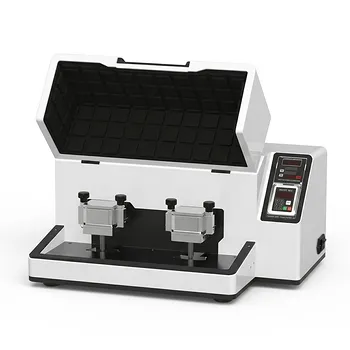
Nanoscale High Energy Vibratory Ball Mill Low Temperature
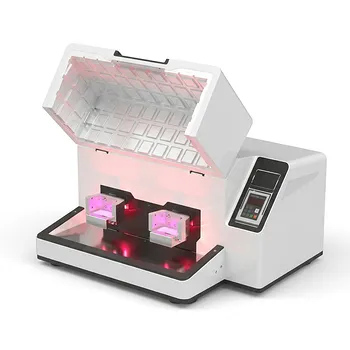
Nano High Energy Vibratory Ball Mill with Heating and Temperature Control
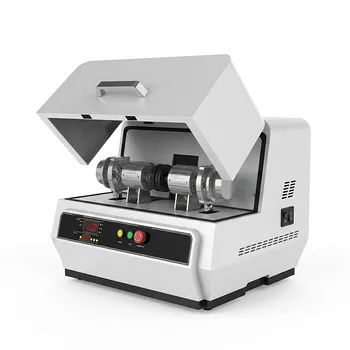
Dual Jar High Energy Vibratory Ball Mill
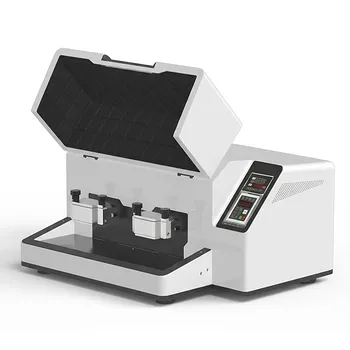
Nanoscale High-Energy Vibratory Ball Mill for Laboratory Sample Preparation, Mechanochemistry, and Mechanical Alloying