What is the function of a dual-axis centrifugal mixer? Achieve Bubble-Free Homogenization for Isoprene Rubber
Updated 5 months ago
The dual-axis centrifugal mixer serves as the primary mechanism for the rapid, bubble-free homogenization of high-viscosity liquid isoprene rubber. It utilizes simultaneous revolution and rotation to generate intense shear forces, allowing reactive diluents and cross-linking agents to integrate at a molecular level where traditional stirring methods fail. This process is essential for ensuring that modified segments are evenly distributed throughout the rubber matrix to achieve the desired mechanical and chemical properties.
The core function of a dual-axis centrifugal mixer is to provide molecular-level dispersion of additives into high-viscosity resins while simultaneously performing a vacuum-like de-foaming action. This dual-action approach eliminates internal voids and ensures the structural integrity of the final modified elastomer.
Overcoming the Limitations of High Viscosity
The Failure of Traditional Stirring
Traditional magnetic or overhead stirring methods are often ineffective when dealing with high-viscosity resins like liquid isoprene rubber. These methods lack the power to move the material consistently, leading to "dead zones" where additives are not fully incorporated.
The Mechanics of Dual-Axis Motion
A dual-axis centrifugal mixer operates by revolving the material container around a central point while simultaneously rotating the container on its own axis. This combination creates powerful shear forces and centrifugal pressure that force the high-viscosity rubber base to mix thoroughly with low-viscosity diluents.
Molecular-Level Homogenization
Because the mixing occurs through intense internal friction and pressure, ingredients like cross-linking agents are dispersed at a molecular level. This ensures that the chemical reaction occurs uniformly throughout the entire batch, preventing localized weak spots in the cured rubber.
Ensuring Structural Integrity through De-foaming
The Role of De-foaming in Performance
During the preparation of modified rubbers, micro-bubbles are often introduced, which can lead to internal voids in the finished product. These voids act as stress concentrators, significantly reducing the mechanical strength and durability of the molded components.
Eliminating Voids Without a Vacuum
The high-speed rotation of the centrifugal mixer forces air bubbles to the surface of the resin, where they collapse under the pressure of the centrifugal force. This integrated de-foaming function allows for a clear, dense, and bubble-free mixture without requiring separate vacuum degassing steps.
Impact on Surface and Mechanical Properties
Proper de-foaming and uniform dispersion are critical for advanced applications, such as creating superhydrophobic surface structures. When modified segments are distributed evenly, the resulting material exhibits consistent hydrophobic behavior and reliable structural integrity across the entire surface.
Understanding Technical Constraints and Trade-offs
Managing Frictional Heat
The intense shear forces required to mix high-viscosity rubber generate significant frictional heat. If the mixing time is too long or the speed is too high, the temperature may rise enough to trigger premature cross-linking or degrade sensitive additives.
Batch Size and Loading Limitations
Centrifugal mixers are highly efficient but are typically limited by the weight capacity of the rotating arms. Overloading the mixer or using unbalanced containers can lead to uneven mixing or mechanical strain on the equipment, necessitating precise measurement of batch sizes.
How to Apply This to Your Project
Before beginning the mixing process, evaluate your specific material requirements to determine the optimal speed and duration settings.
- If your primary focus is mechanical strength: Prioritize the de-foaming phase to ensure the complete removal of micro-bubbles that could cause internal structural failure.
- If your primary focus is chemical modification: Focus on high-speed revolution to ensure cross-linking agents and reactive diluents are fully homogenized at the molecular level.
- If your primary focus is heat-sensitive additives: Use pulsed mixing cycles or lower speeds to prevent the high-viscosity friction from raising the temperature beyond the material's stability point.
By mastering the balance of revolution and rotation, you can produce a modified liquid isoprene rubber that is chemically uniform and structurally flawless.
Summary Table:
| Feature | Mechanical Action | Impact on Modified Rubber |
|---|---|---|
| Dual-Axis Motion | Simultaneous revolution and rotation | Ensures molecular-level dispersion of additives |
| High Shear Force | Intense internal friction and pressure | Overcomes high viscosity to eliminate "dead zones" |
| Centrifugal De-foaming | Air bubbles forced to surface and collapsed | Eliminates internal voids for structural integrity |
| Thermal Management | Pulsed cycles/speed control | Prevents premature cross-linking from frictional heat |
Elevate Your Material Research with Precision Mixing Solutions
Achieving perfect homogeneity in high-viscosity resins requires more than just standard stirring. At [Brand Name], we provide complete laboratory sample preparation solutions tailored for material science. Our high-performance dual-axis centrifugal and defoaming mixers are specifically engineered to deliver bubble-free, molecular-level dispersion for challenging materials like modified liquid isoprene rubber.
Our expertise extends across the entire sample preparation workflow. We offer a comprehensive range of equipment, including:
- Advanced Milling: Planetary ball mills, jet mills, and cryogenic grinders for ultra-fine particle reduction.
- Powder Processing: Sieve shakers, powder mixers, and specialized defoaming mixers.
- Compaction Excellence: A full spectrum of hydraulic presses, including Cold/Warm Isostatic Presses (CIP/WIP), vacuum hot presses, and XRF pellet presses.
Whether you are developing superhydrophobic surfaces or high-strength elastomers, our equipment ensures your materials are chemically uniform and structurally flawless.
Contact our technical experts today to find your solution
References
- Lara Strohmeier, Sandra Schlögl. Digital light processing 3D printing of modified liquid isoprene rubber using thiol-click chemistry. DOI: 10.1039/d0ra04186f
Mentioned Products
- Dual Cup Vacuum Centrifugal Mixer Planetary Paste Defoaming Machine Industrial Material Processor
- Industrial Planetary Centrifugal Vacuum Defoaming Mixer for High Viscosity Paste and Advanced Material Science
- High Viscosity Planetary Centrifugal Vacuum Mixer for Material Defoaming and Uniform Mixing
- High Viscosity Planetary Centrifugal Mixing and Vacuum Defoaming Machine for Laboratory Material Preparation
- High Efficiency Vacuum Planetary Centrifugal Mixer and Defoaming Machine for Industrial Material Research and Precise Laboratory Powder Dispersion
People Also Ask
- Why is a vacuum centrifugal defoaming mixer required to process ceramic slurry before 3D printing? Ensure High Density
- Why is a vacuum centrifugal de-foaming mixer required before DIW of PZT ink? Achieve Dense, Bubble-Free Piezo Ceramics
- What are the advantages of centrifugal defoaming mixers for recycled slurries? Achieve Superior Electrode Quality
- Why is centrifugal defoaming necessary for magnetic composite inks? Ensure Void-Free Extrusion for 3D Printing
- Why is vacuum defoaming necessary for PDMS mixtures before microwave irradiation curing? Key to Structural Integrity

Tech Team · PowderPreparation
Last updated on May 14, 2026
Related Products
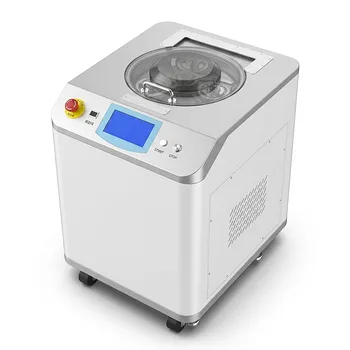
Dual Cup Vacuum Centrifugal Mixer Planetary Paste Defoaming Machine Industrial Material Processor
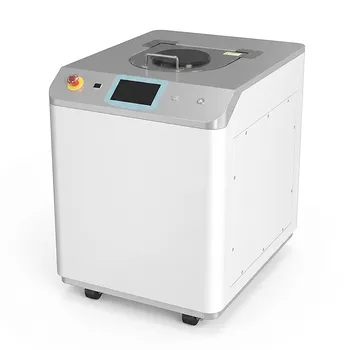
Industrial Planetary Centrifugal Vacuum Defoaming Mixer for High Viscosity Paste and Advanced Material Science
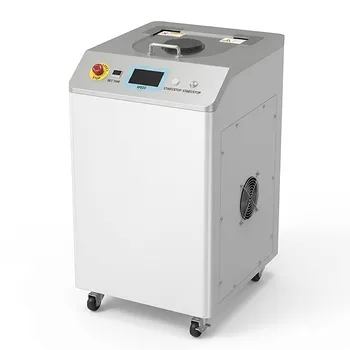
High Viscosity Planetary Centrifugal Vacuum Mixer for Material Defoaming and Uniform Mixing
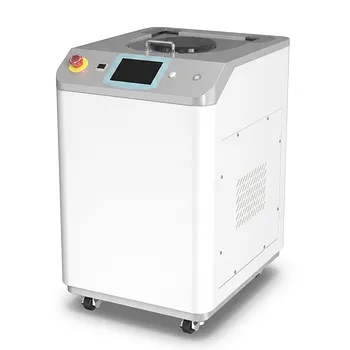
High Viscosity Planetary Centrifugal Mixing and Vacuum Defoaming Machine for Laboratory Material Preparation
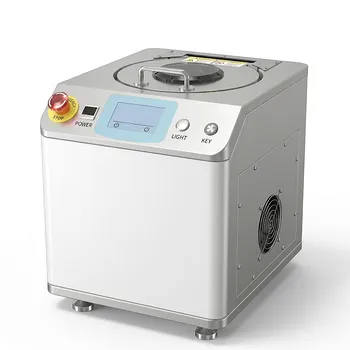
High Efficiency Vacuum Planetary Centrifugal Mixer and Defoaming Machine for Industrial Material Research and Precise Laboratory Powder Dispersion
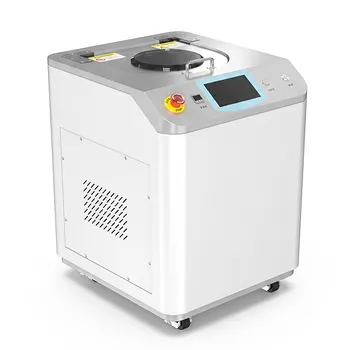
High Speed Vacuum Planetary Centrifugal Mixer and Defoamer for Industrial Paste Processing
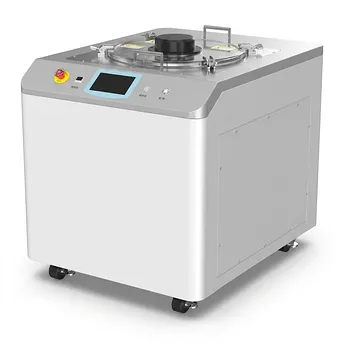
Industrial Planetary Centrifugal Vacuum Defoaming Mixer for High Viscosity Paste and Powder Homogenization
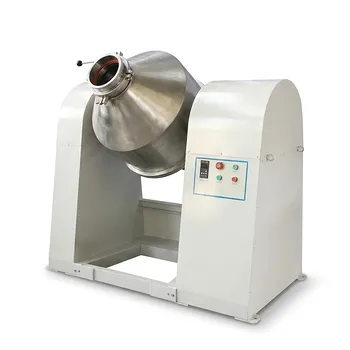
Industrial Double Cone Mixer for Powder Blending and Homogeneous Mixing
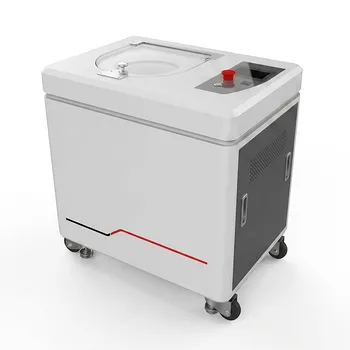
非介入式材料均质机真空脱泡行星搅拌高粘度混合设备
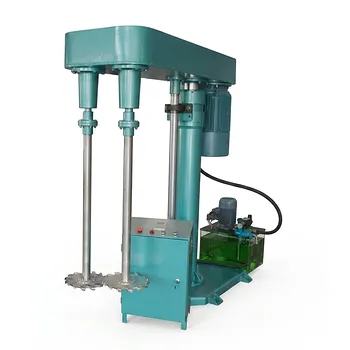
Hydraulic Double Shaft Disperser for High Viscosity Liquid Mixing and Dispersion
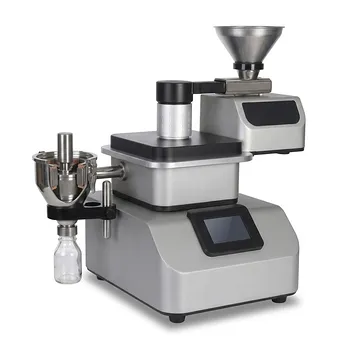
Ultra Centrifugal Mill for Rapid Laboratory Sample Preparation and Fine Powder Grinding
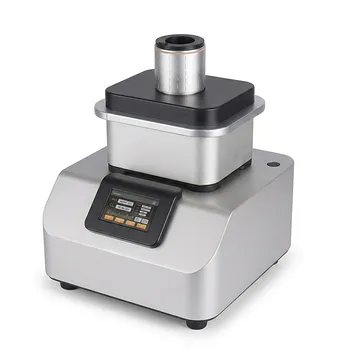
Ultra Centrifugal Mill High Speed Laboratory Grinder for Fibrous and Brittle Sample Preparation
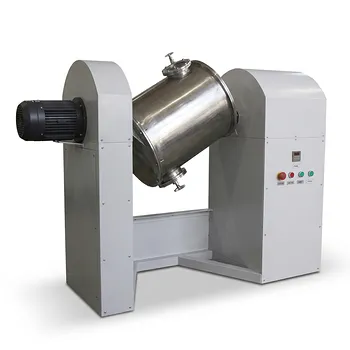
Inclined Mixer for Homogeneous Powder Blending and Grinding
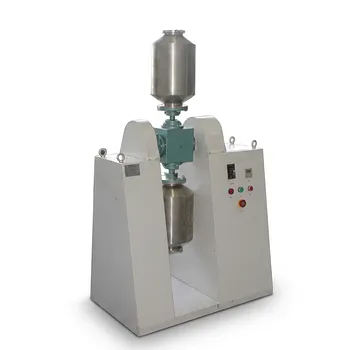
Multi Dimensional Universal Mixer for High Uniformity Powder Blending
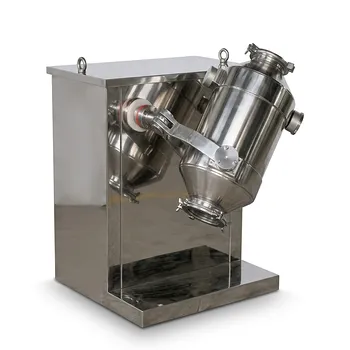
Three-Dimensional Motion Mixer for Laboratory Powder and Granule Blending
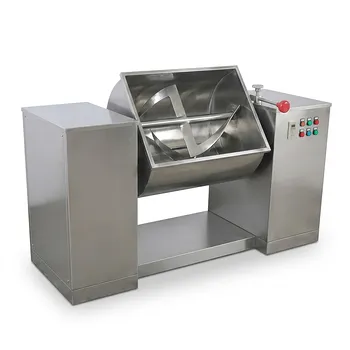
Horizontal Trough Mixer for Uniform Powder and Paste Blending
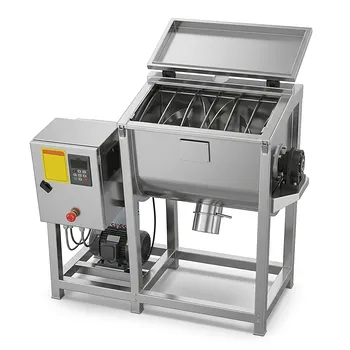
Horizontal Ribbon Mixer for Uniform Powder and Slurry Mixing
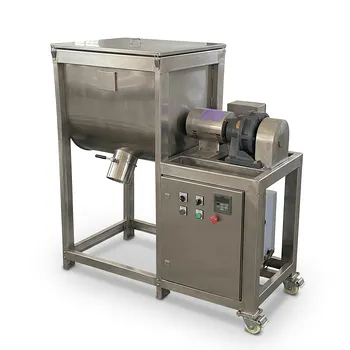
Horizontal Ribbon Mixer for Dry Powder and Slurry Blending
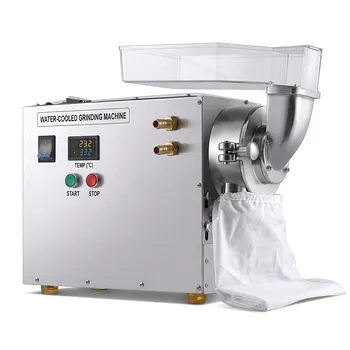
Water Cooled Graduated Continuous Feed Pulverizer for Industrial Powder Processing and Laboratory Material Preparation