Why increase revolution radius for high-viscosity materials? Optimize Mixing Performance with Centrifugal Acceleration
Updated 5 months ago
Increasing the revolution radius is the most effective way to process high-viscosity materials because it directly scales the centrifugal acceleration needed to overcome internal viscous resistance.
While increasing rotation speed primarily adds shear, it cannot match a larger radius's ability to generate the normal pressure required to push stubborn pastes against the container wall. This pressure induces a more intense rheological response, which is the fundamental requirement for fluidizing and dispersing materials with high solid content.
Core Takeaway: To mix high-viscosity materials effectively, you must generate enough centrifugal stress to overcome their internal friction; increasing the revolution radius achieves this more efficiently than speed, ensuring thorough fluidization without the risks of back-mixing.
The Physics of Centrifugal Stress
Overcoming Viscous Resistance
In viscosity-dominated regimes, materials behave more like semi-solids than liquids. To initiate any meaningful mixing, the equipment must generate enough centrifugal stress to break the material's internal bonds.
Generating Normal Pressure
A larger revolution radius significantly enhances centrifugal acceleration, often reaching forces between 300 to 1000 G. This force creates a powerful normal pressure that pins the material against the container wall, providing the stable foundation needed for thorough dispersion.
Inducing Rheological Flow
By increasing the radius, you induce a more intense rheological response at a fixed rotation-to-revolution speed ratio. This "fluidizes" the high-solid-content paste, allowing it to move and blend in a way that pure rotational speed cannot achieve.
Why Speed Alone Often Fails
The Risk of Back-Mixing
Increasing the rotation speed too aggressively can lead to back-mixing. This phenomenon occurs when the speed is mismatched with the load, causing the material to tumble chaotically rather than flow predictably, which ultimately degrades the mixing quality.
Superficial Agitation
High rotation speeds provide localized shear forces that are excellent for breaking down agglomerates. However, without the massive G-forces of a large revolution radius, these shear forces may only affect the surface of a thick paste, leaving the bulk of the material stagnant.
Heat Generation
Excessive rotation speeds generate significant frictional heat within high-viscosity materials. A larger radius allows for high-energy processing at lower, more controlled RPMs, reducing the risk of thermal degradation to sensitive resins or additives.
Integrated Benefits of Large Radius Revolution
Enhanced Deaeration
The powerful centrifugal acceleration generated by a large radius is the primary driver for density-based separation. It forces denser liquids and solids outward while simultaneously driving lighter air bubbles toward the center or the free surface for removal.
Progressive Filler Integration
While high rotation speeds provide the shear to break down filler agglomerates, the revolution radius provides the pressure to wet and integrate those powders into the resin matrix. This ensures that micron-sized or finer particles are uniformly distributed throughout the entire volume.
Consistency Across Batches
A larger revolution radius provides a more stable and "forgiving" environment for varying loads. It ensures that even as material properties shift during the mixing process, the centrifugal stress remains high enough to maintain fluidization.
Understanding the Trade-offs
Mechanical Stress on Equipment
Increasing the revolution radius increases the physical footprint and the mechanical stress on the mixer’s drive system. Large-radius machines require more robust balancing and heavier frames to handle the increased momentum safely.
The Limits of Shear
While a large radius handles the macro-mixing and deaeration, it does not replace the need for rotation. If the rotation speed is kept too low relative to a massive revolution radius, the material may be pressed so hard against the wall that it fails to undergo the internal shear necessary to break down fine clusters.
Optimizing Your Mixing Protocol
How to Apply This to Your Project
To achieve the best results with high-viscosity materials, your strategy should prioritize the mechanical lever that best matches your material's resistance.
- If your primary focus is deaeration of thick pastes: Prioritize a larger revolution radius to maximize G-forces and force air bubbles to the surface efficiently.
- If your primary focus is wetting dry powder fillers: Use a moderate rotation speed to prevent splashing, supported by a large radius to ensure the powder is pressed into the liquid matrix.
- If your primary focus is preventing material degradation: Opt for a larger revolution radius rather than extreme RPMs to minimize heat buildup and avoid the pitfalls of back-mixing.
Mastering the relationship between radius and speed allows you to transform the most stubborn high-viscosity materials into perfectly uniform, air-free dispersions.
Summary Table:
| Feature | Increasing Revolution Radius | Increasing Rotation Speed |
|---|---|---|
| Primary Driver | Centrifugal Acceleration (G-force) | Localized Shear Force |
| Effect on Material | Overcomes bulk viscous resistance | Breaks down surface agglomerates |
| Internal Pressure | High normal pressure (300-1000G) | Low; may lead to surface agitation |
| Heat Generation | Low; high energy at controlled RPMs | High; risk of thermal degradation |
| Key Benefit | Superior deaeration & fluidization | Rapid particle size reduction |
| Main Risk | Mechanical footprint & stress | Back-mixing & uneven dispersion |
Master Your Material Preparation with Precision Engineering
Are you struggling to achieve uniform, bubble-free dispersions in your high-viscosity pastes? At [Company Name], we provide complete laboratory sample preparation solutions tailored for material science. We specialize in high-performance powder processing and compaction equipment designed to meet the most rigorous research and production standards.
Our extensive product line includes:
- Advanced Mills & Mixers: Planetary ball mills, jet mills, and planetary centrifugal mixers for perfect homogenization and deaeration.
- Powder Processing: Crushers (jaw/roll), cryogenic grinders, and specialized sieve shakers (vibratory/air-jet).
- High-Pressure Compaction: A full spectrum of hydraulic presses, including Cold/Warm Isostatic Presses (CIP/WIP), standard lab presses, XRF pellet presses, and vacuum hot presses.
Whether you are processing advanced ceramics, battery slurries, or sensitive resins, our experts are here to help you optimize your workflow. Contact us today to find the perfect solution for your laboratory!
References
- Yoshiyuki Komoda, Naoto Ohmura. Estimation of mean shear rate in a vessel of a planetary centrifugal mixer based on the heat balance equation. DOI: 10.1016/j.cherd.2024.01.006
Mentioned Products
- High Viscosity Planetary Centrifugal Vacuum Mixer for Material Defoaming and Uniform Mixing
- High Efficiency Vacuum Planetary Centrifugal Mixer and Defoaming Machine for Industrial Material Research and Precise Laboratory Powder Dispersion
- Industrial Planetary Centrifugal Vacuum Defoaming Mixer for High Viscosity Paste and Powder Homogenization
- High Viscosity Planetary Centrifugal Mixing and Vacuum Defoaming Machine for Laboratory Material Preparation
- High Speed Vacuum Planetary Centrifugal Mixer and Defoamer for Industrial Paste Processing
People Also Ask
- What core functions does a planetary centrifugal mixer perform? Optimize Hard Carbon Anode Slurry & Degassing
- Why is a planetary centrifugal mixer recommended for geopolymer slurries? Achieve high-shear, air-free homogenization.
- Why is a planetary centrifugal mixer utilized for wood powder and HPMC? Achieve uniform dispersion & rapid defoaming.
- How does a planetary centrifugal mixer address key challenges in Tyr-CDs@EVA optical films? Ensure Optical Clarity.
- What is the role of a planetary centrifugal mixer in UHTC slurry preparation? Achieve Void-Free, High-Viscosity Mixing

Tech Team · PowderPreparation
Last updated on May 14, 2026
Related Products
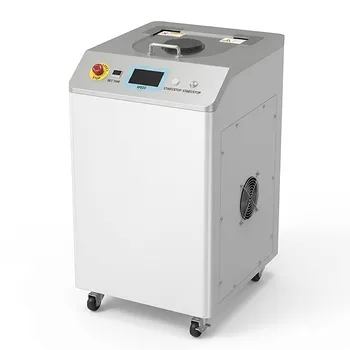
High Viscosity Planetary Centrifugal Vacuum Mixer for Material Defoaming and Uniform Mixing
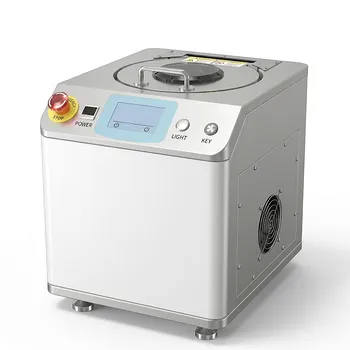
High Efficiency Vacuum Planetary Centrifugal Mixer and Defoaming Machine for Industrial Material Research and Precise Laboratory Powder Dispersion
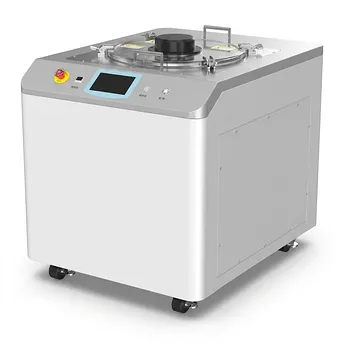
Industrial Planetary Centrifugal Vacuum Defoaming Mixer for High Viscosity Paste and Powder Homogenization
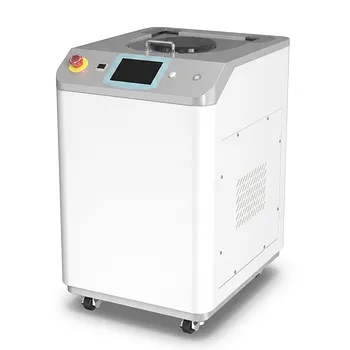
High Viscosity Planetary Centrifugal Mixing and Vacuum Defoaming Machine for Laboratory Material Preparation
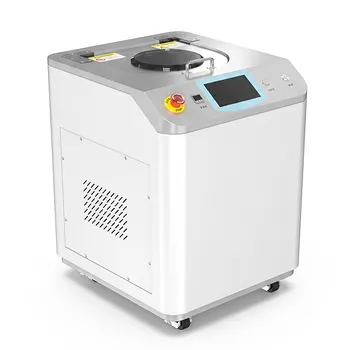
High Speed Vacuum Planetary Centrifugal Mixer and Defoamer for Industrial Paste Processing
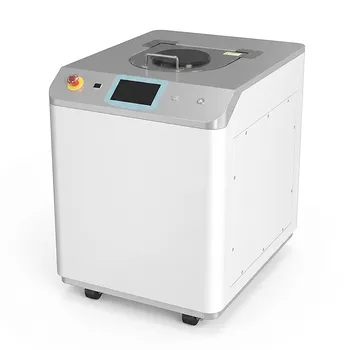
Industrial Planetary Centrifugal Vacuum Defoaming Mixer for High Viscosity Paste and Advanced Material Science
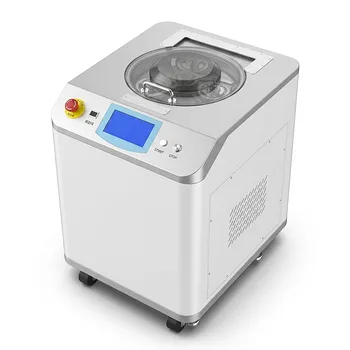
Dual Cup Vacuum Centrifugal Mixer Planetary Paste Defoaming Machine Industrial Material Processor
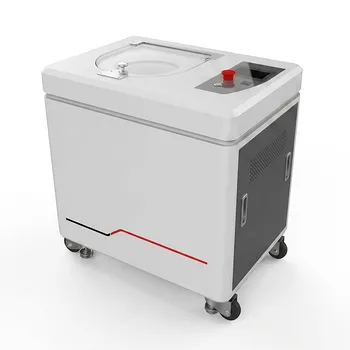
非介入式材料均质机真空脱泡行星搅拌高粘度混合设备

360° Rotating Omnidirectional Laboratory Planetary Ball Mill for Homogeneous Ultra-Fine Grinding and Mixing
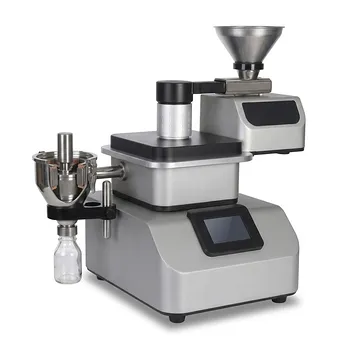
Ultra Centrifugal Mill for Rapid Laboratory Sample Preparation and Fine Powder Grinding
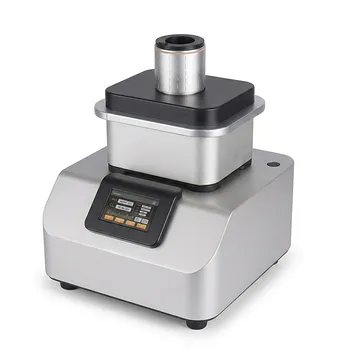
Ultra Centrifugal Mill High Speed Laboratory Grinder for Fibrous and Brittle Sample Preparation
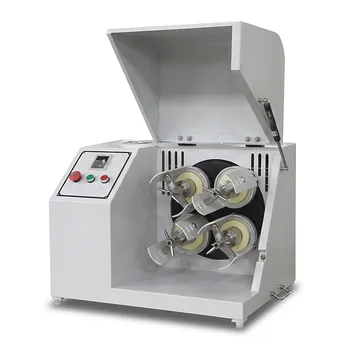
Horizontal Light Duty Planetary Ball Mill for Laboratory Sample Preparation
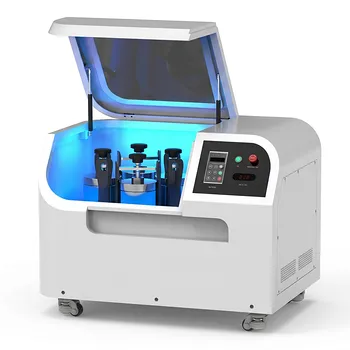
Planetary Ball Mill 12L
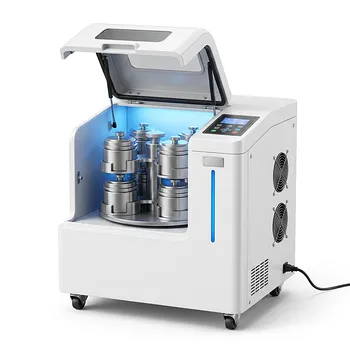
High Energy Omnidirectional Planetary Ball Mill 20L
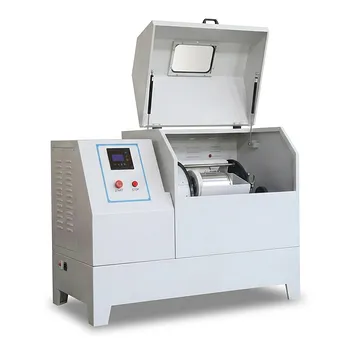
Heavy Duty Horizontal Planetary Ball Mill for Efficient Industrial Grinding and Sample Preparation

Vertical Production Planetary Ball Mill for High Throughput Powder Processing

High Energy Omnidirectional Planetary Ball Mill 16L

Miniature Planetary Ball Mill with Vacuum Grinding and High Efficiency for Laboratory Sample Preparation

Vertical Square Planetary Ball Mill for Laboratory Sample Preparation and Nanoscale Grinding