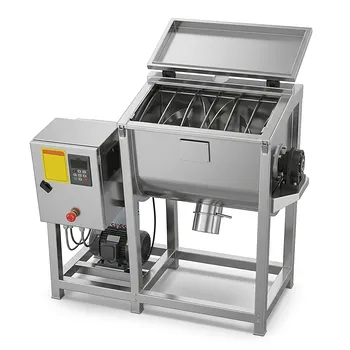
What process advantages do planetary gravity mixers provide for r-GO/RuO2 electrodes? Achieve Superior Nanoscale Dispersion
Updated 5 months ago
Planetary gravity mixers provide superior homogenization of r-GO/RuO2 composite electrodes by utilizing simultaneous revolution and rotation to generate intense shear and centrifugal forces. This process allows for the uniform embedding of RuO2 nano-catalytic particles into the viscoelastic Graphene Oxide (GO) matrix in a fraction of the time required by traditional methods. Furthermore, the integrated defoaming action eliminates micro-bubbles, ensuring a continuous and robust electrochemical interface.
Core Takeaway: By combining high-intensity dispersion with simultaneous bubble elimination, planetary gravity mixers create a highly uniform, agglomerate-free electrode slurry that maximizes the contact area between catalyst particles and the conductive scaffold.
Precision Nanoscale Dispersion and Embedding
Generating Powerful Shear Forces
The dual-motion of revolution and rotation generates high-intensity shear forces that are essential for breaking down nano-scale agglomerates of RuO2. These forces ensure that the oxide particles are distributed at a nanometer scale throughout the mix rather than clumping.
Integration into Viscoelastic Matrices
Reduced Graphene Oxide (r-GO) often exists in a viscoelastic dough-like state or high-viscosity slurry that resists standard stirring. Planetary mixers effectively "force" the RuO2 particles into this dense matrix, creating a tightly integrated composite structure.
Maximizing the Electrochemical Interface
The primary advantage of this uniform embedding is the creation of a tight and continuous interface between the catalyst and the conductive GO scaffold. This maximized contact area is critical for reducing internal resistance and improving the capacitance of the final electrode.
Superior Material Quality and Structural Integrity
Simultaneous De-foaming
As the mixer rotates, centrifugal forces drive heavier material outward while forcing micro-bubbles to the surface where they collapse. This simultaneous de-foaming is vital for preventing voids in the electrode layer that could lead to structural failure or poor conductivity.
Bladeless Mixing Benefits
Because these mixers use centrifugal force rather than physical blades, there is zero risk of cross-contamination from the mixing apparatus. This preserves the high purity of the RuO2 and GO components, which is essential for maintaining electrochemical stability.
Optimal Rheology for Processing
The high-speed homogenization results in a slurry with excellent fluidity and thixotropic properties. These characteristics are necessary for advanced manufacturing techniques like Direct Ink Writing (DIW) or screen printing, where ink stability is paramount.
Understanding the Trade-offs
Heat Generation and Management
The intense kinetic energy used to disperse nanoparticles can lead to significant heat buildup within the mixing vessel. If temperature-sensitive binders or gelling agents are used, active cooling or interval mixing cycles may be required to prevent degradation.
Equipment Cost and Batch Limitations
Planetary centrifugal mixers generally involve a higher capital investment compared to traditional overhead stirrers. Additionally, they are typically designed for batch processing rather than continuous production, which may limit throughput for high-volume industrial applications.
Material Loading Sensitivities
The efficiency of the centrifugal force is highly dependent on the filling ratio and the density of the materials. Improperly balanced containers or suboptimal volume levels can lead to inconsistent mixing results or excessive vibration in the equipment.
How to Apply This to Your Project
Making the Right Choice for Your Goal
To achieve the best results with r-GO/RuO2 composites, your equipment choice should align with your specific manufacturing constraints and performance targets.
- If your primary focus is Direct Ink Writing (DIW) or 3D Printing: Prioritize a mixer that offers precise control over thixotropic properties and total air bubble elimination to ensure extrusion stability.
- If your primary focus is Maximum Catalytic Efficiency: Use high-speed revolution settings to ensure the smallest possible RuO2 particle size and the highest surface area contact with the GO scaffold.
- If your primary focus is Material Purity: Leverage the bladeless nature of the planetary mixer to avoid metallic contamination that can interfere with electrochemical measurements.
- If your primary focus is High-Viscosity Pastes: Ensure the mixer is rated for high-torque operation to effectively move the dense GO dough matrix without stalling.
By leveraging the unique centrifugal dynamics of planetary mixers, you can produce highly stable r-GO/RuO2 electrodes with the structural integrity required for high-performance energy storage.
Summary Table:
| Feature | Process Advantage | Impact on Electrode Quality |
|---|---|---|
| Dual-Rotation Motion | High-intensity shear forces | Nanoscale dispersion of RuO2 without agglomerates. |
| Integrated Defoaming | Centrifugal bubble elimination | Prevents structural voids; ensures continuous conductivity. |
| Bladeless Design | Zero contact contamination | Maintains chemical purity for stable electrochemical results. |
| High-Torque Mixing | Processes viscoelastic matrices | Uniformly embeds particles into dense, dough-like GO. |
| Rheology Control | Optimized thixotropic properties | Enhances suitability for DIW and screen printing. |
Elevate Your Material Research with Precision Engineering
Achieving the perfect r-GO/RuO2 composite requires more than just mixing—it requires a complete, high-performance preparation workflow. At our facility, we specialize in providing complete laboratory sample preparation solutions for material science, focusing on advanced powder processing and compaction equipment.
Whether you are refining electrode slurries or developing new energy storage materials, our extensive product line supports every stage of your project:
- Mixing & Homogenization: Planetary gravity mixers and vacuum defoaming mixers for air-free, uniform dispersions.
- Milling & Grinding: High-energy planetary ball mills, jet mills, and liquid nitrogen cryogenic grinders for ultrafine particle reduction.
- Compaction & Synthesis: A full spectrum of hydraulic presses, including Cold/Warm Isostatic Presses (CIP/WIP), vacuum hot presses, and XRF pellet presses.
- Sizing & Classification: Precision sieve shakers (vibratory/air-jet) and high-quality test meshes.
Ready to optimize your lab’s efficiency and material performance? Contact us today to consult with our experts and find the ideal equipment configuration for your specific research goals.
References
- Che-Ning Yeh, Jiaxing Huang. Binder-free graphene oxide doughs. DOI: 10.1038/s41467-019-08389-6
Mentioned Products
- Industrial Planetary Centrifugal Vacuum Defoaming Mixer for High Viscosity Paste and Powder Homogenization
- High Viscosity Planetary Centrifugal Vacuum Mixer for Material Defoaming and Uniform Mixing
- Industrial Planetary Centrifugal Vacuum Defoaming Mixer for High Viscosity Paste and Advanced Material Science
- High Efficiency Vacuum Planetary Centrifugal Mixer and Defoaming Machine for Industrial Material Research and Precise Laboratory Powder Dispersion
- High Viscosity Planetary Centrifugal Mixing and Vacuum Defoaming Machine for Laboratory Material Preparation
People Also Ask
- What are the advantages of planetary centrifugal mixers for LSM-CeO2 slurries? Superior Results
- Why is a planetary centrifugal defoaming mixer essential in battery slurry? Achieve High Homogeneity & Degassing
- What is the function of industrial planetary centrifugal mixers in 3D printing inks? Achieve Perfect Homogenization
- What are the primary advantages of planetary centrifugal mixers? Master Bladeless Mixing & Vacuum Defoaming
- How does the tilt angle of the container influence fluid flow within a planetary centrifugal mixer? Master 3D Convection

Tech Team · PowderPreparation
Last updated on May 14, 2026
Related Products
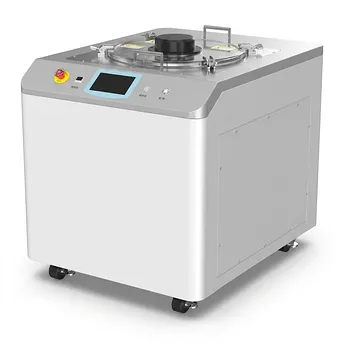
Industrial Planetary Centrifugal Vacuum Defoaming Mixer for High Viscosity Paste and Powder Homogenization
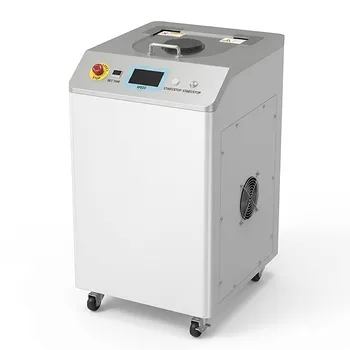
High Viscosity Planetary Centrifugal Vacuum Mixer for Material Defoaming and Uniform Mixing
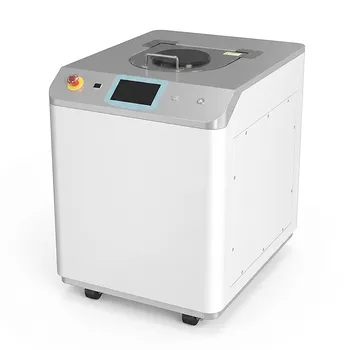
Industrial Planetary Centrifugal Vacuum Defoaming Mixer for High Viscosity Paste and Advanced Material Science
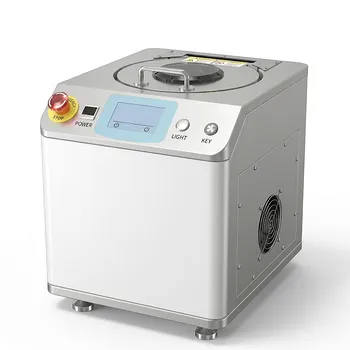
High Efficiency Vacuum Planetary Centrifugal Mixer and Defoaming Machine for Industrial Material Research and Precise Laboratory Powder Dispersion
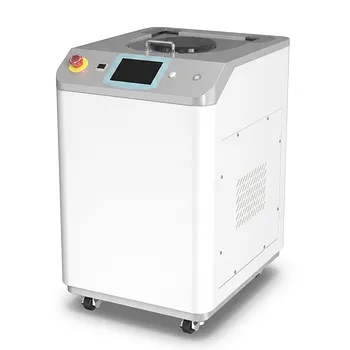
High Viscosity Planetary Centrifugal Mixing and Vacuum Defoaming Machine for Laboratory Material Preparation
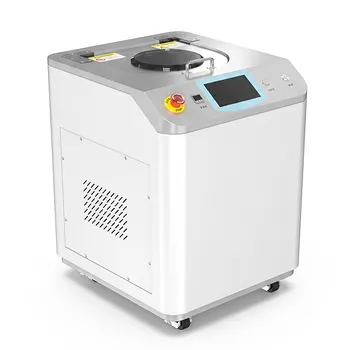
High Speed Vacuum Planetary Centrifugal Mixer and Defoamer for Industrial Paste Processing
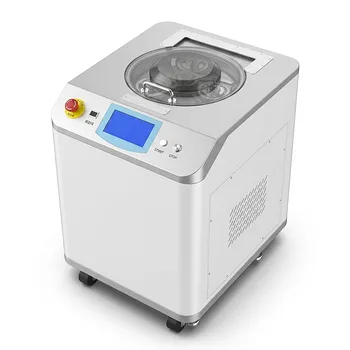
Dual Cup Vacuum Centrifugal Mixer Planetary Paste Defoaming Machine Industrial Material Processor
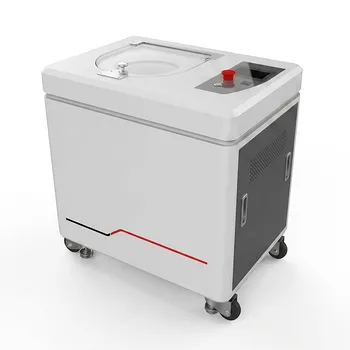
非介入式材料均质机真空脱泡行星搅拌高粘度混合设备
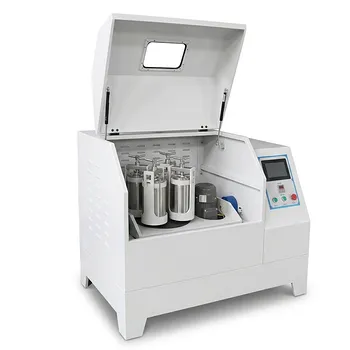
360° Rotating Omnidirectional Laboratory Planetary Ball Mill for Homogeneous Ultra-Fine Grinding and Mixing
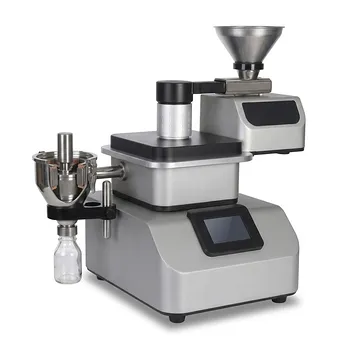
Ultra Centrifugal Mill for Rapid Laboratory Sample Preparation and Fine Powder Grinding
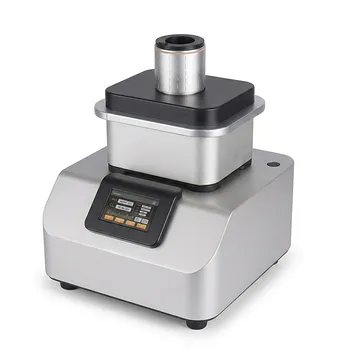
Ultra Centrifugal Mill High Speed Laboratory Grinder for Fibrous and Brittle Sample Preparation
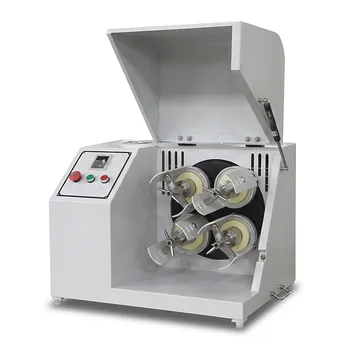
Horizontal Light Duty Planetary Ball Mill for Laboratory Sample Preparation
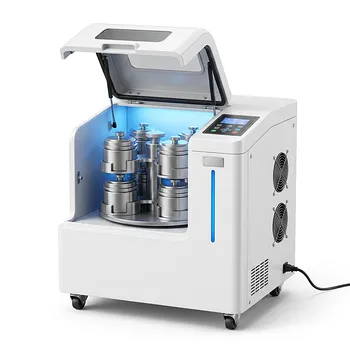
High Energy Omnidirectional Planetary Ball Mill 20L
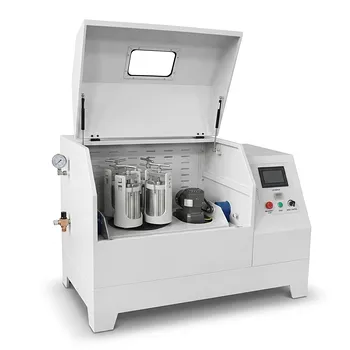
Vertical Production Planetary Ball Mill for High Throughput Powder Processing
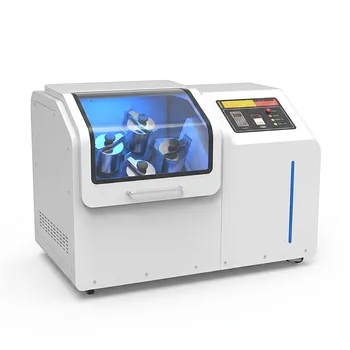
High Energy Omnidirectional Planetary Ball Mill 16L
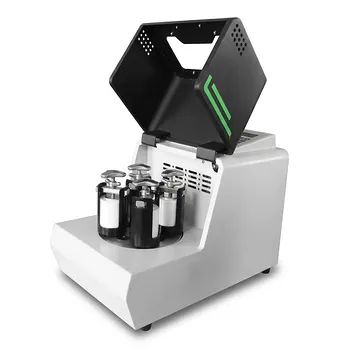
Miniature Planetary Ball Mill with Vacuum Grinding and High Efficiency for Laboratory Sample Preparation