How do multi-station feed nozzles on a centrifugal mixer cover facilitate the continuous mixing process? Expert Guide
Updated 5 months ago
Multi-station feed nozzles facilitate continuous mixing by enabling the simultaneous and synchronized entry of multiple independent components into the mixing chamber. By allowing ingredients to interact before they even reach the primary mixing zone, these nozzles establish a foundation for precise material distribution and consistent formulation ratios. This configuration is essential for maintaining the high-speed flow required in industrial continuous processing.
Multi-station feed nozzles act as a critical pre-conditioning stage that ensures precise ingredient ratios and micro-level dispersion, which are vital for maintaining the quality and continuity of centrifugal mixing operations.
The Mechanism of Simultaneous Component Entry
Streamlining Ingredient Interaction
Multi-station nozzles connect to separate feeders, allowing various components to be introduced into the mixer concurrently. This setup ensures that ingredients begin to blend and interact the moment they enter the system.
By initiating this interaction early, the system sets a baseline for homogeneity before the material reaches the high-energy conical stages. This prevents "slugging" or uneven pockets of material from forming.
Establishing Formulation Accuracy
A continuous process relies on the strict adherence to specific formulation ratios over long periods. Multi-station nozzles allow each component to be metered independently and accurately.
This independent control ensures that the final product remains consistent, even if the flow rates of individual ingredients change. The result is a stable, predictable output that meets rigorous quality standards.
Enhancing Material Distribution via Centrifugal Force
Atomization and Micro-Dispersion
In many centrifugal configurations, the nozzle system introduces liquids directly into a rotating distribution head. The intense centrifugal force generated by this head atomizes the liquid into a fine mist.
This atomized liquid is then forced to penetrate dry powder particles as they are ejected from the channels. This process achieves micron-level dispersion, which is necessary for high-quality wet mixtures and slurries.
Preventing Material Agglomeration
One of the primary challenges in mixing is the formation of clumps, or agglomeration. The fine mist created by the atomization nozzles ensures that liquids are distributed evenly across all particle surfaces.
By avoiding "pooling" of liquids, the system prevents the dry powder from clumping together. This results in a smoother, more uniform mixture that is easier to process in downstream stages.
Understanding the Trade-offs
Complexity of Synchronization
Managing a multi-station feed system requires a high degree of synchronization between multiple independent feeders. If one feeder experiences a lag or blockage, the ratio of the entire mixture is immediately compromised.
This requires sophisticated control logic and real-time monitoring to ensure that the "continuous" nature of the process does not lead to large volumes of off-spec product.
Maintenance and Clogging Risks
Fine-delivery nozzles used for atomization are sensitive to the physical properties of the materials being fed. Particulate-heavy liquids or materials that dry quickly can cause clogs within the nozzle orifices.
Regular maintenance and specialized cleaning protocols are often necessary to keep these stations operational. A failure in just one nozzle can disrupt the entire production line.
How to Apply This to Your Project
When integrating multi-station nozzles into your production line, consider your primary manufacturing goals:
- If your primary focus is formulation precision: Utilize multi-station nozzles to ensure independent feeders maintain strict ratio control from the very beginning of the material flow.
- If your primary focus is micro-level dispersion: Leverage centrifugal atomization features to achieve deep liquid penetration into dry powders and prevent clump formation.
- If your primary focus is process throughput: Implement automated monitoring systems to synchronize all feed lines and prevent downtime caused by ingredient imbalances.
Correctly configured multi-station nozzles transform a standard mixer into a highly precise, continuous production engine capable of delivering superior material homogeneity.
Summary Table:
| Feature | Mechanism | Benefit to Continuous Process |
|---|---|---|
| Simultaneous Entry | Concurrent flow of multiple components | Prevents material "slugging" and ensures early homogeneity. |
| Independent Metering | Precise control of individual feed rates | Maintains strict formulation ratios for consistent product quality. |
| Centrifugal Atomization | High-speed liquid dispersion into mist | Achieves micron-level dispersion and deep powder penetration. |
| Pre-conditioning Stage | Micro-dispersion before the primary zone | Eliminates agglomeration and clumping for smoother downstream processing. |
Elevate Your Material Consistency with Expert Mixing Solutions
Precision in powder processing starts with the right equipment. At [Company Name], we provide complete laboratory sample preparation solutions for material science, specializing in high-performance powder processing and compaction.
Whether you need to achieve micron-level dispersion with our centrifugal and defoaming mixers or require robust equipment for volume reduction and forming, our extensive line has you covered:
- Advanced Milling: Planetary ball mills, jet mills, and cryogenic grinders.
- Size Reduction: Jaw and roll crushers for primary processing.
- Compaction Excellence: A full spectrum of hydraulic presses, including Cold/Warm Isostatic Presses (CIP/WIP), vacuum hot presses, and XRF pellet presses.
- Sieving & Mixing: Precision sieve shakers and high-uniformity powder mixers.
Ready to optimize your continuous mixing workflow? Contact our technical team today to find the perfect solution for your specific material challenges!
References
- Andrey Globin, A. M. Kurgansky. Theoretical studies of the process of mixing feed with a centrifugal mixer. DOI: 10.51419/202145504.
Mentioned Products
- High Viscosity Planetary Centrifugal Vacuum Mixer for Material Defoaming and Uniform Mixing
- Dual Cup Vacuum Centrifugal Mixer Planetary Paste Defoaming Machine Industrial Material Processor
- Industrial Planetary Centrifugal Vacuum Defoaming Mixer for High Viscosity Paste and Powder Homogenization
- High Efficiency Vacuum Planetary Centrifugal Mixer and Defoaming Machine for Industrial Material Research and Precise Laboratory Powder Dispersion
- High Speed Vacuum Planetary Centrifugal Mixer and Defoamer for Industrial Paste Processing
People Also Ask
- What core functions does a planetary centrifugal mixer perform? Optimize Hard Carbon Anode Slurry & Degassing
- Why is a planetary centrifugal mixer recommended for geopolymer slurries? Achieve high-shear, air-free homogenization.
- Why is a planetary centrifugal mixer utilized for wood powder and HPMC? Achieve uniform dispersion & rapid defoaming.
- How does a planetary centrifugal mixer address key challenges in Tyr-CDs@EVA optical films? Ensure Optical Clarity.
- What is the role of a planetary centrifugal mixer in UHTC slurry preparation? Achieve Void-Free, High-Viscosity Mixing

Tech Team · PowderPreparation
Last updated on May 14, 2026
Related Products
High Viscosity Planetary Centrifugal Vacuum Mixer for Material Defoaming and Uniform Mixing
Dual Cup Vacuum Centrifugal Mixer Planetary Paste Defoaming Machine Industrial Material Processor
Industrial Planetary Centrifugal Vacuum Defoaming Mixer for High Viscosity Paste and Powder Homogenization
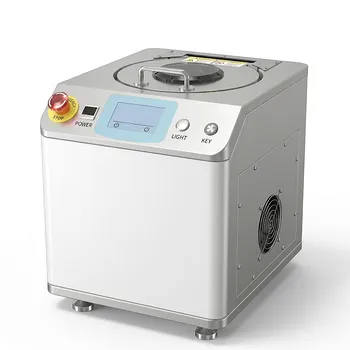
High Efficiency Vacuum Planetary Centrifugal Mixer and Defoaming Machine for Industrial Material Research and Precise Laboratory Powder Dispersion
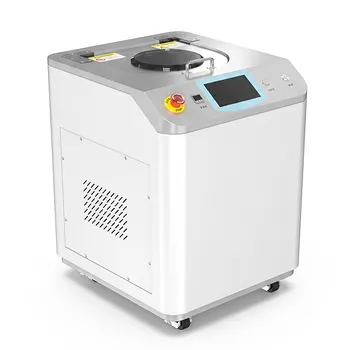
High Speed Vacuum Planetary Centrifugal Mixer and Defoamer for Industrial Paste Processing
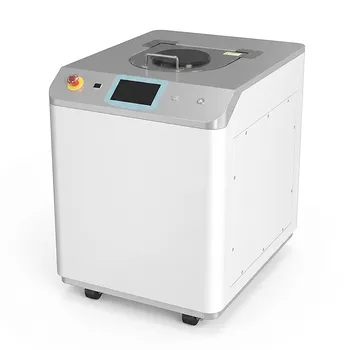
Industrial Planetary Centrifugal Vacuum Defoaming Mixer for High Viscosity Paste and Advanced Material Science
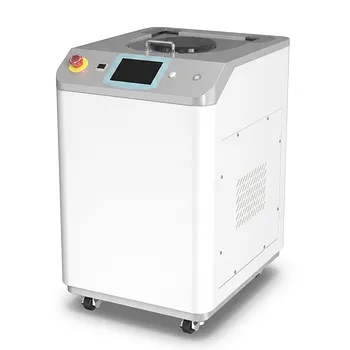
High Viscosity Planetary Centrifugal Mixing and Vacuum Defoaming Machine for Laboratory Material Preparation
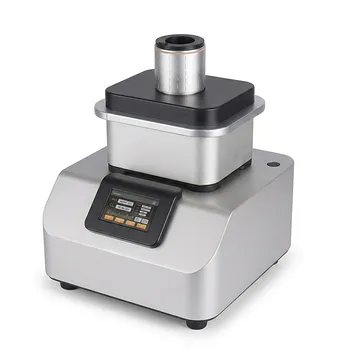
Ultra Centrifugal Mill High Speed Laboratory Grinder for Fibrous and Brittle Sample Preparation
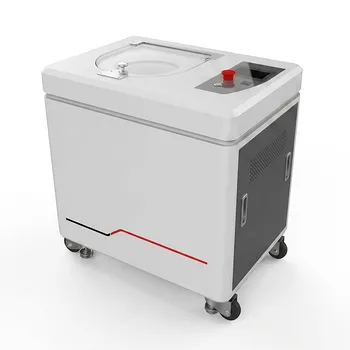
非介入式材料均质机真空脱泡行星搅拌高粘度混合设备
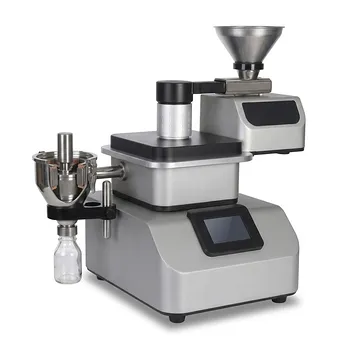
Ultra Centrifugal Mill for Rapid Laboratory Sample Preparation and Fine Powder Grinding
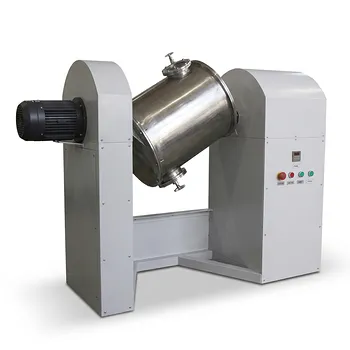
Inclined Mixer for Homogeneous Powder Blending and Grinding
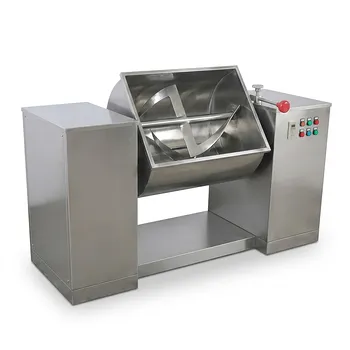
Horizontal Trough Mixer for Uniform Powder and Paste Blending
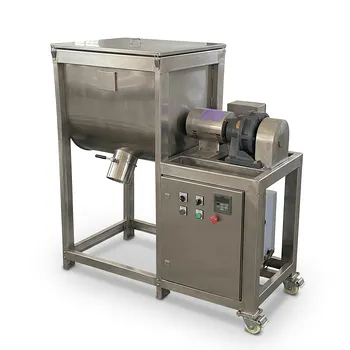
Horizontal Ribbon Mixer for Dry Powder and Slurry Blending
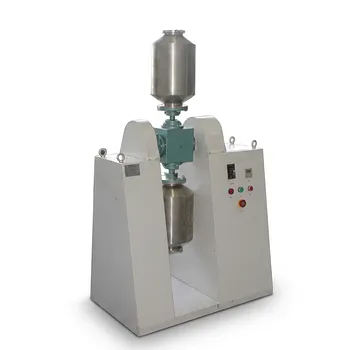
Multi Dimensional Universal Mixer for High Uniformity Powder Blending
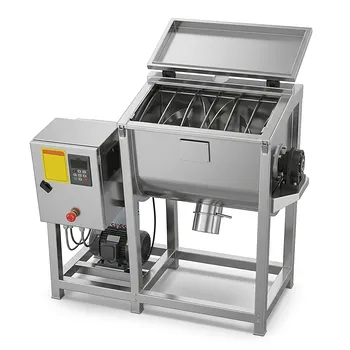
Horizontal Ribbon Mixer for Uniform Powder and Slurry Mixing
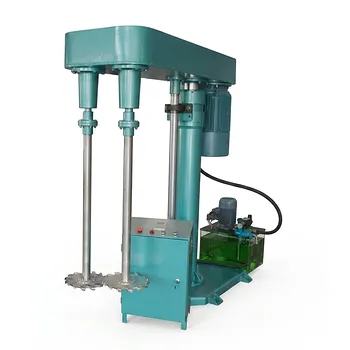
Hydraulic Double Shaft Disperser for High Viscosity Liquid Mixing and Dispersion
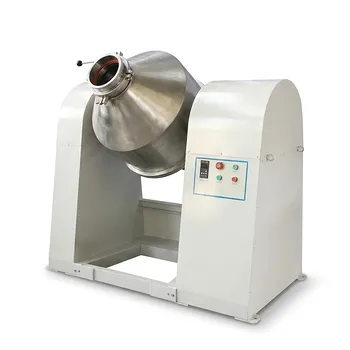
Industrial Double Cone Mixer for Powder Blending and Homogeneous Mixing
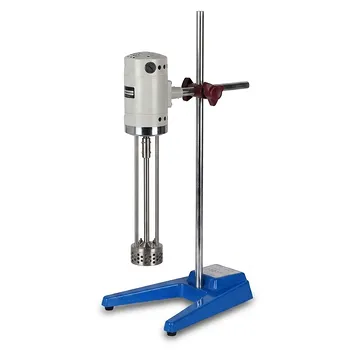
High Shear Laboratory Emulsifier for Mixing and Homogenization
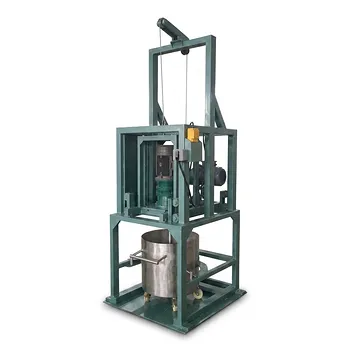
High-Speed Simple Disperser for Efficient Mixing, Dispersion, and Emulsification