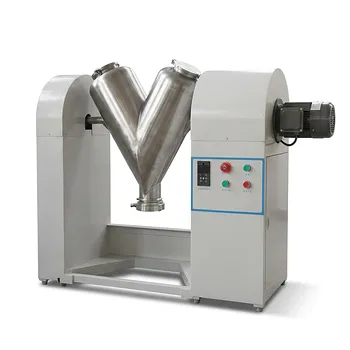
What is the role of a dedicated discharge scraper at the base of a centrifugal mixer housing? Eliminate Dead Zones
Updated 4 months ago
A dedicated discharge scraper is a mechanical guide designed to ensure the total evacuation of material from a centrifugal mixer. Mounted directly to the rotating shaft at the very bottom of the mixer casing, this component physically sweeps powdered materials into the discharge pipe. Its presence is essential for preventing product stagnation at the base of the stationary conical housing, thereby maintaining a steady flow for downstream processes.
The discharge scraper acts as a bridge between mixing and discharge, eliminating "dead zones" at the base of the housing. By mechanically forcing the product toward the outlet, it ensures batch consistency and prevents process bottlenecks.
The Engineering Necessity of Active Discharge
Preventing Material Stagnation
In many centrifugal mixers, gravity alone is insufficient to fully clear the base of a stationary conical housing. Powdered materials, especially those with high cohesive properties, tend to accumulate in the narrowest part of the vessel.
The discharge scraper rotates in tandem with the main shaft, physically displacing any material that settles at the bottom. This prevents the formation of "dead zones" where old product could sit, potentially contaminating subsequent batches.
Ensuring Continuous Production Flow
The transition from the mixing chamber to the discharge pipe is a common point of failure in automated production lines. If material does not exit at a predictable rate, it can cause surging or starving of downstream equipment.
By providing a mechanical assist, the scraper ensures a smooth and continuous discharge. This allows the next stage of the production line to operate at peak efficiency without manual intervention to clear blockages.
Understanding the Trade-offs and Maintenance
Mechanical Wear and Tear
Because the scraper is in constant contact with the moving product and operates in close proximity to the housing, it is a high-wear component. Depending on the abrasiveness of your materials, the scraper edge will degrade over time.
Failure to monitor this wear can lead to a gradual increase in residual material left in the mixer. Regularly scheduled inspections are necessary to ensure the scraper maintains its effective profile.
Calibration and Clearance Risks
The effectiveness of a discharge scraper depends on the precision of its clearance relative to the housing wall. If the gap is too large, material will build up; if it is too small, there is a risk of mechanical contact and metal-to-metal friction.
Proper alignment and calibration during installation are critical. Technicians must ensure the scraper is perfectly centered on the rotating shaft to avoid damaging the stationary casing.
Optimizing Discharge for Your Production Goals
Selecting and maintaining the right scraper configuration depends entirely on your specific process requirements and material characteristics.
- If your primary focus is batch purity: Use a scraper with high-precision clearance and food-grade materials to ensure zero residual buildup between product changeovers.
- If your primary focus is high-volume throughput: Prioritize heavy-duty, abrasion-resistant scraper blades that can withstand the constant mechanical stress of moving large quantities of material.
- If your primary focus is equipment longevity: Implement a rigorous vibration and alignment monitoring program to ensure the rotating scraper never makes contact with the stationary housing.
A well-maintained discharge scraper is the final, vital link in ensuring your mixing process remains efficient, consistent, and fully automated.
Summary Table:
| Feature | Function & Purpose | Key Benefit |
|---|---|---|
| Mechanical Sweep | Physically displaces powder from the conical base | Eliminates material "dead zones" |
| Active Discharge | Bridges the gap between mixing and outlet pipe | Ensures steady, predictable flow |
| Shaft Synchronization | Rotates in tandem with the main mixing shaft | Prevents accumulation of cohesive materials |
| Precision Clearance | Maintains a tight gap with the housing wall | Minimizes residual material between batches |
Optimize Your Powder Processing Workflow with Expert Solutions
Achieving perfect batch consistency requires more than just mixing—it requires total material recovery. At our core, we provide complete laboratory sample preparation solutions for material science, specializing in high-performance powder processing and compaction equipment.
Whether you need advanced centrifugal and defoaming mixers to eliminate air bubbles or heavy-duty crushers, planetary ball mills, and jet mills for precise particle sizing, our equipment is engineered to eliminate bottlenecks and ensure purity. We also offer a full spectrum of Hydraulic Presses (CIP/WIP) and Sieve Shakers to support your entire R&D or production cycle.
Ready to eliminate dead zones and enhance your lab's efficiency? Contact our technical experts today to find the perfect equipment for your application!
References
- Andrey Globin, A. M. Kurgansky. Theoretical studies of the process of mixing feed with a centrifugal mixer. DOI: 10.51419/202145504.
Mentioned Products
- High Viscosity Planetary Centrifugal Vacuum Mixer for Material Defoaming and Uniform Mixing
- Dual Cup Vacuum Centrifugal Mixer Planetary Paste Defoaming Machine Industrial Material Processor
- Industrial Planetary Centrifugal Vacuum Defoaming Mixer for High Viscosity Paste and Powder Homogenization
- High Efficiency Vacuum Planetary Centrifugal Mixer and Defoaming Machine for Industrial Material Research and Precise Laboratory Powder Dispersion
- High Speed Vacuum Planetary Centrifugal Mixer and Defoamer for Industrial Paste Processing
People Also Ask
- What core functions does a planetary centrifugal mixer perform? Optimize Hard Carbon Anode Slurry & Degassing
- Why is a planetary centrifugal mixer recommended for geopolymer slurries? Achieve high-shear, air-free homogenization.
- Why is a planetary centrifugal mixer utilized for wood powder and HPMC? Achieve uniform dispersion & rapid defoaming.
- How does a planetary centrifugal mixer address key challenges in Tyr-CDs@EVA optical films? Ensure Optical Clarity.
- What is the role of a planetary centrifugal mixer in UHTC slurry preparation? Achieve Void-Free, High-Viscosity Mixing

Tech Team · PowderPreparation
Last updated on May 14, 2026
Related Products
High Viscosity Planetary Centrifugal Vacuum Mixer for Material Defoaming and Uniform Mixing
Dual Cup Vacuum Centrifugal Mixer Planetary Paste Defoaming Machine Industrial Material Processor
Industrial Planetary Centrifugal Vacuum Defoaming Mixer for High Viscosity Paste and Powder Homogenization
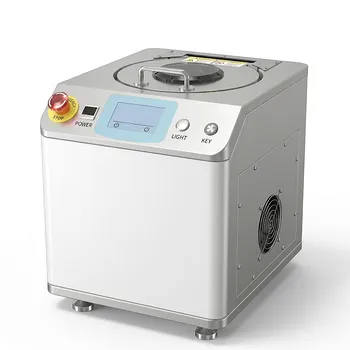
High Efficiency Vacuum Planetary Centrifugal Mixer and Defoaming Machine for Industrial Material Research and Precise Laboratory Powder Dispersion
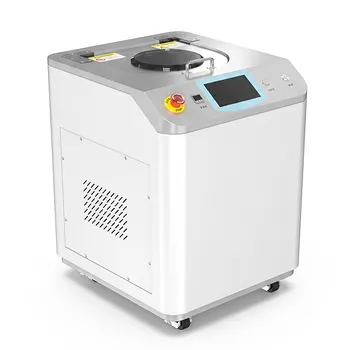
High Speed Vacuum Planetary Centrifugal Mixer and Defoamer for Industrial Paste Processing
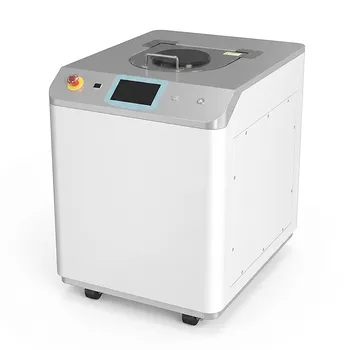
Industrial Planetary Centrifugal Vacuum Defoaming Mixer for High Viscosity Paste and Advanced Material Science
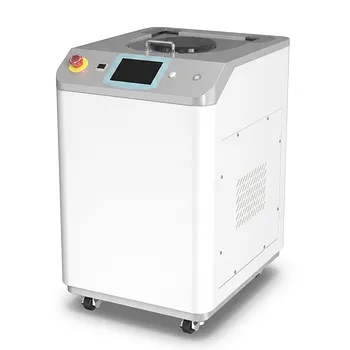
High Viscosity Planetary Centrifugal Mixing and Vacuum Defoaming Machine for Laboratory Material Preparation
Ultra Centrifugal Mill High Speed Laboratory Grinder for Fibrous and Brittle Sample Preparation
非介入式材料均质机真空脱泡行星搅拌高粘度混合设备
Ultra Centrifugal Mill for Rapid Laboratory Sample Preparation and Fine Powder Grinding
Inclined Mixer for Homogeneous Powder Blending and Grinding
Horizontal Trough Mixer for Uniform Powder and Paste Blending
Horizontal Ribbon Mixer for Dry Powder and Slurry Blending
Multi Dimensional Universal Mixer for High Uniformity Powder Blending
Horizontal Ribbon Mixer for Uniform Powder and Slurry Mixing
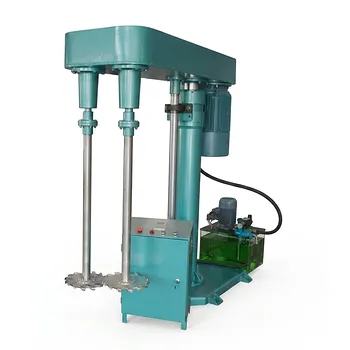
Hydraulic Double Shaft Disperser for High Viscosity Liquid Mixing and Dispersion
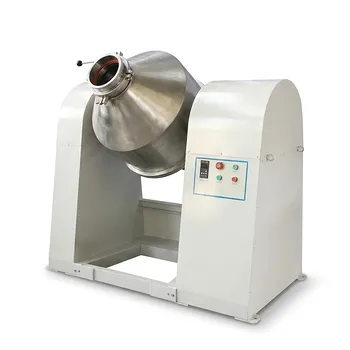
Industrial Double Cone Mixer for Powder Blending and Homogeneous Mixing
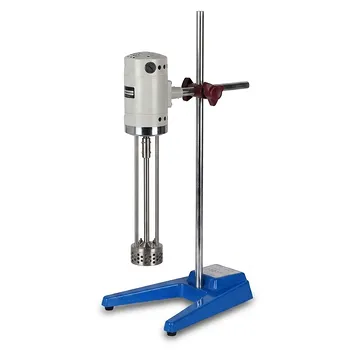
High Shear Laboratory Emulsifier for Mixing and Homogenization
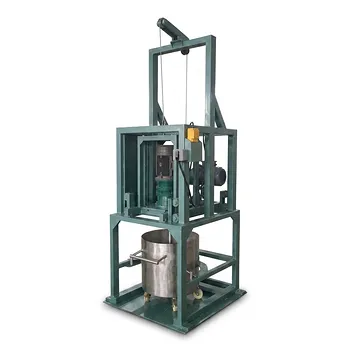
High-Speed Simple Disperser for Efficient Mixing, Dispersion, and Emulsification