What is the core mechanism of a planetary ball mill for cellulose processing? Master Mechanochemical Coupling.
Updated 5 months ago
The core mechanism is mechanochemical coupling. This process utilizes high-frequency impact and intense shear forces to physically disrupt the dense hydrogen bond network of cellulose. When assisted by ionic liquids, the mill facilitates the exfoliation of cellulose into nanofibers while uniquely preserving its original crystalline structure.
This process leverages high-energy collisions and centrifugal forces to refine cellulose powder into the nanoscale. By integrating ionic liquids, the planetary ball mill transitions from simple grinding to a sophisticated mechanochemical treatment that maintains material integrity while maximizing surface area.
The Mechanics of High-Energy Milling
Rotational Dynamics and Centrifugal Force
A planetary ball mill operates through the synchronized motion of a revolving sun wheel and counter-rotating grinding jars. This dual-rotation creates powerful centrifugal forces that propel grinding balls across the internal chamber with extreme velocity.
Impact and Shear Forces
The primary refinement occurs when high-strength grinding balls collide with the cellulose powder and the jar walls. These high-frequency impacts provide the energy necessary to pulverize the bulk material, while the sliding motion of the balls generates shear forces that aid in fiber separation.
Precision Control via Speed Ratios
Operators can influence the energy intensity by adjusting the speed ratio between the sun wheel and the jars. This precision allows for ultra-fine powder refinement and ensures the energy input is sufficient to deconstruct the fibers without causing excessive degradation.
Mechanochemical Transformation of Cellulose
Disruption of the Hydrogen Bond Network
Cellulose is held together by a highly ordered network of hydrogen bonds that resist standard processing. The mechanochemical energy from the mill effectively "unlocks" these bonds, allowing the cellulose structure to expand and accept processing aids.
Preserving Cellulose I Crystallinity
Unlike dry grinding, which often destroys the internal order of the material, processing with ionic liquids preserves the Cellulose I crystalline structure. This is critical for applications where the inherent mechanical strength of the native cellulose must be maintained.
Increasing Specific Surface Area
As the mill exfoliates the cellulose into nanofibers, it significantly increases the specific surface area. This exposure of active hydroxyl groups makes the resulting material far more reactive for subsequent chemical modifications or industrial applications.
The Role of Ionic Liquids in the Process
Facilitating Physical Exfoliation
The presence of ionic liquids acts as a medium that assists in the physical "peeling" or exfoliation of the cellulose layers. This leads to the production of high-aspect-ratio nanofibers that are difficult to achieve through mechanical force alone.
Green Manufacturing Standards
Ionic liquids used in this process typically exhibit high recovery rates, making the method environmentally sustainable. This alignment with green chemistry principles ensures that the high-yield production of nanofibers does not come at a high environmental cost.
Understanding the Trade-offs
Thermal Management and Localized Overheating
High-energy milling generates significant internal heat due to friction and impact. If not managed through speed control or interval milling, localized overheating can lead to undesired grain growth or thermal degradation of the cellulose.
Wet vs. Dry Grinding Outcomes
Choosing the correct medium is vital; dry grinding effectively breaks down crystalline structures into granular shapes for dispersion. In contrast, the wet grinding approach (using ionic liquids or plasticizers) is required if the goal is to produce elongated, high-strength nanofibers.
How to Apply This to Your Project
When implementing planetary ball milling for cellulose processing, your configuration should depend on your specific material requirements:
- If your primary focus is Reinforcement Strength: Utilize wet grinding with ionic liquids to preserve the Cellulose I structure and produce high-aspect-ratio nanofibers.
- If your primary focus is Matrix Dispersion: Opt for dry grinding parameters to transform cellulose into a granular morphology that integrates easily into polymer matrices.
- If your primary focus is Chemical Reactivity: Maximize the milling duration to increase the specific surface area and expose the highest number of active hydroxyl groups.
By mastering the balance between rotational energy and chemical assistance, you can transform raw cellulose into a high-performance, nanostructured material.
Summary Table:
| Process Aspect | Mechanism / Action | Key Benefit |
|---|---|---|
| Rotational Dynamics | Dual-rotation (sun wheel & jars) | High-velocity impact and intense shear |
| Mechanochemical Coupling | Physical disruption of H-bond network | Efficient refinement to the nanoscale |
| Ionic Liquid Role | Facilitated physical exfoliation | High-aspect-ratio nanofiber production |
| Structural Integrity | Preservation of Cellulose I structure | Maintains inherent mechanical strength |
| Surface Engineering | Increased specific surface area | Enhanced reactivity for modifications |
| Sustainability | High recovery rates of processing media | Green chemistry & low environmental cost |
Elevate Your Material Research with Precision Engineering
Achieving perfect cellulose exfoliation requires the right balance of energy and control. At [Your Brand Name], we provide complete laboratory sample preparation solutions tailored for material science. We specialize in high-performance powder processing and compaction equipment designed to meet the rigorous demands of advanced research.
Our extensive product line includes:
- Advanced Milling: Planetary ball mills, jet mills, and cryogenic grinders for ultra-fine particle size reduction.
- Compaction Excellence: A full spectrum of hydraulic presses, including Cold/Warm Isostatic Presses (CIP/WIP), vacuum hot presses, and XRF pellet presses.
- Sizing & Mixing: Vibratory sieve shakers and high-efficiency powder/defoaming mixers.
Whether you are refining nanofibers or developing new composites, our equipment ensures the material integrity and consistency your project deserves. Contact us today to find the perfect solution for your lab!
References
- Sumona Garg, Avanthi Althuri. Overcoming cost, energy, and process barriers for industrially viable nanocellulose production. DOI: 10.1007/s42452-025-07650-6
Mentioned Products
- Vertical Semi Circular Planetary Ball Mill for Laboratory Precision Grinding
- High Energy Planetary Ball Mill for Nano Scale Grinding and Mechanical Alloying
- Heavy Duty Horizontal Planetary Ball Mill for Efficient Industrial Grinding and Sample Preparation
- Vertical Production Planetary Ball Mill for High Throughput Powder Processing
- 360° Rotating Omnidirectional Laboratory Planetary Ball Mill for Homogeneous Ultra-Fine Grinding and Mixing
People Also Ask
- What role does a planetary ball mill play in the synthesis of Li6PS5Cl (LPSCl)? Unlock High Ionic Conductivity
- Why is a planetary ball mill essential for SiBCN-rGO wet-spinning? Achieve Superior Dispersion and Spinnability
- Why is an intermittent grinding process required for perovskites in a planetary ball mill? Ensure Stability & Purity
- Why is a planetary ball mill required for PET micronization? Ensure Accurate Chemical Analysis of Reprocessed PET
- How does mechanized planetary ball milling compare to manual agate grinding? Optimize sulfide standard material precision.

Tech Team · PowderPreparation
Last updated on May 14, 2026
Related Products
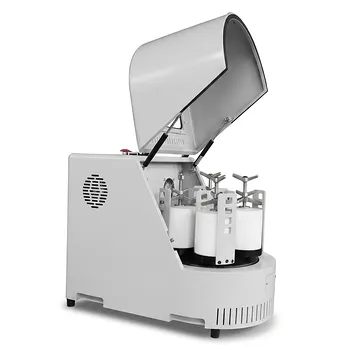
Vertical Semi Circular Planetary Ball Mill for Laboratory Precision Grinding

High Energy Planetary Ball Mill for Nano Scale Grinding and Mechanical Alloying
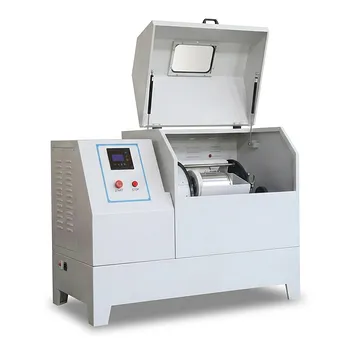
Heavy Duty Horizontal Planetary Ball Mill for Efficient Industrial Grinding and Sample Preparation
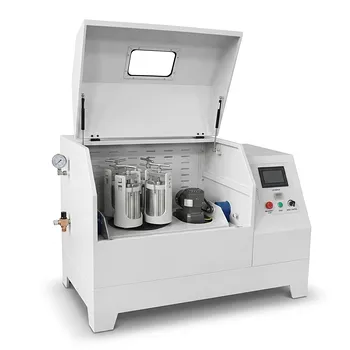
Vertical Production Planetary Ball Mill for High Throughput Powder Processing
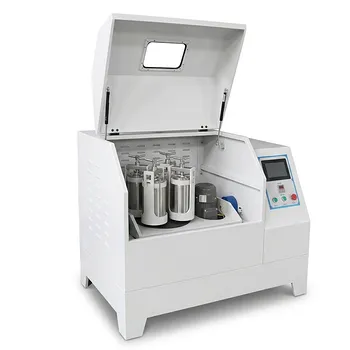
360° Rotating Omnidirectional Laboratory Planetary Ball Mill for Homogeneous Ultra-Fine Grinding and Mixing
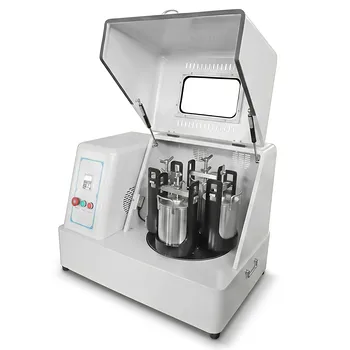
Vertical Square Planetary Ball Mill for Laboratory Sample Preparation and Nanoscale Grinding
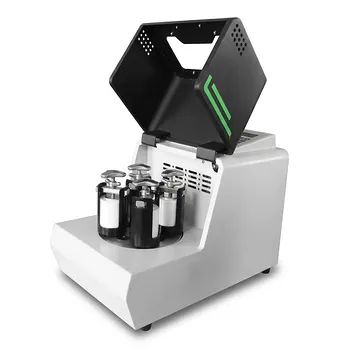
Miniature Planetary Ball Mill with Vacuum Grinding and High Efficiency for Laboratory Sample Preparation
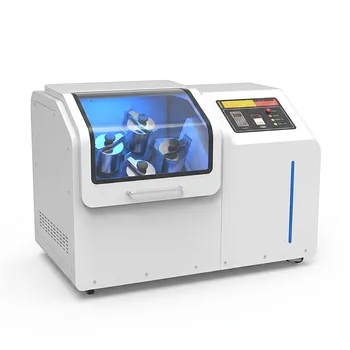
High Energy Omnidirectional Planetary Ball Mill 16L

High Energy Laboratory Planetary Ball Mill for Nano Grinding and Material Science Sample Preparation
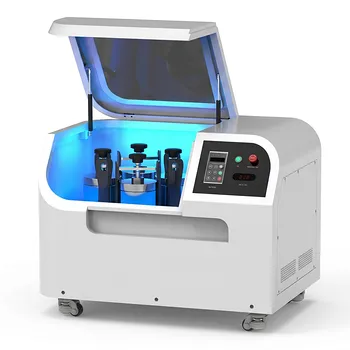
Planetary Ball Mill 12L
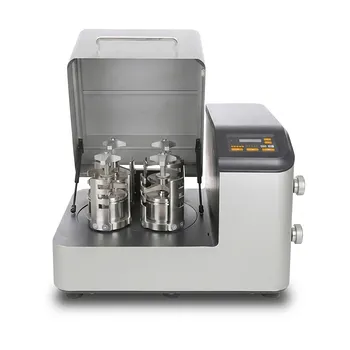
High Energy Planetary Ball Mill for Nano Scale Grinding and Colloidal Mixing in Material Science Research
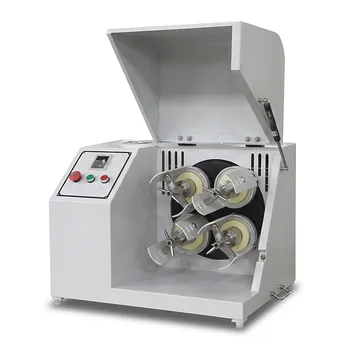
Horizontal Light Duty Planetary Ball Mill for Laboratory Sample Preparation
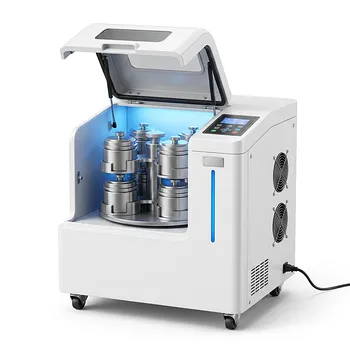
High Energy Omnidirectional Planetary Ball Mill 20L
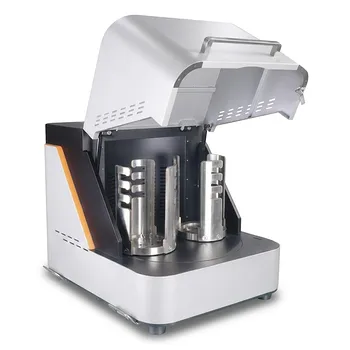
High Energy Laboratory Planetary Ball Mill for Nano Grinding and Colloidal Mixing of Hard and Brittle Materials

8L Planetary Ball Mill for Laboratory Grinding and Sample Preparation
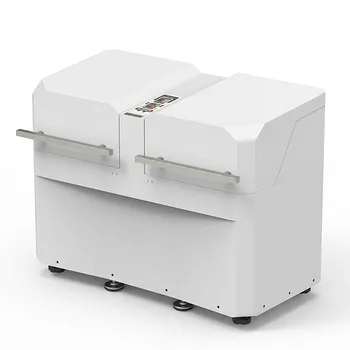
Dual Station Planetary Ball Mill 24L

Multi-Platform Nanoscale High-Energy Vibratory Ball Mill

Nano High Energy Vibratory Ball Mill for Laboratory Sample Preparation
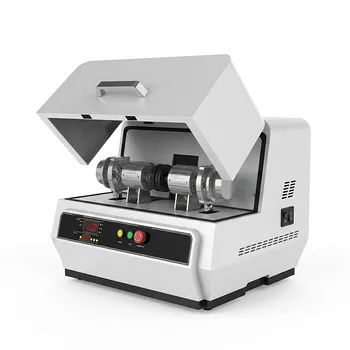
Dual Jar High Energy Vibratory Ball Mill