What is the core function of a planetary ball mill in Mn3AlC synthesis? Master Mechanical Activation for Magnetic Powders
Updated 5 months ago
The planetary ball mill acts as the primary energetic catalyst for mechanical activation. By applying intense impact and shear forces to the $MnO_2-Al-C$ precursor mixture, the mill reduces particle size to the micro-scale and ensures a uniform distribution of components. This process creates a high density of chemically active defect sites, effectively storing mechanical energy within the powder to lower the ignition temperature required for the subsequent self-propagating high-temperature synthesis (SHS) of $Mn_3AlC$.
The core function of the planetary ball mill is to transform raw powders into a highly reactive, homogenized state through mechanical activation. This step is critical because it provides the "starting energy" necessary to trigger the chemical reaction that forms the magnetic $Mn_3AlC$ phase.
The Mechanism of Mechanical Activation
High-Energy Impact and Shear Forces
The planetary ball mill operates through the composite motion of jar rotation and revolution, creating high-frequency collisions between the grinding media and the powder. These forces subject the $MnO_2$, aluminum, and carbon particles to repeated compression and fracture.
Microscopic Homogenization
Unlike standard mixing, high-energy milling ensures that the aluminum reductant and carbon source are in direct, intimate contact with the manganese oxide at the microscopic level. This molecular-level proximity is essential for the rapid diffusion required during the SHS process.
Particle Size Reduction and Surface Area
The mill significantly refines the grain structure, often reaching the nanometer scale. By increasing the specific surface area of the $MnO_2-Al-C$ mixture, the mill enhances the overall chemical activity and reactivity of the system.
Energy Storage and Defect Engineering
Generating Chemically Active Defect Sites
The intense mechanical work induces severe plastic deformation within the powder particles. This deformation creates a high density of lattice defects, such as dislocations and vacancies, which serve as "hot spots" for chemical reactivity.
Lowering the Ignition Temperature
The energy stored within these defect sites reduces the external thermal energy required to start the reaction. This allows the $Mn_3AlC$ synthesis to occur at a significantly lower ignition temperature than would be possible with a simple blended mixture.
Triggering the SHS Reaction
The combination of uniform mixing and stored mechanical energy provides the necessary foundation for self-propagating high-temperature synthesis. Once ignited, the reaction becomes self-sustaining, utilizing the internal energy to convert the precursors into the final magnetic powder.
Understanding the Trade-offs
Potential for Material Contamination
The high-energy nature of the process can lead to wear on the milling jars and balls, potentially introducing impurities like iron or chromium into the $Mn_3AlC$ powder. Selecting appropriate vial materials (such as stainless steel or tungsten carbide) is a critical balancing act between durability and purity.
Risk of Cold Welding and Agglomeration
Ductile materials like aluminum may undergo "cold welding" during extended milling, where particles fuse together rather than fracturing. If not controlled through proper milling parameters or process control agents, this can lead to large, uneven clusters that hinder the SHS reaction.
Over-milling and Phase Transformation
Excessive milling time can lead to unintended phase changes or the formation of amorphous structures before the SHS process even begins. This can alter the magnetic properties of the final $Mn_3AlC$ powder, requiring precise calibration of milling duration and speed.
How to Apply This to Your Synthesis Process
To achieve the best results when using a planetary ball mill for $Mn_3AlC$ synthesis, consider your primary objective:
- If your primary focus is lowering the ignition temperature: Increase the milling duration or rotation speed to maximize the density of active defect sites and stored mechanical energy.
- If your primary focus is high magnetic purity: Use high-hardness grinding media (like WC) and shorter milling cycles to minimize contamination from the milling equipment.
- If your primary focus is uniform particle distribution: Utilize a process control agent (like ethanol) to prevent agglomeration and ensure a molecular-level homogenization of the $MnO_2-Al-C$ precursors.
By mastering the mechanical activation phase, you ensure that the subsequent synthesis is efficient, predictable, and capable of producing high-quality magnetic materials.
Summary Table:
| Core Function | Mechanism | Impact on Synthesis |
|---|---|---|
| Mechanical Activation | High-energy impact and shear forces | Creates chemically active defect sites to store energy |
| Microscopic Homogenization | Jar rotation and revolution composite motion | Ensures intimate contact between MnO2, Al, and C |
| Particle Size Reduction | Repeated compression and fracture | Increases surface area to enhance overall reactivity |
| Energy Storage | Intense plastic deformation | Significantly lowers the ignition temperature for SHS |
| Phase Control | Precise calibration of speed and time | Triggers self-sustaining reactions for magnetic phase formation |
Elevate Your Material Synthesis with Precision Equipment
Achieving the perfect magnetic phase in $Mn_3AlC$ requires more than just mixing—it demands precise mechanical activation. [Your Brand Name] provides complete laboratory sample preparation solutions tailored for material science. We specialize in high-performance powder processing and compaction equipment designed to meet the rigorous standards of modern research.
Our extensive product line includes:
- Advanced Mills: High-energy planetary ball mills, jet mills, and cryogenic grinders for nanometer-scale refinement.
- Sieving & Mixing: Vibratory sieve shakers and high-efficiency defoaming mixers for uniform particle distribution.
- Compaction Solutions: A full spectrum of hydraulic presses, including Cold/Warm Isostatic Presses (CIP/WIP), hot presses, and XRF pellet presses.
Whether you are looking to lower ignition temperatures or minimize material contamination, our experts are here to help you select the ideal configuration for your synthesis process.
Ready to optimize your lab's efficiency? Contact us today to get a professional consultation and quote!
References
- H.H. Ali, Z.I. Zaki. Mechanical activated self-sustaining combustion synthesis of Mn3AlC magnetic powder from MnO2+Al+C mixture. DOI: 10.1016/j.heliyon.2025.e43364
Mentioned Products
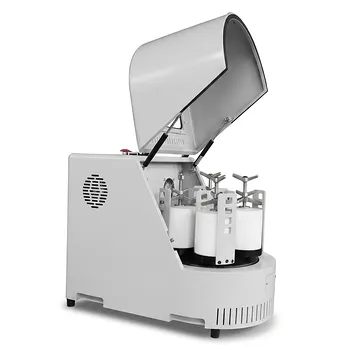
- Vertical Semi Circular Planetary Ball Mill for Laboratory Precision Grinding
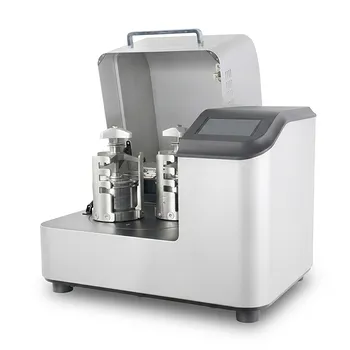
- High Energy Planetary Ball Mill for Nano Scale Grinding and Mechanical Alloying
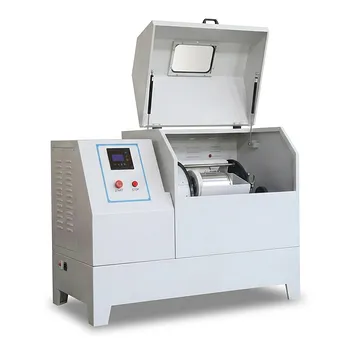
- Heavy Duty Horizontal Planetary Ball Mill for Efficient Industrial Grinding and Sample Preparation
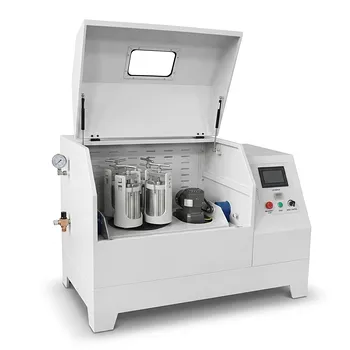
- Vertical Production Planetary Ball Mill for High Throughput Powder Processing
- 360° Rotating Omnidirectional Laboratory Planetary Ball Mill for Homogeneous Ultra-Fine Grinding and Mixing
People Also Ask
- What role does a planetary ball mill play in the synthesis of Li6PS5Cl (LPSCl)? Unlock High Ionic Conductivity
- Why is a planetary ball mill essential for SiBCN-rGO wet-spinning? Achieve Superior Dispersion and Spinnability
- Why is an intermittent grinding process required for perovskites in a planetary ball mill? Ensure Stability & Purity
- Why is a planetary ball mill required for PET micronization? Ensure Accurate Chemical Analysis of Reprocessed PET
- How does mechanized planetary ball milling compare to manual agate grinding? Optimize sulfide standard material precision.

Tech Team · PowderPreparation
Last updated on May 14, 2026
Related Products
Vertical Semi Circular Planetary Ball Mill for Laboratory Precision Grinding
High Energy Planetary Ball Mill for Nano Scale Grinding and Mechanical Alloying
Heavy Duty Horizontal Planetary Ball Mill for Efficient Industrial Grinding and Sample Preparation
Vertical Production Planetary Ball Mill for High Throughput Powder Processing
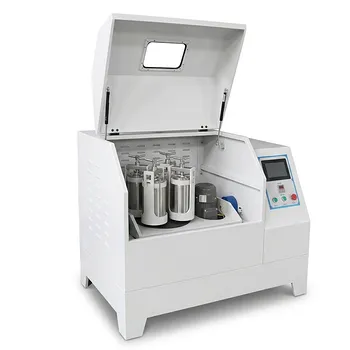
360° Rotating Omnidirectional Laboratory Planetary Ball Mill for Homogeneous Ultra-Fine Grinding and Mixing
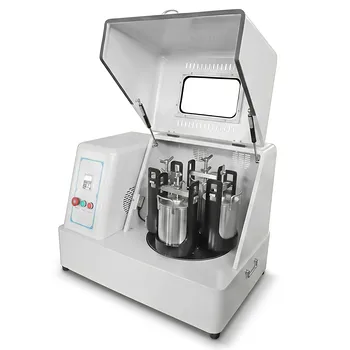
Vertical Square Planetary Ball Mill for Laboratory Sample Preparation and Nanoscale Grinding
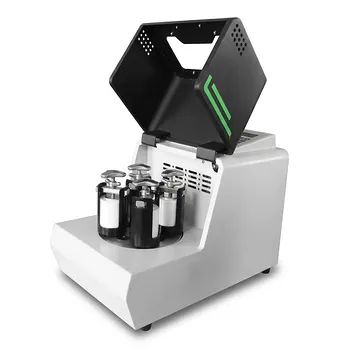
Miniature Planetary Ball Mill with Vacuum Grinding and High Efficiency for Laboratory Sample Preparation
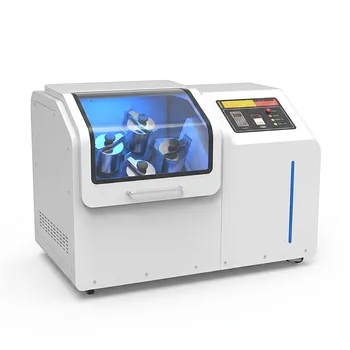
High Energy Omnidirectional Planetary Ball Mill 16L
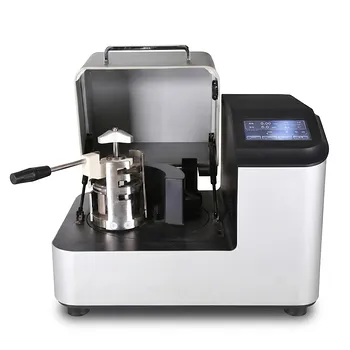
High Energy Laboratory Planetary Ball Mill for Nano Grinding and Material Science Sample Preparation
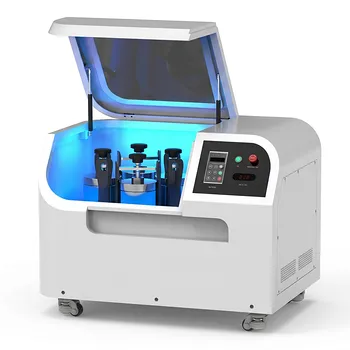
Planetary Ball Mill 12L
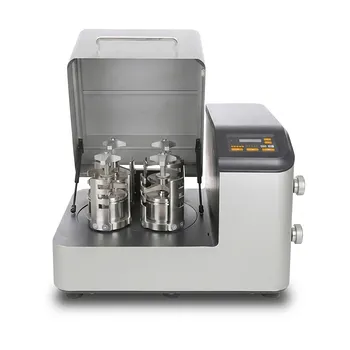
High Energy Planetary Ball Mill for Nano Scale Grinding and Colloidal Mixing in Material Science Research
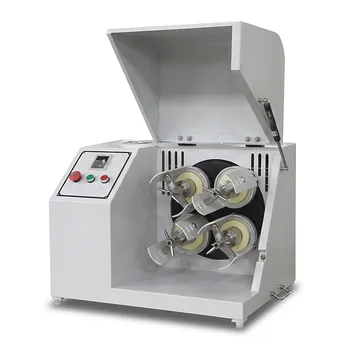
Horizontal Light Duty Planetary Ball Mill for Laboratory Sample Preparation
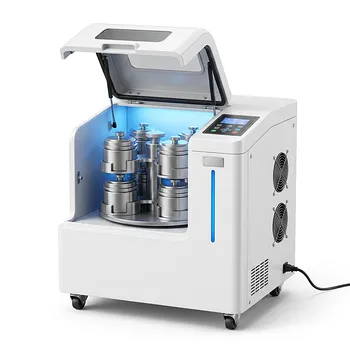
High Energy Omnidirectional Planetary Ball Mill 20L
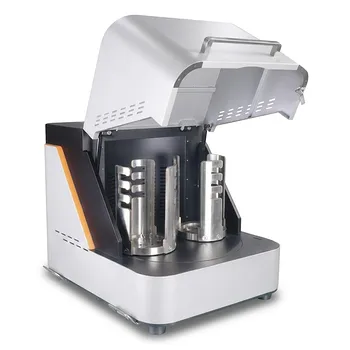
High Energy Laboratory Planetary Ball Mill for Nano Grinding and Colloidal Mixing of Hard and Brittle Materials

8L Planetary Ball Mill for Laboratory Grinding and Sample Preparation
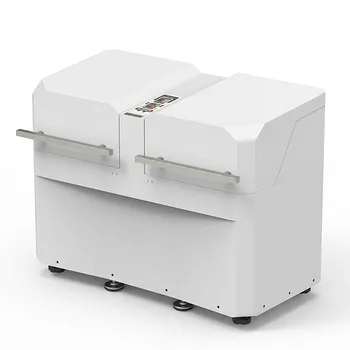
Dual Station Planetary Ball Mill 24L

Multi-Platform Nanoscale High-Energy Vibratory Ball Mill

Nano High Energy Vibratory Ball Mill for Laboratory Sample Preparation
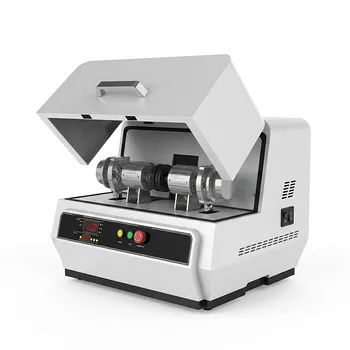
Dual Jar High Energy Vibratory Ball Mill