What function does a laboratory hydraulic press serve in NbC cermet forming? Optimize Density and Structural Integrity
Updated 4 months ago
In the production of Niobium Carbide (NbC) cermets, a laboratory hydraulic press serves as the critical tool for transforming loose composite powders into structural "green bodies."
By applying precise uniaxial pressure through a mold, the press compacts uniformly mixed powders to approximately 55% to 60% of their theoretical density. This process establishes the initial mechanical interlocking between particles and regulates internal pore distribution, creating a stable foundation for the final sintering stage.
The laboratory hydraulic press acts as the bridge between raw powder and a solid component, ensuring the structural integrity and density uniformity required to prevent defects during high-temperature densification.
Achieving Structural Integrity and Density
Compaction and Geometric Definition
The primary function of the press is to force loose NbC composite powders into a pre-defined geometric shape, such as a pellet or block. By using precision stainless steel or hardened steel molds, the press applies thousands of Newtons of axial pressure to overcome internal friction between particles.
Achieving Theoretical Density Targets
A hydraulic press typically brings the cermet material to 55%–60% of its theoretical density. This specific density range is vital because it provides enough air-free contact points for particles to bond without being so overly compacted that the green body cracks or delaminates.
Mechanical Interlocking of Particles
Under high pressure, the individual powder particles undergo rearrangement and plastic deformation. This forces the particles to interlock mechanically, providing the green body with enough handling strength to be moved and processed without crumbling before it reaches the furnace.
Microstructural Control and Sintering Preparation
Regulating Internal Pore Distribution
Precise pressure control allows researchers to regulate how pores are distributed within the material. By ensuring a uniform internal density, the press minimizes the presence of large voids that could lead to structural failure or "breakdown" in the final sintered ceramic.
Minimizing Delamination and Voids
A hydraulic press helps expel trapped air from the powder mass, which is a common cause of internal defects. High-pressure compaction reduces the risk of delamination—the separation of layers within the material—ensuring the green body remains cohesive throughout its volume.
Controlling Sintering Shrinkage
Because the press establishes a consistent initial density, it allows for predictable shrinkage rates during gas pressure or vacuum sintering. This dimensional control is essential for producing cermet parts that meet specific size requirements after the final firing process.
Understanding the Trade-offs
Pressure Gradient Limitations
In uniaxial pressing, pressure is applied from one or two directions, which can create density gradients where the powder is denser near the plunger and less dense in the center. This can lead to uneven shrinkage or warping during the sintering phase if not carefully managed.
Geometry Constraints
Laboratory hydraulic presses are generally limited to simple geometric shapes, such as cylinders or rectangular bars. For highly complex parts with intricate internal features, uniaxial pressing may not be as effective as alternative methods like cold isostatic pressing (CIP).
Risk of Over-Compaction
Applying excessive pressure can lead to springback or "capping," where the stored elastic energy in the compacted powder causes the green body to crack upon release from the mold. Finding the optimal pressure—often around 400 bar—is a delicate balance.
How to Apply This to Your Project
Making the Right Choice for Your Goal
The use of a laboratory hydraulic press should be tailored to the specific mechanical requirements of your NbC cermet application.
- If your primary focus is maximizing sintered density: Ensure the press is calibrated to reach at least 55% green density to provide a sufficient foundation for full densification.
- If your primary focus is high interface bonding (e.g., coatings): Use continuous, stable pressure to facilitate inter-element diffusion and eliminate interface voids between the NbC and the substrate.
- If your primary focus is dimensional accuracy: Maintain strict control over the pressing load to ensure uniform shrinkage across all samples in a batch.
Properly executed hydraulic pressing transforms a fragile powder mixture into a robust precursor, ensuring the final Niobium Carbide cermet achieves its full potential in hardness and mechanical strength.
Summary Table:
| Key Function | Technical Outcome | Benefit for NbC Cermets |
|---|---|---|
| Compaction | 55%–60% Theoretical Density | Establishes the initial structural foundation. |
| Mechanical Interlocking | Particle rearrangement & deformation | Provides handling strength to prevent crumbling. |
| Pore Regulation | Uniform internal density | Minimizes large voids and structural failure risks. |
| Shrinkage Control | Consistent initial density | Ensures predictable dimensions after final sintering. |
| Air Expulsion | Reduction of internal trapped air | Prevents delamination and internal cracking. |
Elevate Your Material Research with Precision Compaction Solutions
Achieving the perfect green body for Niobium Carbide (NbC) cermets requires absolute precision and reliable equipment. At Our Expert Laboratory Solutions, we specialize in providing complete laboratory sample preparation solutions for material science, ensuring your research moves from powder to high-performance component seamlessly.
Our extensive product line includes:
- Powder Processing: High-efficiency crushers (jaw/roll), liquid nitrogen cryogenic grinders, and advanced mills (planetary ball, jet, sand/bead, disc, rotor).
- Sieving & Mixing: Vibratory and air-jet sieve shakers with precision meshes, plus high-performance powder and defoaming mixers.
- Hydraulic Press Spectrum: A full range of compaction tools, including Cold/Warm Isostatic Presses (CIP/WIP), standard lab presses, XRF pellet presses, hot presses, and vacuum hot presses.
Whether you need to optimize green density or eliminate delamination in complex cermet composites, our equipment provides the control you need. Contact us today to discuss your specific application and find the perfect equipment to enhance your laboratory's efficiency!
References
- Daniela Hübler, Thomas Gradt. Effect of different binders and secondary carbides on NbC cermets. DOI: 10.1007/s10010-022-00583-1
Mentioned Products
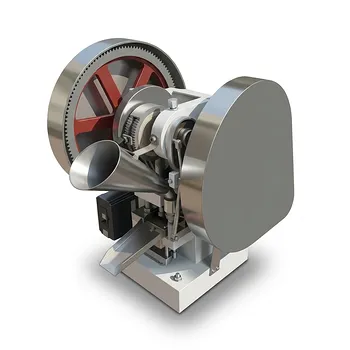
- 6 Ton Variable Frequency Single Punch Tablet Press
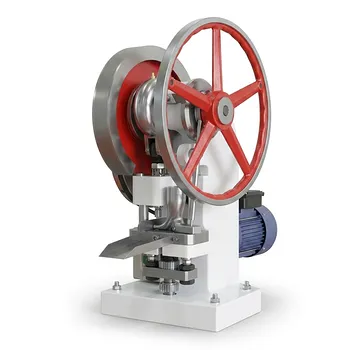
- 5 Ton Single Punch Tablet Press Laboratory Small Batch Production
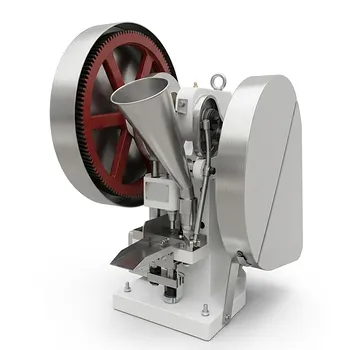
- 6-Ton Small Single-Punch Tablet Press — Laboratory Powder & Granule Tableting Equipment / Tablet Forming Machine
- Manual Tablet Press with Dual Scale Pressure Gauge for Pharmaceutical Food Chemical Laboratory Sample Preparation
- Heating Temperature Controlled High Energy Vibratory Ball Mill
People Also Ask
- Why is a laboratory hydraulic press required for FT-IR KBr pellets? Achieve Precise Sample Clarity for ZrC–SiC Analysis
- Why is vacuum sealing and flexible packaging necessary for Aluminum Titanate powders during CIP? Ensure Peak Density
- What are the advantages of using hardened steel molds and graphite spray for titanium powder? Ensure structural integrity
- Why is a laboratory hydraulic press required to compress oyster shell powder before XRF analysis? Improve Data Accuracy.
- What role does a high-strength stainless steel mold kit play in the uniaxial die compaction process? Ensuring Precision

Tech Team · PowderPreparation
Last updated on Jun 03, 2026
Related Products
6 Ton Variable Frequency Single Punch Tablet Press
5 Ton Single Punch Tablet Press Laboratory Small Batch Production
6-Ton Small Single-Punch Tablet Press — Laboratory Powder & Granule Tableting Equipment / Tablet Forming Machine
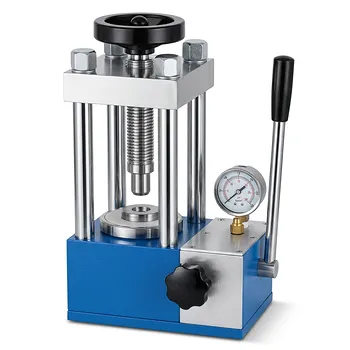
Manual Tablet Press with Dual Scale Pressure Gauge for Pharmaceutical Food Chemical Laboratory Sample Preparation
Heating Temperature Controlled High Energy Vibratory Ball Mill
Vertical Production Planetary Ball Mill for High Throughput Powder Processing
Ordinary Type Rotary Tablet Press for Pharmaceutical Chemical Food Electronic Industries
Small Ceramic Structure Laboratory Sand Mill Nanoscale Grinding Dispersion Equipment Seal-less Screen-less Design
Laboratory Liquid Nitrogen Cryogenic Grinder Polymer Sample Preparation Pulverizer
Small Liquid Nitrogen Cryogenic Grinder for Ultrafine Grinding of Heat-Sensitive Materials in Laboratories
Laboratory Liquid Nitrogen Cryogenic Grinder for Polymer and Elastomer Materials
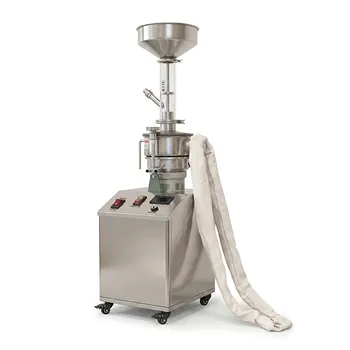
Small Liquid Nitrogen Cryogenic Grinder for Plastic and Heat-Sensitive Material Sample Preparation
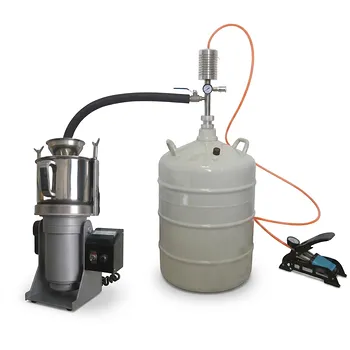
Liquid Nitrogen Cryogenic Grinder for Plastic and Heat-Sensitive Materials
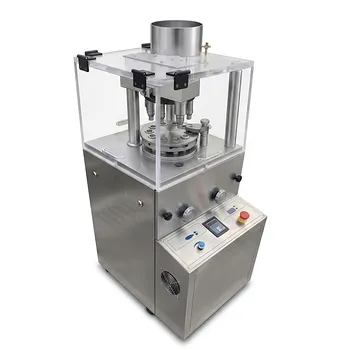
Enhanced 9 Punch Rotary Tablet Press for Powder Compaction
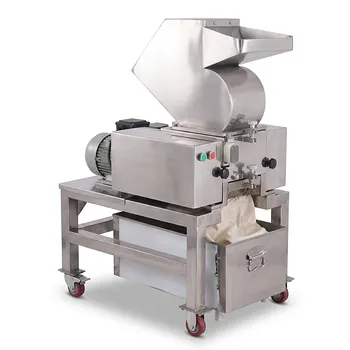
Stainless Steel Coarse Crusher for Pharmaceutical Food and Plastic Material Processing
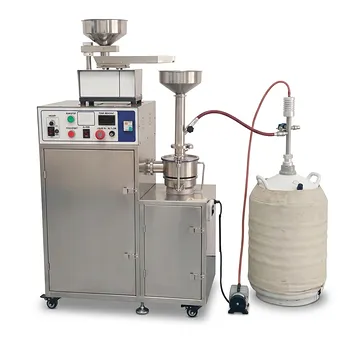
Small Liquid Nitrogen Cryogenic Grinder with Vibratory Feeder for Laboratory Sample Preparation
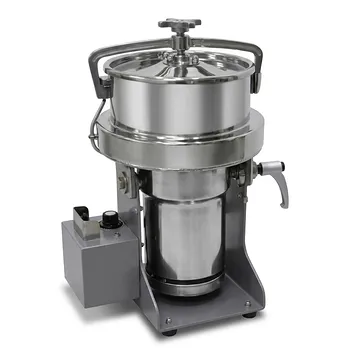
500g Capacity Water Cooled Low Temperature Grinder with Variable Speed and Safety Cover
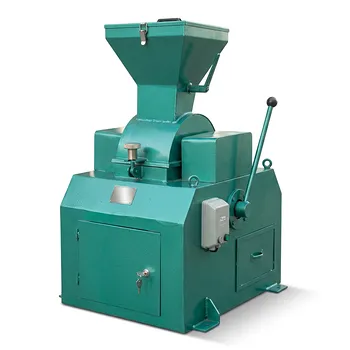
Laboratory Sealed Hammer Blade Crusher Divider for High Hardness Sample Preparation
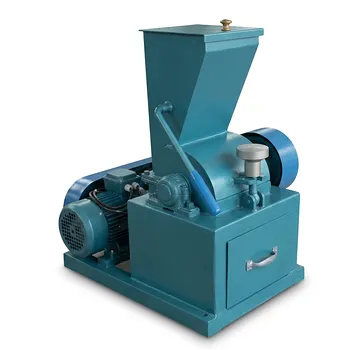
Small Hammer Crusher for Brittle Material Crushing in Mining Metallurgy and Lab Sample Preparation