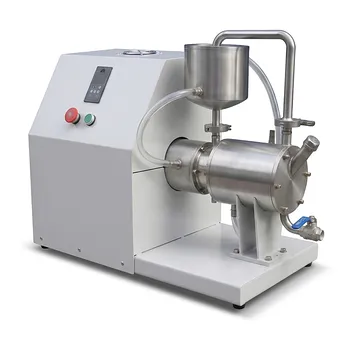
What critical physical environment does a laboratory wet ball mill provide for magnetite grinding experiments? Master Precision
Updated 4 months ago
A laboratory wet ball mill creates a standardized wet grinding dynamic field. This specialized environment is defined by a constant rotation speed and a fixed cylinder volume, allowing researchers to isolate and manipulate specific mechanical variables. By maintaining this consistent field, technicians can quantitatively analyze how magnetite particles evolve under the influence of varying grinding media, material loads, and durations.
This controlled physical environment transforms the mill into a precision instrument capable of isolating the mechanical and chemical factors that dictate mineral liberation and energy efficiency. It is the fundamental prerequisite for moving from qualitative observation to the quantitative modeling of magnetite breakage.
Establishing a Controlled Mechanical Field
The Role of Constant Rotation and Volume
By locking the cylinder volume and rotation speed, the mill ensures that the kinetic energy delivered to the magnetite remains consistent. This stability is vital for reproducing results across multiple experimental trials and establishing a baseline for mechanical force.
Precision Variable Management
Researchers can manipulate the ball-to-material ratio and filling rate within this fixed volume to simulate specific industrial conditions. This control allows for the measurement of mass conservation changes under specific force fields, which is essential for extracting reliable data.
Mechanisms of Mineral Liberation
Impact and Attrition Dynamics
The environment utilizes the impact and attrition of grinding media (typically steel balls) to refine crushed ore to micron-sized particles. This refinement is a critical prerequisite for the liberation of magnetite from non-metallic gangue minerals.
Determining Breakage Characteristics
Narrow-size-range experiments within the mill reveal whether the magnetite is breaking via splitting, attrition, or impact crushing. These findings are used to identify the primary breakage mechanisms, which helps determine the reinforcement direction for industrial secondary grinders.
Integrating Chemical and Kinetic Analysis
The Mill as a Chemical Reaction Vessel
The wet environment serves as a vessel for testing grinding aids (GA) to evaluate their effectiveness in reducing energy consumption. Researchers can observe how these chemicals influence the particle size distribution and the overall flowability of the slurry.
Mathematical Modeling through PBM
The standardized field allows for the extraction of specific breakage rates and distribution functions using the Population Balance Model (PBM). This mathematical approach allows researchers to predict how magnetite will behave in large-scale operations based on small-scale lab data.
Understanding the Trade-offs
Batch vs. Continuous Dynamics
Laboratory mills are typically batch-operated, which may not perfectly replicate the slurry flow dynamics of continuous industrial circuits. This discrepancy can lead to differences in "over-grinding" or residence time behavior that must be accounted for during scaling.
Scaling and Media Limitations
The small cylinder diameter of a lab mill can exaggerate the "wall effect," where the mill shell influences the motion of the grinding media more than it would in a larger unit. Furthermore, the wear rates of steel balls in a lab setting may not accurately reflect the long-term consumption patterns found in high-volume production.
How to Apply This to Your Grinding Research
When utilizing a laboratory wet ball mill for magnetite experiments, your approach should vary based on your ultimate technical objective:
- If your primary focus is mineral liberation for flotation: Prioritize controlling the mill speed and ball loading ratio to reach a target particle size typically below 2 mm.
- If your primary focus is optimizing energy efficiency: Use the mill as a reaction vessel to test varying dosages of grinding aids while monitoring the particle size distribution curves.
- If your primary focus is industrial scale-up: Focus on extracting breakage rates and distribution functions using the Population Balance Model to ensure the lab data is mathematically transferable.
- If your primary focus is understanding material failure: Conduct narrow-size-range experiments to isolate whether the magnetite is failing due to impact or surface attrition.
By masterfully controlling the standardized dynamic field of the laboratory mill, you can transform raw magnetite into a precisely refined product ready for high-grade metal recovery.
Summary Table:
| Key Feature | Lab Mill Environment | Research Benefit |
|---|---|---|
| Mechanical Field | Constant rotation speed & fixed volume | Isolates variables for reproducible kinetic energy data. |
| Breakage Mechanism | Controlled impact and attrition | Determines if material fails via splitting, impact, or wear. |
| Chemical Testing | Closed reaction vessel | Evaluates the efficiency of grinding aids (GA) on slurry flow. |
| Mathematical Modeling | Standardized dynamic field | Enables Population Balance Modeling (PBM) for industrial scaling. |
| Particle Refinement | Precision variable management | Achieves target micron sizes for optimal mineral liberation. |
Elevate Your Material Science Research with Precision Powder Processing
Are you looking to achieve superior mineral liberation or optimize your grinding kinetics? At SYL, we specialize in providing complete laboratory sample preparation solutions designed for rigorous material science applications.
Our extensive product line is engineered for precision and durability, including:
- Advanced Milling Solutions: Planetary ball mills, jet mills, disc mills, and rotor mills for achieving consistent particle size distribution.
- Crushing Equipment: High-performance jaw and roll crushers for primary sample reduction.
- Powder Processing: Sieve shakers, powder mixers, and defoaming mixers to ensure material homogeneity.
- Compaction & Thermal Systems: A full spectrum of hydraulic presses, including Cold/Warm Isostatic Presses (CIP/WIP), vacuum hot presses, and XRF pellet presses.
Whether you are refining magnetite or developing advanced ceramics, our equipment provides the standardized environment necessary for breakthrough results. Contact us today to discuss your specific lab requirements and let our experts help you find the perfect equipment solution!
References
- Chengfang Yuan, Jingkun Tian. Ceramic Grinding Kinetics of Fine Magnetite Ores in the Batch Ball Mill. DOI: 10.3390/min13091188
Mentioned Products
- Vertical Square Planetary Ball Mill for Laboratory Sample Preparation and Nanoscale Grinding
- Single Tank High Energy Vibratory Ball Mill for Laboratory Grinding and Mixing
- 360° Rotating Omnidirectional Laboratory Planetary Ball Mill for Homogeneous Ultra-Fine Grinding and Mixing
- Vertical Semi Circular Planetary Ball Mill for Laboratory Precision Grinding
- Miniature Planetary Ball Mill with Vacuum Grinding and High Efficiency for Laboratory Sample Preparation
People Also Ask
- What is the function of a planetary ball mill in wollastonite ceramic prep? Achieve Molecular Homogenization & Reactivity
- How does a planetary ball mill contribute to the homogenization of trace elements? Achieve Sub-Micron Uniformity
- Why grind lime-pozzolan specimens for TG/DTA for 3 mins? Master sample prep for high-precision thermal analysis.
- What role does a planetary ball mill play in the synthesis of Li6PS5Cl (LPSCl)? Unlock High Ionic Conductivity
- What role does a planetary ball mill play in KNTO ceramic refinement? Optimize Homogeneity & Reactivity

Tech Team · PowderPreparation
Last updated on Jun 03, 2026
Related Products

Vertical Square Planetary Ball Mill for Laboratory Sample Preparation and Nanoscale Grinding
Single Tank High Energy Vibratory Ball Mill for Laboratory Grinding and Mixing
360° Rotating Omnidirectional Laboratory Planetary Ball Mill for Homogeneous Ultra-Fine Grinding and Mixing
Vertical Semi Circular Planetary Ball Mill for Laboratory Precision Grinding
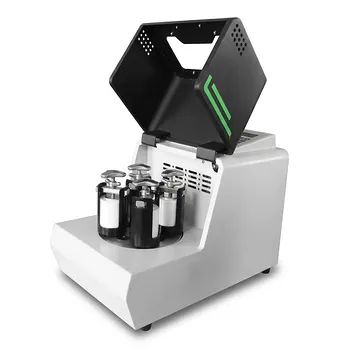
Miniature Planetary Ball Mill with Vacuum Grinding and High Efficiency for Laboratory Sample Preparation
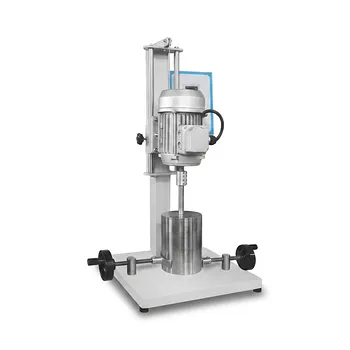
Laboratory Basket Sand Mill for Wet Grinding and Dispersion of Viscous Slurries
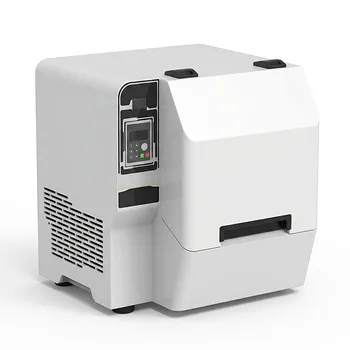
Nano High Energy Vibratory Ball Mill for Laboratory Sample Preparation
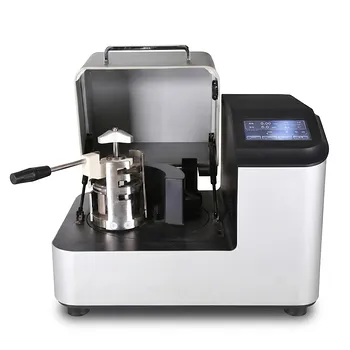
High Energy Laboratory Planetary Ball Mill for Nano Grinding and Material Science Sample Preparation
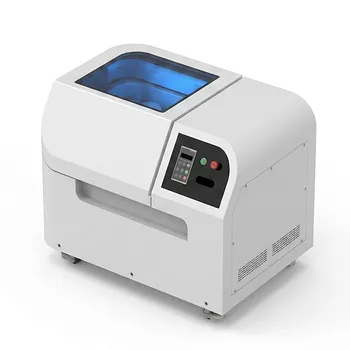
8L Planetary Ball Mill for Laboratory Grinding and Sample Preparation
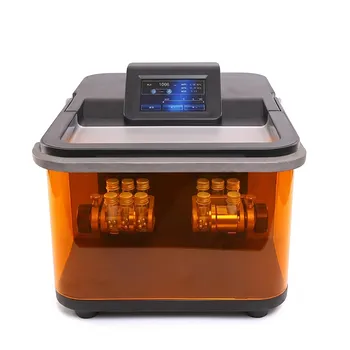
High Throughput Micro Ball Mill for Cryogenic Grinding and Laboratory Cell Disruption
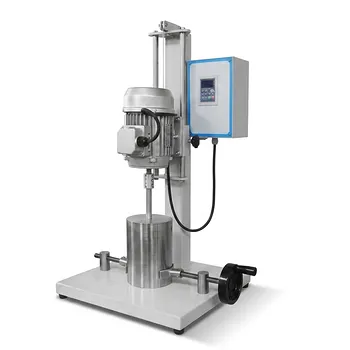
Laboratory Sand Mill Grinding Dispersing Machine for Wet Particle Size Reduction
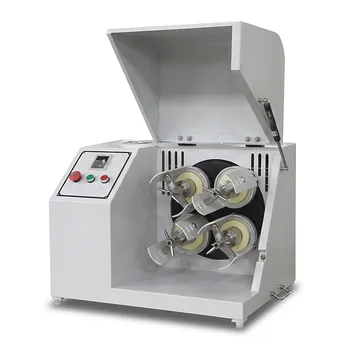
Horizontal Light Duty Planetary Ball Mill for Laboratory Sample Preparation
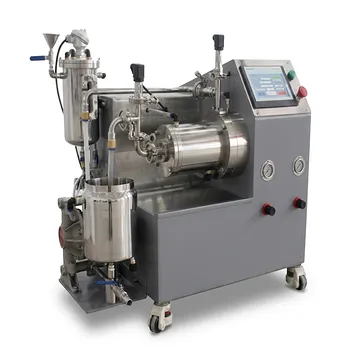
Laboratory Horizontal Bead Mill for Nanomaterial Wet Grinding and Material Science Research
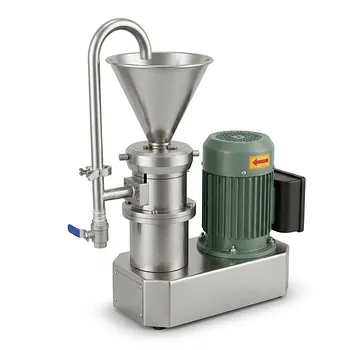
Small Laboratory Colloid Mill for Ultra-Fine Wet Grinding and Emulsification
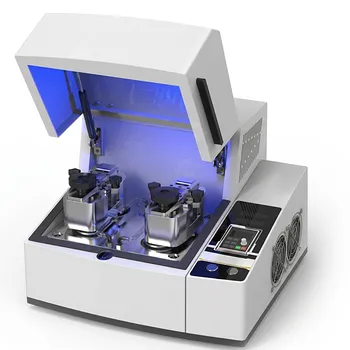
Laboratory Nano High Energy Ball Mill Ultrafine Grinding Mechanical Alloying
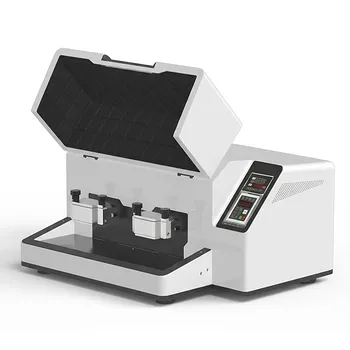
Nanoscale High-Energy Vibratory Ball Mill for Laboratory Sample Preparation, Mechanochemistry, and Mechanical Alloying
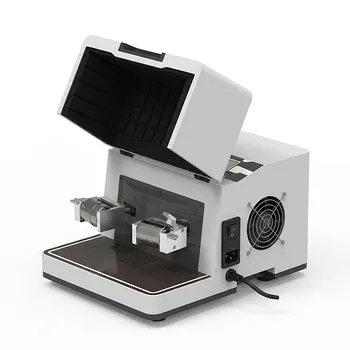
High Energy Hybrid Vibratory Ball Mill for Grinding Mixing and Cell Disruption
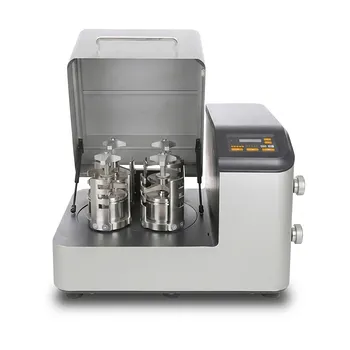
High Energy Planetary Ball Mill for Nano Scale Grinding and Colloidal Mixing in Material Science Research
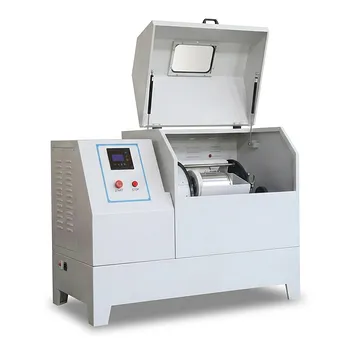
Heavy Duty Horizontal Planetary Ball Mill for Efficient Industrial Grinding and Sample Preparation