What are the specific process functions of mixing blades at the bottom of a high-speed centrifugal mixer? Optimize Your Lab
Updated 5 months ago
The bottom-mounted blades of a high-speed centrifugal mixer serve three critical operational roles: intensive spatial dispersion, mechanical vessel cleaning, and accelerated material discharge. These components utilize high-speed rotational kinetic energy to homogenize materials, integrate moisture, and ensure the vessel remains free of scale buildup throughout the mixing cycle.
Core Takeaway: Beyond simple homogenization, bottom-mounted mixing blades are precision tools that manage the entire lifecycle of a batch—from the initial centrifugal dispersion of dry powders to the mechanical cleaning of vessel walls and the rapid ejection of finished product.
Enhancing Homogeneity and Dispersion
Achieving Uniformity Across Mixing Zones
The primary function of these blades is to provide intensive stirring that eliminates concentration gradients within the vessel. By rotating at high speeds, the blades ensure that particles from different zones are constantly redistributed, leading to a highly uniform mixture.
Facilitating Liquid-Solid Contact
The blades work in tandem with the rotating disc to create a high-friction environment. This process generates centrifugal force, which ejects material particles toward the outer edges of the disc and into the path of injected moisture, ensuring every particle is evenly coated or hydrated.
Maintaining Vessel Integrity and Efficiency
Mechanical Scraping to Prevent Scaling
As materials become moist or tacky, they tend to adhere to the vessel's inner walls. Specific blade configurations act as mechanical scrapers, constantly shearing away material that would otherwise form a hard "scale" or buildup.
Preserving Batch Consistency
By preventing material accumulation on the walls, the blades ensure that the entire mass of the batch remains part of the active mixing process. This prevents "dead zones" where stagnant material might bypass the intensive mixing required for quality control.
Streamlining the Discharge Phase
Utilizing Rotational Kinetic Energy
Once the mixing cycle is complete, the blades transition from a homogenization role to a transport role. They use their rotational kinetic energy to physically drive the finished material toward the discharge port.
Minimizing Cycle Times
The high-speed movement of the blades ensures that the vessel is emptied rapidly. This reduces inter-batch downtime and maximizes the overall throughput of the centrifugal mixer.
Understanding the Trade-offs
Thermal Management and Friction
While high-speed rotation is necessary for dispersion, it generates significant frictional heat. For heat-sensitive materials, this can lead to premature melting or chemical degradation if blade speeds are not carefully calibrated.
Component Wear and Maintenance
The mechanical scraping function, while vital for cleanliness, subjects both the blades and the vessel liner to abrasive wear. Processing highly abrasive powders can lead to blade thinning, which eventually reduces the effectiveness of the scraping and discharge functions.
How to Optimize Blade Performance for Your Process
Applying the right blade strategy depends on the physical characteristics of your material and your desired cycle time.
- If your primary focus is processing tacky or adhesive materials: Prioritize blades with aggressive scraping edges to minimize wall scaling and ensure complete discharge.
- If your primary focus is rapid moisture integration: Focus on blade configurations that maximize centrifugal ejection to ensure powders are dispersed immediately upon contact with liquids.
- If your primary focus is protecting heat-sensitive compounds: Utilize pulsed mixing cycles or reduced blade speeds to balance uniformity with the need to minimize frictional heat.
By understanding these specific functions, you can more effectively configure your centrifugal mixer to achieve consistent, high-quality results across every batch.
Summary Table:
| Process Function | Primary Benefit | Operational Mechanism |
|---|---|---|
| Intensive Dispersion | Ensures batch uniformity & moisture integration | High-speed rotational kinetic energy |
| Mechanical Scraping | Prevents wall scaling and "dead zones" | Active shearing of material from vessel walls |
| Accelerated Discharge | Minimizes inter-batch downtime | Directs finished material toward the discharge port |
| Thermal Management | Controls material integrity | Calibrated blade speeds to mitigate frictional heat |
Elevate Your Material Research with Precision Engineering
At [Your Brand Name], we provide complete laboratory sample preparation solutions tailored for material science. Whether you are dealing with adhesive powders or require ultra-fine homogenization, our specialized equipment ensures consistent, high-quality results for every batch.
Our extensive product line includes:
- Powder Processing: Planetary ball mills, jet mills, disc/rotor mills, and liquid nitrogen cryogenic grinders.
- Mixing & Dispersion: High-speed centrifugal mixers, powder mixers, and vacuum defoaming mixers.
- Sieving & Analysis: Vibratory and air-jet sieve shakers with precision test sieves.
- Compaction & Pressing: A full spectrum of hydraulic presses, including Cold/Warm Isostatic Presses (CIP/WIP), XRF pellet presses, and vacuum hot presses.
Ready to optimize your powder processing workflow? Contact our technical experts today to find the perfect solution for your specific material challenges and enhance your laboratory’s efficiency.
References
- Hongjun Li, Ying Zuo. Research and Optimization Design of Mixing Characteristics of High-speed Centrifugal Mixer Based on DEM. DOI: 10.1088/1742-6596/2095/1/012071
Mentioned Products
- High Speed Vacuum Planetary Centrifugal Mixer and Defoamer for Industrial Paste Processing
- High Viscosity Planetary Centrifugal Vacuum Mixer for Material Defoaming and Uniform Mixing
- High Viscosity Planetary Centrifugal Mixing and Vacuum Defoaming Machine for Laboratory Material Preparation
- High Efficiency Vacuum Planetary Centrifugal Mixer and Defoaming Machine for Industrial Material Research and Precise Laboratory Powder Dispersion
- Ultra Centrifugal Mill High Speed Laboratory Grinder for Fibrous and Brittle Sample Preparation
People Also Ask
- Why increase revolution radius for high-viscosity materials? Optimize Mixing Performance with Centrifugal Acceleration
- What is the function of a planetary centrifugal mixer in electrode slurry prep? Achieve high-energy, uniform dispersion.
- Why is a planetary centrifugal mixer utilized for wood powder and HPMC? Achieve uniform dispersion & rapid defoaming.
- How does a planetary centrifugal mixer contribute to the preparation of magnetic polymer composites? Expert Guide
- How does a planetary centrifugal mixer address key challenges in Tyr-CDs@EVA optical films? Ensure Optical Clarity.

Tech Team · PowderPreparation
Last updated on May 14, 2026
Related Products
High Speed Vacuum Planetary Centrifugal Mixer and Defoamer for Industrial Paste Processing
High Viscosity Planetary Centrifugal Vacuum Mixer for Material Defoaming and Uniform Mixing
High Viscosity Planetary Centrifugal Mixing and Vacuum Defoaming Machine for Laboratory Material Preparation
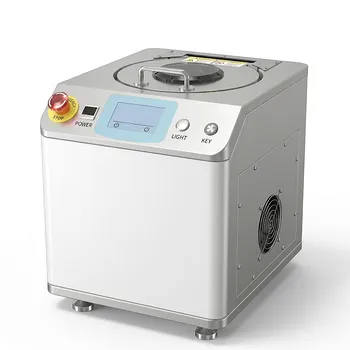
High Efficiency Vacuum Planetary Centrifugal Mixer and Defoaming Machine for Industrial Material Research and Precise Laboratory Powder Dispersion
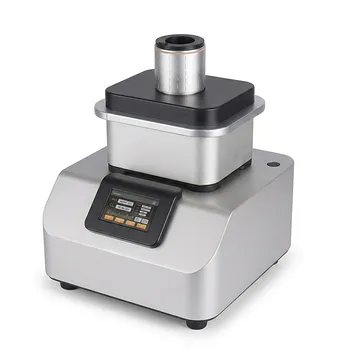
Ultra Centrifugal Mill High Speed Laboratory Grinder for Fibrous and Brittle Sample Preparation
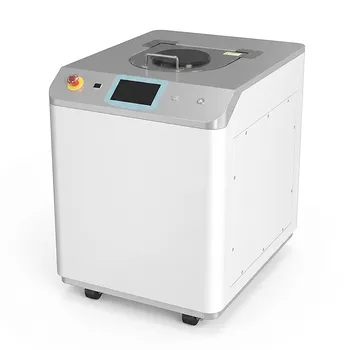
Industrial Planetary Centrifugal Vacuum Defoaming Mixer for High Viscosity Paste and Advanced Material Science
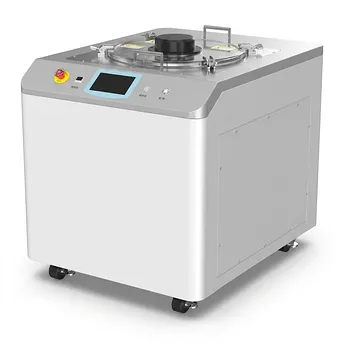
Industrial Planetary Centrifugal Vacuum Defoaming Mixer for High Viscosity Paste and Powder Homogenization
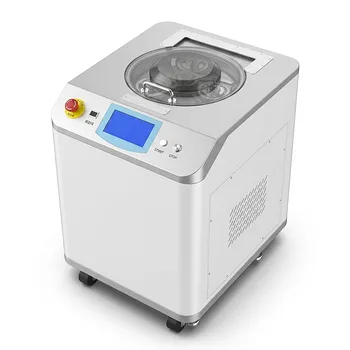
Dual Cup Vacuum Centrifugal Mixer Planetary Paste Defoaming Machine Industrial Material Processor
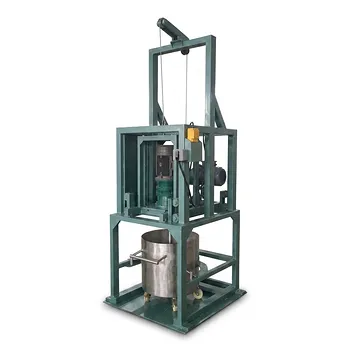
High-Speed Simple Disperser for Efficient Mixing, Dispersion, and Emulsification
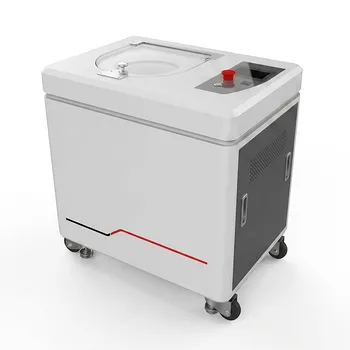
非介入式材料均质机真空脱泡行星搅拌高粘度混合设备
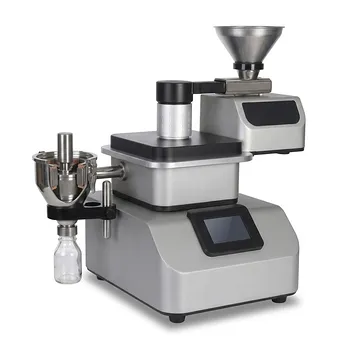
Ultra Centrifugal Mill for Rapid Laboratory Sample Preparation and Fine Powder Grinding
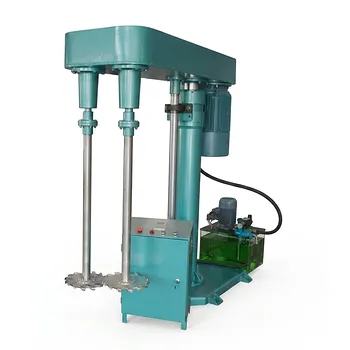
Hydraulic Double Shaft Disperser for High Viscosity Liquid Mixing and Dispersion
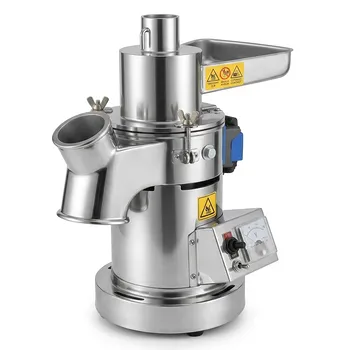
Continuous Feeding Grinder High Efficiency Pulverizer for Lab Sample Preparation
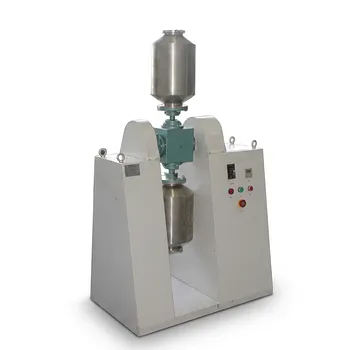
Multi Dimensional Universal Mixer for High Uniformity Powder Blending
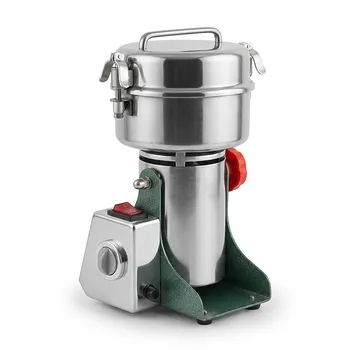
Small High-Speed Swing Grinder for Laboratory Sample Preparation
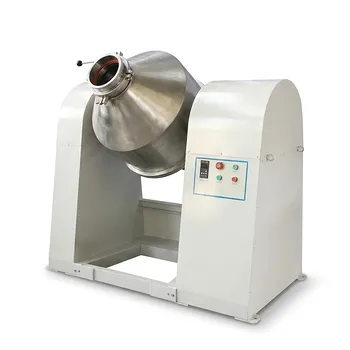
Industrial Double Cone Mixer for Powder Blending and Homogeneous Mixing
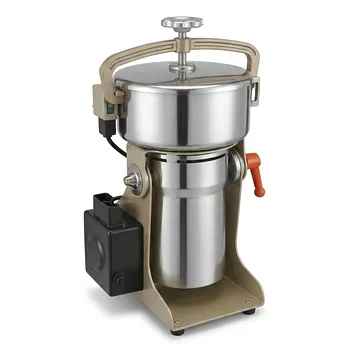
Multifunctional High Efficiency High Speed Laboratory Grinder
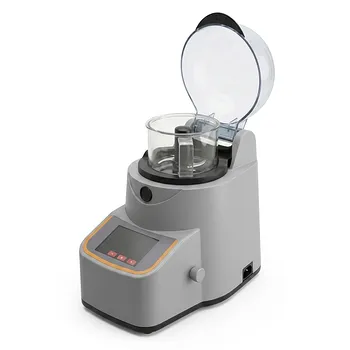
Industrial Knife Mill for Food and Biological Sample Preparation High Speed Laboratory Homogenizer
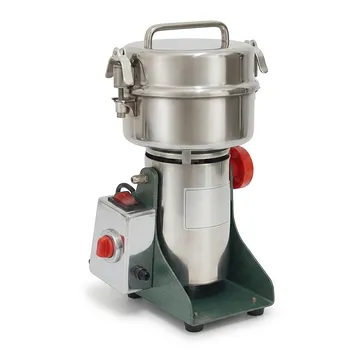
Small High Speed Grinder for Laboratory Sample Preparation