Why is a planetary centrifugal mixer recommended for geopolymer slurries? Achieve high-shear, air-free homogenization.
Updated 3 months ago
A planetary centrifugal mixer is the ideal solution for geopolymer slurries because it provides simultaneous high-shear homogenization and air removal within seconds. This equipment utilizes a dual-motion mechanism—simultaneous revolution and rotation—to achieve microscopic uniformity in high-viscosity materials that would stall traditional mixers. By eliminating internal air pores and breaking down powder agglomerates before rapid hardening occurs, it ensures the structural integrity of the final geopolymer.
Core Takeaway: The planetary centrifugal mixer is recommended because it overcomes the high viscosity of geopolymer slurries to deliver microscopic dispersion and complete deaeration in under one minute, which is critical for systems with fast curing times.
The Mechanics of High-Intensity Homogenization
Dual-Motion Centrifugal Force
The mixer operates by revolving the container around a central axis while simultaneously rotating the container itself. This dual-motion generates intense centrifugal forces and pressure gradients that drive fluid movement throughout the entire volume.
This motion creates a powerful "swirling" effect that ensures every part of the slurry is subjected to the same energy levels. Because the fluid moves against itself and the container walls, there are no shear dead zones, ensuring a perfectly uniform mixture.
Micro-Scale Dispersion and Agglomerate Breakdown
Geopolymer precursors, such as metakaolin powder, often form stubborn agglomerates when they contact alkali activator solutions. The high-energy shear forces generated by a planetary mixer are strong enough to break these clusters apart at the molecular level.
This deep mixing ensures that the solid aluminosilicate particles are fully wetted and dispersed. This level of dispersion is vital for promoting the dissolution process, which directly dictates the eventual compressive strength of the material.
Managing Rapid Reaction Kinetics
Speed as a Critical Success Factor
Many geopolymer systems, especially those containing calcium compounds, are designed for fast-curing. Once the activator is added, the window of workability begins to close rapidly as the chemical reaction takes hold.
Planetary centrifugal mixers are uniquely suited for this because they can complete the mixing and deaeration process in less than one minute. This speed allows operators to achieve a perfect slurry and move to the casting stage before the material begins to harden.
Maintaining Consistency in Fast-Curing Systems
In fast-setting systems, even small inconsistencies in the mix can lead to "weak zones" where the geopolymerization is incomplete. The high-intensity action of the planetary mixer ensures that chemical additives, such as sodium nitrite, are distributed evenly.
This consistency guarantees that the geopolymerization reaction occurs at a uniform rate throughout the entire mass. The result is a predictable, high-quality material with no localized points of failure.
Achieving Structural Integrity Through Deaeration
Simultaneous Mixing and Defoaming
High-viscosity slurries naturally entrap air bubbles during the addition of powders and the initial stirring process. Traditional mixers often struggle to remove these bubbles because the material's thickness prevents them from rising to the surface.
The planetary centrifugal mixer uses centrifugal pressure to force air to the surface while the material is being mixed. This dual-action "defoaming" occurs without the need for a separate degassing step, saving time and preventing the introduction of new air.
Impact on Final Material Density
The removal of microscopic air pores is essential for creating a dense, non-porous structure. Trapped air acts as a series of internal defects that can lead to cracking and reduced durability under load.
By utilizing the synchronized forces of the mixer, you ensure the density and integrity of the geopolymer slurry. This produces a final product with a smoother finish and significantly higher structural reliability.
Understanding the Trade-offs and Limitations
Thermal Management Concerns
The high-intensity energy required to mix high-viscosity slurries generates friction, which can lead to a temperature rise in the material. For geopolymers, heat can further accelerate the curing reaction, potentially shortening the working time even more.
It is critical to monitor mixing durations and, if necessary, use chilled activators to offset the heat generated by the high-shear process. Over-mixing can inadvertently lead to "flash setting" in highly reactive systems.
Scaling and Capacity Constraints
Planetary centrifugal mixers are often limited in batch size compared to massive industrial ribbon blenders or paddle mixers. They are highly specialized for precision applications and high-value materials rather than bulk construction-grade concrete.
While they are unmatched for laboratory development and high-performance components, the cost-per-liter of mixing can be higher. This makes them most effective as the final mixing stage for specialized geopolymer applications.
How to Apply This to Your Geopolymer Project
Recommendations for Equipment Use
To maximize the benefits of this technology, your mixing strategy should be tailored to your specific material goals.
- If your primary focus is Maximum Strength: Use high-speed settings for the full duration to ensure the precursor powders are broken down to a molecular level for complete dissolution.
- If your primary focus is Aesthetic or Structural Purity: Prioritize the deaeration phase (often a secondary speed setting) to eliminate all visible and microscopic surface voids.
- If your primary focus is Fast-Curing Systems: Minimize mixing time to under 45 seconds to leave maximum "pot life" for pouring and shaping the geopolymer.
- If your primary focus is Material Purity: Leverage the non-contact nature of the mixer (no blades) to prevent contamination from metal or polymer wear-particles.
The planetary centrifugal mixer is not just a stirrer, but a precision instrument that ensures the chemical and structural success of high-performance geopolymer systems.
Summary Table:
| Key Feature | Functional Benefit | Impact on Geopolymer |
|---|---|---|
| Dual-Motion Force | High-shear without dead zones | Microscopic dispersion of precursors |
| Rapid Processing | Completes mix in <60 seconds | Prevents "flash setting" in fast-curing systems |
| Centrifugal Deaeration | Removes entrapped air bubbles | Increased density and structural integrity |
| Non-Contact Mixing | No internal blades or impellers | Zero contamination from wear-particles |
Elevate Your Material Research with Precision Engineering
At [Brand Name], we provide complete laboratory sample preparation solutions tailored for material science. Whether you are developing high-performance geopolymer components or advanced ceramics, our equipment ensures the chemical and structural success of your projects.
Our extensive product lines include:
- Mixing & Homogenization: High-intensity powder mixers and defoaming mixers for perfect slurries.
- Milling & Grinding: Planetary ball mills, jet mills, and cryogenic grinders for molecular-level refinement.
- Powder Processing: Sieve shakers, jaw crushers, and disc mills.
- Advanced Compaction: A full spectrum of hydraulic presses, including Cold/Warm Isostatic Presses (CIP/WIP), vacuum hot presses, and XRF pellet presses.
Ready to optimize your final mixing stage and achieve superior material density? Contact our experts today to find the perfect equipment for your laboratory needs!
References
- Kyungwon Kim, Hyunseok Ko. Accentuating the ambient curing behavior of geopolymers: metamodel-guided optimization for fast-curing geopolymers with high flexural strength. DOI: 10.1039/d4dd00217b
Mentioned Products
- High Viscosity Planetary Centrifugal Vacuum Mixer for Material Defoaming and Uniform Mixing
- High Efficiency Vacuum Planetary Centrifugal Mixer and Defoaming Machine for Industrial Material Research and Precise Laboratory Powder Dispersion
- Industrial Planetary Centrifugal Vacuum Defoaming Mixer for High Viscosity Paste and Powder Homogenization
- High Viscosity Planetary Centrifugal Mixing and Vacuum Defoaming Machine for Laboratory Material Preparation
- High Speed Vacuum Planetary Centrifugal Mixer and Defoamer for Industrial Paste Processing
People Also Ask
- What core functions does a planetary centrifugal mixer perform? Optimize Hard Carbon Anode Slurry & Degassing
- Why is a planetary centrifugal mixer utilized for wood powder and HPMC? Achieve uniform dispersion & rapid defoaming.
- How does a planetary centrifugal mixer address key challenges in Tyr-CDs@EVA optical films? Ensure Optical Clarity.
- What is the role of a planetary centrifugal mixer in UHTC slurry preparation? Achieve Void-Free, High-Viscosity Mixing
- Planetary Centrifugal Mixer vs. Manual Mixing for Eu2O3 Resins: Achieving Superior Dispersion & Deaeration

Tech Team · PowderPreparation
Last updated on Jun 03, 2026
Related Products
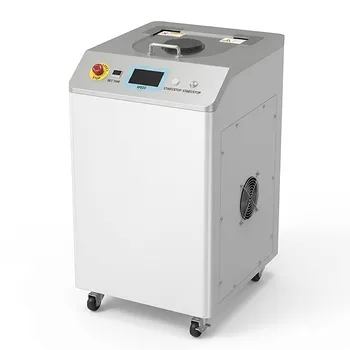
High Viscosity Planetary Centrifugal Vacuum Mixer for Material Defoaming and Uniform Mixing
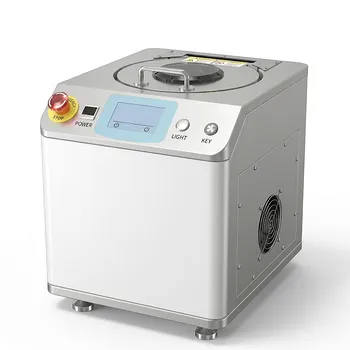
High Efficiency Vacuum Planetary Centrifugal Mixer and Defoaming Machine for Industrial Material Research and Precise Laboratory Powder Dispersion
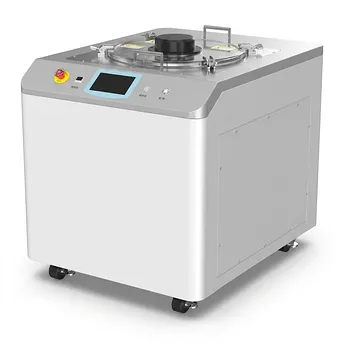
Industrial Planetary Centrifugal Vacuum Defoaming Mixer for High Viscosity Paste and Powder Homogenization
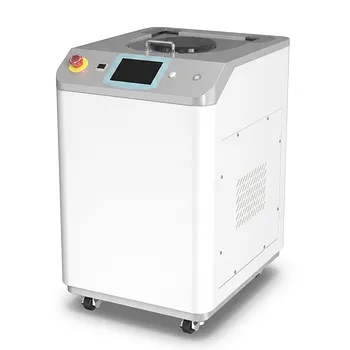
High Viscosity Planetary Centrifugal Mixing and Vacuum Defoaming Machine for Laboratory Material Preparation
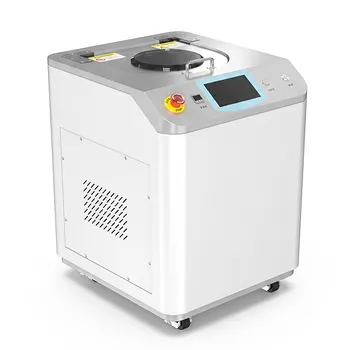
High Speed Vacuum Planetary Centrifugal Mixer and Defoamer for Industrial Paste Processing
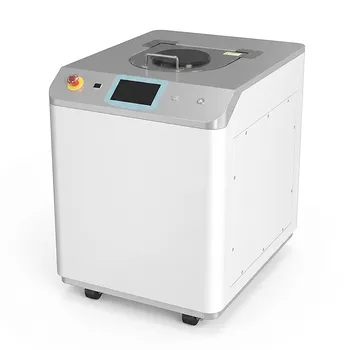
Industrial Planetary Centrifugal Vacuum Defoaming Mixer for High Viscosity Paste and Advanced Material Science
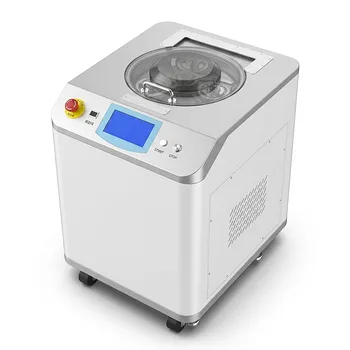
Dual Cup Vacuum Centrifugal Mixer Planetary Paste Defoaming Machine Industrial Material Processor
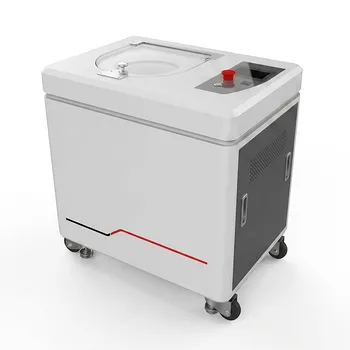
非介入式材料均质机真空脱泡行星搅拌高粘度混合设备

360° Rotating Omnidirectional Laboratory Planetary Ball Mill for Homogeneous Ultra-Fine Grinding and Mixing
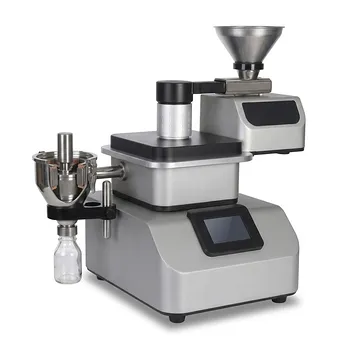
Ultra Centrifugal Mill for Rapid Laboratory Sample Preparation and Fine Powder Grinding
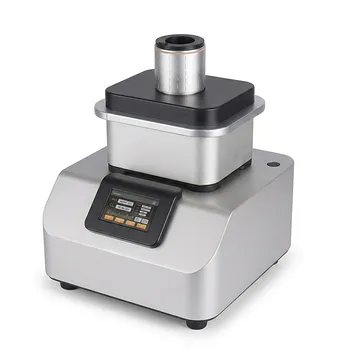
Ultra Centrifugal Mill High Speed Laboratory Grinder for Fibrous and Brittle Sample Preparation
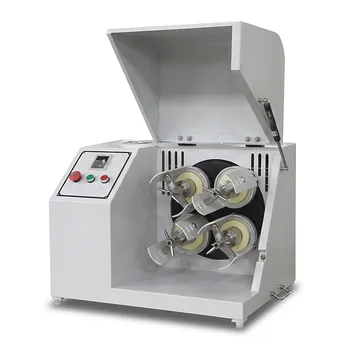
Horizontal Light Duty Planetary Ball Mill for Laboratory Sample Preparation
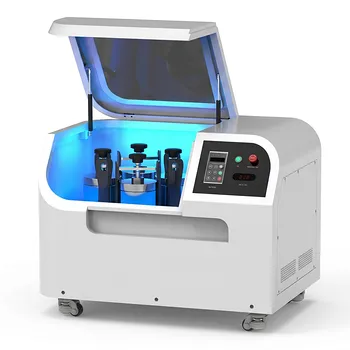
Planetary Ball Mill 12L

High Energy Omnidirectional Planetary Ball Mill 20L

Vertical Production Planetary Ball Mill for High Throughput Powder Processing

Heavy Duty Horizontal Planetary Ball Mill for Efficient Industrial Grinding and Sample Preparation

High Energy Omnidirectional Planetary Ball Mill 16L

Miniature Planetary Ball Mill with Vacuum Grinding and High Efficiency for Laboratory Sample Preparation

Vertical Square Planetary Ball Mill for Laboratory Sample Preparation and Nanoscale Grinding