What role does a planetary centrifugal mixer play in NCM523 regeneration? Achieve Precision Structural Reconstruction
Updated 5 months ago
The planetary centrifugal mixer (PCM) serves as the primary mechanical catalyst for in-situ liquefaction and microscopic structural reconstruction during the regeneration of waste NCM523 cathode materials. By leveraging high-speed centrifugal forces and intense inter-particle friction, the PCM transforms solid eutectic salt precursors into a liquid state, enabling the de-agglomeration of spent particles and the precise replenishment of lost elements.
In the direct regeneration of NCM523, the planetary centrifugal mixer moves beyond simple blending to facilitate a phase change in precursors, ensuring that "spent" secondary particles are broken down and structurally repaired at the primary particle level.
Driving In-Situ Liquefaction via Mechanical Force
Harnessing Centrifugal and Friction Energy
The PCM operates through simultaneous revolution and rotation, creating powerful centrifugal forces that drive particles against one another. This high-intensity interaction generates localized inter-particle friction, which provides the thermal and mechanical energy required to liquefy deep eutectic salt precursors like LiOH–LiNO3.
Transitioning to a Liquid Reaction Environment
The transition of solid precursors into a liquid environment is critical for the regeneration process. This "in-situ liquefaction" ensures that the lithium sources and other additives are in a state where they can chemically interact with the degraded cathode surfaces more effectively than a standard solid-state mix.
Facilitating Microscopic Structural Reconstruction
De-agglomeration of Secondary Particles
Waste NCM523 often exists as tightly packed secondary particle clusters that have suffered from structural decay. The liquid environment created within the PCM allows these clusters to de-agglomerate into primary particles, ensuring that every individual grain of material is exposed for treatment.
Precision Elemental Replenishment
Once the particles are dispersed, the PCM ensures a uniformly dispersed environment where elemental replenishment can occur. This allows lithium and other necessary elements to penetrate the microscopic structures of the primary particles, restoring the original stoichiometric balance and crystal lattice integrity.
Advantages of the Non-Contact Mixing Method
Maintaining Material Purity
Because the PCM utilizes a blade-less, non-contact mixing method, there is no risk of contamination from stirring paddles or impellers. This is vital for battery materials, where even trace amounts of metallic impurities from equipment wear can lead to catastrophic cell failure or reduced cycle life.
Integrated Degassing and Homogenization
The simultaneous rotation and revolution naturally perform vacuum-like deaeration, removing micro-bubbles from the mixture. This results in a high-density, homogeneous precursor "slurry" or paste that is perfectly prepared for the subsequent sintering stages of the regeneration process.
Understanding the Trade-offs and Pitfalls
Management of Thermal Energy
While friction is necessary for liquefaction, excessive processing times can lead to overheating. If the temperature is not monitored, it may lead to premature decomposition of certain precursors or unwanted side reactions before the material reaches the sintering furnace.
Batch Size and Scaling Limitations
PCMs are highly effective for precision engineering at the laboratory and pilot scales, but they often face throughput limitations compared to continuous industrial stirring tanks. High-viscosity mixtures require significant power, and the cost of scaling planetary motion to massive volumes can be a financial hurdle.
How to Apply This to Your Regeneration Project
Recommendations Based on Your Strategic Goals
- If your primary focus is Structural Integrity: Use the PCM specifically to achieve de-agglomeration of secondary particles, ensuring the lithium precursor reaches the primary particle boundaries.
- If your primary focus is High Chemical Purity: Leverage the non-contact nature of the PCM to eliminate the introduction of foreign metal ions that typically occur with high-shear blade mixers.
- If your primary focus is Rapid Prototyping: Utilize the PCM's ability to achieve nanometer-level homogenization in a fraction of the time required by traditional ball milling or stirring.
By integrating a planetary centrifugal mixer into the NCM523 workflow, you transform a simple mixing step into a sophisticated phase-change and reconstruction process that is essential for high-performance material recovery.
Summary Table:
| Key Role | Technical Mechanism | Benefit to NCM523 Regeneration |
|---|---|---|
| In-Situ Liquefaction | Friction-induced thermal energy | Converts solid precursors to liquid for better chemical interaction |
| De-agglomeration | High-speed centrifugal forces | Breaks down secondary clusters into primary particles for full exposure |
| Elemental Replenishment | Homogeneous dispersion | Restores stoichiometric balance and crystal lattice integrity |
| Contamination Control | Blade-less, non-contact mixing | Prevents metallic impurity introduction, ensuring high battery purity |
| Degassing | Simultaneous rotation & revolution | Removes micro-bubbles for high-density, uniform precursor slurries |
Optimize Your Material Recovery with Precision Engineering
Are you looking to enhance the efficiency and purity of your battery recycling or powder processing research? [Brand Name] provides complete laboratory sample preparation solutions for material science, specializing in advanced powder processing and compaction equipment.
Whether you need planetary centrifugal mixers for bubble-free homogenization, jet or ball mills for particle size reduction, or a full spectrum of hydraulic presses—including Cold/Warm Isostatic Presses (CIP/WIP) and vacuum hot presses—we have the tools to ensure your NCM regeneration projects achieve maximum structural integrity and chemical performance.
Ready to upgrade your lab's capabilities? Contact us today to explore our full equipment line and find the perfect solution for your material science challenges!
References
- Moonsu Yoon, Ju Li. Upcycling spent medium-Ni cathodes <i>via</i> novel liquified salt sourcing. DOI: 10.1039/d5ee01086a
Mentioned Products
- High Viscosity Planetary Centrifugal Vacuum Mixer for Material Defoaming and Uniform Mixing
- High Efficiency Vacuum Planetary Centrifugal Mixer and Defoaming Machine for Industrial Material Research and Precise Laboratory Powder Dispersion
- High Speed Vacuum Planetary Centrifugal Mixer and Defoamer for Industrial Paste Processing
- Industrial Planetary Centrifugal Vacuum Defoaming Mixer for High Viscosity Paste and Powder Homogenization
- High Viscosity Planetary Centrifugal Mixing and Vacuum Defoaming Machine for Laboratory Material Preparation
People Also Ask
- What core functions does a planetary centrifugal mixer perform? Optimize Hard Carbon Anode Slurry & Degassing
- Why is a planetary centrifugal mixer recommended for geopolymer slurries? Achieve high-shear, air-free homogenization.
- Why is a planetary centrifugal mixer utilized for wood powder and HPMC? Achieve uniform dispersion & rapid defoaming.
- How does a planetary centrifugal mixer address key challenges in Tyr-CDs@EVA optical films? Ensure Optical Clarity.
- What is the role of a planetary centrifugal mixer in UHTC slurry preparation? Achieve Void-Free, High-Viscosity Mixing

Tech Team · PowderPreparation
Last updated on May 14, 2026
Related Products
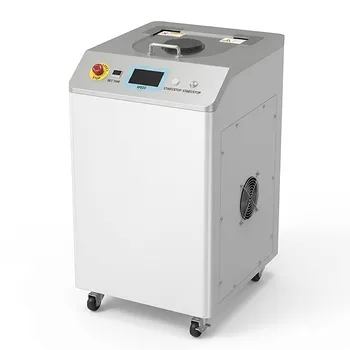
High Viscosity Planetary Centrifugal Vacuum Mixer for Material Defoaming and Uniform Mixing
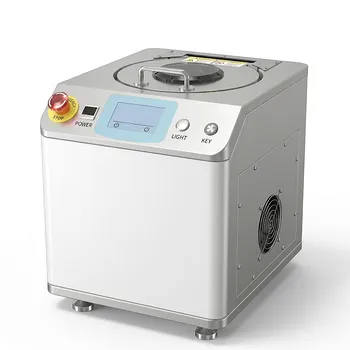
High Efficiency Vacuum Planetary Centrifugal Mixer and Defoaming Machine for Industrial Material Research and Precise Laboratory Powder Dispersion
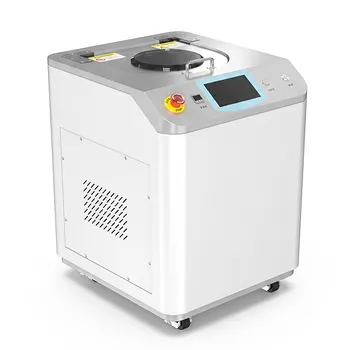
High Speed Vacuum Planetary Centrifugal Mixer and Defoamer for Industrial Paste Processing
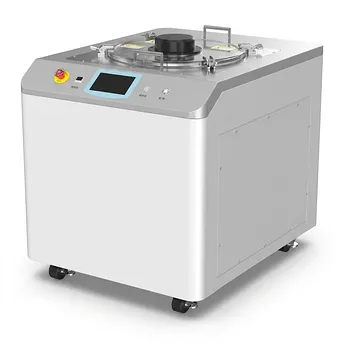
Industrial Planetary Centrifugal Vacuum Defoaming Mixer for High Viscosity Paste and Powder Homogenization
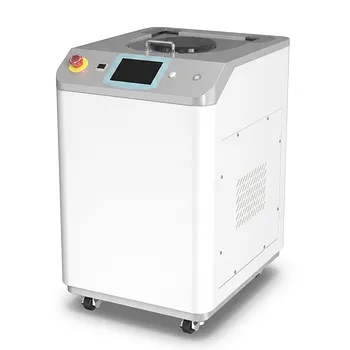
High Viscosity Planetary Centrifugal Mixing and Vacuum Defoaming Machine for Laboratory Material Preparation
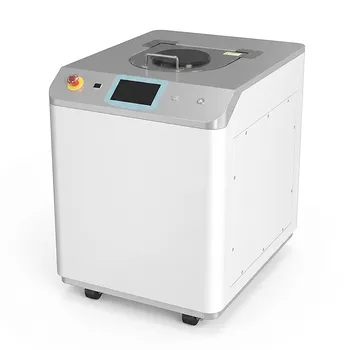
Industrial Planetary Centrifugal Vacuum Defoaming Mixer for High Viscosity Paste and Advanced Material Science
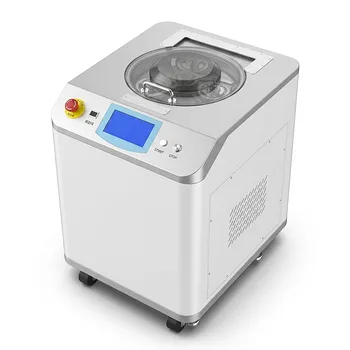
Dual Cup Vacuum Centrifugal Mixer Planetary Paste Defoaming Machine Industrial Material Processor
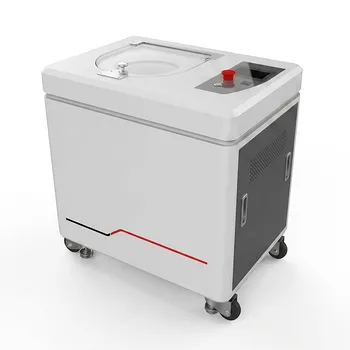
非介入式材料均质机真空脱泡行星搅拌高粘度混合设备
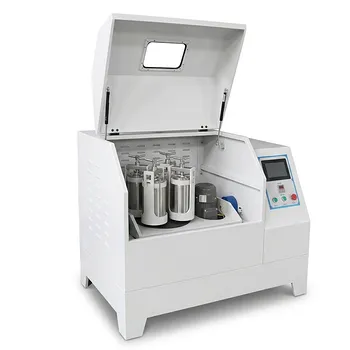
360° Rotating Omnidirectional Laboratory Planetary Ball Mill for Homogeneous Ultra-Fine Grinding and Mixing
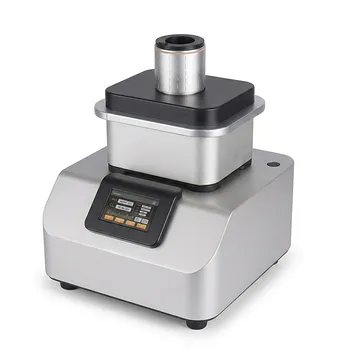
Ultra Centrifugal Mill High Speed Laboratory Grinder for Fibrous and Brittle Sample Preparation
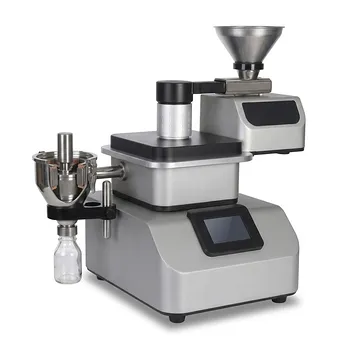
Ultra Centrifugal Mill for Rapid Laboratory Sample Preparation and Fine Powder Grinding
Heavy Duty Horizontal Planetary Ball Mill for Efficient Industrial Grinding and Sample Preparation
Horizontal Light Duty Planetary Ball Mill for Laboratory Sample Preparation
Vertical Production Planetary Ball Mill for High Throughput Powder Processing
Planetary Ball Mill 12L
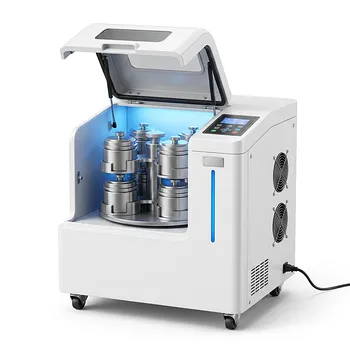
High Energy Omnidirectional Planetary Ball Mill 20L
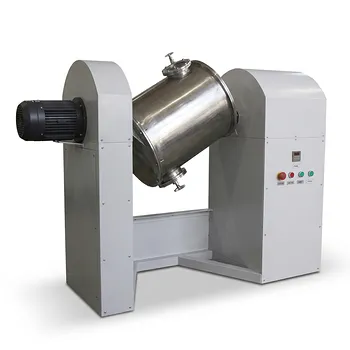
Inclined Mixer for Homogeneous Powder Blending and Grinding
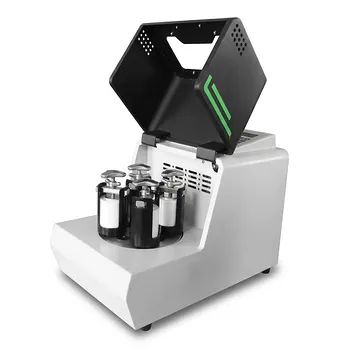
Miniature Planetary Ball Mill with Vacuum Grinding and High Efficiency for Laboratory Sample Preparation
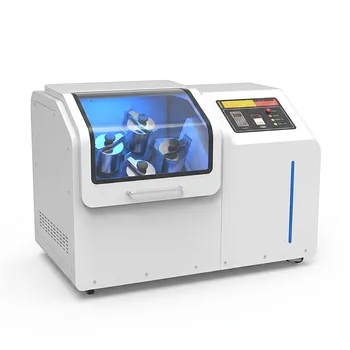
High Energy Omnidirectional Planetary Ball Mill 16L