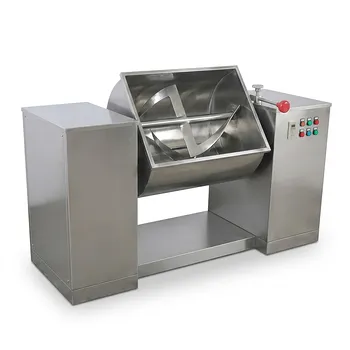
What are the technical advantages of using a planetary centrifugal mixer for geopolymer pastes? Achieve Superior Purity
Updated 5 months ago
The technical superiority of planetary centrifugal mixers (PCMs) in geopolymer synthesis lies in their ability to achieve simultaneous homogenization and degassing without mechanical blades.
Unlike conventional mixers that rely on physical paddles, PCMs utilize high centrifugal forces generated by synchronized revolution and rotation. This creates multi-scale vortex fields that break down micron-scale agglomerates and eliminate internal air bubbles in high-viscosity pastes, ensuring a defect-free material structure.
Planetary centrifugal mixing replaces mechanical stirring with a powerful centrifugal force field, enabling the rapid production of high-viscosity geopolymer pastes that are uniform at a microscopic level and free of entrapped air.
Overcoming High-Viscosity Barriers
Efficient Agglomerate Breakdown
Geopolymer pastes often involve ultra-fine ceramic powders and high-viscosity alkaline activators that are prone to clumping. The high shear stress generated by a PCM’s dual-axis motion forcibly breaks down these powder agglomerates. This ensures total contact between the activator and the precursor, which is essential for a complete chemical reaction.
Micro-level Homogenization
Traditional mixing often leaves "dead zones" or relies on laminar flow, which is insufficient for dense geopolymer precursors like fly ash or brick powder. A PCM induces multi-scale vortex fields within the fluid, moving material particles along complex trajectories. This results in a highly uniform distribution of all components, even when filler loading is extremely high.
Eliminating Structural Defects
Simultaneous Degassing (Defoaming)
Internal air bubbles are a primary cause of structural failure and inconsistent filament flow in 3D-printed geopolymers. PCMs perform defoaming and mixing simultaneously by using centrifugal pressure to force air bubbles to the surface. This process removes even microscopic voids that manual or paddle mixing typically leaves behind.
Preventing Component Segregation
Conventional gravity-based mixers often suffer from component segregation, where heavier aggregates settle at the bottom. A PCM generates a force field that significantly exceeds standard gravity, ensuring that particles with different masses remain uniformly dispersed. This stability is critical for the long-term performance consistency of the final geopolymer product.
Specialized Material Handling
Bladeless Mixing Benefits
The bladeless design of a PCM eliminates the risk of cross-contamination and physical damage to shear-sensitive materials. Because there are no mixing paddles to clean, there is zero material loss on equipment surfaces. This makes the process highly efficient for specialized or expensive geopolymer formulations.
Fiber and Filler Dispersion
When additives like polypropylene fibers or nano-silica are used, conventional mixers often cause clumping or "balling." A PCM achieves a three-dimensional, uniform random distribution of these reinforcements. This enhances the toughening mechanisms of the geopolymer matrix and improves overall thermal conductivity.
Understanding the Trade-offs
Thermal Management Concerns
The high-energy nature of planetary centrifugal mixing can generate significant heat within the paste due to internal friction. For geopolymer formulations with rapid setting times, this heat can accelerate the reaction prematurely. Users must carefully calibrate mixing times and speeds to prevent the material from hardening inside the mixer.
Scalability and Cost
While PCMs offer superior quality, they generally have smaller batch capacities compared to industrial-scale paddle mixers. The equipment is also a higher capital investment. Therefore, it is best suited for high-performance applications where material integrity is more critical than sheer volume.
Applying This Technology to Your Project
How to Choose the Right Mixing Strategy
- If your primary focus is 3D Printing: Use a PCM to ensure the continuity of the filament and to prevent nozzle clogging caused by unmixed agglomerates.
- If your primary focus is Fiber Reinforcement: Leverage the high-shear environment of a PCM to achieve a random 3D distribution of fibers without manual intervention.
- If your primary focus is Maximum Density: Prioritize the PCM’s simultaneous degassing feature to eliminate micro-voids and enhance the compressive strength of the hardened paste.
By shifting from mechanical stirring to centrifugal force, you can achieve a level of material purity and structural uniformity that conventional equipment simply cannot replicate.
Summary Table:
| Feature | Planetary Centrifugal Mixer (PCM) | Conventional Paddle Mixer |
|---|---|---|
| Mixing Mechanism | Dual-axis centrifugal force (Bladeless) | Physical mechanical stirring (Blades) |
| Degassing | Simultaneous defoaming during mixing | Often requires separate vacuum step |
| Homogenization | Micro-level via multi-scale vortex fields | Macro-level; prone to "dead zones" |
| Agglomerates | Breaks micron-scale clumping with high shear | Struggles with high-viscosity clusters |
| Contamination | Zero (no contact with mixing tools) | Risk of cross-contamination from blades |
| Fiber Dispersion | Random 3D uniform distribution | High risk of fiber "balling" or clumping |
Elevate Your Material Research with Precision Mixing Solutions
Achieving a defect-free geopolymer structure requires more than just stirring; it requires advanced fluid dynamics and vacuum-free degassing. At our core, we provide complete laboratory sample preparation solutions for material science, specializing in high-performance powder processing and compaction equipment.
Whether you are developing 3D-printed geopolymers or high-strength composites, our planetary centrifugal mixers and defoaming mixers ensure microscopic uniformity without the hassle of mechanical blades. Beyond mixing, our extensive product line supports your entire workflow:
- Size Reduction: Jaw/roll crushers and cryogenic grinders (liquid nitrogen).
- Milling & Sifting: Planetary ball mills, jet mills, and vibratory sieve shakers.
- Compaction: A full spectrum of hydraulic presses, including Cold/Warm Isostatic Presses (CIP/WIP), XRF pellet presses, and vacuum hot presses.
Ready to eliminate structural defects and optimize your material performance? Contact our technical experts today to find the perfect equipment configuration for your laboratory needs.
References
- João Vicente Soares Martins, Luciano Senff. Waste-Derived Geopolymers for Artificial Coral Development by 3D Printing. DOI: 10.1007/s40831-025-01016-3
Mentioned Products
- High Viscosity Planetary Centrifugal Vacuum Mixer for Material Defoaming and Uniform Mixing
- High Efficiency Vacuum Planetary Centrifugal Mixer and Defoaming Machine for Industrial Material Research and Precise Laboratory Powder Dispersion
- High Speed Vacuum Planetary Centrifugal Mixer and Defoamer for Industrial Paste Processing
- Industrial Planetary Centrifugal Vacuum Defoaming Mixer for High Viscosity Paste and Powder Homogenization
- High Viscosity Planetary Centrifugal Mixing and Vacuum Defoaming Machine for Laboratory Material Preparation
People Also Ask
- What core functions does a planetary centrifugal mixer perform? Optimize Hard Carbon Anode Slurry & Degassing
- Why is a planetary centrifugal mixer recommended for geopolymer slurries? Achieve high-shear, air-free homogenization.
- Why is a planetary centrifugal mixer utilized for wood powder and HPMC? Achieve uniform dispersion & rapid defoaming.
- How does a planetary centrifugal mixer address key challenges in Tyr-CDs@EVA optical films? Ensure Optical Clarity.
- What is the role of a planetary centrifugal mixer in UHTC slurry preparation? Achieve Void-Free, High-Viscosity Mixing

Tech Team · PowderPreparation
Last updated on May 14, 2026
Related Products
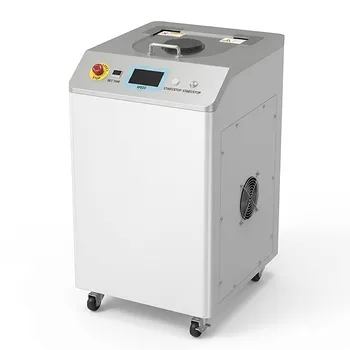
High Viscosity Planetary Centrifugal Vacuum Mixer for Material Defoaming and Uniform Mixing
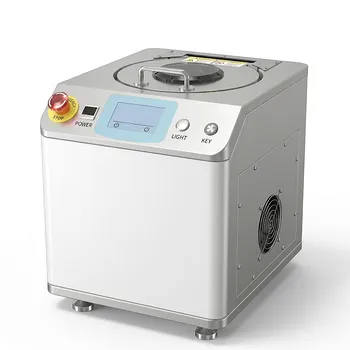
High Efficiency Vacuum Planetary Centrifugal Mixer and Defoaming Machine for Industrial Material Research and Precise Laboratory Powder Dispersion
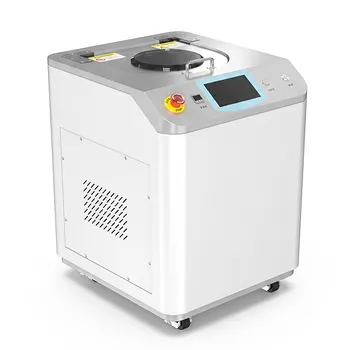
High Speed Vacuum Planetary Centrifugal Mixer and Defoamer for Industrial Paste Processing
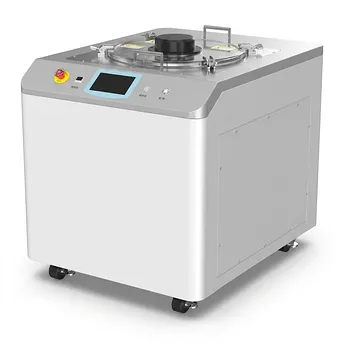
Industrial Planetary Centrifugal Vacuum Defoaming Mixer for High Viscosity Paste and Powder Homogenization
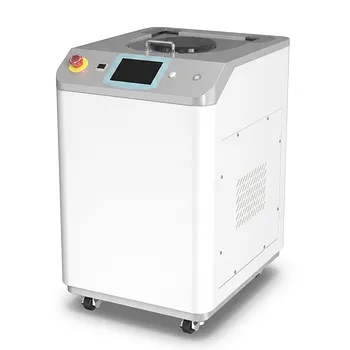
High Viscosity Planetary Centrifugal Mixing and Vacuum Defoaming Machine for Laboratory Material Preparation
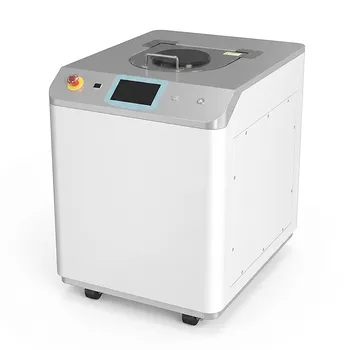
Industrial Planetary Centrifugal Vacuum Defoaming Mixer for High Viscosity Paste and Advanced Material Science
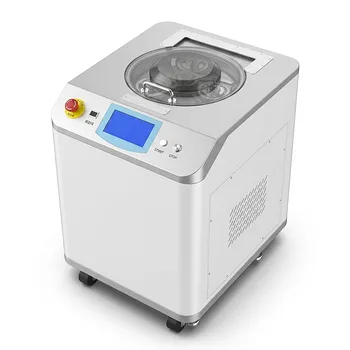
Dual Cup Vacuum Centrifugal Mixer Planetary Paste Defoaming Machine Industrial Material Processor
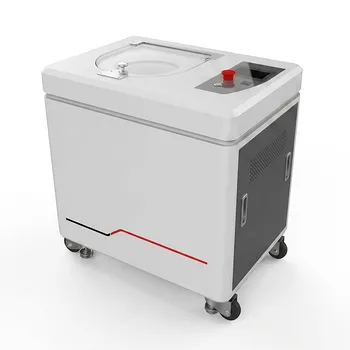
非介入式材料均质机真空脱泡行星搅拌高粘度混合设备

360° Rotating Omnidirectional Laboratory Planetary Ball Mill for Homogeneous Ultra-Fine Grinding and Mixing
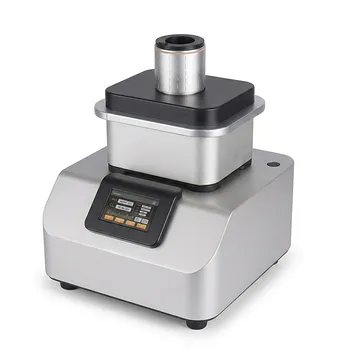
Ultra Centrifugal Mill High Speed Laboratory Grinder for Fibrous and Brittle Sample Preparation
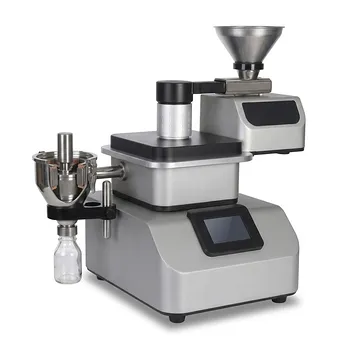
Ultra Centrifugal Mill for Rapid Laboratory Sample Preparation and Fine Powder Grinding

Heavy Duty Horizontal Planetary Ball Mill for Efficient Industrial Grinding and Sample Preparation
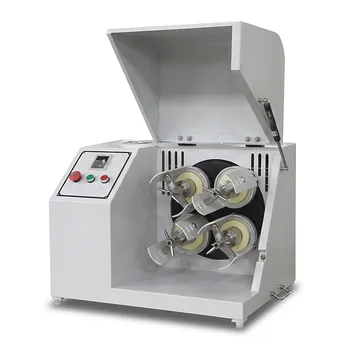
Horizontal Light Duty Planetary Ball Mill for Laboratory Sample Preparation

Vertical Production Planetary Ball Mill for High Throughput Powder Processing
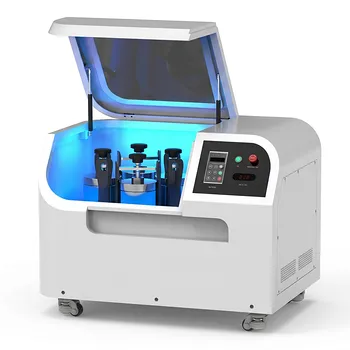
Planetary Ball Mill 12L

High Energy Omnidirectional Planetary Ball Mill 20L
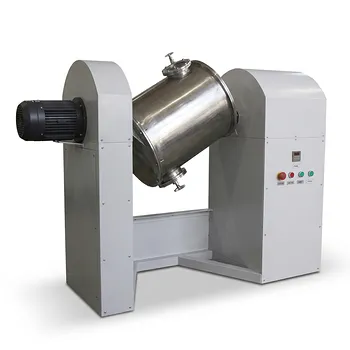
Inclined Mixer for Homogeneous Powder Blending and Grinding

Miniature Planetary Ball Mill with Vacuum Grinding and High Efficiency for Laboratory Sample Preparation

High Energy Omnidirectional Planetary Ball Mill 16L