Planetary Ball Mill vs. Jaw Crusher for Glass: Morphological Advantages for SLM
Updated 4 months ago
The primary morphological advantage of using a planetary ball mill over a jaw crusher is the production of rounded particles rather than sharp, angular ones. This rounded morphology significantly reduces inter-particle friction and lowers the average avalanche angle, which directly enhances the flowability and spreading uniformity of borosilicate glass powder during processes like Selective Laser Melting (SLM).
While jaw crushers rely on simple compression to break glass into random, jagged fragments, planetary ball mills utilize high-energy rotational forces to "polish" particle edges. This results in a powder that flows more like a fluid, which is essential for high-precision additive manufacturing and uniform sintering.
The Impact of Particle Geometry on Material Performance
Angularity and Inter-particle Friction
Jaw crushers operate through mechanical compression, which shatters borosilicate glass into random, angular shapes. These jagged edges create high mechanical interlock and friction between individual grains.
In practical applications, this high friction leads to poor flowability and inconsistent powder beds. If you are using these powders for recoating in 3D printing, the angularity can cause "clumping" or uneven layers.
Rounded Morphology and Flowability
Planetary ball mills use a combination of rotation and revolution to generate frictional and grinding forces. These forces act on the sharp vertices of the glass, effectively rounding the particle edges over time.
Research shows that these rounded particles have a lower average avalanche angle. This measurement indicates that the powder can transition from a static to a moving state more easily, ensuring a smooth, uniform spread during the recoating process.
Technical Drivers of Morphological Superiority
High-Energy Multi-Directional Forces
A planetary ball mill utilizes a sun wheel and grinding jars moving in opposite directions to create high centrifugal and Coriolis forces. This composite motion ensures that the glass is hit from multiple angles by the grinding media.
Unlike the one-dimensional crushing action of a jaw crusher, these shear and impact forces refine the glass into micron or sub-micron scales. This multi-directional energy is what allows the device to smooth out the particle's surface while reducing its size.
Precision Control of Specific Surface Area
The high-energy grinding process significantly increases the specific surface area of the borosilicate glass. This is not just about size; it is about creating a high-energy surface that is more reactive.
Increased surface area leads to higher chemical reactivity and better stability in printing inks or slurries. This allows for better interaction with binders and faster, more predictable results during the sintering phase.
Consequences for Downstream Processing
Enhanced Sintering and Crystallization
The morphology of the powder dictates its packing density during press molding or 3D printing. Rounded particles pack more efficiently, leaving fewer large voids that could weaken the final structure.
Uniform particle size distribution also allows for tighter control over crystallization kinetics. When the particles are uniform and rounded, the resulting glass-ceramic typically maintains a crystal size below 1 micron, ensuring structural integrity.
Uniformity in Additive Manufacturing
In Selective Laser Melting (SLM), the success of a build depends on the recoating uniformity. Rounded powders flow smoothly across the build plate without dragging or skipping.
This consistency eliminates agglomeration, a common problem where fine powders stick together in clumps. By removing these clumps through high-energy milling, you ensure a molecular-level uniform mix in the final part.
Understanding the Trade-offs
The Risk of Contamination
While planetary ball mills offer superior morphology, they introduce a risk of material contamination. Because the grinding media (balls) and the jar are in constant high-energy contact with the glass, small amounts of the media can wear off into the powder.
Using high-purity media like tungsten carbide can mitigate this risk. However, it is a factor that must be monitored if the borosilicate glass is intended for high-purity electronic or medical applications.
Heat Generation and Material Sensitivity
The high-energy nature of planetary milling generates significant heat during long runs. For certain sensitive materials, this heat can trigger premature phase changes or unwanted chemical reactions.
Jaw crushers, by contrast, generate very little heat because the process is rapid and low-energy. When using a planetary mill, intermittent cooling cycles are often necessary to maintain the material's original properties.
How to Apply This to Your Project
Making the Right Choice for Your Goal
The choice between these two methods depends entirely on the required precision of your final application.
- If your primary focus is high-flowability for 3D printing: Use a planetary ball mill to ensure rounded morphology and a low avalanche angle for smooth recoating.
- If your primary focus is simple, high-volume bulk reduction: A jaw crusher is more efficient for breaking down large chunks where particle shape is irrelevant.
- If your primary focus is maximum reactivity and sintering speed: Opt for the planetary ball mill to maximize specific surface area and ensure sub-micron refinement.
- If your primary focus is preventing any media contamination: A jaw crusher (with hardened plates) may be safer, or you must use specialized, high-wear-resistant media in your planetary mill.
By prioritizing the shape of the particle over mere size reduction, you ensure that your borosilicate glass powder performs predictably in advanced manufacturing environments.
Summary Table:
| Feature | Planetary Ball Mill | Jaw Crusher |
|---|---|---|
| Particle Shape | Rounded / Spherical | Sharp / Angular |
| Flowability | High (Low avalanche angle) | Low (High inter-particle friction) |
| Mechanism | Impact & Shear (Multi-directional) | Compression (One-dimensional) |
| Best For | SLM, 3D Printing, Fine Sintering | Bulk Reduction, Initial Crushing |
| Size Goal | Micron / Sub-micron refinement | Large-scale volume reduction |
Optimize Your Material Performance with Precision Sample Prep
Achieving the perfect particle morphology is critical for high-precision applications like Selective Laser Melting (SLM) and advanced sintering. We provide complete laboratory sample preparation solutions tailored for material science research and industrial production.
Whether you need to produce rounded, high-flowability powders or perform rapid bulk reduction, our extensive equipment line has you covered:
- Milling & Grinding: Planetary ball mills, jet mills, liquid nitrogen cryogenic grinders, and rotor mills.
- Crushing & Sieving: Jaw and roll crushers, alongside vibratory and air-jet sieve shakers.
- Mixing: High-efficiency powder and defoaming mixers.
- Compaction & Pressing: A full spectrum of hydraulic presses, including Cold/Warm Isostatic Presses (CIP/WIP), vacuum hot presses, and XRF pellet presses.
Ready to refine your powder processing workflow? Contact our technical experts today to find the ideal solution for your material challenges!
References
- Miranda Fateri. Selective laser melting of glass powders. DOI: 10.18154/rwth-2018-223439
Mentioned Products
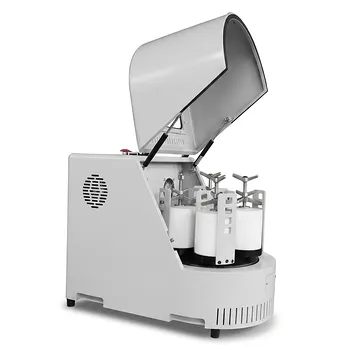
- Vertical Semi Circular Planetary Ball Mill for Laboratory Precision Grinding
- High Energy Planetary Ball Mill for Nano Scale Grinding and Mechanical Alloying
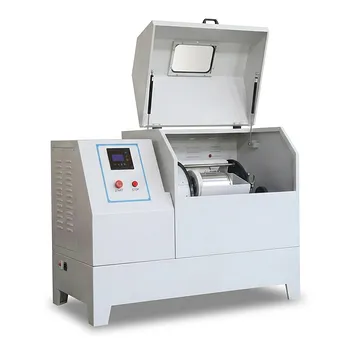
- Heavy Duty Horizontal Planetary Ball Mill for Efficient Industrial Grinding and Sample Preparation
- Vertical Production Planetary Ball Mill for High Throughput Powder Processing
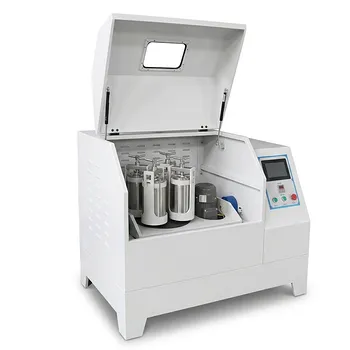
- 360° Rotating Omnidirectional Laboratory Planetary Ball Mill for Homogeneous Ultra-Fine Grinding and Mixing
People Also Ask
- What role does a planetary ball mill play in the synthesis of Li6PS5Cl (LPSCl)? Unlock High Ionic Conductivity
- Why is a planetary ball mill essential for SiBCN-rGO wet-spinning? Achieve Superior Dispersion and Spinnability
- Why is an intermittent grinding process required for perovskites in a planetary ball mill? Ensure Stability & Purity
- Why is a planetary ball mill required for PET micronization? Ensure Accurate Chemical Analysis of Reprocessed PET
- How does mechanized planetary ball milling compare to manual agate grinding? Optimize sulfide standard material precision.

Tech Team · PowderPreparation
Last updated on May 14, 2026
Related Products
Vertical Semi Circular Planetary Ball Mill for Laboratory Precision Grinding

High Energy Planetary Ball Mill for Nano Scale Grinding and Mechanical Alloying
Heavy Duty Horizontal Planetary Ball Mill for Efficient Industrial Grinding and Sample Preparation

Vertical Production Planetary Ball Mill for High Throughput Powder Processing
360° Rotating Omnidirectional Laboratory Planetary Ball Mill for Homogeneous Ultra-Fine Grinding and Mixing
Vertical Square Planetary Ball Mill for Laboratory Sample Preparation and Nanoscale Grinding
Miniature Planetary Ball Mill with Vacuum Grinding and High Efficiency for Laboratory Sample Preparation

High Energy Omnidirectional Planetary Ball Mill 16L
High Energy Laboratory Planetary Ball Mill for Nano Grinding and Material Science Sample Preparation
Planetary Ball Mill 12L
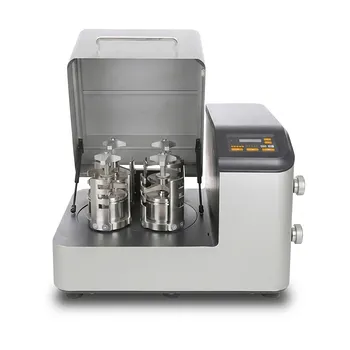
High Energy Planetary Ball Mill for Nano Scale Grinding and Colloidal Mixing in Material Science Research
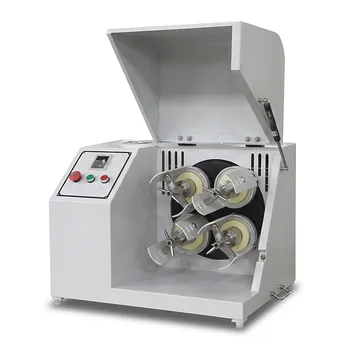
Horizontal Light Duty Planetary Ball Mill for Laboratory Sample Preparation
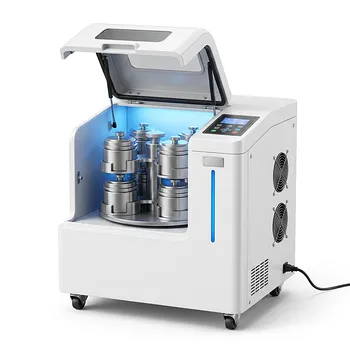
High Energy Omnidirectional Planetary Ball Mill 20L
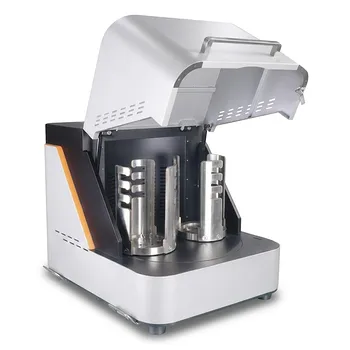
High Energy Laboratory Planetary Ball Mill for Nano Grinding and Colloidal Mixing of Hard and Brittle Materials

8L Planetary Ball Mill for Laboratory Grinding and Sample Preparation
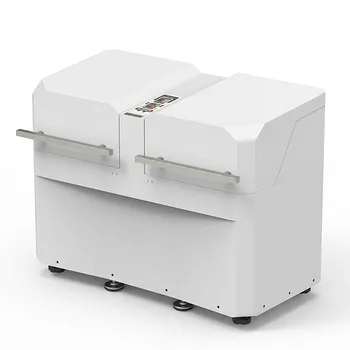
Dual Station Planetary Ball Mill 24L

Multi-Platform Nanoscale High-Energy Vibratory Ball Mill

Nano High Energy Vibratory Ball Mill for Laboratory Sample Preparation
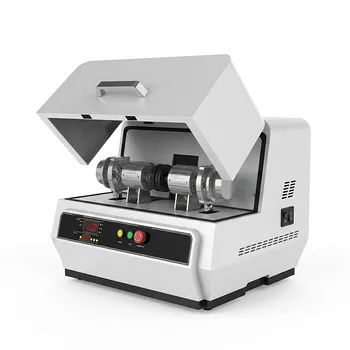
Dual Jar High Energy Vibratory Ball Mill