What are the functions of test sieves & shakers in diatomaceous earth prep? Master precision grading for adsorbents.
Updated 4 months ago
Standard test sieves and vibratory sieve shakers serve as the precision instruments for particle size classification in the preparation of diatomaceous earth adsorbents. These tools transform raw, crushed material into strictly defined size fractions—such as silt (0.075 mm), fine sand (0.075–0.425 mm), and medium sand (0.425–2.00 mm)—which is essential for controlling adsorption kinetics, breakthrough curves, and system pressure drops.
The primary function of this equipment is to ensure particle size uniformity, which eliminates experimental variables and allows for the accurate modeling of adsorption behavior. By isolating specific dimensions, researchers can optimize the balance between available surface area and the mechanical flow properties of the adsorbent bed.
Precise Classification and Grading
Defining Exact Particle Fractions
Standard test sieves utilize precise mesh apertures to separate crushed diatomaceous earth into specific categories. This mechanical separation is the only reliable way to isolate sizes like fine sand or silt for comparative testing.
Ensuring Batch Consistency
Vibratory sieve shakers provide the consistent mechanical energy needed to move powder through the mesh without manual error. This ensures that every sample within a specific grade has a uniform diameter, which is a prerequisite for scientifically valid data.
Eliminating Experimental Variables
By isolating particles within a narrow range, you remove the "noise" caused by inconsistent diffusion rates. This precision is critical when fitting data to pseudo-second-order kinetics or performing isotherm analysis.
Impact on Adsorption Performance
Optimizing Specific Surface Area
The particle size directly dictates the specific surface area available for adsorption. Smaller, precisely graded particles typically offer higher surface area, but they must be accurately classified to ensure the adsorption rate does not fluctuate due to "fines" (undersized particles).
Controlling Bed Dynamics and Pressure
In fixed-bed reactors, particle size influences bed tortuosity and porosity. Graded diatomaceous earth prevents "channeling," where fluid bypasses parts of the adsorbent, ensuring the entire bed is utilized efficiently.
Predicting Breakthrough Curves
Precise grading allows for the creation of repeatable breakthrough curves. Knowing the exact size of the diatomaceous earth particles makes it possible to calculate the point at which the adsorbent bed will reach saturation under specific flow conditions.
Understanding the Trade-offs
Surface Area vs. Hydraulic Conductivity
While smaller particles increase the available surface area and adsorption sites, they also significantly increase bed pressure drop. Using sieves to remove oversized particles improves kinetics, but failing to remove enough "fines" can lead to clogging or excessive energy requirements for pumping.
Mechanical Attrition during Sieving
Extended vibration in a sieve shaker can lead to particle attrition, where fragile diatomaceous earth structures break down into smaller fragments. If the shaking duration is too long, the final graded material may contain more dust than the mesh size intended, skewing experimental results.
Accuracy vs. Sample Throughput
High-precision sieving is a slow process that limits how much material can be prepared at once. Balancing the need for strict uniformity with the volume of adsorbent required for large-scale pilot tests is a common challenge in adsorbent preparation.
Applying This to Your Adsorbent Preparation
Making the Right Choice for Your Goal
- If your primary focus is maximizing adsorption rate: Use finer mesh sieves (e.g., 200 mesh) to isolate the smallest viable particle fractions, which increases the specific surface area available for ion exchange.
- If your primary focus is fixed-bed reactor stability: Prioritize the removal of both undersized "fines" and oversized particles to ensure a uniform bed density and prevent fluid channeling or high pressure drops.
- If your primary focus is kinetic modeling: Use an automatic vibratory shaker with a fixed timer to ensure that particle size distribution is perfectly repeatable across different batches, eliminating physical variance as a source of error.
By masterfully controlling the particle size distribution through standardized sieving, you ensure that the chemical performance of your diatomaceous earth is never undermined by its physical inconsistencies.
Summary Table:
| Equipment/Process | Key Function | Impact on Adsorbent Performance |
|---|---|---|
| Standard Test Sieves | Precise particle size classification | Optimizes specific surface area and adsorption sites. |
| Vibratory Shakers | Automated batch consistency | Ensures repeatable kinetics and removes experimental variables. |
| Particle Grading | Separation of silt/sand fractions | Controls bed porosity and prevents fluid channeling. |
| Fine Mesh Isolation | Removal of undersized "fines" | Minimizes pressure drops and prevents reactor clogging. |
Optimize Your Material Research with Precision Sample Preparation
Achieving consistent results in adsorption studies requires perfectly graded materials. At our facility, we provide complete laboratory sample preparation solutions tailored for material science and powder processing.
Whether you are refining diatomaceous earth or developing advanced catalysts, our extensive equipment line ensures your samples meet the strictest standards:
- Sizing & Classification: High-precision vibratory and air-jet sieve shakers with a full range of test sieves.
- Milling & Grinding: Planetary ball mills, jet mills, and cryogenic grinders for ultra-fine powder production.
- Crushing & Mixing: Heavy-duty jaw/roll crushers and high-efficiency powder/defoaming mixers.
- Compaction & Pressing: Manual lab presses, XRF pellet presses, and advanced Isostatic (CIP/WIP) or Hot Presses.
Ready to enhance your lab's efficiency and accuracy? Contact our experts today to find the ideal equipment for your material processing needs!
References
- Pawan Kumar, Pankaj Kumar Gupta. DE Fluoridation of Domestic Waste Water by using Activated Diatomaceous Earth in fixed Mattress Column Adsorption System. DOI: 10.13005/ojc/370311
Mentioned Products
- Small Laboratory Vibratory Sieve Shaker for Powder Gradation and Particle Size Analysis
- Laboratory Vibratory Test Sieve Shaker for Precision Particle Size Analysis and Powder Grading
- Stainless Steel Laboratory Vibratory Test Sieve Shaker
- Small Laboratory Vibrating Sieve Shaker for Precise Particle Size Analysis
- Vibratory Sieve Shaker Electromagnetic 3D Motion Powder Particle Size Analyzer for Dry and Wet Sieving
People Also Ask
- Why use a 450 μm vibratory sieve shaker for MLO? Ensure Superior Particle Uniformity & Adsorption Performance
- Why is a laboratory vibratory sieve shaker essential for coconut cake fiber? Achieve Precise Particle Size Analysis
- What is the role of laboratory vibratory sieve shakers in waste PUR foam recycling? Optimize Particle Size and Density
- How does a laboratory vibratory sieve shaker contribute to the pre-treatment of PCB powders before sorting? Boost Yields
- What is the primary function of a laboratory vibratory sieve shaker in the evaluation of sand liquefaction potential?

Tech Team · PowderPreparation
Last updated on Jun 03, 2026
Related Products
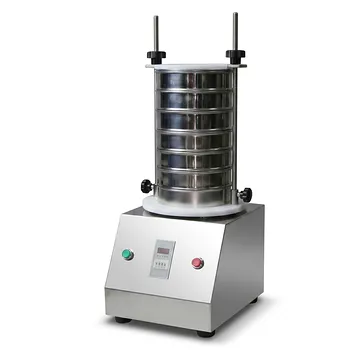
Small Laboratory Vibratory Sieve Shaker for Powder Gradation and Particle Size Analysis
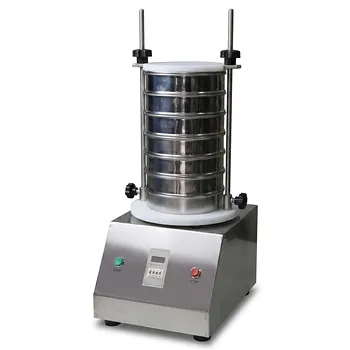
Laboratory Vibratory Test Sieve Shaker for Precision Particle Size Analysis and Powder Grading
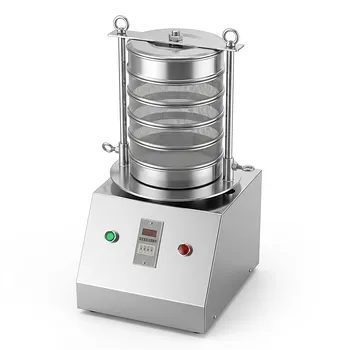
Stainless Steel Laboratory Vibratory Test Sieve Shaker
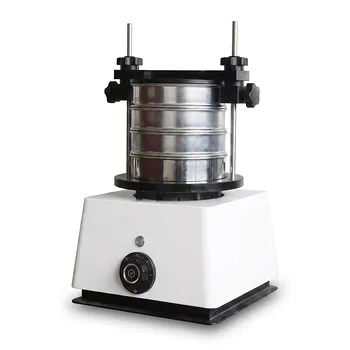
Small Laboratory Vibrating Sieve Shaker for Precise Particle Size Analysis
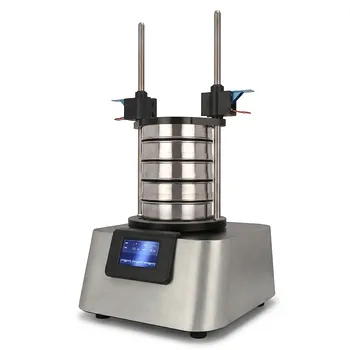
Vibratory Sieve Shaker Electromagnetic 3D Motion Powder Particle Size Analyzer for Dry and Wet Sieving
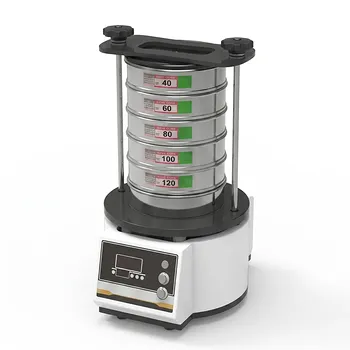
Dry Three Dimensional Vibratory Sieve Shaker
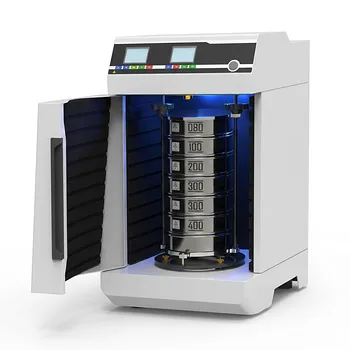
Laboratory Dry and Wet Three Dimensional Vibratory Sieve Shaker for Particle Analysis
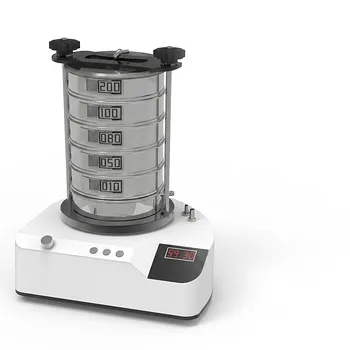
Heavy Duty Dry Three Dimensional Vibratory Sieve Shaker for Particle Separation
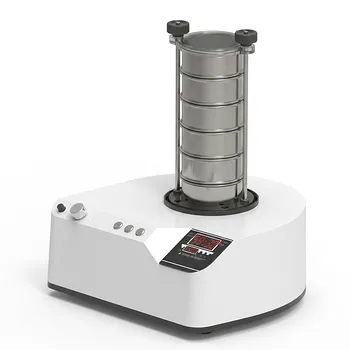
三维电磁微量振动筛分仪
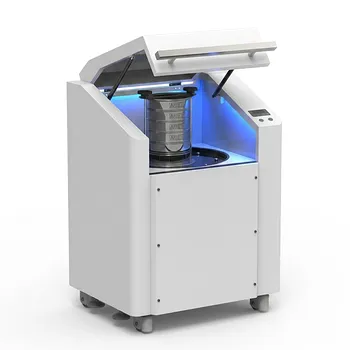
High Frequency Cabinet Type Three-Dimensional Rotary Vibrating Sieve Shaker for Dry Sieving and Particle Classification
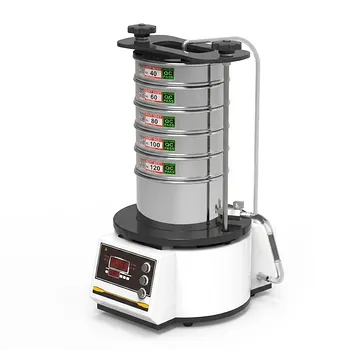
High Frequency Wet Three-Dimensional Vibrating Sieve Shaker for Dry and Wet Particle Size Analysis
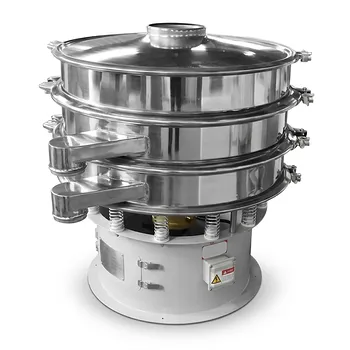
Three Dimensional Rotary Vibrating Sieve
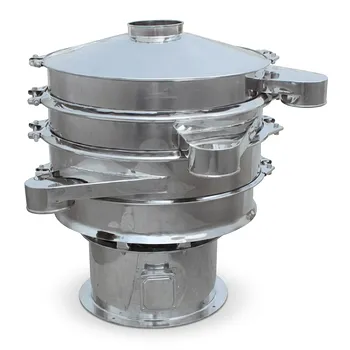
Stainless Steel Rotary Vibrating Sieve High Precision Circular Vibratory Separator Industrial Powder Grading Machine Multi Layer Sifting Equipment
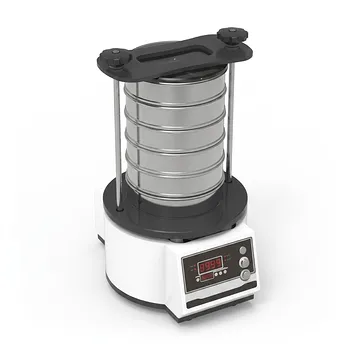
Tapping Oscillating Sieve Shaker for Dry and Wet Particle Size Analysis
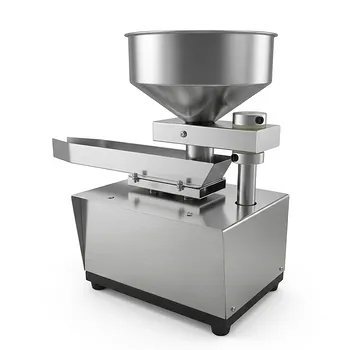
Automatic Vibrating Powder Feeder for Laboratory Material Processing Precision Vibratory Hopper Feeder for Granular and Powder Material Handling Industrial Grade Vibrating Tray Feeder for Consistent Material Sample Preparation
Vibratory Superfine Grinder for Ultra Fine Laboratory Powder Milling
Laboratory Air Jet Sieving Machine for Fine Powder Particle Size Analysis and Deagglomeration