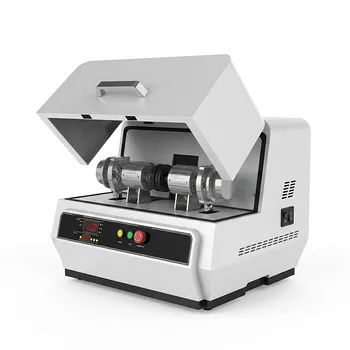
What are the functions of a ball mill and zirconia grinding balls in mixing sheep bone hydroxyapatite? Achieve Uniformity
Updated 3 months ago
The primary functions of the ball mill and zirconia media are particle size reduction and homogenization. In the context of mixing sheep bone hydroxyapatite and alumina, the ball mill acts as a mechanical reactor that applies high-energy impact and shear forces. This ensures that the two distinct materials are dispersed at a micro-scale level, creating a stable, uniform mixture that prevents structural defects during the subsequent sintering process.
The ball mill serves as the mechanical engine for material homogenization, while zirconia grinding balls provide the high-density impact energy required to break agglomerates and disperse alumina within the hydroxyapatite matrix. This synergy is essential for achieving a uniform chemical composition and preventing "compositional segregation" in the final ceramic product.
The Role of the Ball Mill in Material Processing
Achieving Micro-Scale Dispersion
The ball mill, often operating at speeds such as 180 rpm, provides the necessary mechanical rotation to tumble the grinding media and raw materials. This continuous motion ensures that the alumina powder is distributed evenly throughout the sheep bone hydroxyapatite (HA) matrix.
Without this mechanical action, the different densities and particle sizes of HA and alumina would lead to compositional segregation. This segregation creates weak points in the final sintered body, compromising its mechanical integrity.
De-agglomeration of Ceramic Clusters
Raw hydroxyapatite often forms hard agglomerates during synthesis or high-temperature calcination. The ball mill uses mechanical force to break these clusters down into smaller, more manageable particles.
This process ensures a uniform particle size distribution, which is a prerequisite for creating high-quality composite powders. A consistent particle size allows for better flowability and more predictable compaction performance during molding.
Facilitating Mechanochemical Reactions
In some configurations, such as planetary or stirred ball mills, the high-energy collisions can induce solid-phase reactions. This increases the reaction activity of the powders by refining them to sub-micron or even nanometer scales.
This heightened activity reduces the temperature required for sintering and helps eliminate microstructural defects. By homogenizing components at a near-atomic level, the mill prepares an ideal precursor for high-strength bioceramics.
The Strategic Use of Zirconia Grinding Media
Providing High-Density Impact Energy
Zirconia grinding balls are selected for their high density, which translates directly into greater kinetic energy during collisions. This energy is required to force the micro-scale dispersion of alumina additives within the hydroxyapatite.
High-energy impacts ensure that the alumina particles do not simply sit on the surface but are thoroughly integrated into the mixture. This is critical when working with varying proportions of alumina to ensure a stable suspension or dry mix.
Ensuring Material Purity Through Hardness
The high hardness of zirconia makes it exceptionally resistant to wear and abrasion during prolonged milling cycles. This is vital in medical-grade applications like sheep bone HA processing, where contamination from the grinding media must be minimized.
Standard grinding media might shed particles that act as impurities, potentially altering the biological compatibility of the HA. Zirconia’s durability maintains the chemical purity of the ceramic slurry or powder.
Promoting Uniform Coating of Additives
Zirconia media facilitates the uniform adsorption of dispersants, binders, and lubricants onto the surface of the ceramic particles. The mechanical impact ensures that trace organic additives, such as Polyvinyl Alcohol (PVA), coat the particles at a microscopic level.
This uniform coating is essential for producing stable colloidal suspensions. It prevents the particles from re-clumping, ensuring the mixture remains a stable suspension suitable for advanced processing techniques like spray drying or slip casting.
Understanding the Trade-offs
Milling Duration vs. Contamination
While longer milling times (e.g., 24 hours) ensure complete de-agglomeration and homogeneity, they also increase the total energy input and potential for media wear. Even high-purity zirconia will eventually experience some attrition, which may introduce trace amounts of zirconium into the hydroxyapatite.
Energy Intensity and Structural Integrity
Using high-energy planetary mills can refine powders to nanometer scales, but excessive force can sometimes disrupt the crystalline structure of the sheep bone HA. Finding the balance between "enough energy to mix" and "too much energy that damages" is a critical technical challenge.
Optimizing Your Mixing Protocol
How to Apply This to Your Project
To achieve the best results when mixing hydroxyapatite with alumina, consider your primary processing objective:
- If your primary focus is maximum homogenization: Utilize a ball mill with zirconia media for a minimum of 24 hours to ensure molecular-level distribution of all additives.
- If your primary focus is maintaining high purity: Select high-purity zirconia balls and monitor wear rates closely to prevent the introduction of foreign ceramic particles into the HA matrix.
- If your primary focus is rapid particle refinement: Use a planetary ball mill to leverage simultaneous revolution and rotation, which generates the high-energy shear forces needed for nanometer-scale grains.
- If your primary focus is stable suspension for casting: Ensure the ball mill is used to break up HA clusters completely, allowing dispersants like sodium silicate to coat every particle surface uniformly.
By precisely controlling the interaction between the mill's mechanical energy and the zirconia media's physical properties, you can produce a superior composite material ready for high-performance applications.
Summary Table:
| Component | Primary Function | Key Technical Benefit |
|---|---|---|
| Ball Mill | Mechanical Rotation | Ensures micro-scale dispersion & prevents compositional segregation |
| Zirconia Media | High-Density Impact | Breaks hard agglomerates & provides high-energy shear forces |
| The Synergy | Homogenization | Refines particles to sub-micron levels for superior sintering |
| Process Focus | Material Purity | High hardness of zirconia prevents contamination in bioceramics |
Elevate Your Material Research with Precision Engineering
Achieving the perfect bioceramic mixture requires more than just raw materials; it requires high-performance laboratory equipment. At [Brand Name], we provide complete laboratory sample preparation solutions tailored for material science and powder processing.
Whether you are refining sheep bone hydroxyapatite or developing advanced composites, our specialized equipment ensures consistency and purity:
- Advanced Milling: Planetary ball mills, jet mills, and cryogenic grinders for nanometer-scale refinement.
- Superior Compaction: A full spectrum of hydraulic presses, including Cold/Warm Isostatic Presses (CIP/WIP), XRF pellet presses, and vacuum hot presses.
- Preparation & Analysis: Jaw/roll crushers, powder/defoaming mixers, and high-precision vibratory sieve shakers.
Ready to optimize your powder processing workflow? Our experts are here to help you select the right configuration for your specific material needs.
Contact Our Technical Team Today
References
- Süleyman Serdar Pazarlıoğlu. The effect of alumina additive on the properties of sheep hydroxyapatite. DOI: 10.46810/tdfd.1324471
Mentioned Products
- 360° Rotating Omnidirectional Laboratory Planetary Ball Mill for Homogeneous Ultra-Fine Grinding and Mixing
- Single Tank High Energy Vibratory Ball Mill for Laboratory Grinding and Mixing
- 8L Planetary Ball Mill for Laboratory Grinding and Sample Preparation
- High Energy Hybrid Vibratory Ball Mill for Grinding Mixing and Cell Disruption
- Heavy Duty Horizontal Planetary Ball Mill for Efficient Industrial Grinding and Sample Preparation
People Also Ask
- What role does an omni-directional planetary ball mill play in brass/cobalt antimonide pretreatment? Achieve Nano-Scale Homogeneity.
- What is the function of an omni-directional planetary ball mill? Achieve Streak-Free Glass Homogenization
- Why is an intermittent grinding process required for perovskites in a planetary ball mill? Ensure Stability & Purity
- Why is a planetary ball mill essential for SiBCN-rGO wet-spinning? Achieve Superior Dispersion and Spinnability
- What role does a planetary ball mill play in the synthesis of Li6PS5Cl (LPSCl)? Unlock High Ionic Conductivity

Tech Team · PowderPreparation
Last updated on Jun 03, 2026
Related Products

360° Rotating Omnidirectional Laboratory Planetary Ball Mill for Homogeneous Ultra-Fine Grinding and Mixing
Single Tank High Energy Vibratory Ball Mill for Laboratory Grinding and Mixing

8L Planetary Ball Mill for Laboratory Grinding and Sample Preparation
High Energy Hybrid Vibratory Ball Mill for Grinding Mixing and Cell Disruption

Heavy Duty Horizontal Planetary Ball Mill for Efficient Industrial Grinding and Sample Preparation

Vertical Square Planetary Ball Mill for Laboratory Sample Preparation and Nanoscale Grinding

High Energy Planetary Ball Mill for Nano Scale Grinding and Colloidal Mixing in Material Science Research

High Energy Laboratory Planetary Ball Mill for Nano Grinding and Colloidal Mixing of Hard and Brittle Materials

Vertical Production Planetary Ball Mill for High Throughput Powder Processing

Miniature Planetary Ball Mill with Vacuum Grinding and High Efficiency for Laboratory Sample Preparation

Vertical Semi Circular Planetary Ball Mill for Laboratory Precision Grinding
Horizontal Light Duty Planetary Ball Mill for Laboratory Sample Preparation

Dual Station Planetary Ball Mill 24L
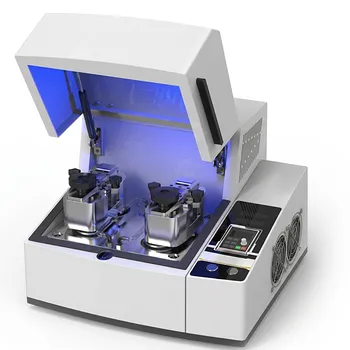
Laboratory Nano High Energy Ball Mill Ultrafine Grinding Mechanical Alloying

High Energy Laboratory Planetary Ball Mill for Nano Grinding and Material Science Sample Preparation

High Energy Planetary Ball Mill for Nano Scale Grinding and Mechanical Alloying
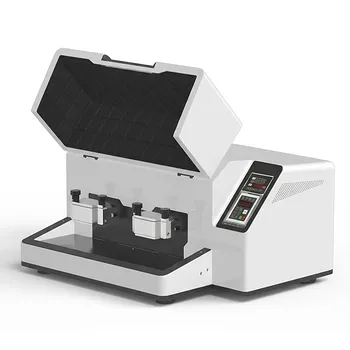
Nanoscale High-Energy Vibratory Ball Mill for Laboratory Sample Preparation, Mechanochemistry, and Mechanical Alloying

High Energy Omnidirectional Planetary Ball Mill 16L
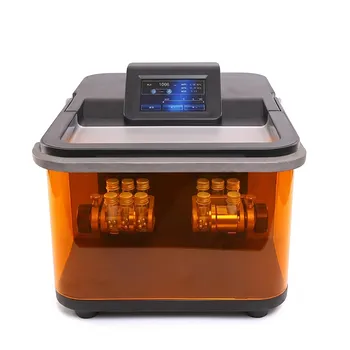
High Throughput Micro Ball Mill for Cryogenic Grinding and Laboratory Cell Disruption