What are the planetary ball mill requirements for segmented grinding and carbonization? Essential Features for Success
Updated 4 months ago
The success of segmented grinding and carbonization cycles hinges on a planetary ball mill's ability to handle high-frequency operational shifts and high-pressure gas environments. To perform these cycles effectively, the equipment must feature advanced programmable logic for frequent start-stop cycles—often at 10-minute intervals—and specialized sealed grinding jars equipped with high-pressure gas inlet/outlet ports. These features enable the periodic removal of passivation layers and facilitate solid-gas phase reactions while maintaining the structural stability required for viscous material processing.
Effective carbonization through planetary milling requires a balance between precise programmable control for intermittent grinding and the specialized hardware needed to maintain high-pressure gas-solid interactions.
Programmable Control and Operational Stability
Managing Frequent Start-Stop Cycles
Segmented grinding requires a motor and drive system capable of enduring frequent starting and stopping. Standard mills may overheat or suffer mechanical fatigue, but equipment designed for carbonization must support stable operation during short, intense 10-minute cycles.
Automation of State Switching
The controller must allow for advanced programmable sequences to manage the transition between grinding phases. This automation ensures that the mechanical energy is applied precisely when needed to trigger free-radical chain scission without manual intervention.
Structural Integrity Under Load
The mill’s frame and internal components must possess high structural stability. This prevents vibration-induced wear that occurs when the mill frequently switches status or handles the shifting weight of heavy grinding media.
Material Handling and Passivation Prevention
Overcoming the Passivation Layer
A primary requirement for the mill is the ability to periodically crush passivation layers. By breaking down these inactive surface coatings, the mechanical force re-exposes active sites on the material, allowing the carbonization reaction to continue.
Eliminating Dead Zones in Viscous Slurries
When handling viscous wet carbonation slurries, the mill must maintain high energy transfer efficiency. The internal geometry and centrifugal force must be sufficient to prevent material from sticking to the jar walls or forming stagnant "dead zones."
Efficient Energy Transfer
The mechanical force must be consistently applied to ensure that inert long-chain carbon-carbon bonds are converted into lighter hydrocarbons. Without high-energy impact, the solid-gas phase reactions required for gasification will stall.
Atmospheric and Pressure Requirements
Sealed Jar Integrity for Gasification
For processes involving addition polymers like PE and PP, the mill must utilize sealed grinding jars. These jars must maintain a vacuum-tight seal to prevent the leakage of volatile hydrocarbon gases such as methane.
Integration of High-Pressure Gas Ports
The grinding jars must be equipped with specialized high-pressure gas inlet and outlet ports. These allow operators to introduce high-pressure hydrogen gas directly into the milling chamber, which is essential for mechanochemical gasification.
Catalyst Compatibility
The equipment environment must remain stable in the presence of catalysts and hydrogen gas. This requires materials (such as stainless steel or specialized alloys) that are resistant to hydrogen embrittlement and chemical corrosion during the reaction.
Understanding the Trade-offs
Mechanical Stress and Component Longevity
Frequent cycling increases the thermal and mechanical stress on the mill’s drive belt and motor. While segmented grinding improves reaction efficiency, it may lead to shorter maintenance intervals compared to continuous, low-intensity milling.
Heat Dissipation vs. Reaction Kinetics
High-energy grinding generates significant heat, which can assist carbonization but may also cause unintended thermal degradation. Balancing the cooling periods within the programmable cycles is critical to prevent damaging the seals or the material itself.
Pressure Management Risks
Utilizing high-pressure hydrogen introduces safety complexities. While necessary for gasification, the requirement for gas-tight ports and pressure monitoring increases the complexity of the setup and requires rigorous pre-operation safety checks.
How to Apply This to Your Project
When selecting or configuring a planetary ball mill for carbonization, align your equipment specs with your specific chemical goals.
- If your primary focus is mechanochemical gasification: Prioritize jars with certified high-pressure gas ports and high-torque motors capable of maintaining RPM under heavy gas loads.
- If your primary focus is preventing material passivation: Invest in a mill with a robust programmable logic controller (PLC) that allows for highly customizable interval grinding and reversing functions.
- If your primary focus is processing viscous slurries: Ensure the mill has a high "G-force" rating and uses grinding media with a density high enough to penetrate thick, sticky material layers.
By integrating programmable precision with high-pressure gas capabilities, you can transform a standard grinding process into a powerful mechanochemical reactor.
Summary Table:
| Feature | Requirement Specification | Benefit for Carbonization |
|---|---|---|
| Control System | Advanced PLC for 10-min start-stop cycles | Manages mechanical energy for chain scission |
| Atmospheric Control | Sealed jars with high-pressure gas ports | Facilitates gas-solid reactions (e.g., Hydrogenation) |
| Structural Stability | High-torque motor & vibration-resistant frame | Maintains precision during high-frequency shifts |
| Energy Transfer | High G-force & high-density grinding media | Re-exposes active sites by crushing passivation layers |
| Material Compatibility | Hydrogen-embrittlement resistant alloys | Ensures safety and longevity in corrosive environments |
Elevate Your Mechanochemical Research with Professional Solutions
Achieving successful carbonization and segmented grinding requires equipment that can withstand extreme mechanical and thermal stress. We provide complete laboratory sample preparation solutions for material science, specializing in high-performance powder processing and compaction equipment.
Our extensive product lines include:
- Advanced Milling & Grinding: High-torque planetary ball mills, jet mills, liquid nitrogen cryogenic grinders, and rotor mills.
- Sample Preparation: Jaw and roll crushers, vibratory/air-jet sieve shakers, and precision powder mixers.
- Compaction & Pressing: A full spectrum of hydraulic presses, including Cold/Warm Isostatic Presses (CIP/WIP), vacuum hot presses, and XRF pellet presses.
Whether you are processing viscous slurries or performing high-pressure gasification, our team is ready to help you configure the perfect laboratory setup to ensure repeatable, high-quality results.
Contact our technical experts today to discuss your project!
References
- Luka Ceyssens, Tom Van Gerven. Mechanochemical activation of argon oxygen decarburization slags for improved mineral carbonation. DOI: 10.5937/imprc25413c
Mentioned Products
- Vertical Semi Circular Planetary Ball Mill for Laboratory Precision Grinding
- High Energy Planetary Ball Mill for Nano Scale Grinding and Mechanical Alloying
- Heavy Duty Horizontal Planetary Ball Mill for Efficient Industrial Grinding and Sample Preparation
- Vertical Production Planetary Ball Mill for High Throughput Powder Processing
- 360° Rotating Omnidirectional Laboratory Planetary Ball Mill for Homogeneous Ultra-Fine Grinding and Mixing
People Also Ask
- What role does a planetary ball mill play in the synthesis of Li6PS5Cl (LPSCl)? Unlock High Ionic Conductivity
- Why is a planetary ball mill essential for SiBCN-rGO wet-spinning? Achieve Superior Dispersion and Spinnability
- Why is an intermittent grinding process required for perovskites in a planetary ball mill? Ensure Stability & Purity
- Why is a planetary ball mill required for PET micronization? Ensure Accurate Chemical Analysis of Reprocessed PET
- How does mechanized planetary ball milling compare to manual agate grinding? Optimize sulfide standard material precision.

Tech Team · PowderPreparation
Last updated on Jun 03, 2026
Related Products
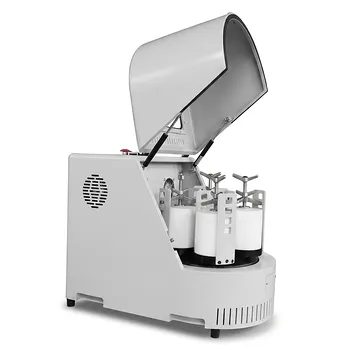
Vertical Semi Circular Planetary Ball Mill for Laboratory Precision Grinding
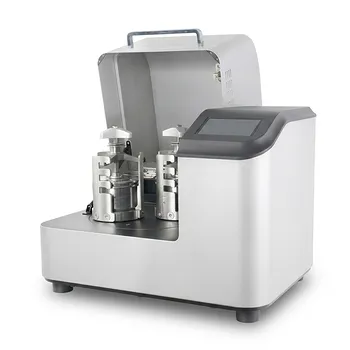
High Energy Planetary Ball Mill for Nano Scale Grinding and Mechanical Alloying
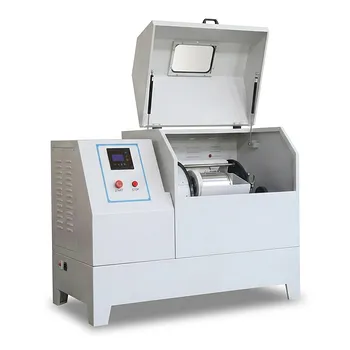
Heavy Duty Horizontal Planetary Ball Mill for Efficient Industrial Grinding and Sample Preparation
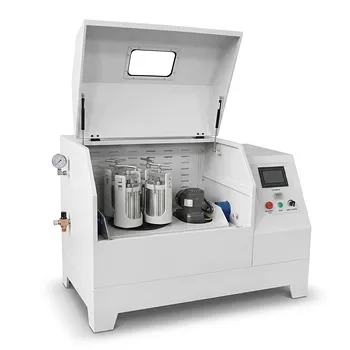
Vertical Production Planetary Ball Mill for High Throughput Powder Processing
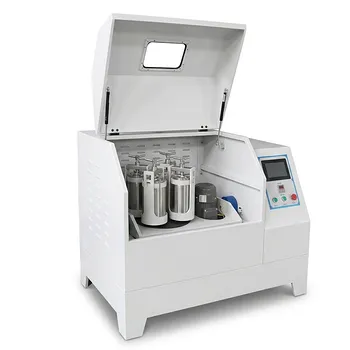
360° Rotating Omnidirectional Laboratory Planetary Ball Mill for Homogeneous Ultra-Fine Grinding and Mixing
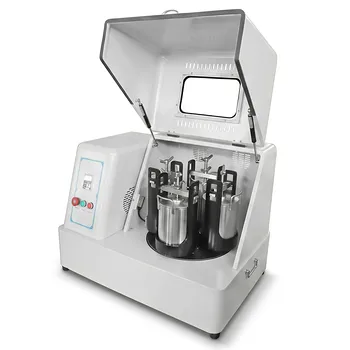
Vertical Square Planetary Ball Mill for Laboratory Sample Preparation and Nanoscale Grinding

Miniature Planetary Ball Mill with Vacuum Grinding and High Efficiency for Laboratory Sample Preparation
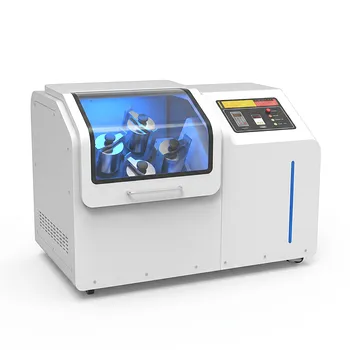
High Energy Omnidirectional Planetary Ball Mill 16L
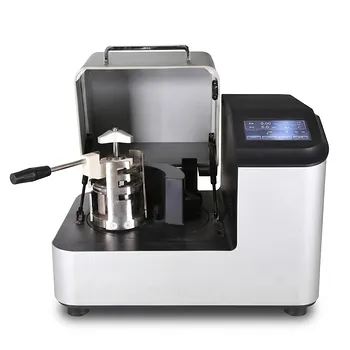
High Energy Laboratory Planetary Ball Mill for Nano Grinding and Material Science Sample Preparation
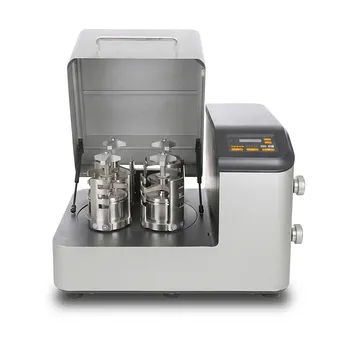
High Energy Planetary Ball Mill for Nano Scale Grinding and Colloidal Mixing in Material Science Research
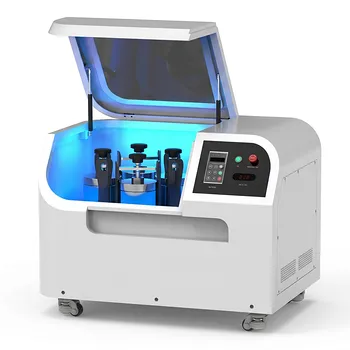
Planetary Ball Mill 12L
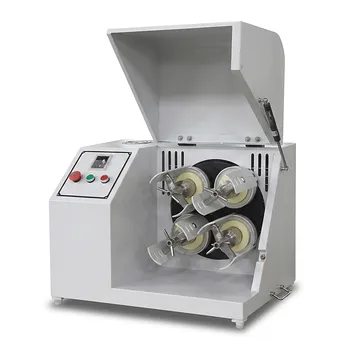
Horizontal Light Duty Planetary Ball Mill for Laboratory Sample Preparation
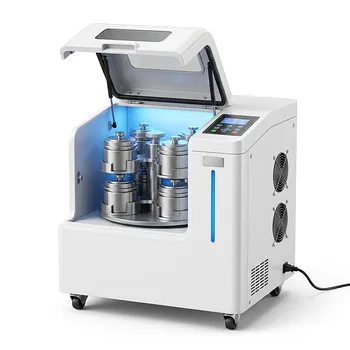
High Energy Omnidirectional Planetary Ball Mill 20L
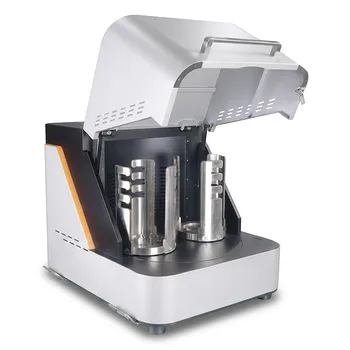
High Energy Laboratory Planetary Ball Mill for Nano Grinding and Colloidal Mixing of Hard and Brittle Materials

8L Planetary Ball Mill for Laboratory Grinding and Sample Preparation
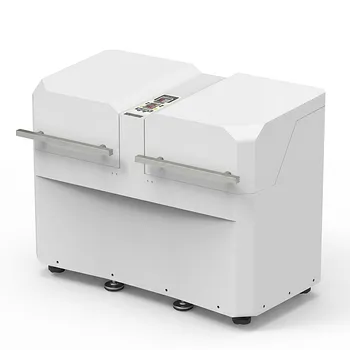
Dual Station Planetary Ball Mill 24L

Multi-Platform Nanoscale High-Energy Vibratory Ball Mill

Nano High Energy Vibratory Ball Mill for Laboratory Sample Preparation
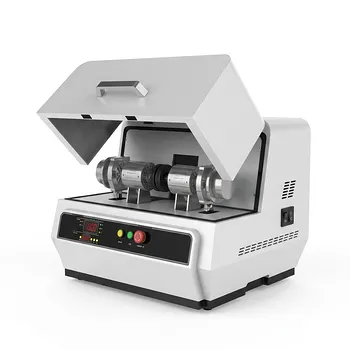
Dual Jar High Energy Vibratory Ball Mill