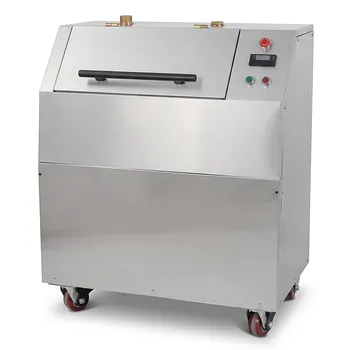
What are the advantages of using a motorized vibratory sieve shaker compared to manual sieving for sediment grain size analysis?
Updated 3 months ago
Motorized vibratory sieve shakers offer superior precision and efficiency over manual methods by providing standardized, high-frequency mechanical energy. This equipment ensures that sediment samples are processed with consistent force and duration, eliminating the human variability that often leads to inaccurate grain size distribution data. By automating the motion, laboratories can achieve the thorough separation required for rigorous scientific and engineering classifications.
The core advantage of a motorized vibratory sieve shaker is the transformation of a subjective, manual process into a standardized mechanical protocol. This shift ensures that sediment classification is based on repeatable energy application, resulting in highly accurate gradation curves and reliable data for downstream analysis.
Enhancing Data Accuracy Through Standardization
Elimination of Human Operational Bias
Manual sieving is inherently inconsistent because the force, speed, and technique vary significantly between different operators. A motorized shaker provides standardized reciprocating and tapping motions, ensuring that the results are independent of the person performing the test. This removal of "random error" is critical for maintaining the integrity of long-term geological or environmental studies.
Consistent Frequency and Amplitude
Vibratory shakers deliver a constant power output and multi-dimensional vibration frequency that manual shaking cannot replicate. This uniform energy ensures that sediment particles are continuously redistributed across the entire sieve surface. Such consistency is vital for ensuring that fine particles have the maximum opportunity to pass through precision sieve pores.
Programmed Duration for Repeatability
Standardized testing often requires specific sieving times, typically ranging from 10 to 20 minutes. Motorized units utilize integrated timers to guarantee that every sample undergoes the exact same duration of mechanical stress. This level of control allows researchers to calculate mean grain size and sorting coefficients with a high degree of confidence.
Maximizing Separation Efficiency
Multi-Dimensional Particle Rearrangement
A motorized shaker applies multi-dimensional mechanical vibration, which causes particles to tumble and reorient themselves continuously. This movement is essential for particles with irregular shapes to eventually present their smallest dimension to the sieve mesh. Manual sieving often fails to achieve this level of thorough rearrangement, leading to incomplete separation.
Effective Processing of Fine Fractions
Separating silt and fine sand from larger aggregates requires high-frequency energy to overcome particle adhesion. Motorized equipment ensures thorough screening of even the smallest fractions, such as those passing through a number 200 sieve. This precision is necessary for accurately analyzing the correlation between sediment characteristics and the abundance of materials like microplastics.
Increased Laboratory Throughput
Automating the sieving process allows laboratory personnel to focus on other tasks while the machine handles the labor-intensive separation. This significantly enhances sieving efficiency and allows for a higher volume of samples to be processed in a standard workday.
Understanding the Trade-offs
Equipment Costs and Maintenance
While manual sieving requires minimal investment, motorized shakers represent a significant capital expenditure. Additionally, these mechanical systems require periodic maintenance and calibration to ensure the vibration frequency and amplitude remain within manufacturer specifications.
Potential for Sample Degradation
The high-frequency energy of a vibratory shaker can be aggressive on fragile sediment particles. Over-shaking or using excessive amplitude can lead to particle attrition, where grains break down into smaller pieces during the test. This can artificially skew the results toward a finer grain size distribution if the duration is not carefully calibrated.
Making the Right Choice for Your Goal
How to Apply This to Your Project
- If your primary focus is scientific research or regulatory compliance: Utilize a motorized vibratory shaker to ensure the reproducibility and precision required for AASHTO or USCS soil classification systems.
- If your primary focus is rapid field assessment on a budget: Manual sieving may be acceptable for "ballpark" estimations, provided the operator follows a strict, timed protocol to minimize gross errors.
- If your primary focus is analyzing fine-grained sediments: A motorized shaker with a tapping function is essential to prevent sieve blinding and ensure that silts and clays are fully separated.
Transitioning to a motorized vibratory sieve shaker is the most effective way to ensure your sediment analysis is defined by technical rigor rather than human variability.
Summary Table:
| Feature | Motorized Vibratory Shaker | Manual Sieving |
|---|---|---|
| Precision | High; standardized mechanical energy | Low; highly dependent on operator |
| Repeatability | Excellent; programmed timers & frequency | Poor; results vary between tests |
| Efficiency | High; allows multi-tasking and high volume | Low; labor-intensive and slow |
| Particle Separation | Superior multi-dimensional rearrangement | Limited; often results in incomplete separation |
| Best For | Scientific research & regulatory compliance | Rapid, low-budget field assessments |
Optimize Your Material Analysis with Precision Solutions
Achieve the highest level of accuracy in your laboratory with our complete sample preparation solutions. We specialize in high-performance powder processing and compaction equipment designed for rigorous material science applications.
Our extensive product line includes:
- Sieving Excellence: Vibratory and air-jet sieve shakers with a full range of precision meshes.
- Advanced Milling: Planetary ball mills, jet mills, and cryogenic grinders for ultra-fine processing.
- Compaction Power: A full spectrum of hydraulic presses, including Cold/Warm Isostatic Presses (CIP/WIP), XRF pellet presses, and vacuum hot presses.
- Preparation Tools: Jaw and roll crushers, powder mixers, and defoaming mixers.
Whether you are analyzing sediment grain size or developing advanced ceramics, our equipment ensures repeatable, high-quality results every time.
Ready to enhance your lab’s efficiency? Contact our experts today for a tailored solution that fits your specific research or production needs!
References
- Peter Mafimisebi. Sedimentology and Petrographic Studies of Ogun River Bridge Sediments, Dahomey Basin, Southwestern Nigeria. DOI: 10.46759/iijsr.2024.8403
Mentioned Products
- Vibratory Sieve Shaker Electromagnetic 3D Motion Powder Particle Size Analyzer for Dry and Wet Sieving
- High Frequency Cabinet Type Three-Dimensional Rotary Vibrating Sieve Shaker for Dry Sieving and Particle Classification
- Laboratory Dry and Wet Three Dimensional Vibratory Sieve Shaker for Particle Analysis
- Heavy Duty Dry Three Dimensional Vibratory Sieve Shaker for Particle Separation
- Small Laboratory Vibratory Sieve Shaker for Powder Gradation and Particle Size Analysis
People Also Ask
- How does a vibratory sieve shaker contribute to optimizing the performance of activated carbon? Enhance Adsorption Precision
- Why is a laboratory vibratory sieve shaker necessary for processing magnesium-based borate precursor powders? Boost Activity
- Why use a vibratory sieve shaker to verify coarse aggregate grading in rubberized concrete? Ensure Structural Integrity
- What function do vibratory sieve shakers and standard test sieves serve in the preparation of adsorbents? Key Guide
- What role does a vibratory sieve shaker play in the particle size analysis of ground corn products? Enhance QC Precision

Tech Team · PowderPreparation
Last updated on Jun 03, 2026
Related Products

Vibratory Sieve Shaker Electromagnetic 3D Motion Powder Particle Size Analyzer for Dry and Wet Sieving
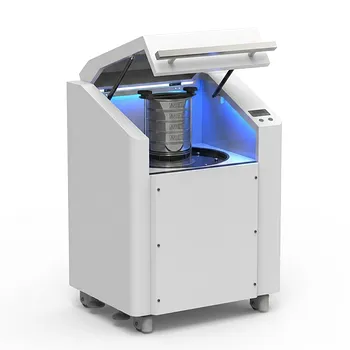
High Frequency Cabinet Type Three-Dimensional Rotary Vibrating Sieve Shaker for Dry Sieving and Particle Classification
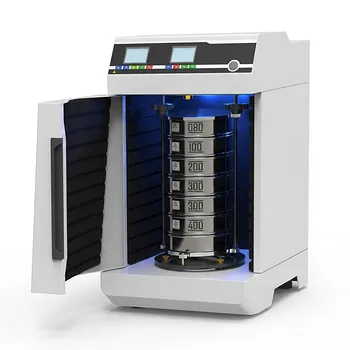
Laboratory Dry and Wet Three Dimensional Vibratory Sieve Shaker for Particle Analysis

Heavy Duty Dry Three Dimensional Vibratory Sieve Shaker for Particle Separation

Small Laboratory Vibratory Sieve Shaker for Powder Gradation and Particle Size Analysis

Small Laboratory Vibrating Sieve Shaker for Precise Particle Size Analysis

Dry Three Dimensional Vibratory Sieve Shaker
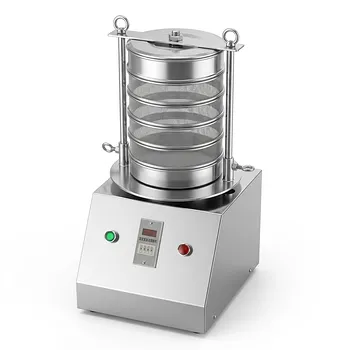
Stainless Steel Laboratory Vibratory Test Sieve Shaker

Laboratory Vibratory Test Sieve Shaker for Precision Particle Size Analysis and Powder Grading
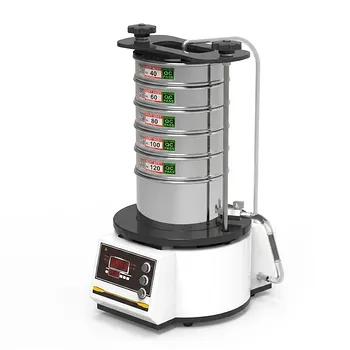
High Frequency Wet Three-Dimensional Vibrating Sieve Shaker for Dry and Wet Particle Size Analysis

三维电磁微量振动筛分仪

Tapping Oscillating Sieve Shaker for Dry and Wet Particle Size Analysis

Three Dimensional Rotary Vibrating Sieve

Stainless Steel Rotary Vibrating Sieve High Precision Circular Vibratory Separator Industrial Powder Grading Machine Multi Layer Sifting Equipment
Automatic Vibrating Powder Feeder for Laboratory Material Processing Precision Vibratory Hopper Feeder for Granular and Powder Material Handling Industrial Grade Vibrating Tray Feeder for Consistent Material Sample Preparation
High Speed Vibratory Disc Mill for Spectral Analysis Sample Preparation and Rapid Powder Grinding
Small Vibrating Ultrafine Grinder for Traditional Chinese Medicine
Vibratory Superfine Grinder for Ultra Fine Laboratory Powder Milling
High Energy Hybrid Vibratory Ball Mill for Grinding Mixing and Cell Disruption