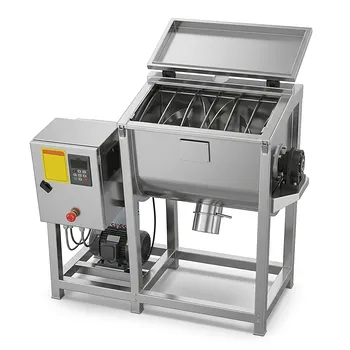
What are the advantages of high-shear vortex mixers for CPSA cement? Achieve superior homogeneity and hydration data.
Updated 5 months ago
High-shear vortex mixing is the technical prerequisite for achieving a homogeneous distribution of Carbonated Paste-based Synthetic Aggregate (CPSA) in cementitious systems. Manual stirring lacks the mechanical energy required to break down dense powder agglomerates, particularly when CPSA volumes reach high concentrations of 67–87 wt%. By operating at speeds such as 1700 rpm, a vortex mixer ensures that CPSA particles are uniformly dispersed to function as active nucleation sites, promoting a consistent hydration reaction that manual methods cannot replicate.
High-shear mixing transforms CPSA from a simple filler into an active participant in the hydration process by ensuring microscopic uniformity and the immediate capture of critical kinetic data. Without this intensive energy input, the resulting paste will suffer from local compositional variations and unrepresentative mechanical properties.
Overcoming Physical Barriers in High-Filler Systems
Breaking Down Powder Agglomerates
At high solids loading, particles naturally tend to clump together due to inter-particle forces. A high-shear vortex mixer provides the necessary mechanical force to disrupt these clusters, ensuring every particle is wetted and integrated.
Enabling CPSA Nucleation Sites
For CPSA to effectively serve as a nucleation site for hydration products, it must be distributed evenly throughout the Portland cement clinker. Vortex mixing ensures these synthetic aggregates are positioned to facilitate a homogeneous chemical reaction across the entire matrix.
Handling High Particle Volumes
When dealing with CPSA concentrations of 67–87 wt%, the mix becomes significantly more viscous and difficult to blend. Manual stirring is physically incapable of providing the uniform shear needed to move such high volumes of solid material into a stable suspension.
Precision in Hydration and Kinetics
Capturing Early-Stage Hydration Peaks
The rapid homogenization capability of a vortex mixer allows researchers to capture the initial exothermic hydration peak immediately after water contact. Manual stirring is too slow and inconsistent, often leading to "lost" data during the critical first seconds of the reaction.
Ensuring Precise Water-to-Cement Ratios
Vortex mixers are designed to integrate small volumes of water with cement powder rapidly and vigorously. This precision maintains a consistent water-to-cement (w/c) ratio throughout the sample, preventing the local dry spots or over-saturated zones common in manual mixing.
Preventing Kinetic Deviations
Inefficient mixing creates local compositional variations that cause fluctuations in hydration kinetics. By ensuring a high degree of homogeneity, high-shear mixers allow for the collection of data that accurately reflects the material's inherent physicochemical characteristics.
Enhancing Microstructural Integrity
Elimination of Internal Micro-bubbles
High-speed rotation and revolution generate centrifugal forces that help remove tiny internal air bubbles from the paste. This "defoaming" effect leads to a hardened cement paste with a more uniform microstructure and significantly fewer structural defects.
Reduction of Component Segregation
Manual stirring often fails to prevent heavier particles from settling or segregating during the mixing process. High-shear equipment maintains the stability of the paste, ensuring that the CPSA and clinker remain integrated until the onset of setting.
Consistency in Mechanical Performance
By eliminating local variations, vortex mixing ensures that the elastic modulus and compressive strength of the hardened paste are uniform across different specimens. This is vital for obtaining representative and repeatable experimental results in a laboratory setting.
Understanding the Trade-offs
Heat Generation and Sample Temperature
The intensive energy of high-shear mixing can introduce frictional heat into the cement paste. In temperature-sensitive hydration studies, this can slightly alter the reaction rate if the mixing duration is not strictly controlled or if cooling measures are not employed.
Volume Limitations and Equipment Cost
Vortex and planetary mixers are often limited to smaller batch sizes compared to industrial-scale manual or paddle mixing. Additionally, the requirement for specialized high-speed equipment increases the initial laboratory overhead and maintenance costs compared to simple manual tools.
Implementing High-Shear Mixing in Your Workflow
Selecting the Right Approach for Your Objectives
The choice of mixing intensity should align with your specific research or production requirements for CPSA-integrated materials.
- If your primary focus is kinetic accuracy: Use a high-shear vortex mixer to ensure immediate homogenization and capture the very first signs of the exothermic reaction.
- If your primary focus is structural density: Prioritize a planetary centrifugal mixer with defoaming capabilities to eliminate micro-bubbles and achieve nanometer-scale dispersion.
- If your primary focus is high-volume CPSA loading: Ensure your equipment is rated for high-viscosity mixing (at least 1700 rpm) to prevent the formation of dry aggregate clusters.
Utilizing high-shear vortex mixing is not merely an optimization but a fundamental requirement for unlocking the true chemical and structural potential of Carbonated Paste-based Synthetic Aggregates.
Summary Table:
| Feature | High-Shear Vortex Mixer | Manual Stirring |
|---|---|---|
| Homogeneity | Uniform dispersion even at 67–87 wt% CPSA | High risk of local compositional variation |
| Agglomerate Breaking | Mechanical force disrupts dense clusters | Ineffective against inter-particle forces |
| Hydration Kinetics | Captures immediate exothermic peaks | Data is often lost or inconsistent |
| Microstructure | Centrifugal defoaming removes air bubbles | Prone to internal bubbles and defects |
| Repeatability | Precise, standardized mixing energy | Subject to human error and inconsistency |
Elevate Your Material Science Research with Precision Mixing
Achieving a homogeneous distribution in CPSA-integrated systems requires more than just manual effort; it demands high-energy mechanical solutions. We specialize in providing complete laboratory sample preparation solutions for material science.
Our extensive product line is designed to handle the most challenging powder processing tasks, including:
- Advanced Mixers: High-shear, planetary ball, and vacuum defoaming mixers for perfect dispersion.
- Size Reduction: Jaw/roll crushers and cryogenic grinders.
- Compaction Excellence: A full spectrum of hydraulic presses, including Cold/Warm Isostatic Presses (CIP/WIP), XRF pellet presses, and vacuum hot presses.
Ensure your research integrity with equipment that delivers microscopic uniformity and repeatable results. Contact our experts today to find the perfect solution for your laboratory workflow!
References
- Ebtisam Saeed, Jorge S. Dolado. Supplementary Cementitious Materials Based on CO <sub>2</sub> –Capturing Periwinkle Shell. DOI: 10.1021/acssusresmgt.5c00313
Mentioned Products
- High Shear Laboratory Emulsifier for Mixing and Homogenization
- 非介入式材料均质机真空脱泡行星搅拌高粘度混合设备
- High-Speed Simple Disperser for Efficient Mixing, Dispersion, and Emulsification
- High Viscosity Planetary Centrifugal Vacuum Mixer for Material Defoaming and Uniform Mixing
- High Speed Vacuum Planetary Centrifugal Mixer and Defoamer for Industrial Paste Processing
People Also Ask
- Why is a high-shear laboratory mixer necessary for TiO2 cement paste? Achieve Perfect Nanoparticle Dispersion
- What are the equipment requirements for dispersing chemical pigments in ceramic glazes? Achieve Flawless Color Precision
- What is the function of a high-shear mixer in the preparation of CuCl2-doped graphene powder? Achieve Uniform Doping
- What role does high-shear mixing equipment play in the preparation of silicone inks? Optimize Dispersion and Rheology
- What is the function of additives like cellulose or wax in lab mixers? Enhance Pellet Integrity and Strength

Tech Team · PowderPreparation
Last updated on May 14, 2026
Related Products
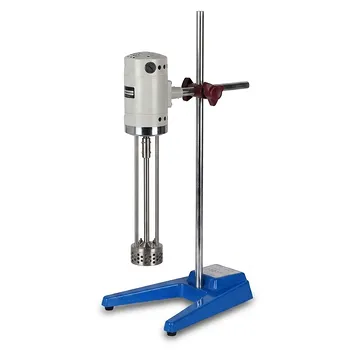
High Shear Laboratory Emulsifier for Mixing and Homogenization
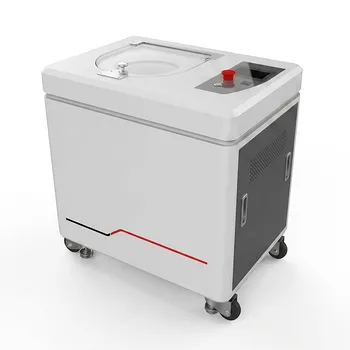
非介入式材料均质机真空脱泡行星搅拌高粘度混合设备
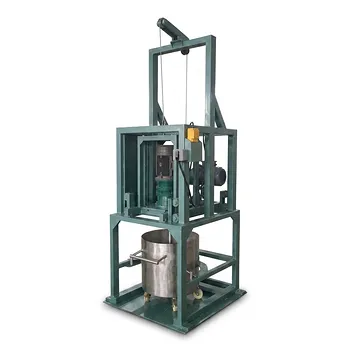
High-Speed Simple Disperser for Efficient Mixing, Dispersion, and Emulsification
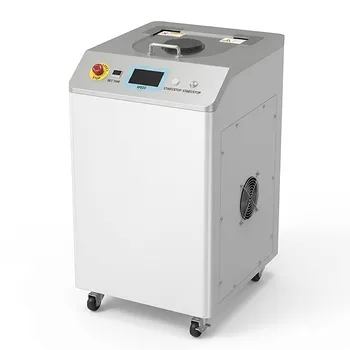
High Viscosity Planetary Centrifugal Vacuum Mixer for Material Defoaming and Uniform Mixing
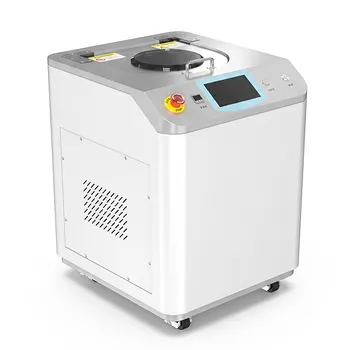
High Speed Vacuum Planetary Centrifugal Mixer and Defoamer for Industrial Paste Processing
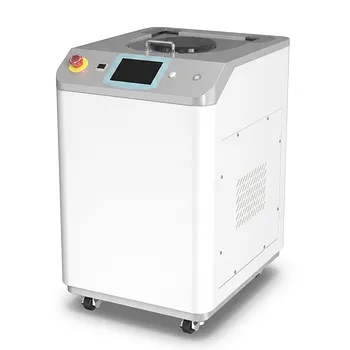
High Viscosity Planetary Centrifugal Mixing and Vacuum Defoaming Machine for Laboratory Material Preparation
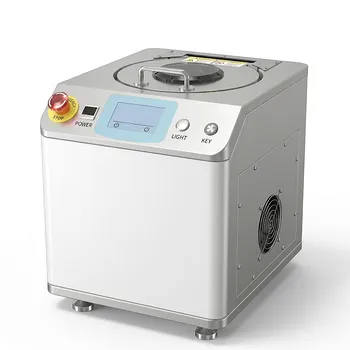
High Efficiency Vacuum Planetary Centrifugal Mixer and Defoaming Machine for Industrial Material Research and Precise Laboratory Powder Dispersion
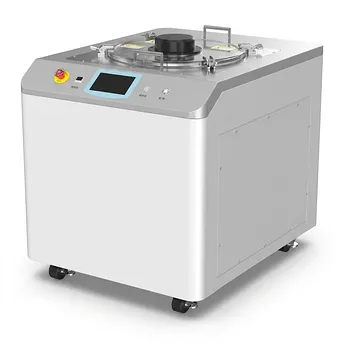
Industrial Planetary Centrifugal Vacuum Defoaming Mixer for High Viscosity Paste and Powder Homogenization
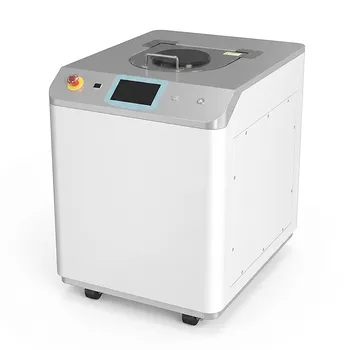
Industrial Planetary Centrifugal Vacuum Defoaming Mixer for High Viscosity Paste and Advanced Material Science
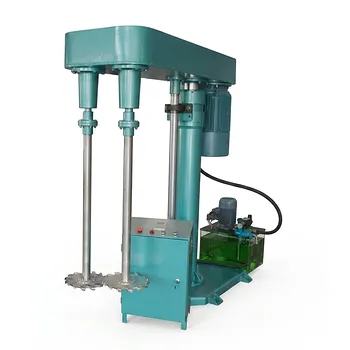
Hydraulic Double Shaft Disperser for High Viscosity Liquid Mixing and Dispersion
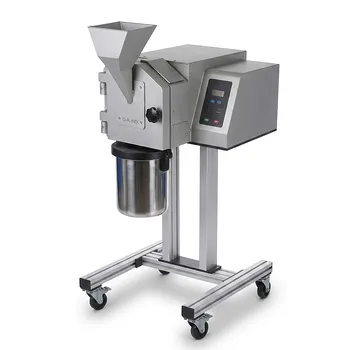
Industrial Rotor Beater Mill for High Speed Impact and Shear Grinding in Laboratory Sample Preparation
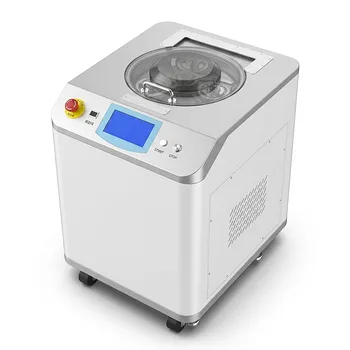
Dual Cup Vacuum Centrifugal Mixer Planetary Paste Defoaming Machine Industrial Material Processor
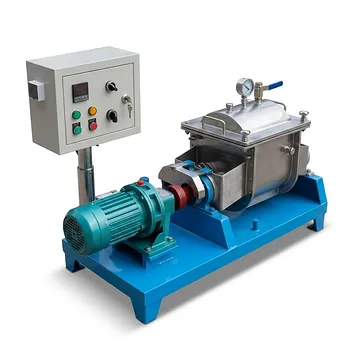
Industrial Vacuum Kneader for High-Viscosity Silicone, Rubber, and Compound Mixing
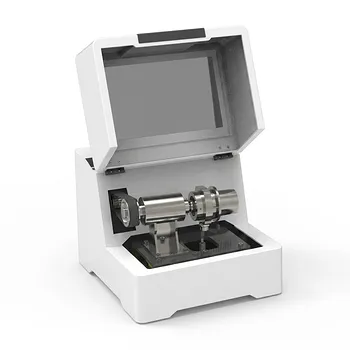
Single Tank High Energy Vibratory Ball Mill for Laboratory Grinding and Mixing
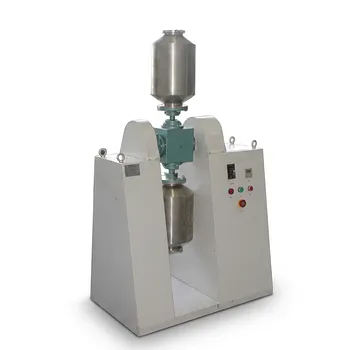
Multi Dimensional Universal Mixer for High Uniformity Powder Blending
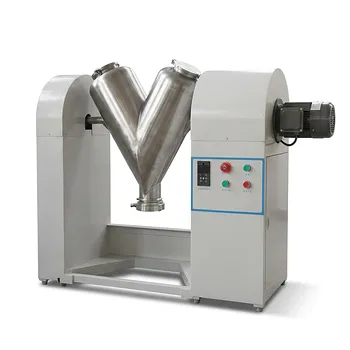
V-Type Powder Mixer for Uniform Blending of Dry Powders and Granules
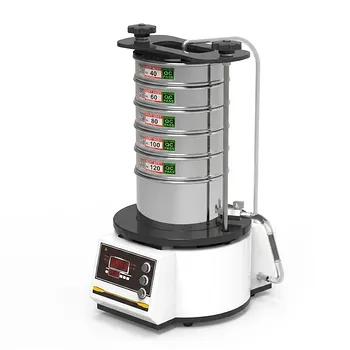
High Frequency Wet Three-Dimensional Vibrating Sieve Shaker for Dry and Wet Particle Size Analysis
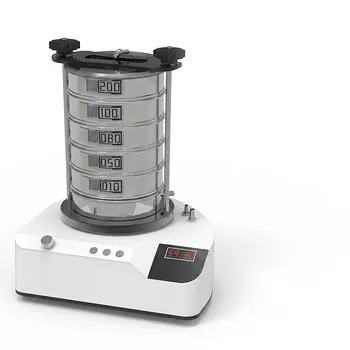
Heavy Duty Dry Three Dimensional Vibratory Sieve Shaker for Particle Separation
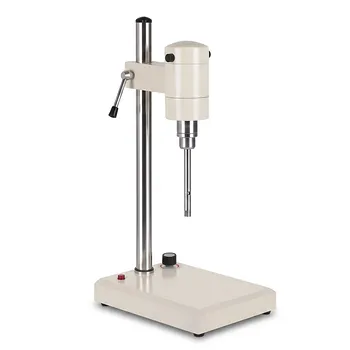
High Speed Dispersing Homogenizer for Laboratory Emulsification Dispersion and Cell Disruption