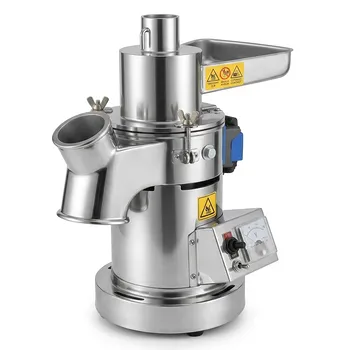
Why is a high-shear laboratory mixer necessary for TiO2 cement paste? Achieve Perfect Nanoparticle Dispersion
Updated 4 months ago
The necessity of a high-shear laboratory mixer for titanium dioxide ($TiO_2$) cement paste stems from its ability to overcome the strong inter-particle forces that cause nanoparticles to clump. By providing intense mechanical energy, these mixers ensure $TiO_2$ is uniformly dispersed, which is essential for activating its photocatalytic properties and ensuring a dense, well-hydrated cement matrix. Without high-shear force, $TiO_2$ remains in large agglomerates that decrease material performance and compromise structural integrity.
High-shear mixing is the only effective method to de-agglomerate titanium dioxide at the nano-scale. This process transforms a clumped powder into a functional material that maximizes chemical reactivity and ensures a uniform cement microstructure.
Overcoming Nanoparticle Agglomeration
The Challenge of High Surface Energy
Titanium dioxide nanoparticles possess a very high specific surface area, which naturally leads to strong inter-particle attraction. This attraction causes the particles to form thick agglomerates that standard mixing paddles cannot break apart.
Mechanical Force and De-agglomeration
A high-shear mixer utilizes high-speed rotation to generate powerful mechanical forces. These forces are required to physically disrupt the bonds between nanoparticles, ensuring they are separated and suspended individually within the liquid phase.
Achieving Molecular-Level Dispersion
To achieve a truly homogeneous mixture, components must be distributed at a molecular level. High-shear action ensures that the $TiO_2$ is not just stirred, but integrated uniformly throughout the cement matrix.
Maximizing Photocatalytic and Chemical Performance
Optimizing Reactive Surface Area
The primary value of $TiO_2$ in cement is its photocatalytic reaction, often used for air purification or self-cleaning surfaces. High-shear mixing maximizes the effective surface area of the particles, which is critical for these chemical reactions to occur efficiently.
Promoting Cement Hydration
Uniformly dispersed $TiO_2$ particles act as nucleation sites for cement hydration products. When particles are well-distributed, they promote a more consistent and faster hydration process, leading to a denser and stronger final microstructure.
Preventing Material Segregation
Incomplete mixing can lead to "hot spots" of high nanoparticle concentration and areas of depletion. High-shear dispersion prevents grout segregation and ensures that the fluidity and mechanical properties of the paste remain stable.
Precision Control and Consistency
Staged Mixing Protocols
Advanced laboratory mixers allow for programmable speed control, enabling staged mixing processes. This often involves a low-speed wetting phase followed by a high-speed dispersion phase to ensure all particles are fully wetted before high energy is applied.
Uniformity of Admixtures
Cement pastes containing $TiO_2$ often require superplasticizers or retarders to maintain workability. High-shear mixing ensures these chemical admixtures are perfectly distributed, preventing localized fluctuations in fluidity or setting time.
Ensuring Base Material Quality
For processes involving subsequent granulation or molding, the initial slurry must have uniform consistency. High-shear mixing provides a high-quality base material that responds predictably to high-pressure compaction or extrusion.
Understanding the Trade-offs
Heat Generation
The intense mechanical energy of high-shear mixing can generate significant frictional heat. In cementitious systems, excessive heat may accelerate the hydration process prematurely, potentially reducing the "open time" or workability of the paste.
Potential Admixture Degradation
While high-shear is excellent for dispersion, some sensitive chemical additives can be sensitive to extreme mechanical stress. It is vital to balance the mixing duration and speed to achieve dispersion without shearing long-chain polymer admixtures to the point of failure.
Equipment Maintenance
High-shear mixers are precision instruments that require more rigorous maintenance than standard stirrers. The high speeds involved can lead to faster wear on impellers and bearings, especially when mixing abrasive cementitious materials.
Making the Right Choice for Your Goal
How to Apply This to Your Project
- If your primary focus is air purification efficiency: Use the highest recommended shear speeds to maximize the $TiO_2$ surface area available for photocatalysis.
- If your primary focus is structural strength: Prioritize the duration of high-shear mixing to ensure $TiO_2$ provides maximum nucleation sites for a dense cement matrix.
- If your primary focus is workability and flow: Utilize a staged mixing approach with a programmable mixer to ensure superplasticizers are evenly distributed without being over-sheared.
- If your primary focus is scalability: Document the specific "shear rate" and "energy input" used in the lab to ensure the process can be replicated by industrial forced mixers during production.
Ultimately, high-shear mixing is the bridge between using titanium dioxide as a simple filler and utilizing it as a high-performance functional additive.
Summary Table:
| Feature | Role in TiO2 Cement Preparation | Impact on Material Performance |
|---|---|---|
| De-agglomeration | Breaks strong inter-particle van der Waals forces. | Ensures uniform, molecular-level dispersion. |
| Surface Optimization | Increases the active surface area of TiO2 particles. | Maximizes photocatalytic and self-cleaning efficiency. |
| Nucleation Support | Distributes particles to act as hydration sites. | Promotes a denser, stronger cement microstructure. |
| Admixture Uniformity | Evenly integrates superplasticizers and retarders. | Prevents segregation and ensures stable workability. |
| Energy Control | Programmable speeds for staged mixing protocols. | Consistent, repeatable results for lab-to-scale transition. |
Elevate Your Material Research with Precision Preparation Solutions
Achieving the perfect dispersion of nanoparticles like $TiO_2$ is critical for modern material science. At [Brand Name], we provide complete laboratory sample preparation solutions tailored for high-performance research. We specialize in powder processing and compaction equipment designed to bridge the gap between experimental theory and structural integrity.
Our extensive equipment lines empower your lab to achieve superior results:
- Advanced Mixing & Milling: High-shear mixers, planetary ball mills, jet mills, and vacuum defoaming mixers for perfect de-agglomeration.
- Precision Compaction: A full spectrum of hydraulic presses, including Cold/Warm Isostatic Presses (CIP/WIP), XRF pellet presses, and vacuum hot presses.
- Material Processing: Durable jaw/roll crushers and precision sieve shakers for exact particle size control.
Whether you are optimizing photocatalytic cement or developing new ceramics, our tools ensure consistency and quality at every stage. Contact our technical experts today to find the ideal solution for your laboratory needs!
References
- Yasmine Jabali, Georges Aouad. Photocatalytic Activity and Mechanical Properties of Cement Slurries Containing Titanium Dioxide. DOI: 10.3390/buildings13041046
Mentioned Products
- High Shear Laboratory Emulsifier for Mixing and Homogenization
- 非介入式材料均质机真空脱泡行星搅拌高粘度混合设备
- Industrial Rotor Beater Mill for High Speed Impact and Shear Grinding in Laboratory Sample Preparation
- High Efficiency Vacuum Planetary Centrifugal Mixer and Defoaming Machine for Industrial Material Research and Precise Laboratory Powder Dispersion
- High-Speed Simple Disperser for Efficient Mixing, Dispersion, and Emulsification
People Also Ask
- What are the equipment requirements for dispersing chemical pigments in ceramic glazes? Achieve Flawless Color Precision
- What is the function of a high-shear mixer in the preparation of CuCl2-doped graphene powder? Achieve Uniform Doping
- What role does high-shear mixing equipment play in the preparation of silicone inks? Optimize Dispersion and Rheology
- What is the function of additives like cellulose or wax in lab mixers? Enhance Pellet Integrity and Strength
- Why is a high-shear powder mixer utilized in the preparation of binary-mixed diatomaceous earth? Ensure Homogeneity

Tech Team · PowderPreparation
Last updated on Jun 03, 2026
Related Products
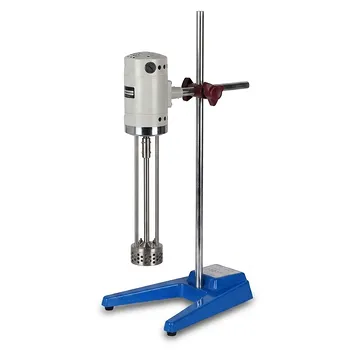
High Shear Laboratory Emulsifier for Mixing and Homogenization
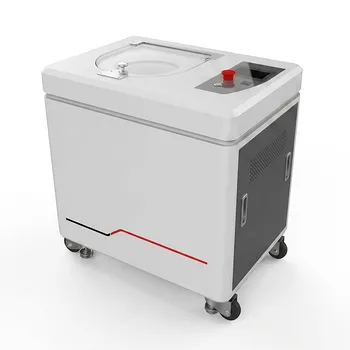
非介入式材料均质机真空脱泡行星搅拌高粘度混合设备
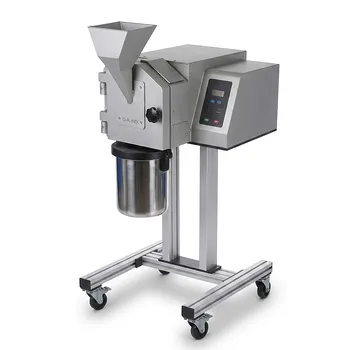
Industrial Rotor Beater Mill for High Speed Impact and Shear Grinding in Laboratory Sample Preparation
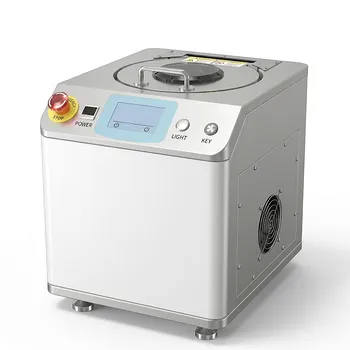
High Efficiency Vacuum Planetary Centrifugal Mixer and Defoaming Machine for Industrial Material Research and Precise Laboratory Powder Dispersion
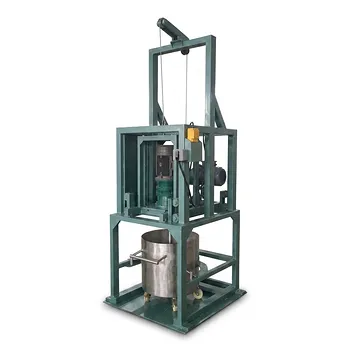
High-Speed Simple Disperser for Efficient Mixing, Dispersion, and Emulsification
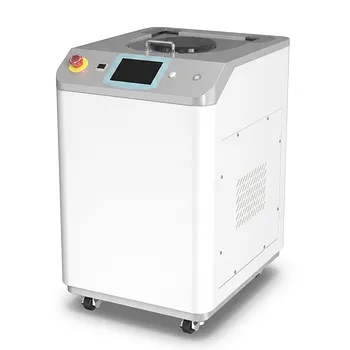
High Viscosity Planetary Centrifugal Mixing and Vacuum Defoaming Machine for Laboratory Material Preparation
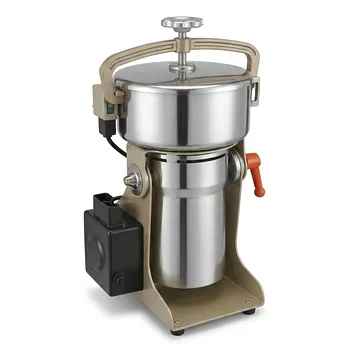
Multifunctional High Efficiency High Speed Laboratory Grinder
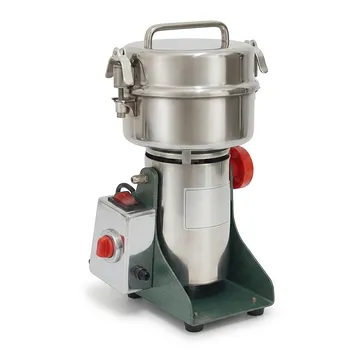
Small High Speed Grinder for Laboratory Sample Preparation
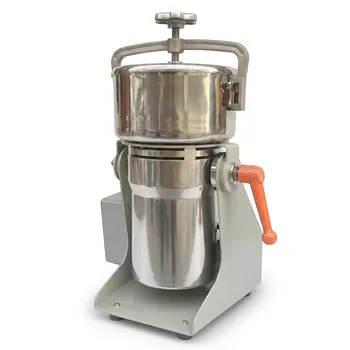
High Speed Laboratory Grinder Efficient Stainless Steel Powder Pulverizer Universal Material Science Mill for Sample Preparation
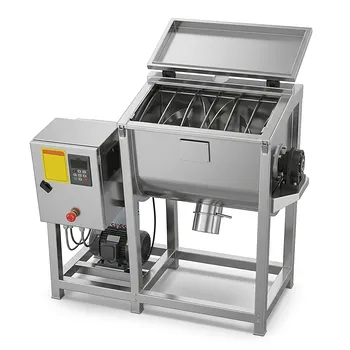
Horizontal Ribbon Mixer for Uniform Powder and Slurry Mixing
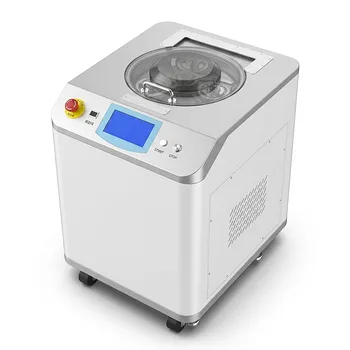
Dual Cup Vacuum Centrifugal Mixer Planetary Paste Defoaming Machine Industrial Material Processor
Small High-Speed Swing Grinder for Laboratory Sample Preparation
Multi Dimensional Universal Mixer for High Uniformity Powder Blending
Industrial Planetary Centrifugal Vacuum Defoaming Mixer for High Viscosity Paste and Advanced Material Science
Inclined Mixer for Homogeneous Powder Blending and Grinding
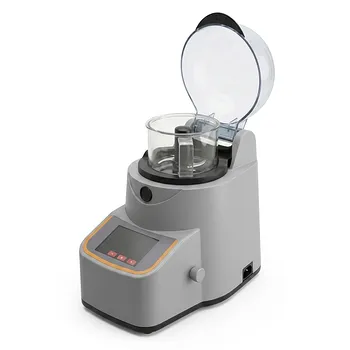
Industrial Knife Mill for Food and Biological Sample Preparation High Speed Laboratory Homogenizer
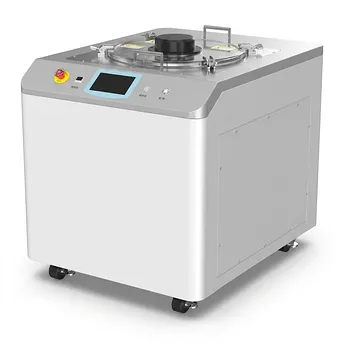
Industrial Planetary Centrifugal Vacuum Defoaming Mixer for High Viscosity Paste and Powder Homogenization
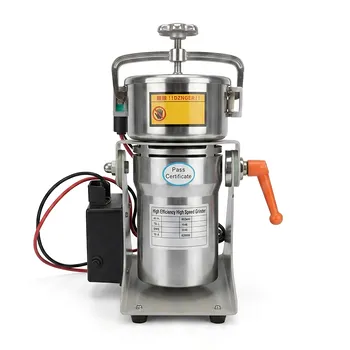
High Efficiency High Speed Grinder Laboratory Mill 1300W 25000rpm
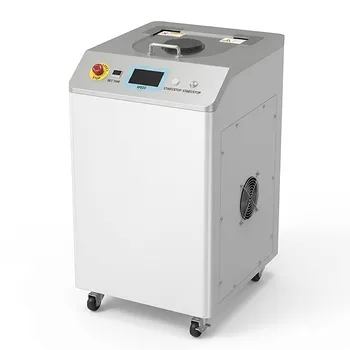
High Viscosity Planetary Centrifugal Vacuum Mixer for Material Defoaming and Uniform Mixing