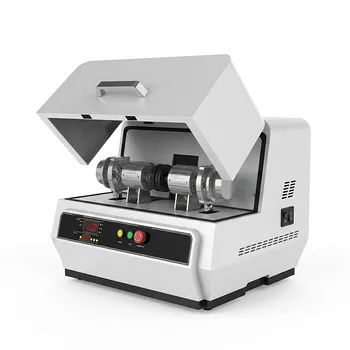
What are the advantages of using a ball mill versus manual mixing? Achieve Superior Homogeneity in Ternary Composites.
Updated 4 months ago
Ball milling transforms ternary composite powder mixing by providing high-energy mechanical forces that manual mixing cannot replicate, specifically enabling the physical intercalation and uniform coating of heterogeneous components. This process effectively breaks down Van der Waals forces between powders—such as NiZn ferrite, carbonyl iron, and carbon black—to create a synergistic network that maximizes both magnetic and dielectric losses.
While manual mixing relies on low-energy displacement, ball milling uses mechanical energy to achieve microscopic homogenization and surface coating. This foundational step is critical for preventing agglomeration and ensuring that the final material exhibits consistent physical and chemical properties across its entire structure.
Overcoming Physical Barriers to Homogeneity
Breaking Intermolecular Forces
Ball milling generates significant mechanical energy that is necessary to overcome the Van der Waals forces holding particles together. Manual mixing lacks the intensity required to disrupt these attractions, often leaving the ternary components as distinct, poorly integrated clusters.
Eliminating Particle Agglomeration
High-energy impacts and shear forces within the mill forcibly eliminate the agglomeration of nanoparticles. This ensures that ultra-fine phases, such as carbon black or strengthening agents, are dispersed individually rather than remaining in large, inefficient clumps.
Microscopic Intercalation
The rolling and impacting action of the grinding media forces the physical intercalation of different materials. This results in a molecular-level uniform distribution that is impossible to achieve through simple mechanical stirring or hand-grinding.
Enhancing Chemical and Structural Performance
Optimizing Reaction Kinetics
By reducing particle size and increasing the reaction contact area, ball milling accelerates solid-state reaction kinetics during subsequent sintering. This is particularly vital in complex systems where manual mixing would lead to reaction delays or incomplete transformations.
Creating Uniform Surface Coatings
Ball mills allow one component to effectively coat the surface of another, such as coating binders or modified fine powders onto matrix granules. This "dry coating" mechanism ensures high chemical consistency and prevents the secondary agglomeration of fillers during later manufacturing stages like melt extrusion.
Embedding and Matrix Integration
In specialized applications, such as cryogenic or planetary milling, high-energy impacts can embed particles directly into a matrix. This alters the deposition mechanism and improves the retention of the various phases, leading to a more robust and stable composite material.
Understanding the Trade-offs
Risk of Material Contamination
The high-energy environment that makes ball milling effective also introduces the risk of media wear. Small amounts of material from the grinding balls or the jar itself can wear down and contaminate the ternary powder, potentially altering its electrical or magnetic profile.
Heat Generation and Sensitivity
The friction and impact of ball milling generate significant heat, which can be detrimental to temperature-sensitive materials or polymers. In these cases, specialized equipment like cryogenic mills or carefully managed duty cycles are required to prevent material degradation.
Energy Consumption and Processing Time
While manual mixing is instantaneous and low-cost, ball milling requires specialized machinery and extended processing times. The technician must balance the need for extreme uniformity against the increased energy costs and longer production schedules.
How to Apply This to Your Project
Making the Right Choice for Your Goal
- If your primary focus is maximizing electromagnetic performance: Utilize high-energy planetary ball milling to ensure the formation of a synergistic network through effective intercalation.
- If your primary focus is preventing secondary agglomeration in extrusion: Use dry ball milling to uniformly coat fillers onto the matrix surface, which stabilizes the mix for downstream processing.
- If your primary focus is rapid solid-state synthesis: Prioritize ball milling to reduce particle size and increase contact area, thereby overcoming the kinetic barriers common in manual grinding.
Choosing ball milling over manual methods ensures that your ternary composite achieves the microscopic uniformity required for high-performance technical applications.
Summary Table:
| Feature | Manual Mixing | Ball Milling |
|---|---|---|
| Energy Level | Low-energy displacement | High-energy mechanical force |
| Particle Dispersion | High risk of agglomeration | Breaks Van der Waals forces |
| Homogeneity | Macroscopic level only | Microscopic/Molecular level |
| Surface Coating | Inefficient/Non-existent | Uniform dry coating of components |
| Reaction Kinetics | Slow; limited contact area | Accelerated; high surface activity |
| Stability | Poor phase retention | Robust synergistic network |
Elevate Your Material Research with Precision Powder Solutions
Are you struggling with inconsistent material properties or particle agglomeration in your ternary composites? Achieving microscopic uniformity requires more than manual effort—it requires professional-grade equipment.
At our facility, we provide complete laboratory sample preparation solutions tailored for material science. We specialize in high-performance powder processing and compaction equipment, including:
- Advanced Milling: Planetary ball mills, jet mills, cryo-grinders, and rotor mills for perfect homogenization.
- Preparation & Sizing: Jaw/roll crushers and vibratory sieve shakers for precise particle control.
- Compaction Excellence: A full spectrum of hydraulic presses, including Cold/Warm Isostatic Presses (CIP/WIP), XRF pellet presses, and vacuum hot presses.
- Mixing Technology: Specialized powder and defoaming mixers to ensure a stable, synergistic matrix.
Whether you are a researcher aiming for high electromagnetic performance or a distributor seeking reliable OEM/ODM support, we deliver the tools necessary for excellence.
Optimize your powder processing workflow and ensure consistent results—contact our experts today!
References
- anas houbi, Beibit Karibayev. Synthesis and Microwave Absorption Properties of (Ni0.5Zn0.5Fe2O4/CI/CB) Ternary Composites. DOI: 10.31489/2022ch4/4-22-9
Mentioned Products
- Heavy Duty Horizontal Planetary Ball Mill for Efficient Industrial Grinding and Sample Preparation
- Vertical Semi Circular Planetary Ball Mill for Laboratory Precision Grinding
- Vertical Square Planetary Ball Mill for Laboratory Sample Preparation and Nanoscale Grinding
- High Energy Planetary Ball Mill for Nano Scale Grinding and Mechanical Alloying
- Vertical Production Planetary Ball Mill for High Throughput Powder Processing
People Also Ask
- Why grind lime-pozzolan specimens for TG/DTA for 3 mins? Master sample prep for high-precision thermal analysis.
- What is the role of a planetary ball mill in the mechanical activation of ZTA powder? Boost Sintering Performance
- What is the function of a planetary ball mill in wollastonite ceramic prep? Achieve Molecular Homogenization & Reactivity
- How does a planetary ball mill contribute to the homogenization of trace elements? Achieve Sub-Micron Uniformity
- What is the function of a high-performance planetary ball mill in AMZ laminates? Master Ceramic Homogenization.

Tech Team · PowderPreparation
Last updated on Jun 03, 2026
Related Products
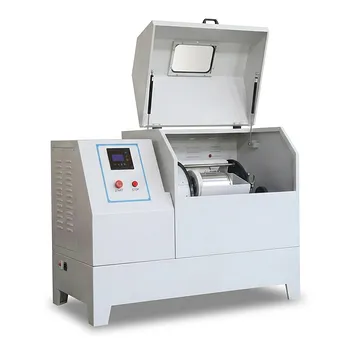
Heavy Duty Horizontal Planetary Ball Mill for Efficient Industrial Grinding and Sample Preparation
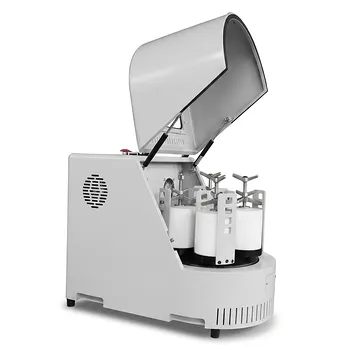
Vertical Semi Circular Planetary Ball Mill for Laboratory Precision Grinding
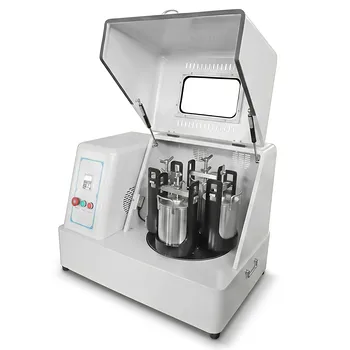
Vertical Square Planetary Ball Mill for Laboratory Sample Preparation and Nanoscale Grinding
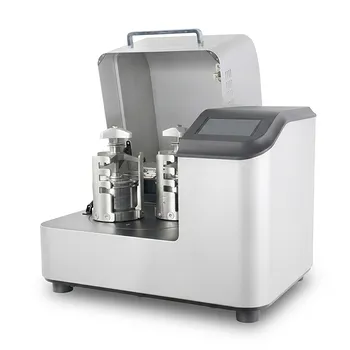
High Energy Planetary Ball Mill for Nano Scale Grinding and Mechanical Alloying
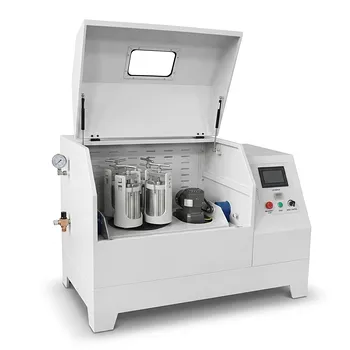
Vertical Production Planetary Ball Mill for High Throughput Powder Processing
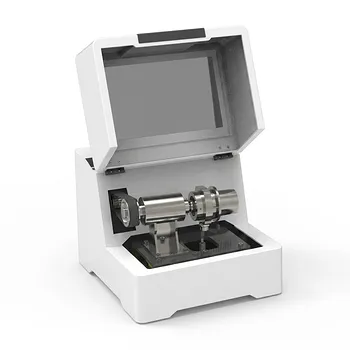
Single Tank High Energy Vibratory Ball Mill for Laboratory Grinding and Mixing
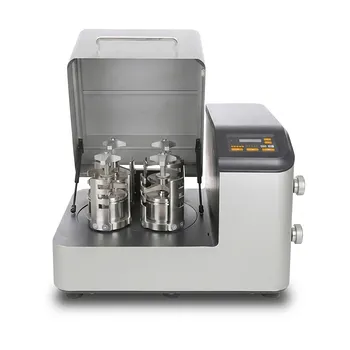
High Energy Planetary Ball Mill for Nano Scale Grinding and Colloidal Mixing in Material Science Research
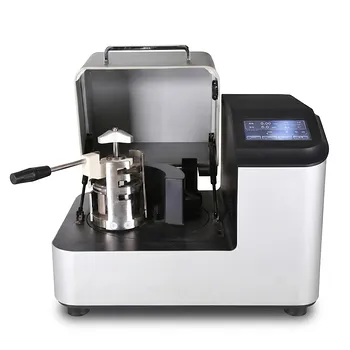
High Energy Laboratory Planetary Ball Mill for Nano Grinding and Material Science Sample Preparation
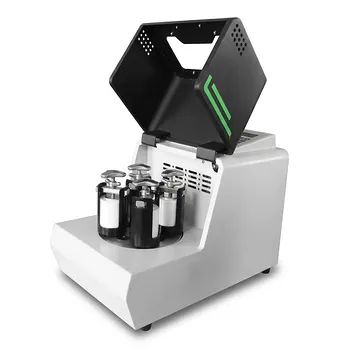
Miniature Planetary Ball Mill with Vacuum Grinding and High Efficiency for Laboratory Sample Preparation
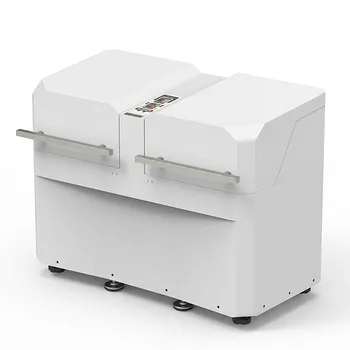
Dual Station Planetary Ball Mill 24L
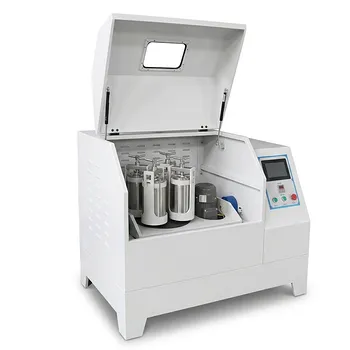
360° Rotating Omnidirectional Laboratory Planetary Ball Mill for Homogeneous Ultra-Fine Grinding and Mixing
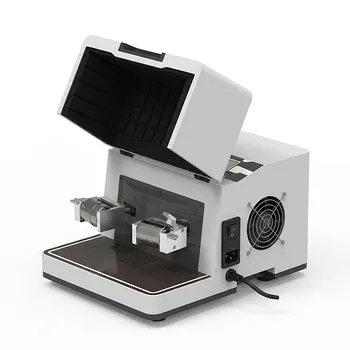
High Energy Hybrid Vibratory Ball Mill for Grinding Mixing and Cell Disruption
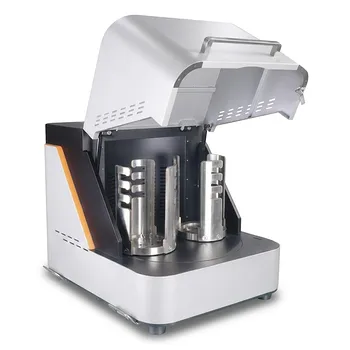
High Energy Laboratory Planetary Ball Mill for Nano Grinding and Colloidal Mixing of Hard and Brittle Materials
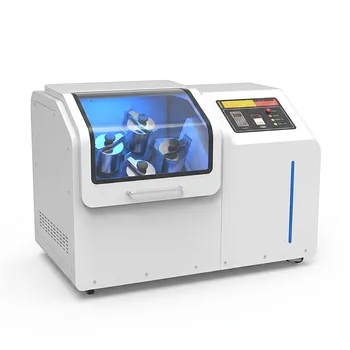
High Energy Omnidirectional Planetary Ball Mill 16L
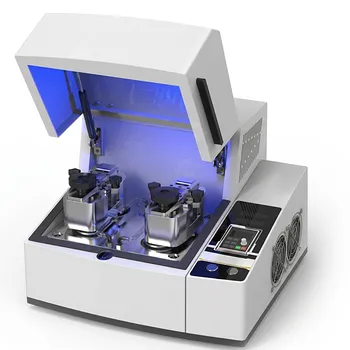
Laboratory Nano High Energy Ball Mill Ultrafine Grinding Mechanical Alloying
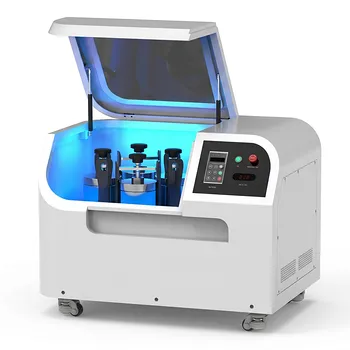
Planetary Ball Mill 12L

High Throughput Micro Ball Mill for Cryogenic Grinding and Laboratory Cell Disruption
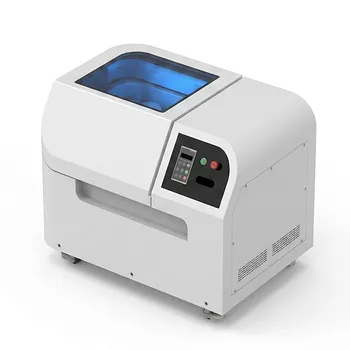
8L Planetary Ball Mill for Laboratory Grinding and Sample Preparation
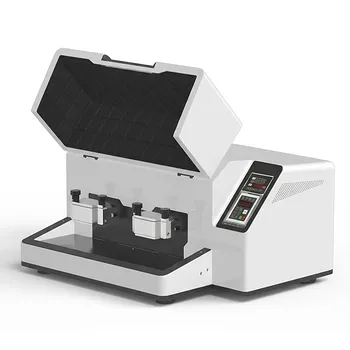
Nanoscale High-Energy Vibratory Ball Mill for Laboratory Sample Preparation, Mechanochemistry, and Mechanical Alloying