What advantages does a planetary ball mill offer for sulfide electrolyte synthesis? Boost Ionic Conductivity Now
Updated 5 months ago
A planetary ball mill provides a high-energy mechanochemical environment that far exceeds the capabilities of standard mixing by inducing deep solid-state reactions. Unlike standard techniques that only achieve physical blending, planetary milling utilizes intense impact and shear forces to break crystal lattices, facilitate atomic-level contact, and produce amorphous or specific crystalline structures that significantly boost room-temperature ionic conductivity.
The central advantage of planetary ball milling lies in its ability to transition from simple mixing to mechanochemical synthesis, enabling the creation of highly active, nanostructured sulfide electrolytes with superior electrochemical properties that are unattainable through conventional stirring.
The Mechanics of High-Energy Synthesis
Mechanochemical Transformation vs. Simple Blending
Standard mixing techniques typically result in a macroscopic distribution of precursors like Li2S and P2S5. In contrast, a planetary ball mill drives mechanochemical reactions, forcing these raw materials to undergo phase transformations into amorphous or partially crystalline states at room temperature.
Atomic-Level Contact and Diffusion
The high-speed rotation of the mill generates intense centrifugal forces, causing grinding media to collide with materials at extreme velocities. This process ensures atomic-level contact, promoting the diffusion of ions across grain boundaries and creating a homogeneous precursor powder ready for further treatment.
Grain Size Refinement
Planetary milling is exceptionally effective at reducing particle sizes to the sub-micron or nanometer scale. This refinement increases the surface area-to-volume ratio, which is critical for enhancing the reaction kinetics during subsequent vacuum heat treatments.
Enhancing Electrolyte Performance
Superior Ionic Conductivity
By facilitating thorough physical mixing and chemical refinement, planetary ball mills directly increase the room-temperature ionic conductivity of sulfide electrolytes. This is achieved by creating more efficient pathways for lithium-ion transport within the resulting crystal lattice or amorphous matrix.
Precision in Particle Size Distribution
For high-performance applications, a narrow particle size distribution is essential for creating stable electrolyte slurries. The impact and compression actions of the mill ensure a uniform output, which prevents localized impedance variations in the final battery cell.
Uniform Additive Dispersion
When incorporating dopants or sintering aids, such as SnCl2 or iron oxide, planetary milling ensures these trace elements are highly dispersed. This level of uniformity is vital for stabilizing argyrodite structures like Li6PS5Cl and preventing the formation of secondary, non-conductive phases.
Process Advantages in Reliability
Mitigating Composition Segregation
Traditional high-temperature solid-state reactions often suffer from composition segregation, where different components settle or separate. The high-energy environment of a planetary mill maintains a uniform phase distribution throughout the synthesis, ensuring consistent chemical properties across the entire batch.
Enabling Low-Temperature Processing
Because the mill provides significant energy mechanically, it creates a highly active precursor. This allows for the successful formation of complex structures, such as LGPS-type crystals, at lower temperatures than would otherwise be required, saving energy and preventing the loss of volatile components.
Understanding the Trade-offs
Media Contamination Risks
The primary drawback of high-energy milling is the potential for contamination from the grinding jars or media. As the balls impact the walls and each other, microscopic fragments of zirconia or stainless steel can be introduced into the sulfide electrolyte, potentially compromising its purity.
Heat Generation and Control
The intense friction generated during high-speed milling can lead to significant heat buildup. For sensitive sulfide materials, this heat must be managed through specialized cooling systems or interval milling cycles to prevent unwanted thermal degradation during the synthesis process.
Energy Consumption and Throughput
While excellent for laboratory and pilot-scale development, planetary ball mills are energy-intensive compared to standard stirrers. Balancing the rotation speed and milling time is a constant optimization challenge to achieve the desired material properties without excessive energy expenditure.
Applying This to Your Synthesis Goals
Strategic Recommendations
- If your primary focus is maximizing ionic conductivity: Utilize high-speed milling (e.g., 500 rpm or higher) to ensure complete amorphization and molecular-level contact between Li2S and P2S5.
- If your primary focus is producing electrolyte slurries for coating: Prioritize milling cycles that optimize for a narrow particle size distribution and high dispersion of sintering aids.
- If your primary focus is synthesizing argyrodite structures (LPSCl): Use the planetary mill to create a highly active precursor, which will allow for the formation of the argyrodite phase at lower subsequent annealing temperatures.
The planetary ball mill is the definitive tool for sulfide electrolyte synthesis, transforming raw precursors into high-conductivity solid-state materials through the power of mechanochemistry.
Summary Table:
| Feature | Standard Mixing | Planetary Ball Mill | Research Benefit |
|---|---|---|---|
| Energy Level | Low (Physical blending) | High (Mechanochemical) | Drives deep solid-state reactions |
| Contact Scale | Macroscopic | Atomic-level | Facilitates ion diffusion & faster kinetics |
| Particle Size | Inconsistent | Sub-micron/Nanometer | Higher surface area & stable slurries |
| Conductivity | Basic | Superior (High Room-Temp) | Optimized lithium-ion transport pathways |
| Phase Control | Poor (Segregation risk) | Uniform Phase Distribution | Consistent chemical properties per batch |
Elevate Your Material Research with Professional Lab Solutions
Achieving superior ionic conductivity in sulfide solid electrolytes requires more than just mixing—it requires precision mechanochemical engineering. We provide complete laboratory sample preparation solutions tailored for material science R&D.
Our specialized equipment range includes:
- High-Energy Milling: Planetary ball mills, jet mills, and cryogenic grinders for nanometer-scale refinement.
- Advanced Compaction: A full spectrum of hydraulic presses, including Cold/Warm Isostatic Presses (CIP/WIP), hot presses, and vacuum hot presses for high-density pellet formation.
- Powder Processing: Sieve shakers, powder mixers, and defoaming mixers to ensure maximum uniformity.
Whether you are a researcher or a commercial distributor, our equipment offers the reliability and performance needed to push the boundaries of solid-state battery technology.
Ready to optimize your synthesis process? Contact us today for a custom solution!
References
- Kazuto Fujiwara, Hiroshi Inoue. Unveiling the Capacity Boosting Mechanism of the MoS<sub>2</sub> Electrode by Focusing on the Under Potential Deposition in All‐Solid‐State Batteries Prepared by One‐Pot One‐Step Liquid Phase Mixing. DOI: 10.1002/adsu.202500426
Mentioned Products
- Planetary Ball Mill 12L
- Vertical Square Planetary Ball Mill for Laboratory Sample Preparation and Nanoscale Grinding
- Horizontal Light Duty Planetary Ball Mill for Laboratory Sample Preparation
- Dual Station Planetary Ball Mill 24L
- Miniature Planetary Ball Mill with Vacuum Grinding and High Efficiency for Laboratory Sample Preparation
People Also Ask
- What is the core function of a planetary ball mill in Mn3AlC synthesis? Master Mechanical Activation for Magnetic Powders
- What is the role of a planetary ball mill in MCP powder preparation? Optimize Reactivity & 3D Printing Performance
- Why is an industrial-grade planetary ball mill used for precursor treatment? Optimize Cation Disorder in ZnSiP2 Anodes
- What is the function of a planetary ball mill in Cu-ODS? Essential for Mechanical Alloying & Nano-Oxide Dispersion
- Why is a planetary ball mill required for the preparation of AZ91D-Ni-GNPs composite powders? High-Energy Alloying Guide

Tech Team · PowderPreparation
Last updated on May 14, 2026
Related Products
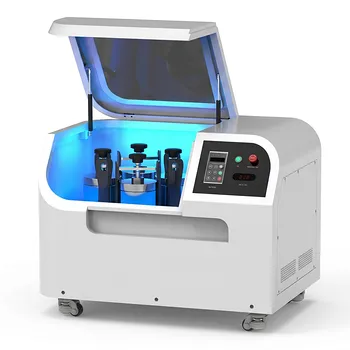
Planetary Ball Mill 12L
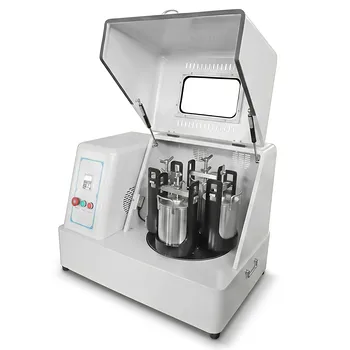
Vertical Square Planetary Ball Mill for Laboratory Sample Preparation and Nanoscale Grinding
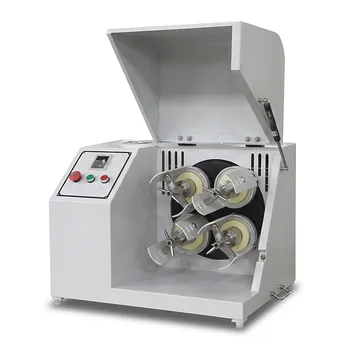
Horizontal Light Duty Planetary Ball Mill for Laboratory Sample Preparation
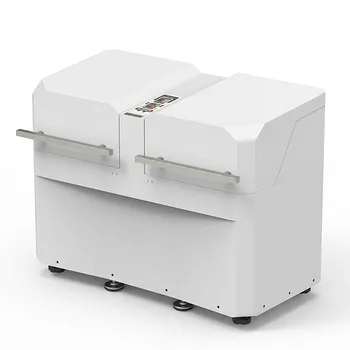
Dual Station Planetary Ball Mill 24L
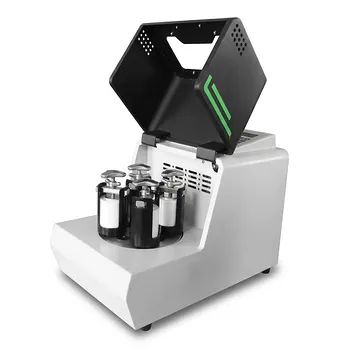
Miniature Planetary Ball Mill with Vacuum Grinding and High Efficiency for Laboratory Sample Preparation

8L Planetary Ball Mill for Laboratory Grinding and Sample Preparation
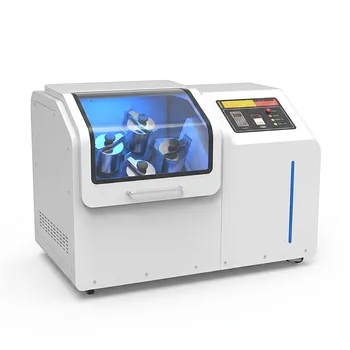
High Energy Omnidirectional Planetary Ball Mill 16L
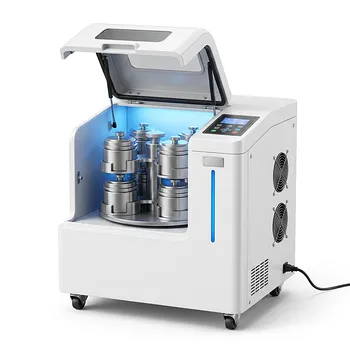
High Energy Omnidirectional Planetary Ball Mill 20L
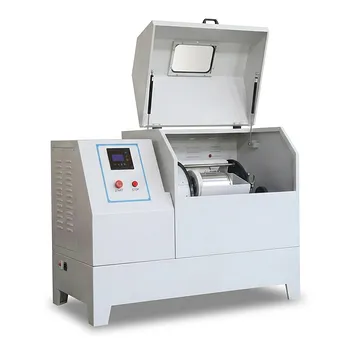
Heavy Duty Horizontal Planetary Ball Mill for Efficient Industrial Grinding and Sample Preparation
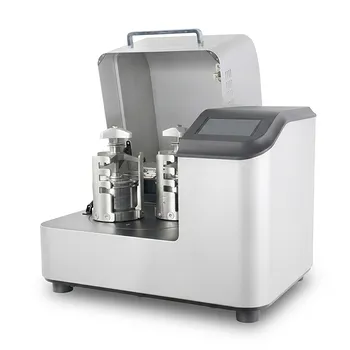
High Energy Planetary Ball Mill for Nano Scale Grinding and Mechanical Alloying
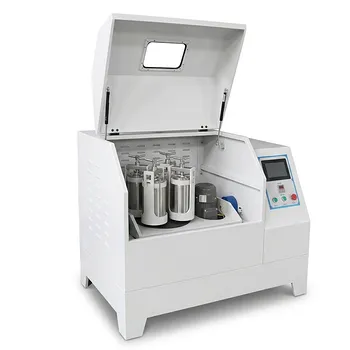
360° Rotating Omnidirectional Laboratory Planetary Ball Mill for Homogeneous Ultra-Fine Grinding and Mixing
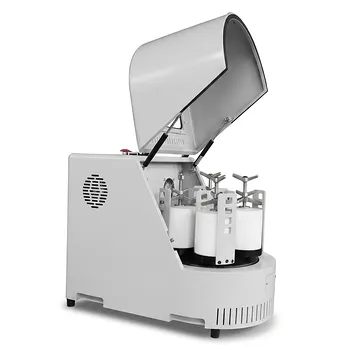
Vertical Semi Circular Planetary Ball Mill for Laboratory Precision Grinding

High Energy Laboratory Planetary Ball Mill for Nano Grinding and Material Science Sample Preparation
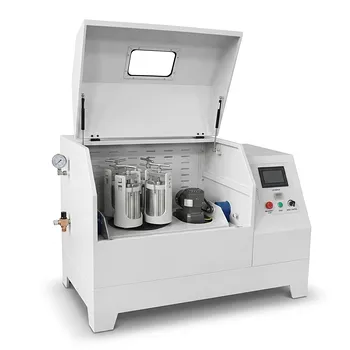
Vertical Production Planetary Ball Mill for High Throughput Powder Processing
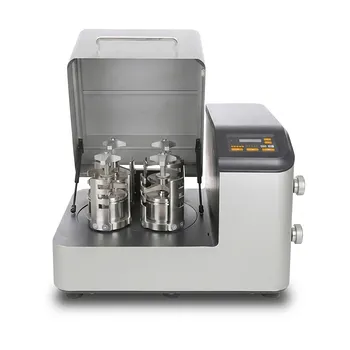
High Energy Planetary Ball Mill for Nano Scale Grinding and Colloidal Mixing in Material Science Research
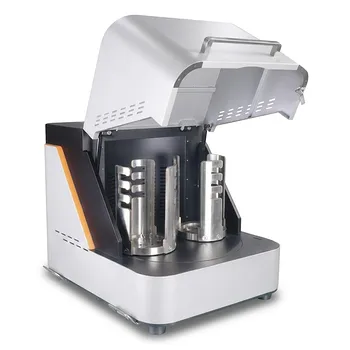
High Energy Laboratory Planetary Ball Mill for Nano Grinding and Colloidal Mixing of Hard and Brittle Materials
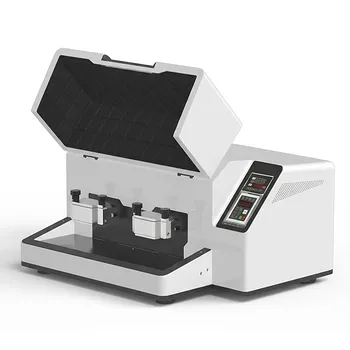
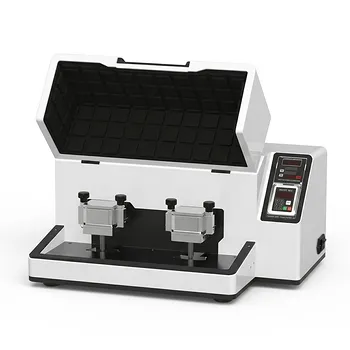
Nanoscale High-Energy Vibratory Ball Mill for Laboratory Sample Preparation, Mechanochemistry, and Mechanical Alloying
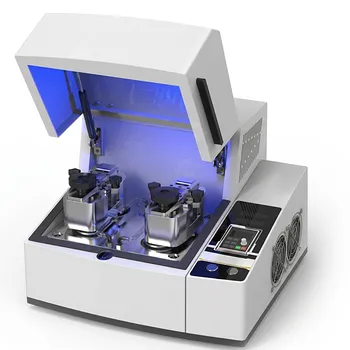
Laboratory Nano High Energy Ball Mill Ultrafine Grinding Mechanical Alloying
Nanoscale High Energy Vibratory Ball Mill Low Temperature