What are the considerations for selecting stainless steel ball mill jars and balls for Ti2SnC? Maximize Impact Energy
Updated 5 months ago
Selecting stainless steel ball mill jars and grinding balls for Ti2SnC processing requires a focus on maximizing mechanical impact strength to drive phase decomposition. The primary objective is to facilitate the high-energy collisions necessary to convert kinetic energy into crystal defect and chemical energy, which triggers the precipitation and nucleation of tin (Sn) atoms. Key parameters include maintaining a high ball-to-material ratio, typically 10:1, and utilizing a combination of grinding ball diameters to optimize collision frequency.
Core Takeaway: To effectively process Ti2SnC, stainless steel media must be configured to deliver high-intensity impact energy that overcomes the material's structural stability, using specific mass-to-volume ratios to drive mechanochemical reactions.
Optimizing Energy Transfer for MAX Phase Decomposition
Mechanical Impact Strength
Stainless steel is chosen for its high hardness and density, which are essential for providing the impact force needed to decompose the Ti2SnC MAX phase. Without sufficient mass, the grinding media cannot generate the threshold energy required to disrupt the material's crystalline structure.
Conversion of Kinetic Energy
High-frequency collisions at rotational speeds—often ranging from 300 to 800 rpm—convert mechanical energy into internal crystal energy. This energy accumulation is the physical foundation for the structural refinement and mechanochemical changes required during the milling process.
Driving Tin Precipitation
The specific goal when milling Ti2SnC is to accelerate the nucleation and precipitation of tin (Sn) atoms. High-energy impacts facilitate the diffusion of these atoms, a process that is significantly slower or impossible under lower-energy milling conditions.
Configuration of Grinding Media and Jars
The Ball-to-Material Ratio
A 10:1 ball-to-material ratio is standard for ensuring efficient energy transfer across the entire powder volume. This high ratio increases the probability of high-energy contact events, ensuring that no portion of the Ti2SnC remains unprocessed or "dead" within the jar.
Mixed Grinding Ball Diameters
Utilizing a combination of different ball sizes, such as 15mm and 20mm, balances the need for heavy impact with collision frequency. Larger balls provide the sheer force required for initial fracturing, while smaller balls increase the total surface area of contact to refine the powder.
Durability and Process Duration
Stainless steel jars are capable of withstanding long-duration milling (up to 30 hours) without significant structural degradation. This stability is critical for Ti2SnC, as the decomposition and subsequent alloying processes often require extended processing times to reach completion.
Understanding the Trade-offs and Limitations
Iron Contamination Risks
The most significant drawback of using stainless steel is the potential for iron contamination, which can reach levels around 1.49 at.% in intensive processes. While often acceptable, you must verify that these trace amounts do not form undesirable iron-containing phases in your final sintered microstructure.
Wear Resistance vs. Inertness
While stainless steel offers excellent wear resistance compared to softer metals, it lacks the chemical inertness of materials like zirconia. If your application is extremely sensitive to metal impurities, the high impact energy of steel must be weighed against the superior purity of ceramic alternatives.
Thermal Management
The high-intensity collisions required for Ti2SnC generate significant heat within the stainless steel jar. Continuous high-speed milling may require cooling intervals or atmospheric control to prevent unwanted thermal reactions or powder oxidation.
Applying These Considerations to Your Process
Recommendations for Specific Goals
- If your primary focus is rapid phase decomposition: Utilize high-density stainless steel balls with a 10:1 ratio and maximize rotational speed to increase kinetic energy.
- If your primary focus is powder uniformity: Employ a tiered combination of ball diameters (e.g., 10mm, 15mm, and 20mm) to ensure both heavy impact and high-frequency refinement.
- If your primary focus is high chemical purity: Monitor milling duration strictly and consider using a zirconia-lined jar if the introduction of iron atoms interferes with the Ti2SnC properties.
By precisely balancing media mass and collision frequency, you can harness the mechanical strength of stainless steel to successfully drive the complex phase transformations inherent in Ti2SnC processing.
Summary Table:
| Parameter | Recommended Specification | Purpose |
|---|---|---|
| Media Material | High-density Stainless Steel | Provides high mechanical impact for phase decomposition |
| Ball-to-Material Ratio | 10:1 (by mass) | Ensures uniform energy transfer and prevents "dead zones" |
| Rotational Speed | 300 - 800 rpm | Converts kinetic energy into crystal defects and heat |
| Ball Diameters | Mixed (e.g., 15mm & 20mm) | Balances high-force fracturing with contact frequency |
| Milling Duration | Up to 30 hours | Sufficient time for tin (Sn) nucleation and precipitation |
| Critical Risk | Iron Contamination (~1.49 at.%) | Must be monitored for impact on final sintered microstructure |
Elevate Your Material Synthesis with Precision Equipment
Processing complex MAX phases like Ti2SnC requires more than just high energy—it requires the right equipment configuration. At KINTEK SOLUTION, we provide complete laboratory sample preparation solutions tailored for advanced material science.
Whether you need high-performance planetary ball mills, jet mills, or vibratory sieve shakers to refine your powders, or high-pressure Cold/Warm Isostatic Presses (CIP/WIP) and vacuum hot presses for superior sintering, our equipment is designed to meet the most rigorous research standards.
Don't let contamination or inefficient energy transfer stall your breakthrough. Contact us today to discuss how our specialized powder processing and compaction solutions can optimize your laboratory workflow!
References
- Zhenglin Zou, ZhengMing Sun. Engineering the Diameter of Sn Nanowhiskers Derived From MAX Phases via Liquid Media. DOI: 10.1002/metm.70016
Mentioned Products
- High Energy Omnidirectional Planetary Ball Mill 16L
- Heavy Duty Horizontal Planetary Ball Mill for Efficient Industrial Grinding and Sample Preparation
- Vertical Square Planetary Ball Mill for Laboratory Sample Preparation and Nanoscale Grinding
- 8L Planetary Ball Mill for Laboratory Grinding and Sample Preparation
- Dual Station Planetary Ball Mill 24L
People Also Ask
- What role does an omni-directional planetary ball mill play in brass/cobalt antimonide pretreatment? Achieve Nano-Scale Homogeneity.
- What is the role of a high-energy planetary ball mill in Li2ZrO3 and LBS prep? Achieve Superior Electrolyte Density
- What role does a high-energy planetary ball mill play in processing quenched bioactive glass? Achieve Nano-Scale Precision
- What role does a planetary ball mill play in nano-mineral filler prep? Achieve Sub-100nm Precision & Performance
- What role does a high-energy planetary ball mill play in magnesium-based hydrogen storage alloy preparation?

Tech Team · PowderPreparation
Last updated on May 14, 2026
Related Products
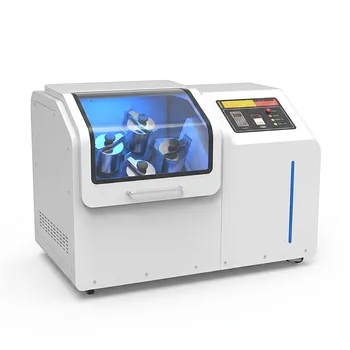
High Energy Omnidirectional Planetary Ball Mill 16L
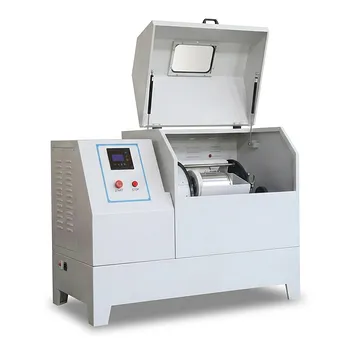
Heavy Duty Horizontal Planetary Ball Mill for Efficient Industrial Grinding and Sample Preparation
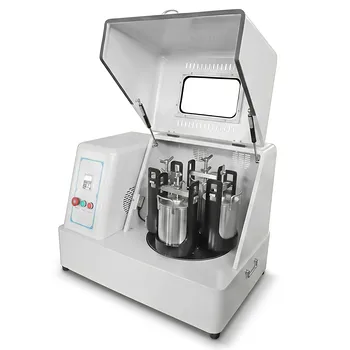
Vertical Square Planetary Ball Mill for Laboratory Sample Preparation and Nanoscale Grinding
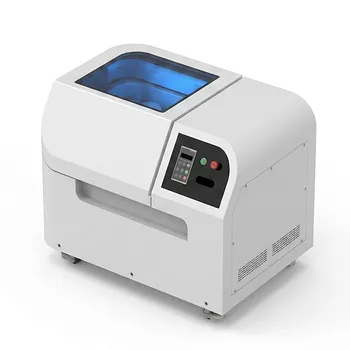
8L Planetary Ball Mill for Laboratory Grinding and Sample Preparation
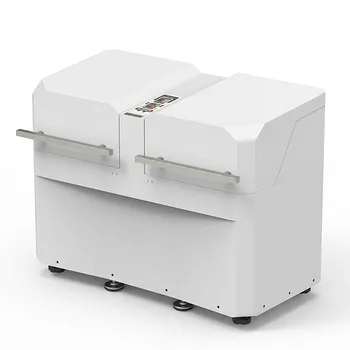
Dual Station Planetary Ball Mill 24L
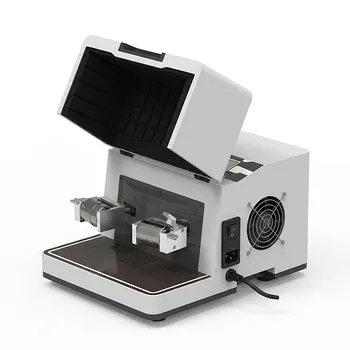
High Energy Hybrid Vibratory Ball Mill for Grinding Mixing and Cell Disruption
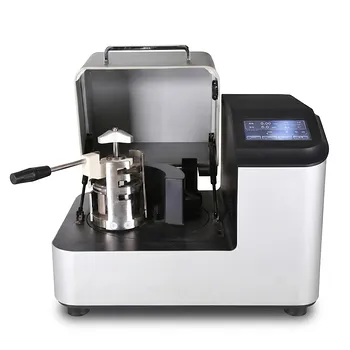
High Energy Laboratory Planetary Ball Mill for Nano Grinding and Material Science Sample Preparation
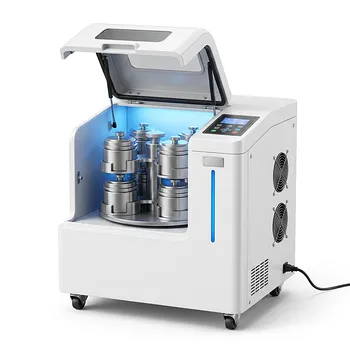
High Energy Omnidirectional Planetary Ball Mill 20L

High Throughput Micro Ball Mill for Cryogenic Grinding and Laboratory Cell Disruption
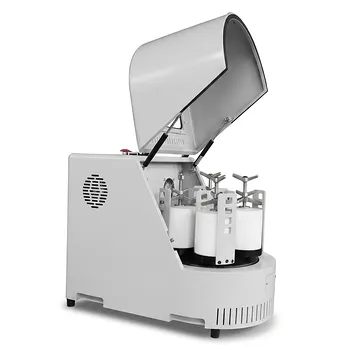
Vertical Semi Circular Planetary Ball Mill for Laboratory Precision Grinding
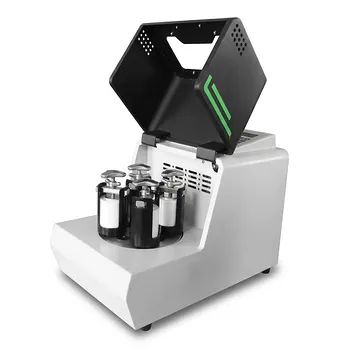
Miniature Planetary Ball Mill with Vacuum Grinding and High Efficiency for Laboratory Sample Preparation
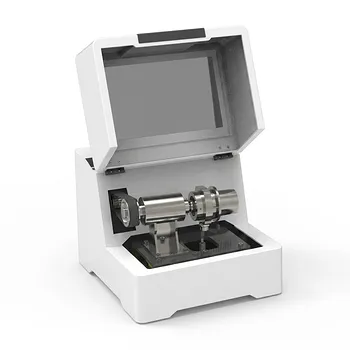
Single Tank High Energy Vibratory Ball Mill for Laboratory Grinding and Mixing
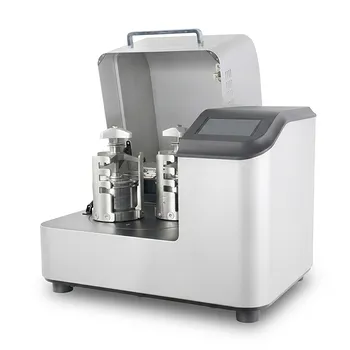
High Energy Planetary Ball Mill for Nano Scale Grinding and Mechanical Alloying
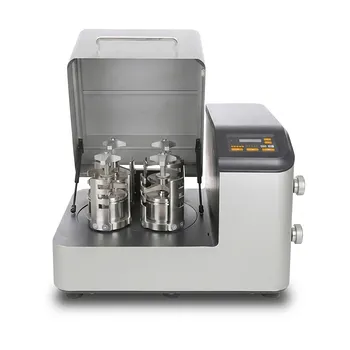
High Energy Planetary Ball Mill for Nano Scale Grinding and Colloidal Mixing in Material Science Research
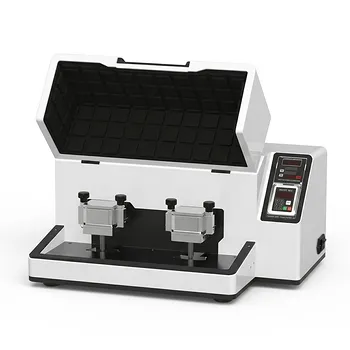
Nanoscale High Energy Vibratory Ball Mill Low Temperature
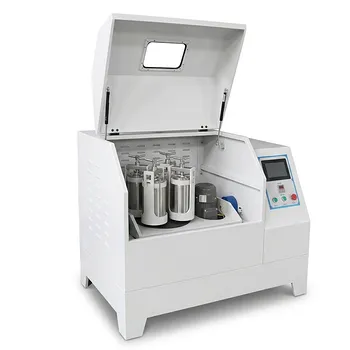
360° Rotating Omnidirectional Laboratory Planetary Ball Mill for Homogeneous Ultra-Fine Grinding and Mixing
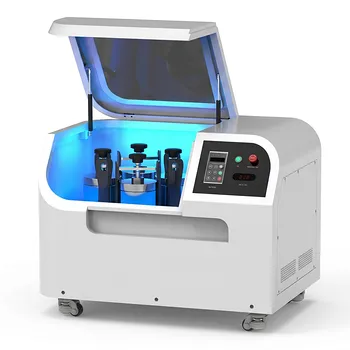
Planetary Ball Mill 12L
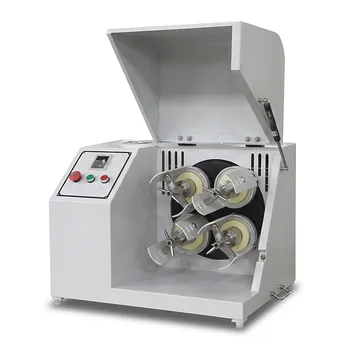
Horizontal Light Duty Planetary Ball Mill for Laboratory Sample Preparation
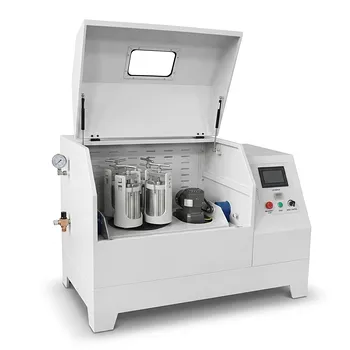
Vertical Production Planetary Ball Mill for High Throughput Powder Processing