HSE vs. Ball Milling for Cathode Prep: Speed & Scalability for Li1.2Ni0.2Mn0.6O2 and Na0.66Ni0.27Mg0.06Mn0.66O2
Updated 4 months ago
High-shear emulsification represents a paradigm shift in cathode material preparation, offering a drastic reduction in processing time. While traditional planetary ball milling requires between 90 minutes and 12 hours to achieve sufficient mixing, high-shear emulsification completes the pretreatment of $Li_{1.2}Ni_{0.2}Mn_{0.6}O_2$ and sodium-based precursors in as little as 4 minutes. This transition eliminates the physical volume constraints of milling jars and significantly lowers energy consumption per kilogram of material produced.
High-shear emulsification (HSE) replaces the slow, impact-based grinding of ball mills with rapid mechanical shear, enabling industrial-scale production. It solves the primary bottlenecks of energy inefficiency and limited batch sizes inherent in traditional solid-state reaction methods.
Efficiency and Processing Speed
Drastic Reduction in Pretreatment Time
Traditional planetary ball milling (PBM) is a time-intensive process that relies on high-speed rotation (e.g., 400 rpm) to mix precursors like lithium carbonate and nickel hydroxide. This method typically demands 90 to 120 minutes of grinding, and in some specialized syntheses, can extend up to 12 hours to ensure reactant activity.
High-shear emulsification compresses this timeline into a 4-minute window. By utilizing intense mechanical shear forces instead of gravity-fed impact, the system achieves the necessary precursor contact area in a fraction of the time.
Energy Consumption and Operational Costs
The energy required to drive heavy grinding balls in a planetary mill for several hours is substantial. Because HSE operates for such a short duration, it significantly reduces the kilowatt-hours per batch, making it a more sustainable option for large-scale manufacturing.
The reduction in heat generation during these shorter cycles also minimizes the need for complex cooling systems. This translates to lower overhead costs and simpler equipment maintenance schedules.
Scalability and Industrial Throughput
Overcoming Jar Volume Limitations
A critical weakness of planetary ball milling is its reliance on milling jars, which impose a hard limit on batch sizes. Scaling up production usually requires purchasing more machines or larger, more expensive units that still face mechanical stress limits.
HSE equipment is designed for flow-through or large-tank processing. This allows manufacturers to expand capacity by using high-power shear heads that can process significantly larger volumes of material without the physical constraints of individual jars.
Consistency in Large-Batch Mixing
In the synthesis of $Li_{1.2}Ni_{0.2}Mn_{0.6}O_2$ (LMNO), maintaining a uniform crystal phase depends on the perfect distribution of lithium and transition metals. HSE provides a more consistent shear field across the entire volume of the mixture compared to the chaotic impact of balls in a mill.
This consistency ensures that the subsequent high-temperature calcination produces lithium-rich layered oxides with high phase purity. For sodium-based materials like $Na_{0.66}Ni_{0.27}Mg_{0.06}Mn_{0.66}O_2$, this uniformity is equally vital for maintaining structural stability during cycling.
Material Performance and Dispersion
De-agglomeration of Nanoparticles
Cathode active materials often suffer from nanoparticle agglomeration, which hinders the formation of a conductive network. High-shear mixing is uniquely effective at breaking these clusters apart, ensuring that conductive carbon black and binders like PVDF are evenly distributed.
This level of dispersion is critical for the electrical continuity of the cathode film. Without it, the mechanical stability of the layer on the substrate is compromised, leading to delamination or poor rate performance.
Enhancing Reactant Activity
PBM increases reactant activity through high-energy impact, which can sometimes lead to localized over-grinding or contamination from the milling media (balls and jar walls). HSE achieves high surface area through fluid-structure interaction, which is generally cleaner and more controlled.
This controlled environment is particularly beneficial for sensitive sodium-ion precursors. It prevents the introduction of impurities that could catalyze side reactions during the high-temperature synthesis phase.
Understanding the Trade-offs
Limitations in Particle Size Reduction
While HSE is superior for mixing and de-agglomeration, it may not match the particle size reduction capabilities of a ball mill for extremely hard or large-grained raw materials. If the precursor chemistry requires significant fracturing of primary particles, HSE may need to be paired with a preliminary grinding step.
Equipment Specialization and Media Wear
High-shear mixers involve high-speed moving parts that must be precision-engineered to resist wear from abrasive ceramic precursors. While they eliminate "ball wear" (contamination from grinding media), the shear heads themselves are subject to erosion over time.
Selecting the right metallurgy or ceramic coating for the shear equipment is essential to prevent metallic contamination in the final cathode material. This represents a different, though manageable, maintenance challenge compared to traditional milling.
How to Apply This to Your Project
Recommendations for Implementation
Choosing between these two methods depends on your production stage and the specific physical characteristics of your precursors.
- If your primary focus is rapid industrial scaling: Transition to high-shear emulsification to bypass the volume limits of ball mill jars and reduce processing time by over 95%.
- If your primary focus is extreme particle size reduction of hard precursors: Stick with planetary ball milling or use it as a primary stage before utilizing HSE for final homogenization.
- If your primary focus is maximizing slurry uniformity and electrical conductivity: Prioritize high-shear equipment to ensure nanoparticle de-agglomeration and a stable conductive network.
Adopting high-shear emulsification allows for a more streamlined, energy-efficient production line that directly addresses the scalability challenges of modern battery material synthesis.
Summary Table:
| Feature | High-Shear Emulsification (HSE) | Planetary Ball Milling (PBM) |
|---|---|---|
| Processing Time | ~4 Minutes | 90 Minutes - 12 Hours |
| Energy Efficiency | High (Short operation cycles) | Low (Extended grinding required) |
| Scalability | High (Flow-through systems) | Low (Limited by jar volume) |
| Mechanism | Intense Mechanical Shear | Impact & Attrition Forces |
| Primary Use | Homogenization & De-agglomeration | Particle Size Reduction |
Optimize Your Battery Material Synthesis with Expert Solutions
Achieving superior cathode performance for $Li_{1.2}Ni_{0.2}Mn_{0.6}O_2$ and $Na_{0.66}Ni_{0.27}Mg_{0.06}Mn_{0.66}O_2$ requires precision in every step of the preparation. Whether you are focused on the rapid homogenization of high-shear emulsification or the intensive grinding of planetary ball milling, we provide the complete laboratory sample preparation solutions you need.
Our Specialized Equipment for Material Science Includes:
- Advanced Milling & Grinding: Planetary ball mills, jet mills, disc mills, and liquid nitrogen cryogenic grinders.
- Mixing & Dispersion: High-performance powder mixers, defoaming mixers, and high-shear equipment for uniform slurries.
- Compaction & Pressing: A full spectrum of hydraulic presses, including Cold/Warm Isostatic Presses (CIP/WIP), hot presses, and XRF pellet presses.
- Sizing & Pre-processing: Jaw/roll crushers and precision sieve shakers (vibratory/air-jet).
Streamline your workflow and enhance material activity today. Contact our technical team for a custom solution to take your powder processing from the lab to industrial scale.
References
- Francisco J. Garcia‐Garcia, J. G. Lozano. Ultrafast Organic Emulsion‐Based Synthesis of High‐Performance Cathode Materials for Rechargeable Batteries. DOI: 10.1002/batt.202500213
Mentioned Products
- Vertical Semi Circular Planetary Ball Mill for Laboratory Precision Grinding
- High Energy Planetary Ball Mill for Nano Scale Grinding and Mechanical Alloying
- Heavy Duty Horizontal Planetary Ball Mill for Efficient Industrial Grinding and Sample Preparation
- Vertical Production Planetary Ball Mill for High Throughput Powder Processing
- 360° Rotating Omnidirectional Laboratory Planetary Ball Mill for Homogeneous Ultra-Fine Grinding and Mixing
People Also Ask
- What role does a planetary ball mill play in the synthesis of Li6PS5Cl (LPSCl)? Unlock High Ionic Conductivity
- Why is a planetary ball mill essential for SiBCN-rGO wet-spinning? Achieve Superior Dispersion and Spinnability
- Why is an intermittent grinding process required for perovskites in a planetary ball mill? Ensure Stability & Purity
- Why is a planetary ball mill required for PET micronization? Ensure Accurate Chemical Analysis of Reprocessed PET
- How does mechanized planetary ball milling compare to manual agate grinding? Optimize sulfide standard material precision.

Tech Team · PowderPreparation
Last updated on Jun 03, 2026
Related Products
Vertical Semi Circular Planetary Ball Mill for Laboratory Precision Grinding

High Energy Planetary Ball Mill for Nano Scale Grinding and Mechanical Alloying
Heavy Duty Horizontal Planetary Ball Mill for Efficient Industrial Grinding and Sample Preparation
Vertical Production Planetary Ball Mill for High Throughput Powder Processing
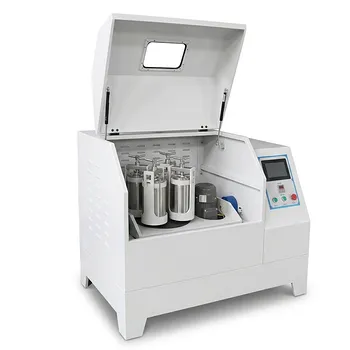
360° Rotating Omnidirectional Laboratory Planetary Ball Mill for Homogeneous Ultra-Fine Grinding and Mixing

Vertical Square Planetary Ball Mill for Laboratory Sample Preparation and Nanoscale Grinding

Miniature Planetary Ball Mill with Vacuum Grinding and High Efficiency for Laboratory Sample Preparation
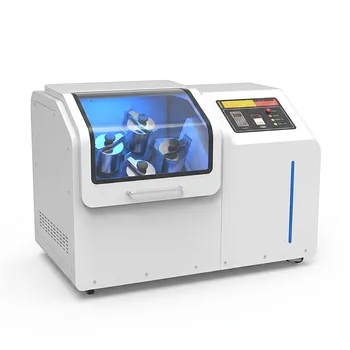
High Energy Omnidirectional Planetary Ball Mill 16L

High Energy Laboratory Planetary Ball Mill for Nano Grinding and Material Science Sample Preparation
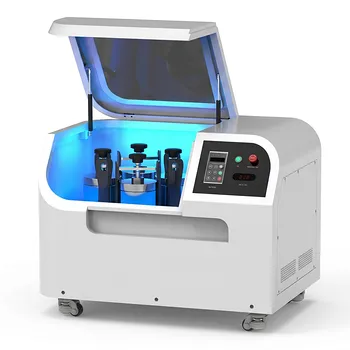
Planetary Ball Mill 12L
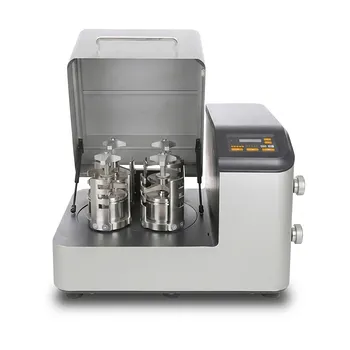
High Energy Planetary Ball Mill for Nano Scale Grinding and Colloidal Mixing in Material Science Research
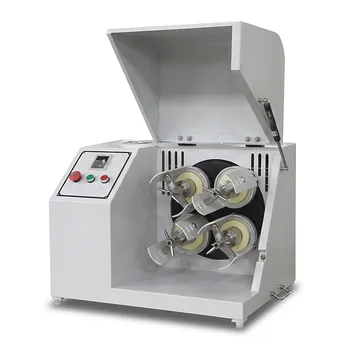
Horizontal Light Duty Planetary Ball Mill for Laboratory Sample Preparation
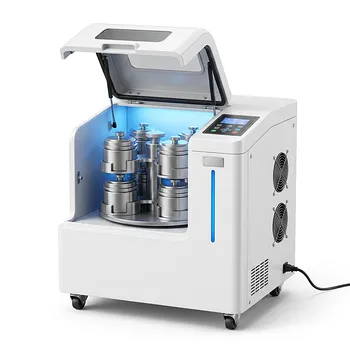
High Energy Omnidirectional Planetary Ball Mill 20L
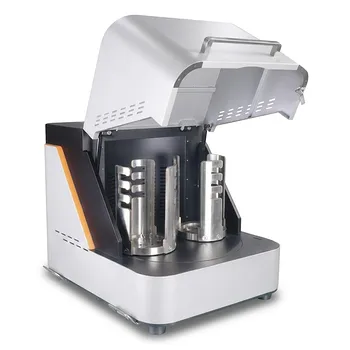
High Energy Laboratory Planetary Ball Mill for Nano Grinding and Colloidal Mixing of Hard and Brittle Materials
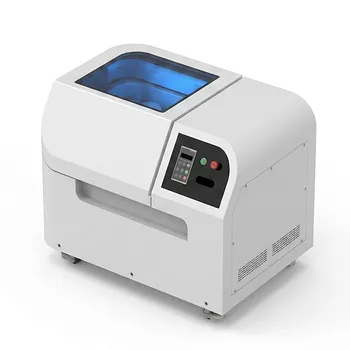
8L Planetary Ball Mill for Laboratory Grinding and Sample Preparation
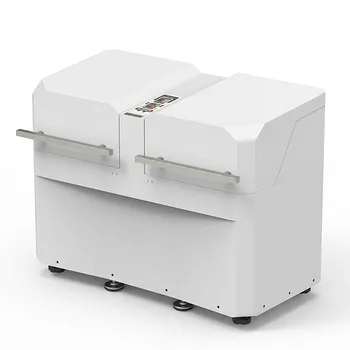
Dual Station Planetary Ball Mill 24L
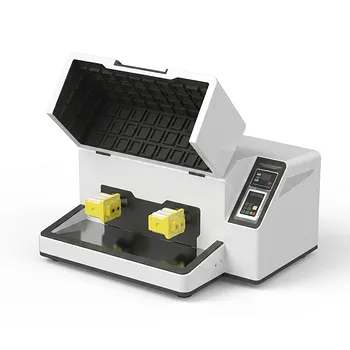
Multi-Platform Nanoscale High-Energy Vibratory Ball Mill
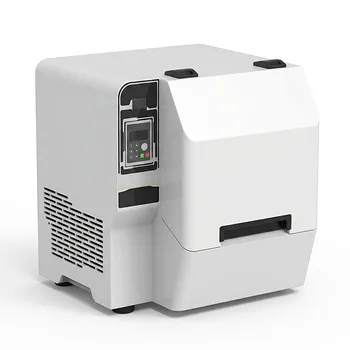
Nano High Energy Vibratory Ball Mill for Laboratory Sample Preparation
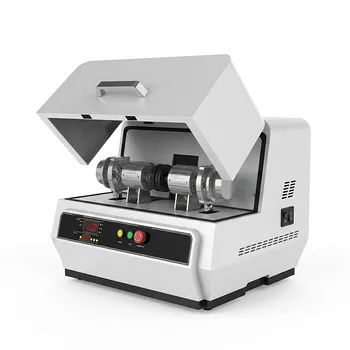
Dual Jar High Energy Vibratory Ball Mill