How does 90% critical speed affect ball mill grinding of high-silica talc? Optimize Impact for Superior Fineness
Updated 4 months ago
Setting a ball mill to 90% of its critical speed maximizes the impact energy required to pulverize high-silica talc ore. This specific velocity forces the grinding media into a "cataract" motion, where they are thrown to the mill’s apex before falling back onto the material bed. This high-energy state is essential for breaking the tough crystalline structures of silica that lower speeds might fail to penetrate.
Operating at 90% critical speed optimizes the cataract effect, converting rotational energy into high-velocity impacts rather than simple friction. This is the most efficient configuration for ensuring abrasive, silica-rich talc reaches a fineness capable of passing through a 106-micron test sieve.
The Mechanics of the Cataract Effect
High-Trajectory Media Movement
At 90% of the critical speed, the centrifugal force is strong enough to carry the grinding media nearly to the top of the drum. Instead of rolling down the side, the balls launch into a parabolic flight path across the mill's internal diameter.
This "cataracting" motion ensures that the kinetic energy of the media is released all at once upon impact with the ore.
Impact vs. Attrition
Lower speeds (60-80% of critical) typically result in cascading motion, which relies on attrition—the rubbing of particles against each other.
High-silica ores are often too hard for attrition alone; they require the crushing impact provided by the high-trajectory falls achieved at 90% speed.
Impact on High-Silica Talc Processing
Overcoming Silica’s Structural Resistance
Silica is significantly harder and more abrasive than pure talc, requiring a higher energy threshold for structural breakdown.
Operating at 90% speed provides the mechanical energy necessary to trigger structural transitions and amorphization in the silica components. Without this intensity, the silica remains coarse, while the softer talc is over-ground, leading to an inefficient process.
Ensuring Target Fineness
The ultimate goal of this setting is to meet strict particle size distributions, specifically the ability to pass a 106-micron test sieve.
The high-energy impact of the cataract effect ensures that even the hardest silica inclusions are shattered to the required micron level. This results in a more homogenous final product suitable for industrial applications.
Understanding the Trade-offs
Accelerated Component Wear
While 90% speed increases grinding efficiency, it also subjects the mill liners and grinding media to significantly higher stress.
The same high-energy impacts that break the ore also strike the mill walls, leading to faster mechanical degradation and more frequent maintenance cycles.
The Risk of Centrifuging
Operating at 90% leaves a very small margin for error; if the speed increases further, the mill reaches its critical speed.
At 100% critical speed, the centrifugal force pins the media to the wall, causing the grinding action to stop entirely. Precise speed control via a Variable Frequency Drive (VFD) is usually required to maintain this aggressive 90% threshold safely.
Applying This to Your Milling Operation
Making the Right Choice for Your Goal
To optimize your ball mill for high-silica talc, you must balance the need for throughput with the reality of equipment maintenance.
- If your primary focus is maximum throughput and fineness: Maintain the speed at 90% of critical to ensure the cataract effect is fully engaged for silica breakdown.
- If your primary focus is reducing maintenance costs: Consider dropping to 75-80% of critical, acknowledging that grinding times will increase and silica may not reach the 106-micron target as quickly.
- If your primary focus is processing low-silica (pure) talc: Use a lower speed range (60-70%) to favor attrition, which preserves the plate-like structure of the talc while saving energy.
By aligning your mill's rotational velocity with the specific mineralogical challenges of your ore, you ensure a consistent, high-quality output that meets rigorous industrial standards.
Summary Table:
| Speed (% of Critical) | Motion Type | Primary Grinding Mechanism | Ideal Application |
|---|---|---|---|
| 60% - 70% | Cascading | Attrition (Rubbing/Friction) | Pure talc; preserving plate-like structures |
| 75% - 85% | Mixed | Impact + Attrition | Standard ores; balanced efficiency and wear |
| 90% | Cataracting | High-Energy Impact | High-silica talc; breaking tough inclusions |
| 100%+ | Centrifuging | None (Material stays on wall) | N/A (Avoid - grinding stops) |
Elevate Your Material Processing with Precision Engineering
Achieving the perfect 106-micron fineness for high-silica talc requires more than just the right speed—it requires the right equipment. At our core, we provide complete laboratory sample preparation solutions tailored for the demanding needs of material science.
We specialize in high-performance powder processing and compaction equipment, ensuring your research or production meets the highest industrial standards. Our extensive product line includes:
- Size Reduction: Advanced crushers (jaw/roll), liquid nitrogen cryogenic grinders, and high-efficiency mills (planetary ball, jet, sand/bead, disc, rotor).
- Classification & Mixing: Vibratory and air-jet sieve shakers with precision test sieves, plus professional-grade powder and defoaming mixers.
- Sample Compaction: A full spectrum of hydraulic presses, from standard lab and XRF pellet presses to sophisticated Cold/Warm Isostatic Presses (CIP/WIP) and vacuum hot presses.
Whether you are processing abrasive minerals or developing new materials, our specialists are here to help you select the ideal configuration for maximum throughput and longevity.
Ready to optimize your lab's efficiency? Contact us today to find your solution!
References
- Ömer GÜLEÇ, Metin Uçurum. Combination of Conventional Ball Mill and Stirred Mill to Obtain Ultra-Fine Talc. DOI: 10.21605/cukurovaumfd.1377725
Mentioned Products
- Heavy Duty Horizontal Planetary Ball Mill for Efficient Industrial Grinding and Sample Preparation
- Vertical Semi Circular Planetary Ball Mill for Laboratory Precision Grinding
- Vertical Square Planetary Ball Mill for Laboratory Sample Preparation and Nanoscale Grinding
- High Energy Planetary Ball Mill for Nano Scale Grinding and Mechanical Alloying
- Vertical Production Planetary Ball Mill for High Throughput Powder Processing
People Also Ask
- Why grind lime-pozzolan specimens for TG/DTA for 3 mins? Master sample prep for high-precision thermal analysis.
- What is the role of a planetary ball mill in the mechanical activation of ZTA powder? Boost Sintering Performance
- What is the function of a planetary ball mill in wollastonite ceramic prep? Achieve Molecular Homogenization & Reactivity
- How does a planetary ball mill contribute to the homogenization of trace elements? Achieve Sub-Micron Uniformity
- What is the function of a high-performance planetary ball mill in AMZ laminates? Master Ceramic Homogenization.

Tech Team · PowderPreparation
Last updated on May 14, 2026
Related Products
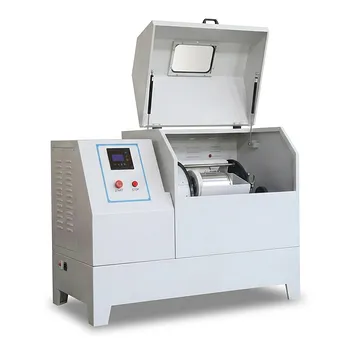
Heavy Duty Horizontal Planetary Ball Mill for Efficient Industrial Grinding and Sample Preparation
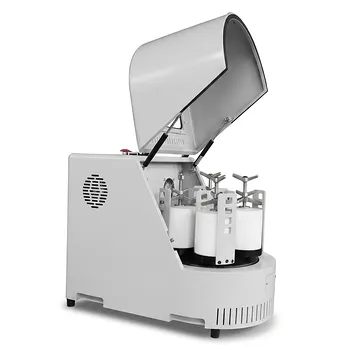
Vertical Semi Circular Planetary Ball Mill for Laboratory Precision Grinding

Vertical Square Planetary Ball Mill for Laboratory Sample Preparation and Nanoscale Grinding
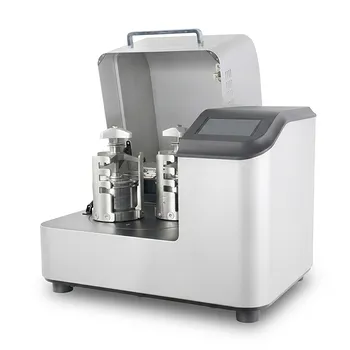
High Energy Planetary Ball Mill for Nano Scale Grinding and Mechanical Alloying
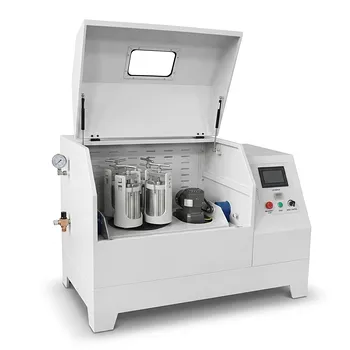
Vertical Production Planetary Ball Mill for High Throughput Powder Processing
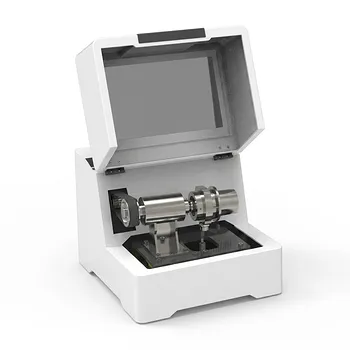
Single Tank High Energy Vibratory Ball Mill for Laboratory Grinding and Mixing
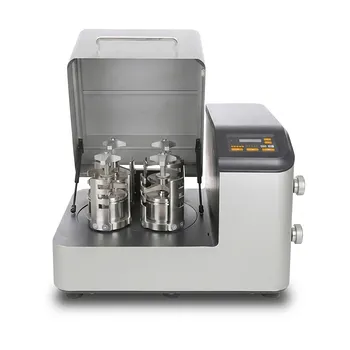
High Energy Planetary Ball Mill for Nano Scale Grinding and Colloidal Mixing in Material Science Research
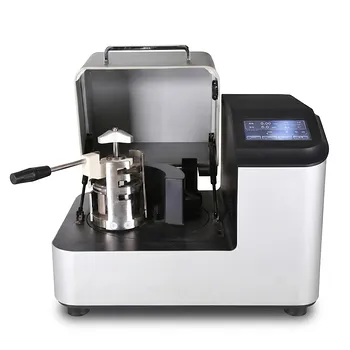
High Energy Laboratory Planetary Ball Mill for Nano Grinding and Material Science Sample Preparation
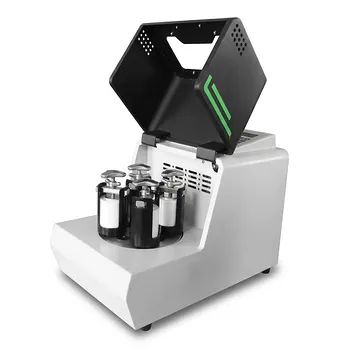
Miniature Planetary Ball Mill with Vacuum Grinding and High Efficiency for Laboratory Sample Preparation
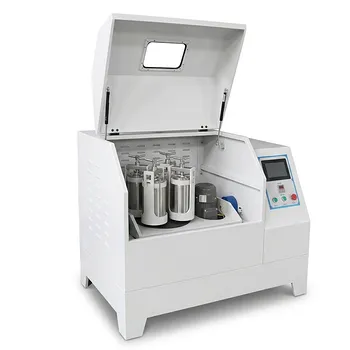
360° Rotating Omnidirectional Laboratory Planetary Ball Mill for Homogeneous Ultra-Fine Grinding and Mixing
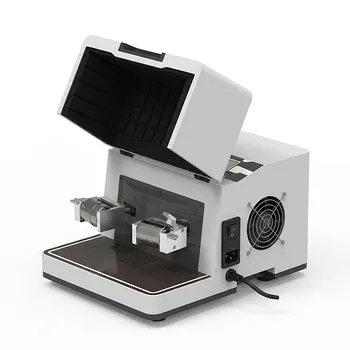
High Energy Hybrid Vibratory Ball Mill for Grinding Mixing and Cell Disruption
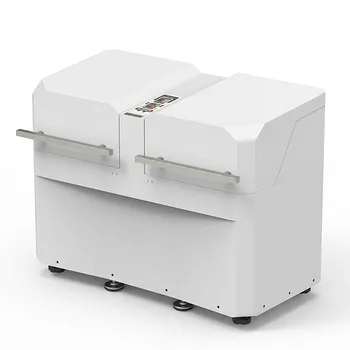
Dual Station Planetary Ball Mill 24L
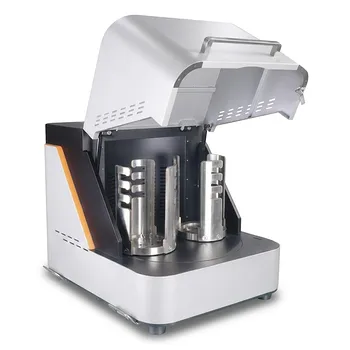
High Energy Laboratory Planetary Ball Mill for Nano Grinding and Colloidal Mixing of Hard and Brittle Materials
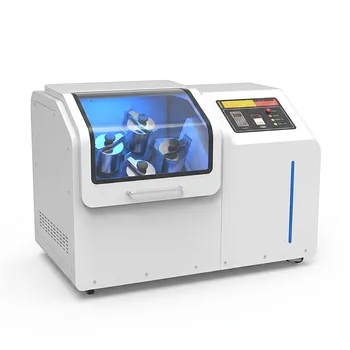
High Energy Omnidirectional Planetary Ball Mill 16L
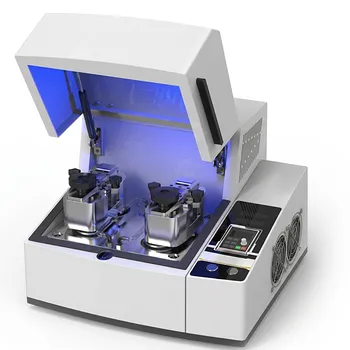
Laboratory Nano High Energy Ball Mill Ultrafine Grinding Mechanical Alloying
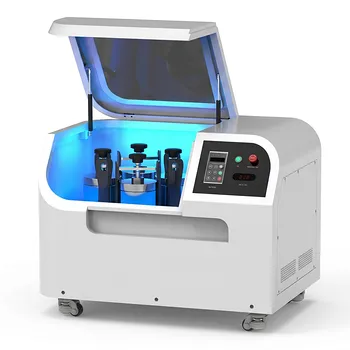
Planetary Ball Mill 12L
High Throughput Micro Ball Mill for Cryogenic Grinding and Laboratory Cell Disruption
8L Planetary Ball Mill for Laboratory Grinding and Sample Preparation
Nanoscale High-Energy Vibratory Ball Mill for Laboratory Sample Preparation, Mechanochemistry, and Mechanical Alloying