How does laboratory pressure molding equipment facilitate Li2ZrO3-LBS green body preparation? Maximize Density & Quality
Updated 4 months ago
Laboratory pressure molding equipment transforms loose composite powders into structural green bodies by applying directional force to eliminate voids and maximize particle contact. This process uses manual or automatic hydraulic presses to compress the $\text{Li}_2\text{ZrO}_3\text{-LBS}$ mixture, forcing out trapped air and inducing a densified rearrangement of particles. By establishing a high initial green density, the equipment creates the necessary physical foundation for uniform glass phase penetration and robust grain bonding during subsequent high-temperature sintering.
The primary role of laboratory pressure molding is to convert disorganized powder into a dense, geometrically precise "green body." This pre-compaction step is critical because it minimizes porosity and optimizes the interface between the electrolyte and the glass phase before heat treatment begins.
The Mechanics of Powder Consolidation
Air Expulsion and Particle Rearrangement
Laboratory hydraulic presses apply uniaxial pressure—typically ranging from 100 MPa to 200 MPa—to the powder within a precision mold. This force compels the individual particles to overcome internal friction and slide into a more compact packing structure.
As the particles rearrange, trapped air is forced out of the interstitial spaces. This reduction in internal voids is essential to prevent gas expansion and cracking during the heating cycle.
Plastic and Brittle Deformation
Under high pressure, the $\text{Li}_2\text{ZrO}_3$ and LBS particles undergo plastic or brittle deformation at their contact points. This deformation increases the total contact area between the ceramic particles and the additive phases.
The resulting mechanical interlocking gives the green body its structural integrity. This allows the pellet to be handled and moved into the furnace without crumbling or losing its shape.
Establishing the Foundation for Sintering
Reducing Atomic Diffusion Distance
By creating a high-density green body, the press effectively shortens the distance atoms must travel during the diffusion process. This proximity allows for faster densification and can often lead to successful sintering at lower temperatures.
A well-compacted green body ensures that the solid-state reactions occur uniformly throughout the sample. This prevents localized areas of high porosity that could weaken the final electrolyte.
Facilitating Glass Phase Penetration
In $\text{Li}_2\text{ZrO}_3\text{-LBS}$ composites, the LBS (Lithium-Boron-Sulfur or similar glass phase) must flow between the $\text{Li}_2\text{ZrO}_3$ grains. The initial compaction ensures that the gaps are small and uniform.
This uniformity allows the glass phase to penetrate the structure evenly during sintering. The result is a tight, cohesive grain boundary network that enhances the ionic conductivity of the finished electrolyte.
Understanding the Trade-offs and Pitfalls
Pressure Sensitivity and Internal Gradients
While higher pressure generally increases density, exceeding the material's limits can cause lamination or "capping" where the pellet splits into layers. This occurs when internal stresses are stored during compression and released unevenly during ejection from the mold.
Furthermore, uniaxial pressing can lead to density gradients. Friction between the powder and the mold walls often results in the center of the pellet being less dense than the surfaces near the punch.
Mold Wear and Contamination
Repeated use of high-pressure steel molds can introduce trace metallic contaminants into the composite powder. These impurities can negatively affect the electrochemical performance of the $\text{Li}_2\text{ZrO}_3\text{-LBS}$ electrolyte.
Using specialized liners or high-hardness tool steels is often necessary to maintain purity. Proper lubrication of the mold walls is also required to ensure the green body can be ejected without surface damage.
How to Apply This to Your Project
Successful green body preparation requires balancing applied force with the specific flow characteristics of your composite powder.
- If your primary focus is maximizing ionic conductivity: Prioritize higher compaction pressures (near 200 MPa) to ensure the tightest possible grain boundaries and optimal glass phase distribution.
- If your primary focus is preventing structural defects: Use a slower pressure application rate and consider a "hold time" at peak pressure to allow air to escape and particles to settle fully.
- If your primary focus is consistent geometric precision: Ensure the use of precision-ground steel molds and maintain a consistent powder mass-to-volume ratio for every sample.
By precisely controlling the pressure molding stage, you establish the microstructural framework necessary for a high-performance, dense composite electrolyte.
Summary Table:
| Stage of Process | Key Mechanism | Impact on Li2ZrO3-LBS Quality |
|---|---|---|
| Compaction | Air expulsion & particle rearrangement | Eliminates voids; establishes high initial green density. |
| Deformation | Plastic/brittle interlocking at contact points | Provides structural integrity for handling & processing. |
| Pre-Sintering | Shortening of atomic diffusion distance | Enables faster densification at lower temperatures. |
| Phase Integration | Uniform interstitial gap control | Facilitates even LBS glass phase penetration for conductivity. |
Elevate Your Material Research with Precision Engineering
Achieving the perfect green body for Li2ZrO3-LBS composite electrolytes requires more than just pressure—it requires precision. At our core, we provide complete laboratory sample preparation solutions tailored for material science. Whether you are refining powders or compacting advanced ceramics, our equipment ensures the structural integrity and high density your research demands.
Our extensive product line includes:
- Advanced Compaction: A full spectrum of hydraulic presses, including Cold/Warm Isostatic Presses (CIP/WIP), standard lab presses, XRF pellet presses, and vacuum hot presses.
- Powder Processing: High-performance crushers, liquid nitrogen cryogenic grinders, and various mills (planetary ball, jet, sand/bead, disc, rotor).
- Analysis & Mixing: Sieve shakers, powder mixers, and defoaming mixers for perfectly homogeneous mixtures.
Ready to optimize your lab’s efficiency and achieve superior sintering results? Contact us today to consult with our specialists and find the ideal solution for your powder processing needs!
References
- Anastasia V. Kalashnova, K. V. Druzhinin. Effect of Li2O–В2O3–SiO2 glass on conductivity, microstructure, and stability of Li2ZrO3 solid electrolyte. DOI: 10.15826/elmattech.2025.4.060
Mentioned Products
- 6 Ton Variable Frequency Single Punch Tablet Press
- Manual Tablet Press with Dual Scale Pressure Gauge for Pharmaceutical Food Chemical Laboratory Sample Preparation
- 6-Ton Small Single-Punch Tablet Press — Laboratory Powder & Granule Tableting Equipment / Tablet Forming Machine
- 5 Ton Single Punch Tablet Press Laboratory Small Batch Production
- Vertical Production Planetary Ball Mill for High Throughput Powder Processing
People Also Ask
- Why is a laboratory hydraulic press required for FT-IR KBr pellets? Achieve Precise Sample Clarity for ZrC–SiC Analysis
- Why is vacuum sealing and flexible packaging necessary for Aluminum Titanate powders during CIP? Ensure Peak Density
- What are the advantages of using hardened steel molds and graphite spray for titanium powder? Ensure structural integrity
- Why is a laboratory hydraulic press required to compress oyster shell powder before XRF analysis? Improve Data Accuracy.
- What role does a high-strength stainless steel mold kit play in the uniaxial die compaction process? Ensuring Precision

Tech Team · PowderPreparation
Last updated on Jun 03, 2026
Related Products
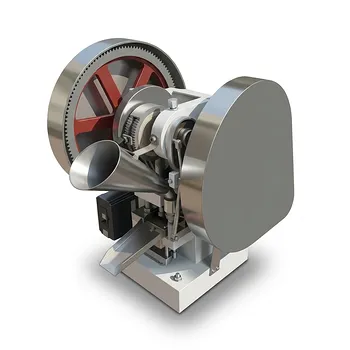
6 Ton Variable Frequency Single Punch Tablet Press
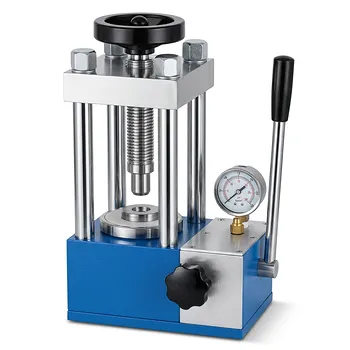
Manual Tablet Press with Dual Scale Pressure Gauge for Pharmaceutical Food Chemical Laboratory Sample Preparation
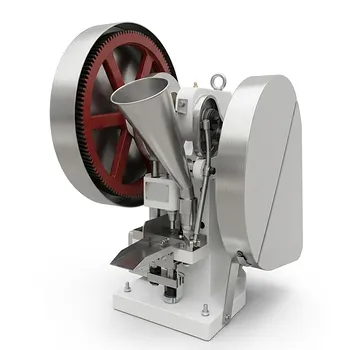
6-Ton Small Single-Punch Tablet Press — Laboratory Powder & Granule Tableting Equipment / Tablet Forming Machine
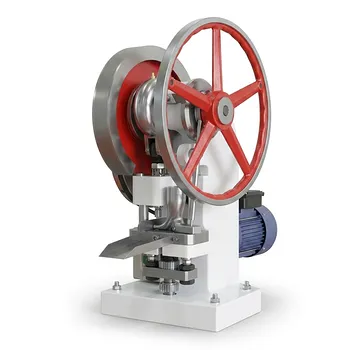
5 Ton Single Punch Tablet Press Laboratory Small Batch Production
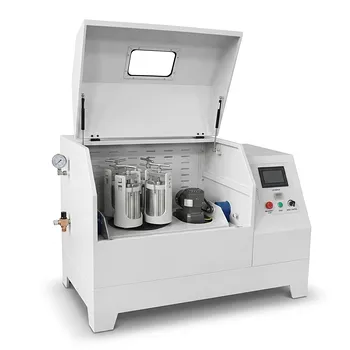
Vertical Production Planetary Ball Mill for High Throughput Powder Processing
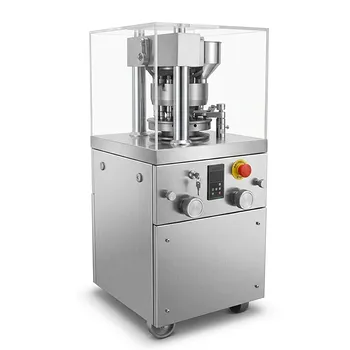
Ordinary Type Rotary Tablet Press for Pharmaceutical Chemical Food Electronic Industries
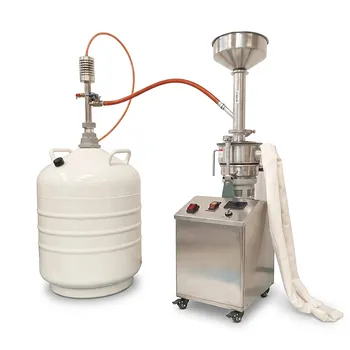
Laboratory Liquid Nitrogen Cryogenic Grinder for Polymer and Elastomer Materials
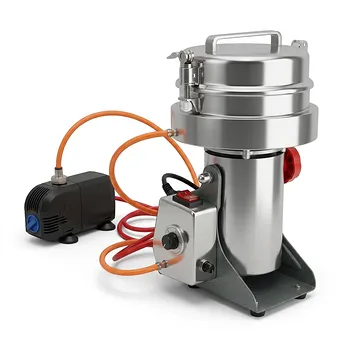
Water Cooled High Speed Grinder with Cryogenic Option for Laboratory Sample Preparation
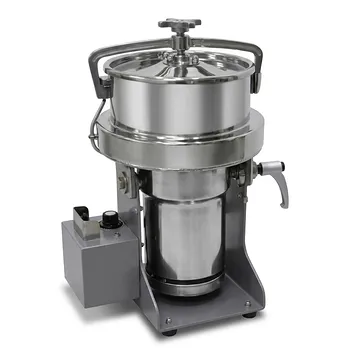
500g Capacity Water Cooled Low Temperature Grinder with Variable Speed and Safety Cover
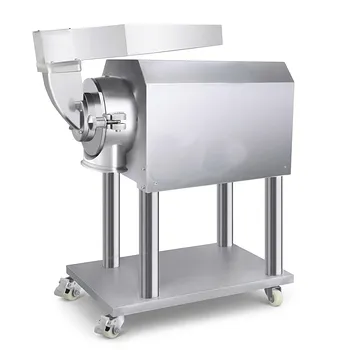
High Speed Small Laboratory Crusher for Dry Material Sample Preparation
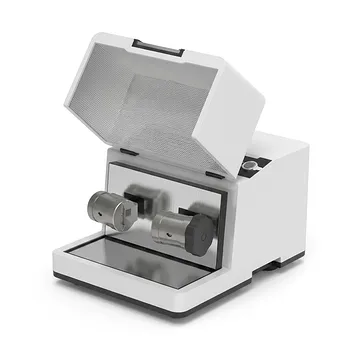
Heating Temperature Controlled High Energy Vibratory Ball Mill
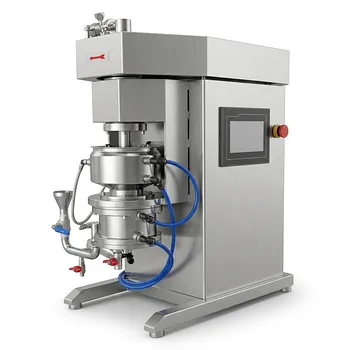
Small Ceramic Structure Laboratory Sand Mill Nanoscale Grinding Dispersion Equipment Seal-less Screen-less Design
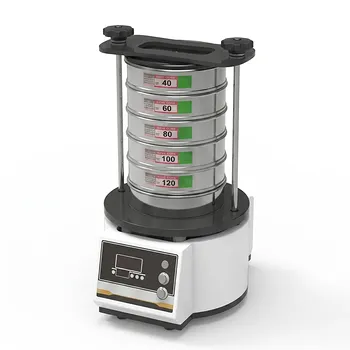
Dry Three Dimensional Vibratory Sieve Shaker
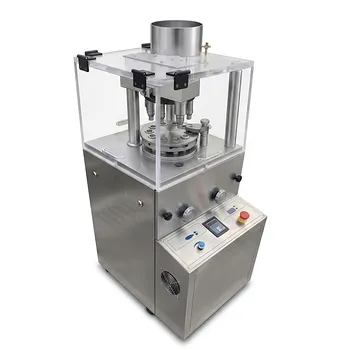
Enhanced 9 Punch Rotary Tablet Press for Powder Compaction
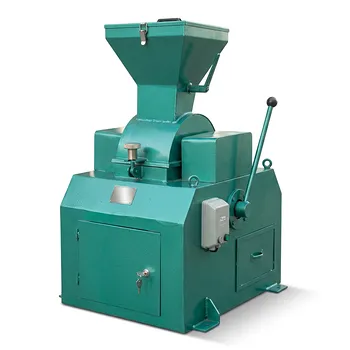
Laboratory Sealed Hammer Blade Crusher Divider for High Hardness Sample Preparation
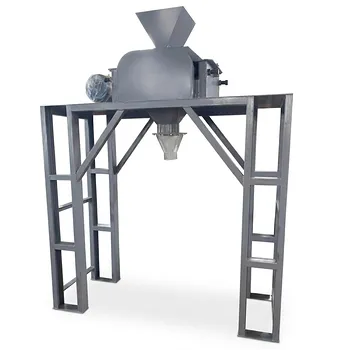
Heightened Customized Laboratory Double Roll Crusher for Coal Ore Rock Crushing
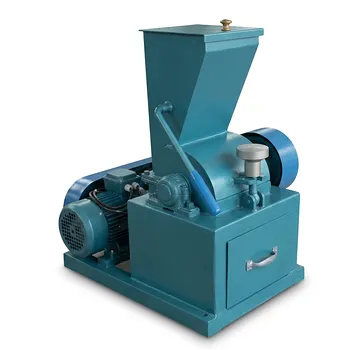
Small Hammer Crusher for Brittle Material Crushing in Mining Metallurgy and Lab Sample Preparation
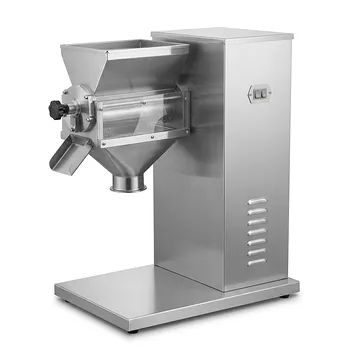
Small Swing Granulator Efficient Powder Granulation for Pharmaceutical Chemical Food Industries
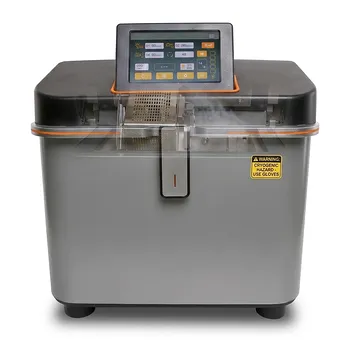
Cryogenic Liquid Nitrogen Grinder for DNA Analysis and Polymer Pulverization with Automatic Cooling and Electromagnetic Impact Technology