How does high-energy mechanical stirring equipment benefit metakaolin mixing? Achieve Homogeneous Geopolymer Slurries
Updated 5 months ago
High-energy mechanical stirring is the catalyst for geopolymer uniformity. It generates intense shear forces that break down metakaolin agglomerates and ensure rapid, complete contact between aluminosilicate minerals and the alkaline activator. This process optimizes the dissolution phase and results in a chemically stable, rheologically predictable slurry that is essential for high-performance applications.
High-energy stirring transforms geopolymerization from a localized surface reaction into a deep, homogenous chemical process by utilizing mechanical shear to eliminate powder clustering and facilitate uniform ion exchange across the entire mixture.
The Mechanics of High-Energy Dispersion
Breaking Down Metakaolin Agglomerates
Metakaolin powder naturally tends to form clusters or agglomerates that resist simple mixing. High-speed rotation generates the mechanical shear necessary to force these particles apart, ensuring that the powder is uniformly dispersed within the liquid phase.
Accelerating the Dissolution Process
The geopolymerization reaction begins with the dissolution of aluminosilicate minerals. High-energy stirring ensures that the alkaline activator is in full contact with the total surface area of the metakaolin particles, significantly speeding up the release of reactive ions.
Promoting Deep Ion Exchange
The intense mechanical action helps break through the inert layers on solid particles. This facilitates a more efficient ion exchange between the activator and the precursors, which is the foundational step for a robust polycondensation reaction.
Enhancing Slurry Quality and Reactivity
Achieving Rheological Stability
Uniformly dispersed metakaolin results in a slurry with stable rheological properties. This consistency is vital for industrial processes such as molding, 3D printing, or foaming, where the flow behavior of the "fresh" geopolymer must be predictable.
Eliminating Component Gradients
Standard mixing often leaves "pockets" of high or low concentration of activator or precursor. High-precision mechanical stirring eliminates these component gradients, ensuring that the chemical environment is identical at every point within the mixture.
Facilitating Additive Integration
When using organic additives or pore-forming agents, high-energy mixing ensures these secondary materials are fully integrated. This prevents low-density additives from segregating or clustering, which is a common cause of failure in lightweight geopolymers.
Impact on Final Material Integrity
Preventing Structural Defects
Local non-uniformity in the slurry leads to localized reaction failures. By ensuring a homogeneous precursor, high-energy equipment prevents the formation of density gradients and internal structural defects that could compromise the final product.
Ensuring Consistent Mechanical Strength
The mechanical performance of a solidified geopolymer depends on a uniform chemical matrix. Thorough mixing ensures that the polycondensation reaction occurs evenly, resulting in consistent compressive strength and durability across the entire material.
Improving Test Repeatability
In laboratory settings, high-precision stirring provides constant rotation speeds. This control is critical for ensuring that test samples are consistent, allowing researchers to accurately measure the impact of different formulations without mixing-induced variables.
Understanding the Trade-offs
Heat Generation and Thermal Management
The high friction involved in high-speed stirring can generate significant heat within the slurry. Because temperature influences the setting time of geopolymers, operators must monitor the mix to ensure the reaction does not accelerate prematurely.
Equipment Maintenance and Wear
The abrasive nature of aluminosilicate powders combined with high-speed rotation increases the wear and tear on mixing blades and motors. Choosing high-durability materials for the equipment is necessary to maintain long-term operational efficiency.
Energy Consumption vs. Reaction Quality
While high-energy mixing produces a superior product, it requires more power and specialized equipment. Engineers must balance the intensity of the mixing phase with the specific performance requirements of the final geopolymer application to optimize cost.
How to Apply This to Your Project
Recommendations Based on Your Goal
- If your primary focus is maximizing mechanical strength: Use high-speed forced stirring to ensure complete depolymerization and a dense, uniform chemical matrix.
- If your primary focus is producing porous or lightweight materials: Prioritize high-precision speed control to ensure that foaming agents and lightweight fillers are evenly distributed without segregation.
- If your primary focus is research and development: Utilize stirring equipment with constant speed settings to ensure the repeatability of your samples and the accuracy of your data.
- If your primary focus is large-scale industrial casting: Implement a two-stage mixing process—combining low-speed pre-mixing with a high-speed finishing stage—to manage bulk volume while ensuring homogenization.
The strategic use of high-energy mechanical stirring is the most effective way to transition from a simple mixture to a high-performance geopolymer system.
Summary Table:
| Key Benefit | Mechanical Mechanism | Impact on Final Material |
|---|---|---|
| Agglomerate Breakdown | High-speed rotation & mechanical shear | Ensures uniform particle dispersion and eliminates clusters. |
| Accelerated Dissolution | Increased surface area contact with activator | Speeds up reactive ion release for faster polycondensation. |
| Deep Ion Exchange | Penetration of inert surface layers | Creates a robust, chemically stable matrix with high integrity. |
| Rheological Stability | Homogeneous component distribution | Predictable flow behavior for 3D printing and industrial molding. |
| Structural Uniformity | Elimination of concentration gradients | Prevents internal defects and ensures consistent mechanical strength. |
Elevate Your Material Science Research with Precision Equipment
Achieving the perfect geopolymer slurry requires more than just mixing—it requires the right mechanical force and precision. At our core, we provide complete laboratory sample preparation solutions for material science, specializing in the equipment you need to process powders and compact materials effectively.
From high-performance mills (planetary ball, jet, and rotor) for metakaolin preparation to advanced powder mixers and defoaming mixers that ensure a bubble-free, homogeneous slurry, we have the tools to optimize your workflow. Our expertise extends to the final stages of production with a full spectrum of hydraulic presses, including Cold/Warm Isostatic Presses (CIP/WIP) and vacuum hot presses for superior material density.
Ready to improve your test repeatability and material performance? Contact our technical experts today to find the ideal processing solution for your laboratory or industrial application.
References
- Cengiz Bağcı, Semih KARAHAN. Geopolimerin Alüminyum Panellere Alternatif Yapıştırıcı Olarak Kullanımı Üzerine Bir Araştırma. DOI: 10.19113/sdufenbed.1297195
Mentioned Products
- Single Tank High Energy Vibratory Ball Mill for Laboratory Grinding and Mixing
- Dual Jar High Energy Vibratory Ball Mill
- High Energy Omnidirectional Planetary Ball Mill 16L
- Heating Temperature Controlled High Energy Vibratory Ball Mill
- High-Speed Simple Disperser for Efficient Mixing, Dispersion, and Emulsification
People Also Ask
- What is the primary purpose of using a vibratory ball mill in the preparation of respirable carbon fiber fragments?
- What is the purpose of using a vibratory ball mill for Al-Ni-Fe alloy ribbons? Achieve High Catalytic Activity
- Why is a vibratory ball mill preferred over a planetary ball mill for rapid powder particle refinement? High-Speed Impact
- How does a high-energy vibratory ball mill improve the performance of MgH2? Optimize Hydrogen Storage Kinetics
- What role do high-energy ball mills play in the preparation of reinforcements for hybrid metal matrix composites?

Tech Team · PowderPreparation
Last updated on May 14, 2026
Related Products
Single Tank High Energy Vibratory Ball Mill for Laboratory Grinding and Mixing
Dual Jar High Energy Vibratory Ball Mill

High Energy Omnidirectional Planetary Ball Mill 16L
Heating Temperature Controlled High Energy Vibratory Ball Mill
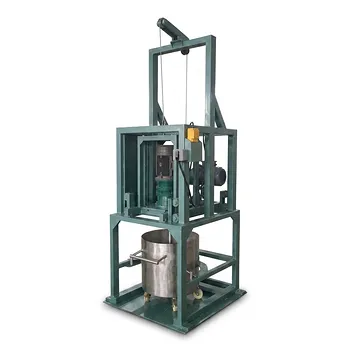
High-Speed Simple Disperser for Efficient Mixing, Dispersion, and Emulsification
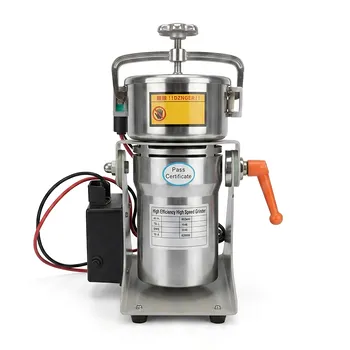
High Efficiency High Speed Grinder Laboratory Mill 1300W 25000rpm
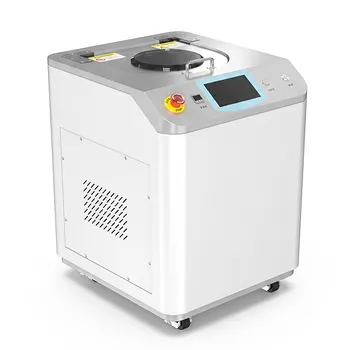
High Speed Vacuum Planetary Centrifugal Mixer and Defoamer for Industrial Paste Processing
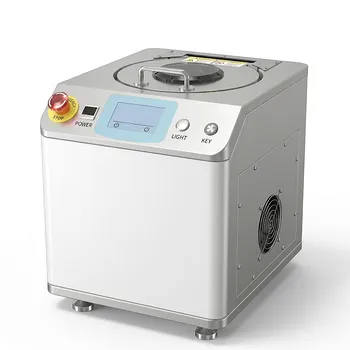
High Efficiency Vacuum Planetary Centrifugal Mixer and Defoaming Machine for Industrial Material Research and Precise Laboratory Powder Dispersion
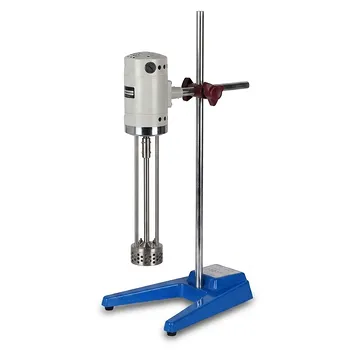
High Shear Laboratory Emulsifier for Mixing and Homogenization
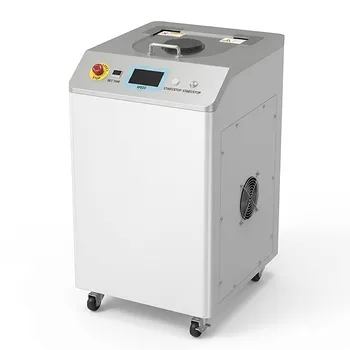
High Viscosity Planetary Centrifugal Vacuum Mixer for Material Defoaming and Uniform Mixing
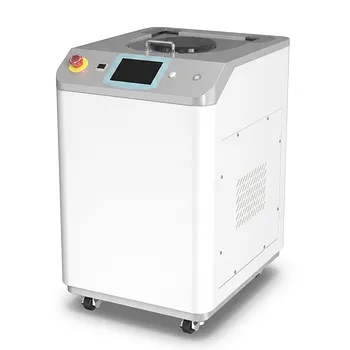
High Viscosity Planetary Centrifugal Mixing and Vacuum Defoaming Machine for Laboratory Material Preparation
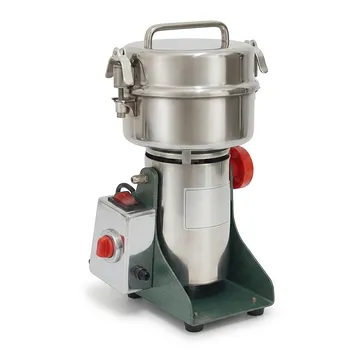
Small High Speed Grinder for Laboratory Sample Preparation
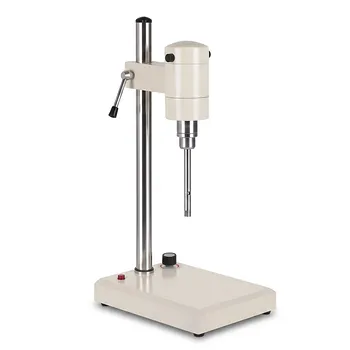
High Speed Dispersing Homogenizer for Laboratory Emulsification Dispersion and Cell Disruption
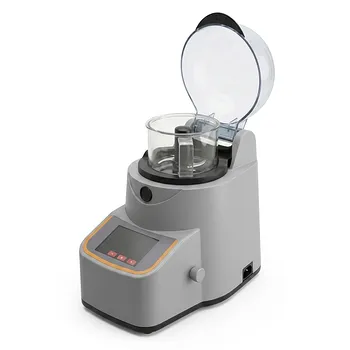
Industrial Knife Mill for Food and Biological Sample Preparation High Speed Laboratory Homogenizer
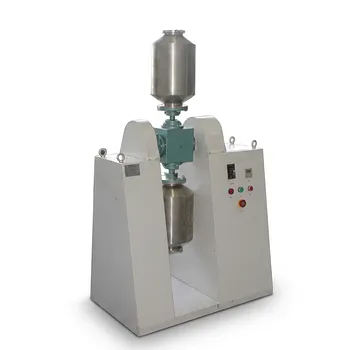
Multi Dimensional Universal Mixer for High Uniformity Powder Blending
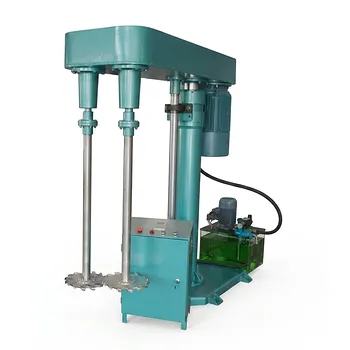
Hydraulic Double Shaft Disperser for High Viscosity Liquid Mixing and Dispersion