How does a planetary ball mill facilitate Sn nanowhisker growth from Ti2SnC? High-Energy Mechanochemical Synthesis Tips
Updated 5 months ago
The generation of tin (Sn) nanowhiskers via the mechanochemical decomposition of $Ti_2SnC$ is driven by the precise application of high-energy impact and shear forces. These forces selectively break the relatively weak Ti-Sn bonds within the $Ti_2SnC$ layered structure, releasing highly active Sn atoms. These atoms subsequently migrate and aggregate along chemical potential gradients to form the nuclei required for the spontaneous growth of nanowhiskers.
The planetary ball mill acts as a mechanical reactor that destabilizes the $Ti_2SnC$ lattice, converting mechanical energy into the chemical potential necessary for solid-state phase separation and Sn nucleation.
The Mechanics of Structural Decomposition
Breaking the Ti-Sn Bond
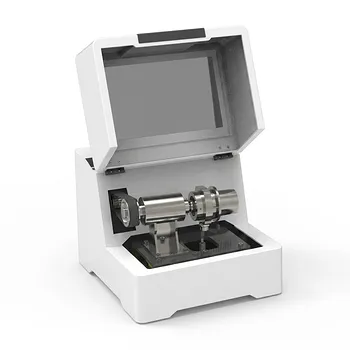
The $Ti_2SnC$ phase belongs to a class of layered ceramics where the bonds between the transition metal ($Ti$) and the A-group element ($Sn$) are significantly weaker than the covalent $Ti-C$ bonds. A planetary ball mill utilizes high-speed rotation and revolution to generate high-energy impact and shear forces that specifically target these weaker metallic-like bonds.
Mechanical Activation of Tin Atoms
As the milling balls collide with the material, the kinetic energy is transferred to the lattice, providing the mechanical activation needed to overcome the bond energy. This process releases Sn atoms from their fixed positions within the $Ti_2SnC$ structure, transforming them into a highly mobile and chemically active state.
Localized High-Energy Environments
The milling process creates localized zones of high temperature and high pressure at the points of impact. While the macroscopic temperature of the mill remains relatively low, these microscopic "hot spots" provide the energy required to drive the decomposition that would otherwise require much higher bulk thermal energy.
From Atomic Release to Nucleation
Migration Driven by Chemical Potential
Once released from the lattice, the Sn atoms are no longer in a stable equilibrium. They migrate through the deformed structure, driven by chemical potential gradients created by the mechanical stress and the inherent instability of the decomposed phase.
Formation of Precursor Nuclei
The migrating Sn atoms aggregate at specific sites, such as grain boundaries or structural defects, which are introduced in high density by the ball milling process. These aggregates form the initial nuclei that serve as the foundation for the subsequent spontaneous growth of Sn nanowhiskers.
Interfacial Hybridization and Mixing
The planetary ball mill ensures that any remaining components or additives are mixed at the microscopic or atomic scale. This uniform dispersion is critical for ensuring that the nucleation of Sn occurs consistently throughout the material matrix rather than in isolated clusters.
Understanding the Trade-offs
Mechanical Over-Processing
While high energy is required to initiate decomposition, excessive milling can lead to the amorphization of the material or the destruction of the newly formed Sn nuclei. Finding the balance between "activation" and "structural degradation" is the primary challenge in mechanochemical synthesis.
Potential for Contamination
The high-energy collisions between the balls and the vial walls can introduce impurities (such as iron or zirconia) into the powder. These contaminants can interfere with the chemical potential gradients and inhibit the clean growth of Sn nanowhiskers.
Thermal Management Issues
Even though the process is "mechanochemical," the friction generated can cause a rise in macroscopic temperature if not managed. Uncontrolled heat may lead to the melting or coarsening of the Sn atoms, preventing the formation of high-aspect-ratio nanowhiskers in favor of spherical particles.
Applying This to Your Synthesis Goals
Recommendations for Process Optimization
The success of Sn nanowhisker generation depends on tailoring the milling parameters to the specific stability of the $Ti_2SnC$ precursor.
- If your primary focus is maximizing nanowhisker yield: Increase the milling speed and the ball-to-powder ratio to ensure sufficient energy is available to break the Ti-Sn bonds throughout the entire sample.
- If your primary focus is controlling whisker morphology: Utilize intermittent milling cycles (pulse milling) to prevent excessive heat buildup, which preserves the structural defects necessary for directed Sn migration and nucleation.
- If your primary focus is high purity: Use milling media made of the same material as the target (if possible) or high-hardness ceramic vials to minimize the introduction of metallic contaminants that disrupt nucleation.
The planetary ball mill is the essential engine for converting the stable $Ti_2SnC$ ceramic into a dynamic precursor system for tin nanowhisker growth.
Summary Table:
| Key Mechanism | Action in Ti2SnC Decomposition | Effect on Sn Nanowhisker Growth |
|---|---|---|
| High-Energy Impact | Selectively breaks weak Ti-Sn bonds | Releases highly mobile, active Sn atoms |
| Mechanical Activation | Converts kinetic energy to chemical potential | Drives atomic migration across gradients |
| Localized Hot Spots | Creates micro-zones of high pressure/temp | Enables decomposition without bulk heating |
| Defect Generation | Introduces high-density grain boundaries | Provides necessary sites for Sn nucleation |
Elevate Your Material Research with Precision Powder Processing Solutions
At [Your Brand Name], we provide complete laboratory sample preparation solutions tailored for advanced material science. Whether your research focuses on the mechanochemical synthesis of nanowhiskers or the development of complex layered ceramics, our high-energy equipment provides the reliability and precision required for breakthrough results.
Our Specialized Equipment for Material Science:
- Advanced Milling: Planetary ball mills, jet mills, and liquid nitrogen cryogenic grinders for superior mechanical activation and particle size control.
- High-Performance Compaction: A full spectrum of hydraulic presses, including Cold/Warm Isostatic Presses (CIP/WIP), standard lab presses, and vacuum hot presses.
- Comprehensive Processing: Jaw/roll crushers, vibratory/air-jet sieve shakers, and specialized powder or defoaming mixers.
From breaking atomic bonds to final sample compaction, we specialize in powder processing and compaction equipment that drives innovation. Contact us today to discuss how our solutions can enhance your laboratory’s efficiency and synthesis outcomes.
References
- Zhenglin Zou, ZhengMing Sun. Engineering the Diameter of Sn Nanowhiskers Derived From MAX Phases via Liquid Media. DOI: 10.1002/metm.70016
Mentioned Products
- Vertical Semi Circular Planetary Ball Mill for Laboratory Precision Grinding
- High Energy Planetary Ball Mill for Nano Scale Grinding and Mechanical Alloying
- Vertical Production Planetary Ball Mill for High Throughput Powder Processing
- Heavy Duty Horizontal Planetary Ball Mill for Efficient Industrial Grinding and Sample Preparation
- 360° Rotating Omnidirectional Laboratory Planetary Ball Mill for Homogeneous Ultra-Fine Grinding and Mixing
People Also Ask
- What role does a planetary ball mill play in the synthesis of Li6PS5Cl (LPSCl)? Unlock High Ionic Conductivity
- Why is a planetary ball mill essential for SiBCN-rGO wet-spinning? Achieve Superior Dispersion and Spinnability
- Why is an intermittent grinding process required for perovskites in a planetary ball mill? Ensure Stability & Purity
- Why is a planetary ball mill required for PET micronization? Ensure Accurate Chemical Analysis of Reprocessed PET
- How does mechanized planetary ball milling compare to manual agate grinding? Optimize sulfide standard material precision.

Tech Team · PowderPreparation
Last updated on May 14, 2026
Related Products
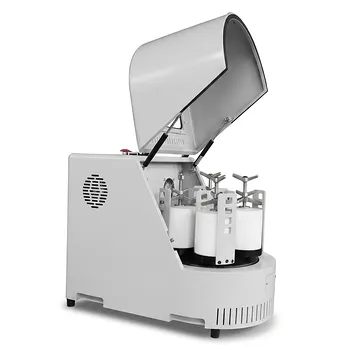
Vertical Semi Circular Planetary Ball Mill for Laboratory Precision Grinding
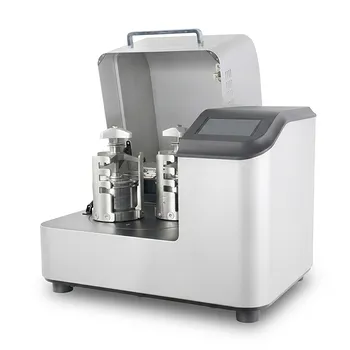
High Energy Planetary Ball Mill for Nano Scale Grinding and Mechanical Alloying
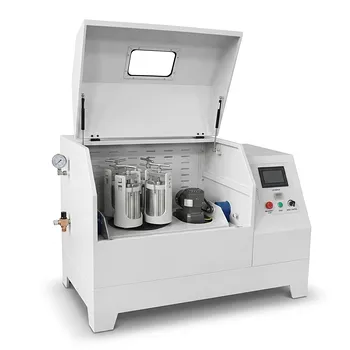
Vertical Production Planetary Ball Mill for High Throughput Powder Processing
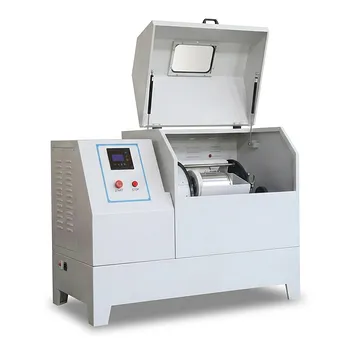
Heavy Duty Horizontal Planetary Ball Mill for Efficient Industrial Grinding and Sample Preparation
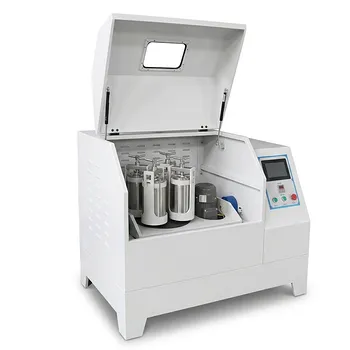
360° Rotating Omnidirectional Laboratory Planetary Ball Mill for Homogeneous Ultra-Fine Grinding and Mixing
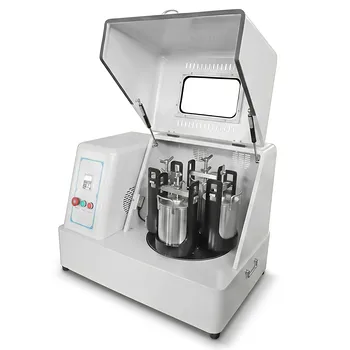
Vertical Square Planetary Ball Mill for Laboratory Sample Preparation and Nanoscale Grinding
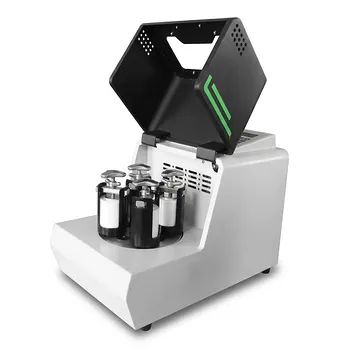
Miniature Planetary Ball Mill with Vacuum Grinding and High Efficiency for Laboratory Sample Preparation
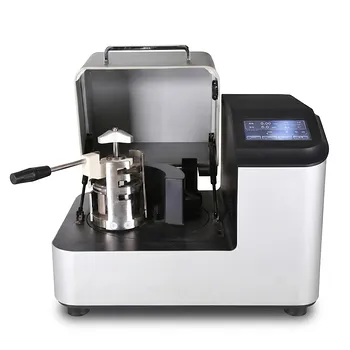
High Energy Laboratory Planetary Ball Mill for Nano Grinding and Material Science Sample Preparation
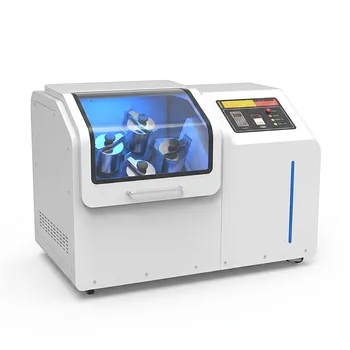
High Energy Omnidirectional Planetary Ball Mill 16L
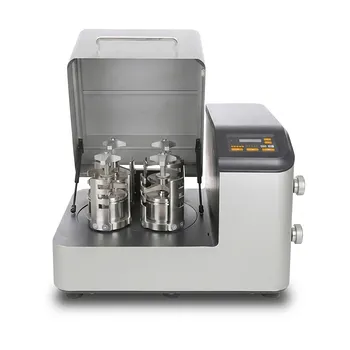
High Energy Planetary Ball Mill for Nano Scale Grinding and Colloidal Mixing in Material Science Research
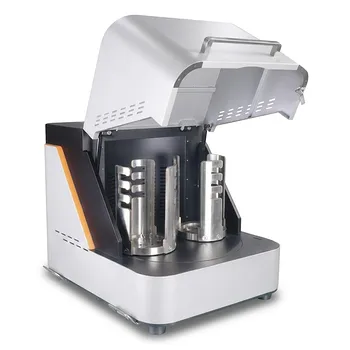
High Energy Laboratory Planetary Ball Mill for Nano Grinding and Colloidal Mixing of Hard and Brittle Materials
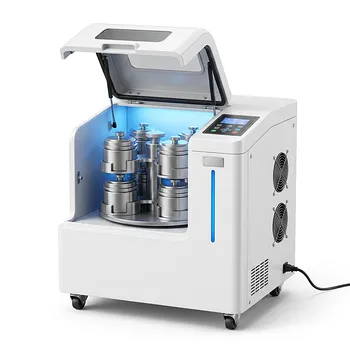
High Energy Omnidirectional Planetary Ball Mill 20L
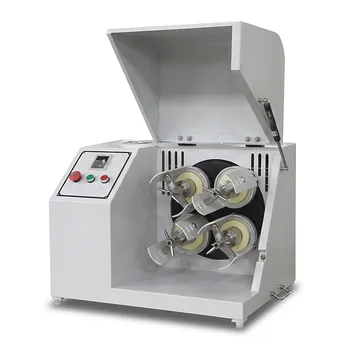
Horizontal Light Duty Planetary Ball Mill for Laboratory Sample Preparation

8L Planetary Ball Mill for Laboratory Grinding and Sample Preparation
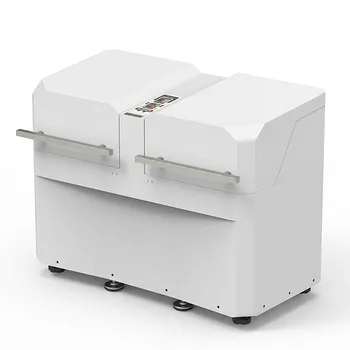
Dual Station Planetary Ball Mill 24L
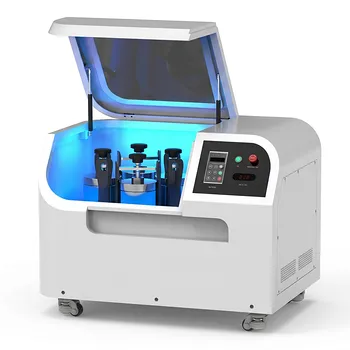
Planetary Ball Mill 12L

Nano High Energy Vibratory Ball Mill for Laboratory Sample Preparation

Multi-Platform Nanoscale High-Energy Vibratory Ball Mill

High Energy Hybrid Vibratory Ball Mill for Grinding Mixing and Cell Disruption