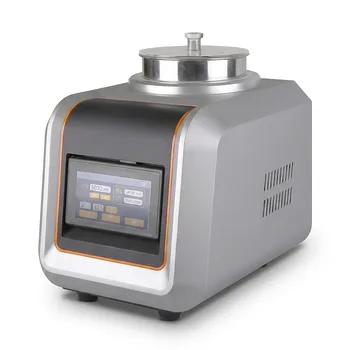
How does controlling the sieving time affect the accuracy of urea particle size analysis? Ensure Precision & Reliability
Updated 3 months ago
Controlling sieving time is the fundamental requirement for achieving accurate and reproducible urea particle size analysis. By standardizing the duration—typically at a fixed 10-minute interval—laboratories ensure that every sample is subjected to the same mechanical intensity. This consistency prevents measurement errors caused by incomplete particle separation or the physical breakdown of the urea crystals themselves.
Core Takeaway: Precise regulation of sieving time balances the "probability of passage" for particles through the mesh against the risk of material attrition. This standardization eliminates operational variables, ensuring that particle size distribution data is scientifically comparable across different production batches.
The Role of Standardization in Measurement
Ensuring Mechanical Consistency
Urea particles are subject to specific mechanical forces during the shaking process. Setting a fixed time ensures that the energy input remains constant for every test performed.
This consistency allows for the creation of stable particle size distribution curves. Without a standardized time, it is impossible to accurately evaluate whether changes in data reflect true production shifts or mere operational variance.
Eliminating Operational Measurement Errors
Manual or inconsistent timing introduces human error into the analytical process. By automating and strictly controlling the vibration duration, laboratories remove the subjectivity of the operator.
Standardized timing ensures that all particles have an optimal opportunity to contact the sieve apertures. This leads to cumulative retention data that is both reliable and reproducible across different testing environments.
The Risks of Improper Timing
Consequences of Insufficient Sieving Time
If the sieving duration is too short, the sample undergoes incomplete classification. Smaller particles that should pass through the mesh remain trapped on top because they lacked sufficient time to navigate the sieve openings.
This results in an "oversize" bias, where the urea appears coarser than it actually is. Such data can lead to incorrect adjustments in the production process, potentially compromising the quality of the final product.
The Impact of Excessive Sieving Time
Conversely, excessive sieving time can lead to particle attrition. The prolonged mechanical friction causes urea crystals to rub against each other and the sieve mesh, artificially creating excess fine powder.
In some cases, extremely fine particles may even undergo re-agglomeration due to high surface energy. This phenomenon can cause the apparent particle size to increase, leading to a "reverse" error that obscures the true distribution of the sample.
Understanding the Trade-offs
Balancing Throughness and Material Integrity
The primary trade-off in urea analysis is between separation thoroughness and particle degradation. While longer times increase the statistical probability that a particle will find an opening, they also increase the likelihood of physical damage to the urea.
Impact of Vibration Amplitude
Time cannot be viewed in isolation from vibration amplitude. A high amplitude (e.g., 50 mm) combined with a long duration can accelerate mesh clogging or particle breakage. Finding the "sweet spot" involves balancing these two parameters to ensure particles "jump" and "layer" correctly without being destroyed.
How to Apply This to Your Analysis
Making the Right Choice for Your Goal
To ensure your particle size analysis provides the most value, consider your primary objective when setting your sieving parameters:
- If your primary focus is Standardized Quality Control: Implement a strict, fixed 10-minute sieving duration to ensure all historical and current data remain comparable.
- If your primary focus is Minimizing Particle Damage: Conduct a "time-climb" study to identify the exact point where attrition begins to outweigh separation, and set your limit just below that threshold.
- If your primary focus is Eliminating Human Error: Use automated vibratory shakers with digital timers to ensure the mechanical intensity is identical for every operator.
Strictly regulated sieving time transforms a simple mechanical process into a precise analytical tool for consistent urea production.
Summary Table:
| Sieving Duration | Impact on Accuracy | Material Behavior | Resulting Data Bias |
|---|---|---|---|
| Optimal (Standardized) | High Accuracy | Particles find mesh apertures naturally | Reliable & reproducible PSD curve |
| Too Short | Low Accuracy | Incomplete classification/separation | "Oversize" bias (appears coarser) |
| Too Long | Low Accuracy | Particle attrition & crystal breakdown | "Fine" bias or re-agglomeration error |
| Inconsistent | Not Comparable | Variable mechanical energy input | Operational measurement errors |
Optimize Your Urea Analysis with Professional Laboratory Solutions
Precision in particle size analysis starts with the right equipment. Our Laboratory Solutions provide complete laboratory sample preparation for material science, specializing in high-performance powder processing and compaction equipment.
Whether you need to standardize your urea testing with advanced vibratory or air-jet sieve shakers, or require specialized crushers, cryogenic grinders, and planetary ball mills for sample preparation, our tools are engineered to eliminate operational variables and ensure repeatable results. We also offer a full spectrum of hydraulic presses, including Cold/Warm Isostatic Presses (CIP/WIP) and vacuum hot presses, to support your material research and production goals.
Contact our experts today to enhance your lab's accuracy and efficiency!
References
- Vasu Kumar, SA Kanade. Comparative study of particle size distribution in Commercial urea fertilizers from India. DOI: 10.33545/2618060x.2025.v8.i7sa.3189
Mentioned Products
- Vibratory Sieve Shaker Electromagnetic 3D Motion Powder Particle Size Analyzer for Dry and Wet Sieving
- Small Laboratory Vibrating Sieve Shaker for Precise Particle Size Analysis
- Stainless Steel Laboratory Vibratory Test Sieve Shaker
- Laboratory Vibratory Test Sieve Shaker for Precision Particle Size Analysis and Powder Grading
- Laboratory Dry and Wet Three Dimensional Vibratory Sieve Shaker for Particle Analysis
People Also Ask
- How does a vibratory sieve shaker contribute to optimizing the performance of activated carbon? Enhance Adsorption Precision
- Why is a laboratory vibratory sieve shaker necessary for processing magnesium-based borate precursor powders? Boost Activity
- Why use a vibratory sieve shaker to verify coarse aggregate grading in rubberized concrete? Ensure Structural Integrity
- What function do vibratory sieve shakers and standard test sieves serve in the preparation of adsorbents? Key Guide
- What role does a vibratory sieve shaker play in the particle size analysis of ground corn products? Enhance QC Precision

Tech Team · PowderPreparation
Last updated on Jun 03, 2026
Related Products
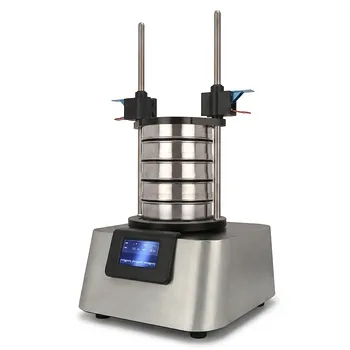
Vibratory Sieve Shaker Electromagnetic 3D Motion Powder Particle Size Analyzer for Dry and Wet Sieving
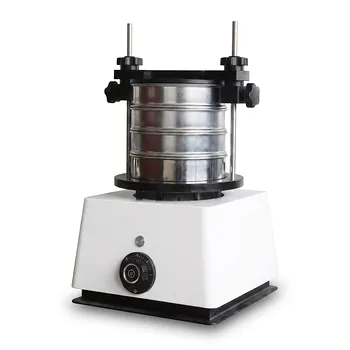
Small Laboratory Vibrating Sieve Shaker for Precise Particle Size Analysis
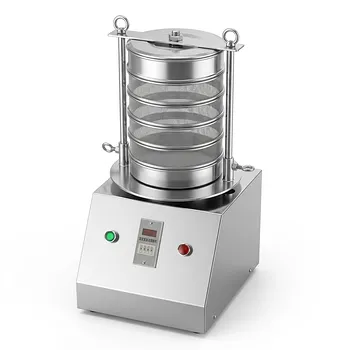
Stainless Steel Laboratory Vibratory Test Sieve Shaker
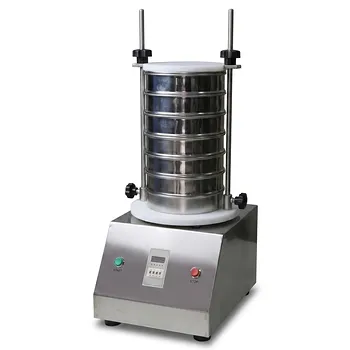
Laboratory Vibratory Test Sieve Shaker for Precision Particle Size Analysis and Powder Grading
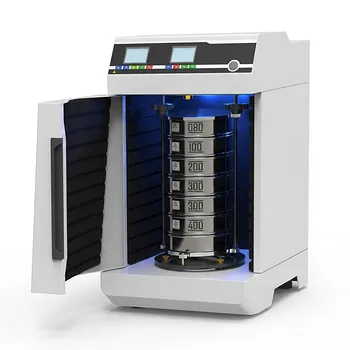
Laboratory Dry and Wet Three Dimensional Vibratory Sieve Shaker for Particle Analysis
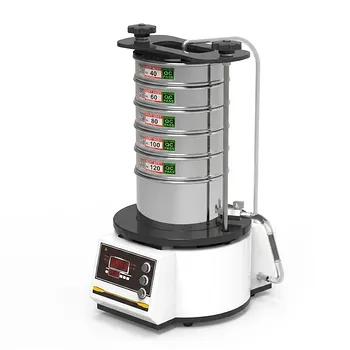
High Frequency Wet Three-Dimensional Vibrating Sieve Shaker for Dry and Wet Particle Size Analysis
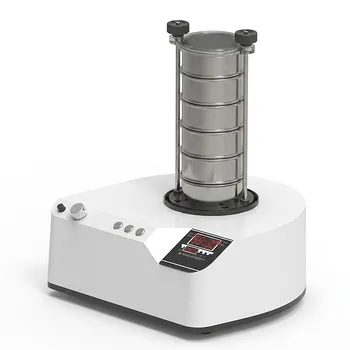
三维电磁微量振动筛分仪
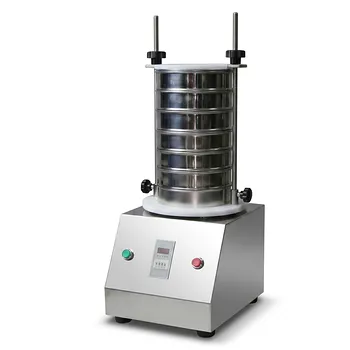
Small Laboratory Vibratory Sieve Shaker for Powder Gradation and Particle Size Analysis
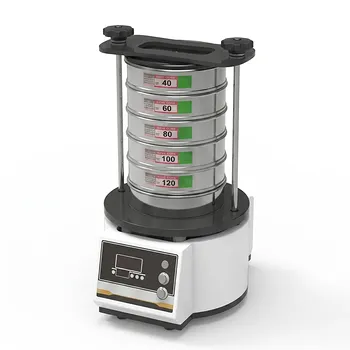
Dry Three Dimensional Vibratory Sieve Shaker
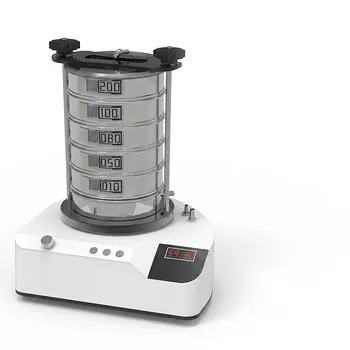
Heavy Duty Dry Three Dimensional Vibratory Sieve Shaker for Particle Separation
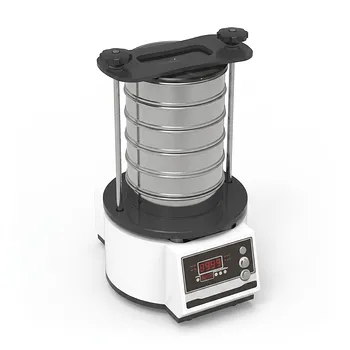
Tapping Oscillating Sieve Shaker for Dry and Wet Particle Size Analysis
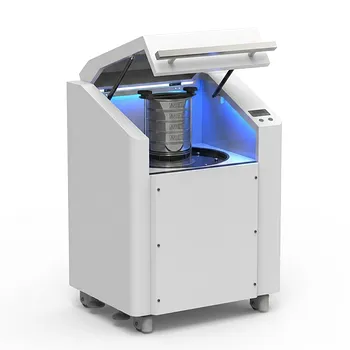
High Frequency Cabinet Type Three-Dimensional Rotary Vibrating Sieve Shaker for Dry Sieving and Particle Classification