How does a vibratory sieve shaker control Microcrystalline Cellulose particle size? Ensure Tablet Quality.
Updated 5 months ago
The vibratory sieve shaker is the cornerstone of particle size control in Microcrystalline Cellulose (MCC) processing.
By utilizing mechanical vibration in conjunction with a stack of standard test sieves, this equipment physically classifies MCC granules into precise size fractions (such as 25–75μm or 75–125μm). This standardized process allows researchers to calculate critical metrics—including mean particle size, distribution curves, and uniformity coefficients—which are essential for predicting how the MCC will perform during tablet compression and liquid absorption.
A vibratory sieve shaker transforms raw MCC powder into scientifically defined size fractions, enabling researchers to isolate the impact of particle size on critical performance metrics like tablet tensile strength, capillary absorption, and manufacturing flowability.
Mechanisms of Physical Classification
Mechanical Vibration and Sieve Stacking
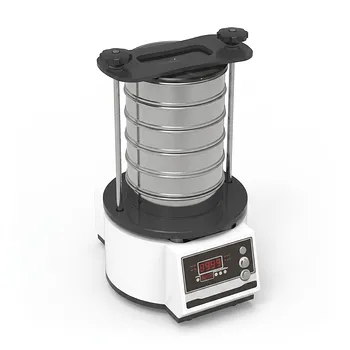
The shaker provides high-frequency mechanical vibration to drive MCC powder through a series of standard test sieves arranged in descending order of aperture size. This motion ensures that each granule has multiple opportunities to pass through the mesh, leading to a highly accurate separation based on physical dimensions.
Defining Precise Particle Fractions
This process separates raw powder into distinct grades (often referred to as G1, G2, or G3). By isolating these specific ranges, manufacturers can ensure the consistency of porous media for subsequent experiments, such as evaluating capillary absorption kinetics.
Quantitative Mass Distribution
As the shaker operates for a set duration and amplitude, the mass of the sample retained on each sieve is weighed. This data is used to generate frequency distribution curves and calculate the mass percentages required for rigorous quality control.
Enhancing Predictive Accuracy in Manufacturing
Impact on Tablet Tensile Strength
One of the primary contributions of the vibratory sieve shaker is allowing researchers to independently evaluate how specific granule sizes affect the tensile strength of a final tablet. By eliminating the experimental error caused by uneven size distribution, the shaker provides a clear view of the material's structural potential.
Predicting Flowability and Die Filling
The equipment is used to determine the uniformity coefficient and curvature coefficient of the MCC batch. These values are critical for predicting how the powder will flow through industrial hoppers and how effectively it will fill tablet dies during high-speed manufacturing.
Characterizing Packing Characteristics
Through the determination of D-values (D10, D50, D90), the shaker provides foundational data on how particles will pack together. This information is essential for predicting the fineness modulus and the overall density of the MCC powder when compressed.
Scientific Characterization and Quality Control
Evaluating Processing Effects
The vibratory sieve shaker serves as a core detection method for assessing how different drying processes or mechanical stresses affect the MCC. By measuring the "grinding degree" or the percentage of fine powder generated, engineers can optimize their production parameters.
Standardizing Experimental Samples
In specialized research, such as microplastic analysis or capillary wetting, the shaker ensures that samples are restricted within a scientifically defined range (e.g., 1 micrometer to 5 millimeters). This effectively removes non-compliant large fragments or extremely fine dust that could skew experimental results.
Understanding the Trade-offs and Limitations
Mechanical Stress and Particle Attrition
While vibration is necessary for separation, excessive amplitude or prolonged shaking durations can cause mechanical stress. This may lead to the attrition of fragile MCC granules, potentially resulting in a higher percentage of "fines" than were present in the original sample.
Sieve Blinding and Static Charges
Microcrystalline Cellulose is prone to developing static charges, which can cause fine particles to adhere to the mesh or each other. This "blinding" of the sieve apertures can lead to inaccurate weight measurements and an overestimation of the average particle size.
Sample Volume Constraints
Overloading a sieve stack can impede the movement of particles, preventing them from reaching the mesh surface. To maintain accuracy, the sample mass must be carefully calibrated to the surface area of the test sieves being used.
How to Optimize Your MCC Size Analysis
Making the Right Choice for Your Goal
- If your primary focus is tablet structural integrity: Utilize the shaker to isolate G1, G2, and G3 fractions to perform independent tensile strength testing on each grade.
- If your primary focus is production efficiency: Prioritize the calculation of the uniformity coefficient and D50 values to ensure consistent flowability and die filling.
- If your primary focus is material characterization: Use frequency distribution curves to monitor how changes in the drying or grinding process impact the fineness modulus of the powder.
Mastery of the vibratory sieve shaker ensures that MCC granules meet the rigorous physical standards required for high-performance pharmaceutical manufacturing and scientific research.
Summary Table:
| Process Step | Key Mechanism | Benefit for MCC |
|---|---|---|
| Physical Classification | High-frequency mechanical vibration | Precise isolation of 25–125μm size fractions. |
| Quality Control | Frequency distribution & D-values | Predicts powder flow and die-filling efficiency. |
| Performance Testing | Mass distribution measurement | Optimizes tablet tensile strength and absorption. |
| Process Evaluation | Sieve stacking & mass retention | Monitors drying effects and prevents fine dust issues. |
Precision in particle size analysis is essential for high-performance pharmaceutical and material science research. We provide complete laboratory sample preparation solutions to help you achieve the perfect powder consistency for every application.
Our extensive product lines include specialized vibratory and air-jet sieve shakers with various test sieves, as well as high-efficiency crushers (jaw/roll), mills (planetary ball, jet, rotor), and powder mixers. To support your final forming needs, we manufacture a full spectrum of hydraulic presses, including Cold/Warm Isostatic Presses (CIP/WIP), hot presses, and vacuum hot presses.
Ready to enhance your lab's efficiency and ensure the integrity of your material processing? Contact us today to discover how our specialized powder processing and compaction equipment can empower your research and production.
References
- Sarsvatkumar Patel, Arvind K. Bansal. Understanding Size Enlargement and Hardening of Granules on Tabletability of Unlubricated Granules Prepared by Dry Granulation. DOI: 10.1002/jps.22315
Mentioned Products
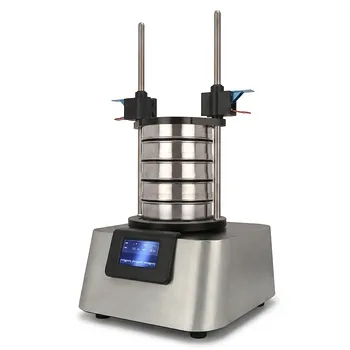
- Vibratory Sieve Shaker Electromagnetic 3D Motion Powder Particle Size Analyzer for Dry and Wet Sieving
- 三维电磁微量振动筛分仪
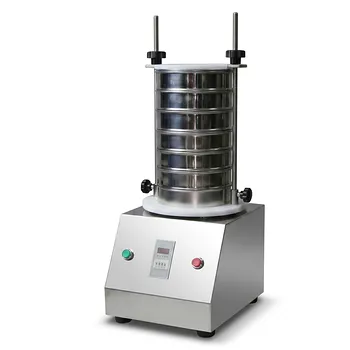
- Small Laboratory Vibratory Sieve Shaker for Powder Gradation and Particle Size Analysis
- Stainless Steel Laboratory Vibratory Test Sieve Shaker
- Laboratory Vibratory Test Sieve Shaker for Precision Particle Size Analysis and Powder Grading
People Also Ask
- How does a vibratory sieve shaker contribute to optimizing the performance of activated carbon? Enhance Adsorption Precision
- Why is a laboratory vibratory sieve shaker necessary for processing magnesium-based borate precursor powders? Boost Activity
- Why use a vibratory sieve shaker to verify coarse aggregate grading in rubberized concrete? Ensure Structural Integrity
- What function do vibratory sieve shakers and standard test sieves serve in the preparation of adsorbents? Key Guide
- What role does a vibratory sieve shaker play in the particle size analysis of ground corn products? Enhance QC Precision

Tech Team · PowderPreparation
Last updated on May 14, 2026
Related Products
Vibratory Sieve Shaker Electromagnetic 3D Motion Powder Particle Size Analyzer for Dry and Wet Sieving
三维电磁微量振动筛分仪
Small Laboratory Vibratory Sieve Shaker for Powder Gradation and Particle Size Analysis
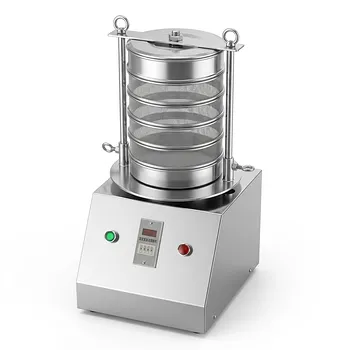
Stainless Steel Laboratory Vibratory Test Sieve Shaker
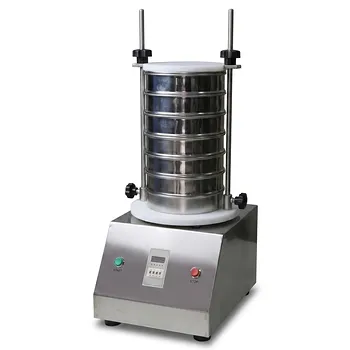
Laboratory Vibratory Test Sieve Shaker for Precision Particle Size Analysis and Powder Grading
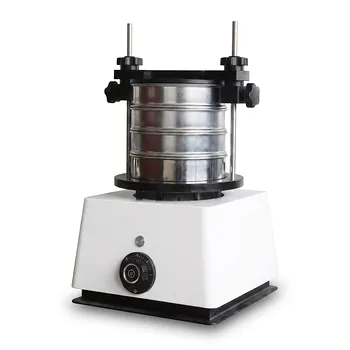
Small Laboratory Vibrating Sieve Shaker for Precise Particle Size Analysis
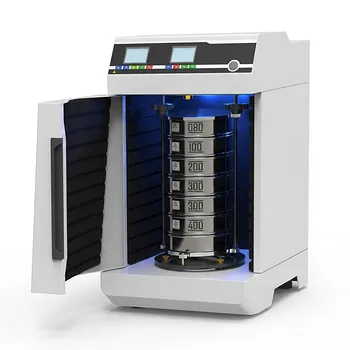
Laboratory Dry and Wet Three Dimensional Vibratory Sieve Shaker for Particle Analysis
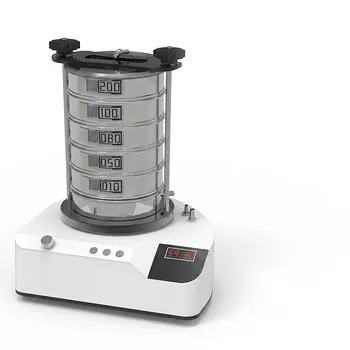
Heavy Duty Dry Three Dimensional Vibratory Sieve Shaker for Particle Separation
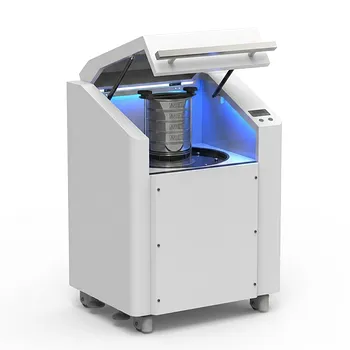
High Frequency Cabinet Type Three-Dimensional Rotary Vibrating Sieve Shaker for Dry Sieving and Particle Classification
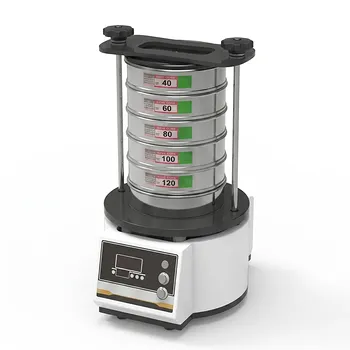
Dry Three Dimensional Vibratory Sieve Shaker
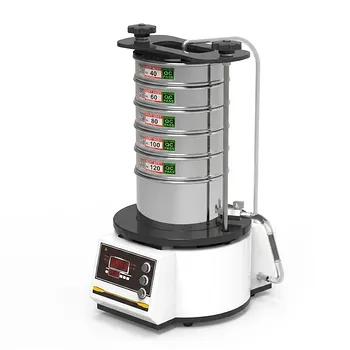
High Frequency Wet Three-Dimensional Vibrating Sieve Shaker for Dry and Wet Particle Size Analysis
Tapping Oscillating Sieve Shaker for Dry and Wet Particle Size Analysis
Three Dimensional Rotary Vibrating Sieve
Stainless Steel Rotary Vibrating Sieve High Precision Circular Vibratory Separator Industrial Powder Grading Machine Multi Layer Sifting Equipment
High Energy Hybrid Vibratory Ball Mill for Grinding Mixing and Cell Disruption
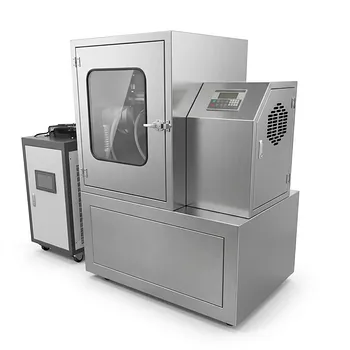
Vibratory Superfine Grinder for Ultra Fine Laboratory Powder Milling
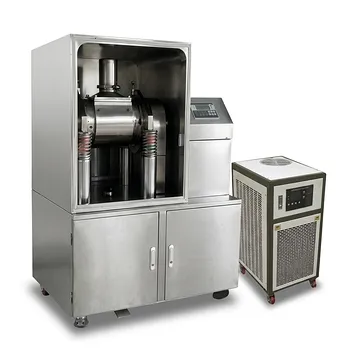
Small Vibrating Ultrafine Grinder for Traditional Chinese Medicine
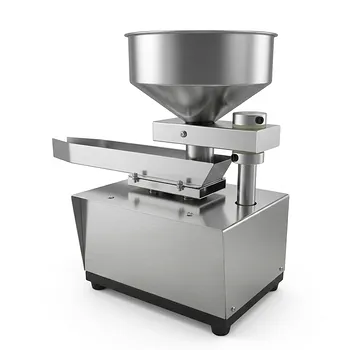
Automatic Vibrating Powder Feeder for Laboratory Material Processing Precision Vibratory Hopper Feeder for Granular and Powder Material Handling Industrial Grade Vibrating Tray Feeder for Consistent Material Sample Preparation
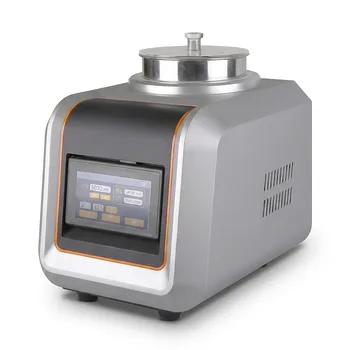
Laboratory Air Jet Sieving Machine for Fine Powder Particle Size Analysis and Deagglomeration