How does a planetary ball mill contribute to processing waste eggshells into biological fillers? Precision Refinement
Updated 4 months ago
A planetary ball mill acts as the primary mechanical catalyst for transforming waste eggshells into high-performance biological fillers by utilizing high-energy impact and shear forces to achieve extreme particle refinement. By reducing coarse eggshells to micron or sub-micron scales, the equipment significantly increases the specific surface area, ensuring the resulting powder can be uniformly dispersed and chemically reactive within various polymer or metal matrices.
A planetary ball mill converts brittle eggshell waste into functional biological filler by mechanically optimizing particle size and surface morphology. This process is essential for improving the interfacial bonding and reinforcement properties required for industrial-grade composite materials.
Mechanisms of Particle Refinement
High-Energy Impact and Shear Forces
The core function of a planetary ball mill is the generation of intense centrifugal and impact forces through high-speed rotation. As the grinding jars move in a planetary motion, the grinding media (balls) collide with the coarse eggshell particles with immense energy. This mechanical action breaks down the cellular structure of the eggshells, transitioning them from waste fragments into a fine, workable powder.
Achieving Precision Particle Size
Through the adjustment of rotational speeds—often reaching 800 rpm or higher—and extended milling durations, the equipment can achieve specific fineness levels. While standard processing might target 75 micrometers, specialized applications can push the refinement down to 45 micrometers or even the nanoscale (less than 100 nm). This precision allows manufacturers to tailor the filler size to the specific requirements of the host matrix, such as unsaturated polyester or epoxy resins.
Enhancing Material Performance and Reactivity
Increasing Specific Surface Area
Reducing the particle size exponentially increases the specific surface area of the eggshell powder. A higher surface area provides more contact points for interfacial bonding between the biological filler and the matrix. This is a critical factor in ensuring the filler actually reinforces the material rather than acting as a point of structural weakness.
Facilitating Chemical Transformations
For applications requiring further processing, such as the synthesis of hydroxyapatite, the fine powder produced by the mill is essential. The increased surface area and particle uniformity facilitate the complete decomposition of calcium carbonate (CaCO3) into calcium oxide (CaO) during calcination. This ensures that the precursor material is highly reactive and capable of forming stable chemical bonds during subsequent composite formation.
Improving Dispersion and Reinforcement
Fine particles produced by planetary milling are less likely to aggregate, leading to uniform dispersion throughout a matrix like Nitrile Butadiene Rubber (NBR) or aluminum alloys. This uniformity is vital for achieving consistent mechanical properties across the entire composite material. Without this level of refinement, coarse particles would create stress concentrations that compromise the integrity of the final product.
Understanding the Trade-offs and Limitations
Heat Generation and Material Sensitivity
The high-energy nature of planetary milling generates significant frictional heat during long processing cycles. If not managed through cooling breaks or specialized jars, this heat can potentially alter the organic components remaining in the eggshell or cause unwanted phase changes. Operators must balance the desire for smaller particles with the risk of thermal degradation of the biological material.
Energy Consumption and Scalability
While highly effective for producing premium, ultra-fine fillers, planetary ball mills are energy-intensive compared to standard crushing methods. The cost of energy and the wear on grinding media represent significant operational overhead. For low-value applications, the cost of achieving sub-micron fineness may outweigh the performance benefits gained from the filler.
How to Apply This to Your Project
Selecting the Right Milling Parameters
- If your primary focus is basic structural reinforcement: Aim for a particle size of 75 micrometers using moderate speeds to minimize energy costs while ensuring adequate dispersion.
- If your primary focus is chemical reactivity or calcination: Utilize high speeds (800+ rpm) and longer durations to achieve particles below 45 micrometers, maximizing the surface area for thermal processing.
- If your primary focus is high-performance nano-composites: Extend milling times significantly to reach sub-100 nm scales, ensuring the highest possible interfacial bonding with the polymer matrix.
By masterfully controlling the mechanical energy of a planetary ball mill, researchers and manufacturers can effectively upcycle agricultural waste into a high-value, functional component for advanced material science.
Summary Table:
| Feature | Impact on Eggshell Processing |
|---|---|
| Primary Mechanism | High-energy impact and shear forces via planetary motion |
| Particle Size Range | Precision refinement from 75μm down to sub-100nm |
| Material Benefit | Increased specific surface area for superior interfacial bonding |
| Chemical Advantage | Faster calcination and complete CaCO3 to CaO transformation |
| Final Application | Uniform dispersion in polymer, rubber, or metal matrices |
Elevate Your Material Research with Expert Sample Preparation
Transforming waste into high-value biological fillers requires precision and reliability. At [Company Name], we provide complete laboratory sample preparation solutions for material science, specializing in high-performance powder processing and compaction equipment.
Whether you need to refine eggshells to the nanoscale or produce high-density pellets, our extensive product line has you covered:
- Advanced Milling: Planetary ball mills, jet mills, and cryogenic grinders for extreme refinement.
- Size Reduction: Durable jaw and roll crushers for initial processing.
- Compaction Excellence: A full spectrum of hydraulic presses, including Cold/Warm Isostatic Presses (CIP/WIP), vacuum hot presses, and XRF pellet presses.
- Post-Processing: Vibratory sieve shakers, powder mixers, and defoaming mixers for consistent results.
Ready to optimize your workflow? Our specialists are here to help you select the ideal equipment for your specific material challenges.
Contact Us Today to Request a Quote
References
- Ruben Bayu Kristiawan, Esa Nur Shohih. Mechanical Properties of Unsaturated Polyester Composites Reinforced with Eggshell-Derived CaCO₃ Bio-filler as a Sustainable Material. DOI: 10.20961/mekanika.v24i2.104039
Mentioned Products
- Vertical Semi Circular Planetary Ball Mill for Laboratory Precision Grinding
- High Energy Planetary Ball Mill for Nano Scale Grinding and Mechanical Alloying
- Heavy Duty Horizontal Planetary Ball Mill for Efficient Industrial Grinding and Sample Preparation
- Vertical Production Planetary Ball Mill for High Throughput Powder Processing
- 360° Rotating Omnidirectional Laboratory Planetary Ball Mill for Homogeneous Ultra-Fine Grinding and Mixing
People Also Ask
- What role does a planetary ball mill play in the synthesis of Li6PS5Cl (LPSCl)? Unlock High Ionic Conductivity
- Why is a planetary ball mill essential for SiBCN-rGO wet-spinning? Achieve Superior Dispersion and Spinnability
- Why is an intermittent grinding process required for perovskites in a planetary ball mill? Ensure Stability & Purity
- Why is a planetary ball mill required for PET micronization? Ensure Accurate Chemical Analysis of Reprocessed PET
- How does mechanized planetary ball milling compare to manual agate grinding? Optimize sulfide standard material precision.

Tech Team · PowderPreparation
Last updated on Jun 03, 2026
Related Products

Vertical Semi Circular Planetary Ball Mill for Laboratory Precision Grinding

High Energy Planetary Ball Mill for Nano Scale Grinding and Mechanical Alloying

Heavy Duty Horizontal Planetary Ball Mill for Efficient Industrial Grinding and Sample Preparation

Vertical Production Planetary Ball Mill for High Throughput Powder Processing

360° Rotating Omnidirectional Laboratory Planetary Ball Mill for Homogeneous Ultra-Fine Grinding and Mixing

Vertical Square Planetary Ball Mill for Laboratory Sample Preparation and Nanoscale Grinding

Miniature Planetary Ball Mill with Vacuum Grinding and High Efficiency for Laboratory Sample Preparation

High Energy Omnidirectional Planetary Ball Mill 16L

High Energy Laboratory Planetary Ball Mill for Nano Grinding and Material Science Sample Preparation

High Energy Planetary Ball Mill for Nano Scale Grinding and Colloidal Mixing in Material Science Research
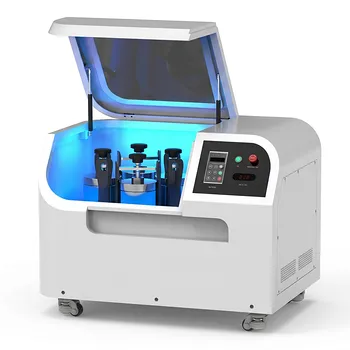
Planetary Ball Mill 12L
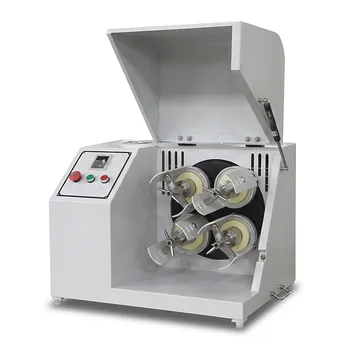
Horizontal Light Duty Planetary Ball Mill for Laboratory Sample Preparation

High Energy Omnidirectional Planetary Ball Mill 20L

High Energy Laboratory Planetary Ball Mill for Nano Grinding and Colloidal Mixing of Hard and Brittle Materials

8L Planetary Ball Mill for Laboratory Grinding and Sample Preparation

Dual Station Planetary Ball Mill 24L

Multi-Platform Nanoscale High-Energy Vibratory Ball Mill

Nano High Energy Vibratory Ball Mill for Laboratory Sample Preparation
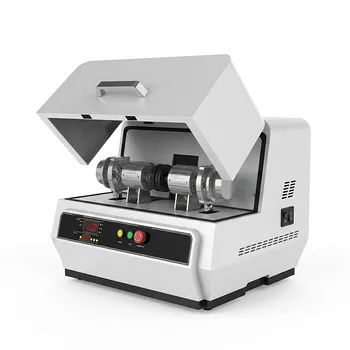
Dual Jar High Energy Vibratory Ball Mill