How does a continuous water injection system in a mechanical wet sieving apparatus impact sieving efficiency? High Precision
Updated 3 months ago
Continuous water injection transforms mechanical wet sieving by combining constant hydrodynamic flushing with mechanical vibration to keep sieve apertures clear. This dual-force approach prevents "blinding"—where particles of a size similar to the mesh clog the openings—allowing for high-precision classification in a significantly shorter duration.
The integration of a spray system ensures that mesh openings remain unobstructed throughout the process. By eliminating clogs in real-time, the system achieves a level of accuracy and speed that dry or static wet methods cannot match, particularly with complex mineral compositions.
The Synergy of Mechanical and Hydrodynamic Forces
Constant Aperture Cleaning
The continuous flow of water acts as a dynamic cleaning agent that works in tandem with the machine's vibration. While vibration moves the material across the mesh, the water pressure forces stuck particles out of the openings.
This interaction ensures that the effective open area of the sieve remains at its maximum throughout the entire cycle.
Accelerated Particle Migration
Water acts as a transport medium, reducing friction between particles and the mesh surface. This allows fine particles to be "washed" through the apertures much faster than they would fall by gravity or vibration alone.
The result is a substantial reduction in the time required to reach a complete separation of the sample.
Impact on Complex Mineral Compositions
Managing Near-Size Particles
In standard sieving, particles that are nearly the same size as the mesh opening often become wedged, halting the process. The continuous injection system provides the kinetic energy necessary to dislodge these particles or push them through.
This capability is critical for maintaining high-precision results when working with materials that have a wide range of grain sizes.
Dispersion of Fine Aggregates
Complex minerals often contain clays or fine particles that tend to clump together or adhere to larger stones. The constant spray of water breaks these bonds, ensuring that individual grains are classified according to their actual size rather than their aggregate size.
This dispersion is essential for accurate geological and mineralogical analysis.
Understanding the Trade-offs
Management of Wastewater and Slurry
While efficiency is gained in the separation phase, the use of continuous water injection creates a large volume of slurry. Users must have a system in place for dewatering the samples and managing the effluent.
This adds a secondary processing step that is not required in dry sieving applications.
Equipment Maintenance and Wear
The combination of abrasive mineral particles and high-velocity water can increase the rate of wear on the sieve mesh. Regular calibration and inspection are necessary to ensure that the apertures have not expanded beyond their specified tolerances.
Additionally, the apparatus must be constructed from corrosion-resistant materials to withstand constant moisture exposure.
Applying This Technology to Your Workflow
Choosing to use a continuous water injection system should be based on your specific material properties and the required precision of your data.
- If your primary focus is Maximum Precision: Continuous water injection is the superior choice as it prevents mesh blinding and ensures every particle has the opportunity to pass the sieve.
- If your primary focus is Reduced Processing Time: This system is highly effective, as the hydrodynamic flushing significantly accelerates the passage of fines compared to dry mechanical shaking.
- If your primary focus is Minimal Sample Preparation: You should consider the added complexity of drying the sample after sieving, which may offset the time saved during the sieving process itself.
By integrating hydrodynamic flushing into your mechanical sieving process, you ensure a cleaner, faster, and more accurate classification of complex materials.
Summary Table:
| Impact Factor | Mechanism | Benefit for Sieving Efficiency |
|---|---|---|
| Aperture Cleaning | Real-time water spray | Eliminates mesh blinding/clogging by dislodging near-size particles. |
| Particle Migration | Hydrodynamic transport | Reduces friction and washes fines through apertures faster than gravity. |
| Aggregate Control | Particle dispersion | Breaks bonds in clays/aggregates to ensure accurate individual grain sizing. |
| Processing Speed | Dual-force action | Combines vibration with water pressure to drastically reduce cycle time. |
Transform Your Material Research with Expert Sample Prep Solutions
Achieving precise results starts with superior preparation. At [Brand Name], we specialize in providing complete laboratory sample preparation solutions for material science, focusing on high-performance powder processing and compaction equipment.
Our extensive range includes:
- Sieve Shakers: Vibratory and air-jet models equipped with precise test sieves and meshes.
- Crushing & Grinding: Jaw/roll crushers, liquid nitrogen cryogenic grinders, and advanced mills (planetary ball, jet, sand/bead, disc, rotor).
- Mixing & Dispersion: High-efficiency powder mixers and defoaming mixers.
- Compaction Equipment: A full spectrum of hydraulic presses, including Cold/Warm Isostatic Presses (CIP/WIP), XRF pellet presses, and vacuum hot presses.
Let us help you optimize your workflow with equipment designed for durability and maximum precision. Contact our technical experts today to discuss your specific requirements and receive a tailored solution!
References
- Sushanta Kumar Pradhan, Sudip Sundar Das. Comparison of Sieving Techniques in Size Distribution and Estimation of Particle Size of a Bulk Sample. DOI: 10.37398/jsr.2023.670401
Mentioned Products
- Vibratory Sieve Shaker Electromagnetic 3D Motion Powder Particle Size Analyzer for Dry and Wet Sieving
- High Frequency Wet Three-Dimensional Vibrating Sieve Shaker for Dry and Wet Particle Size Analysis
- Tapping Oscillating Sieve Shaker for Dry and Wet Particle Size Analysis
- Laboratory Dry and Wet Three Dimensional Vibratory Sieve Shaker for Particle Analysis
- Laboratory Air Jet Sieving Machine for Fine Powder Particle Size Analysis and Deagglomeration
People Also Ask
- How does a vibratory sieve shaker contribute to optimizing the performance of activated carbon? Enhance Adsorption Precision
- Why is a laboratory vibratory sieve shaker necessary for processing magnesium-based borate precursor powders? Boost Activity
- Why use a vibratory sieve shaker to verify coarse aggregate grading in rubberized concrete? Ensure Structural Integrity
- What function do vibratory sieve shakers and standard test sieves serve in the preparation of adsorbents? Key Guide
- What role does a vibratory sieve shaker play in the particle size analysis of ground corn products? Enhance QC Precision

Tech Team · PowderPreparation
Last updated on Jun 03, 2026
Related Products
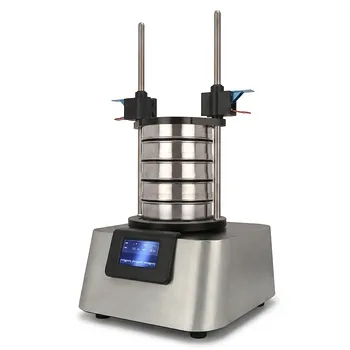
Vibratory Sieve Shaker Electromagnetic 3D Motion Powder Particle Size Analyzer for Dry and Wet Sieving
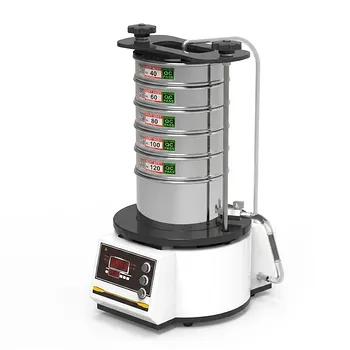
High Frequency Wet Three-Dimensional Vibrating Sieve Shaker for Dry and Wet Particle Size Analysis
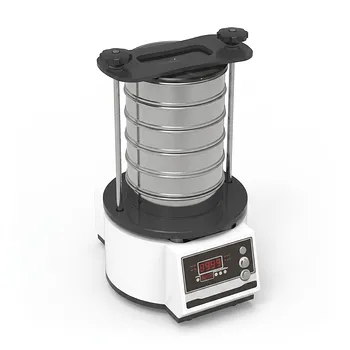
Tapping Oscillating Sieve Shaker for Dry and Wet Particle Size Analysis
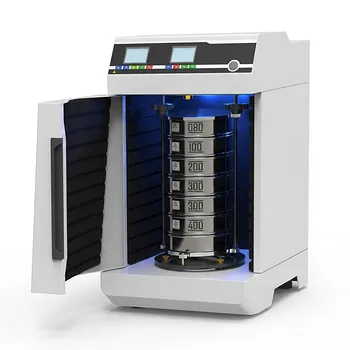
Laboratory Dry and Wet Three Dimensional Vibratory Sieve Shaker for Particle Analysis
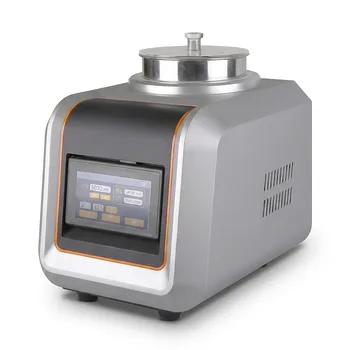
Laboratory Air Jet Sieving Machine for Fine Powder Particle Size Analysis and Deagglomeration

Dry Three Dimensional Vibratory Sieve Shaker
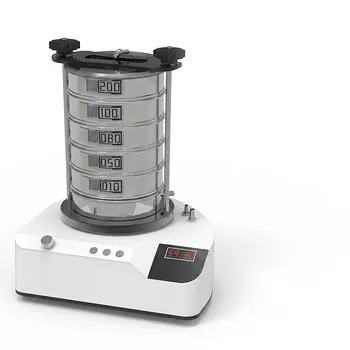
Heavy Duty Dry Three Dimensional Vibratory Sieve Shaker for Particle Separation
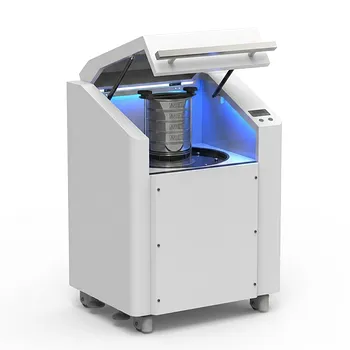
High Frequency Cabinet Type Three-Dimensional Rotary Vibrating Sieve Shaker for Dry Sieving and Particle Classification

Laboratory Vibratory Test Sieve Shaker for Precision Particle Size Analysis and Powder Grading
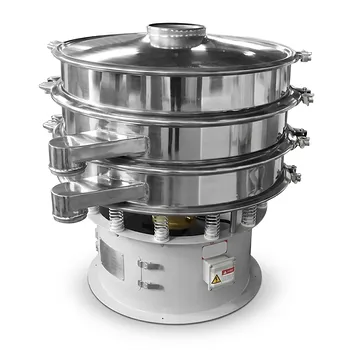
Three Dimensional Rotary Vibrating Sieve

Small Laboratory Vibrating Sieve Shaker for Precise Particle Size Analysis
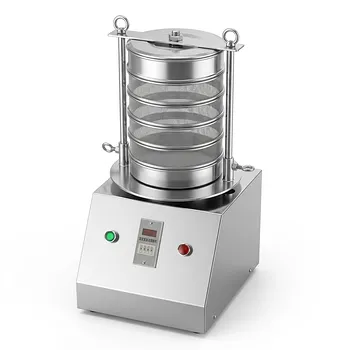
Stainless Steel Laboratory Vibratory Test Sieve Shaker

Small Laboratory Vibratory Sieve Shaker for Powder Gradation and Particle Size Analysis
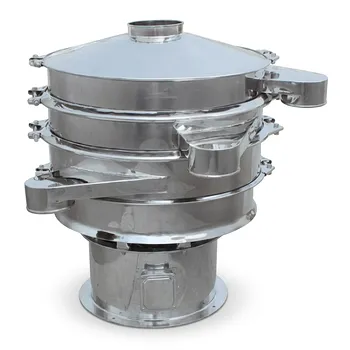
Stainless Steel Rotary Vibrating Sieve High Precision Circular Vibratory Separator Industrial Powder Grading Machine Multi Layer Sifting Equipment
Laboratory Small Horizontal Sand Mill for Nano Materials Wet Grinding
Small Laboratory Oscillating Granulator for Wet and Dry Granulation Processing
三维电磁微量振动筛分仪
Industrial Swing Granulator for Powder Processing in Pharma Food and Chemical Industries
Water Cooled Pulse Jet Ultra Fine Pulverizer for Continuous Grinding