How does a ball mill contribute to the primary crushing and reduction of coarse ferrovanadium residue? Optimize Recovery
Updated 4 months ago
The primary function of a ball mill in ferrovanadium processing is to apply high-energy impact and shear forces to reduce coarse residue into a manageable powder. By utilizing a specific ball-to-material ratio, the mill breaks down the physical structure of dried residue until 80% of the material passes through a 75 μm standard sieve (d80). This size reduction is the critical precursor required for subsequent ultrafine pulverization and the effective liberation of valuable metals.
A ball mill acts as the essential bridge between raw residue and fine-grade processing. It converts coarse ferrovanadium waste into a standardized d80 75 μm particle size, ensuring that iron, vanadium, and titanium can be efficiently liberated in downstream stages.
The Mechanics of Coarse Particle Reduction
The Role of Impact and Shear Forces
The ball mill operates by rotating a cylinder filled with grinding media (balls) and the ferrovanadium residue. As the cylinder turns, the media is lifted and dropped, creating impact forces that shatter large particles.
Simultaneously, the movement of the balls sliding against each other creates shear forces. These combined actions are necessary to overcome the inherent structural integrity of coarse ferrovanadium waste.
Optimizing the 1:4 Ball-to-Material Ratio
Efficiency in the ball mill is largely dictated by the ball-to-material ratio, which is typically maintained at 1:4. This specific balance ensures there is enough grinding media to provide consistent contact points without over-filling the mill.
Maintaining this ratio prevents the "cushioning effect," where too much material dampens the impact of the balls. It also protects the mill lining from excessive wear that occurs when the ball-to-material ratio is too high.
Strategic Importance of the 75 μm Benchmark
Preparing for Ultrafine Pulverization
The ball mill is not designed to reach the final particle size alone; it serves as the foundation for the ultrafine pulverizer. By reaching a d80 of 75 μm, the material is sufficiently "pre-conditioned" for high-speed air or mechanical pulverization.
Without this primary reduction stage, the ultrafine pulverizer would face excessive mechanical stress. This would lead to frequent equipment failure and inconsistent final product quality.
Maximizing Metal Liberation
The ultimate goal of grinding ferrovanadium residue is the liberation of iron, vanadium, and titanium. These metals are often locked within a complex mineral matrix that must be physically broken apart.
Reducing the material to 75 μm significantly increases the surface area and exposes these metallic components. This exposure is vital for any subsequent chemical leaching or physical separation processes used to recover the metals.
Understanding the Trade-offs
Energy Consumption vs. Particle Size
While reaching a finer particle size generally improves metal liberation, it follows the law of diminishing returns. The energy required to grind material becomes exponentially higher as you move past the 75 μm threshold in a standard ball mill.
Risk of Over-Grinding
Over-grinding can create "slimes" or ultra-fine particles that are difficult to manage in downstream recovery circuits. A ball mill must be carefully monitored to ensure it hits the d80 target without producing an excess of material that is too fine to be processed efficiently.
Strategic Implementation for Residue Recovery
How to Apply This to Your Project
To achieve the best results in ferrovanadium residue processing, your approach should vary based on your specific operational priorities:
- If your primary focus is Maximum Metal Recovery: Prioritize achieving a strict d80 of 75 μm to ensure that iron, vanadium, and titanium are fully exposed for downstream liberation.
- If your primary focus is Operational Longevity: Focus on maintaining the 1:4 ball-to-material ratio to minimize wear and tear on the mill liners and grinding media.
- If your primary focus is Throughput Speed: Use the ball mill strictly for primary reduction and rely on the ultrafine pulverizer for final sizing to avoid bottlenecks in the grinding circuit.
A properly calibrated ball mill is the indispensable first step in transforming coarse ferrovanadium residue into a high-value source of industrial metals.
Summary Table:
| Parameter | Target Specification | Strategic Benefit |
|---|---|---|
| Particle Size | d80 ≤ 75 μm | Essential precursor for ultrafine pulverization |
| Grinding Ratio | 1:4 Ball-to-Material | Prevents cushioning and minimizes equipment wear |
| Force Dynamics | Impact & Shear | Breaks complex mineral matrices to release metals |
| Metal Recovery | Fe, V, and Ti | Maximizes surface area for downstream liberation |
Optimize Your Material Recovery with Expert Sample Prep Solutions
Success in ferrovanadium residue processing starts with precise particle size control. We provide complete laboratory sample preparation solutions for material science, specializing in high-performance powder processing and compaction equipment. Our extensive product lines are engineered to help you achieve the critical d80 75 μm benchmark and beyond:
- Size Reduction: Heavy-duty jaw/roll crushers and high-energy mills (planetary ball, jet, sand, disc, and rotor) for efficient primary and secondary grinding.
- Sieving & Analysis: Vibratory and air-jet sieve shakers with precision meshes to ensure your output meets strict standardized requirements.
- Advanced Processing: Powder mixers, defoaming mixers, and a full spectrum of hydraulic presses, including Cold/Warm Isostatic Presses (CIP/WIP) and vacuum hot presses for material synthesis.
Whether you are refining industrial waste or developing advanced alloys, our equipment ensures maximum metal liberation and process reliability. Contact us today to discuss your specific application and discover how our expertise can enhance your laboratory's efficiency!
References
- M. Nevondo, Emmanuel Rotimi Sadiku. Phase transformation sequence of pre-oxidized roast-leach ferrovanadium residue. DOI: 10.1016/j.heliyon.2024.e28308
Mentioned Products
- Heavy Duty Horizontal Planetary Ball Mill for Efficient Industrial Grinding and Sample Preparation
- 8L Planetary Ball Mill for Laboratory Grinding and Sample Preparation
- Vertical Square Planetary Ball Mill for Laboratory Sample Preparation and Nanoscale Grinding
- Vertical Semi Circular Planetary Ball Mill for Laboratory Precision Grinding
- High Energy Planetary Ball Mill for Nano Scale Grinding and Mechanical Alloying
People Also Ask
- Why grind lime-pozzolan specimens for TG/DTA for 3 mins? Master sample prep for high-precision thermal analysis.
- What is the role of a planetary ball mill in the mechanical activation of ZTA powder? Boost Sintering Performance
- What is the function of a planetary ball mill in wollastonite ceramic prep? Achieve Molecular Homogenization & Reactivity
- How does a planetary ball mill contribute to the homogenization of trace elements? Achieve Sub-Micron Uniformity
- What is the function of a high-performance planetary ball mill in AMZ laminates? Master Ceramic Homogenization.

Tech Team · PowderPreparation
Last updated on Jun 03, 2026
Related Products
Heavy Duty Horizontal Planetary Ball Mill for Efficient Industrial Grinding and Sample Preparation
8L Planetary Ball Mill for Laboratory Grinding and Sample Preparation

Vertical Square Planetary Ball Mill for Laboratory Sample Preparation and Nanoscale Grinding
Vertical Semi Circular Planetary Ball Mill for Laboratory Precision Grinding
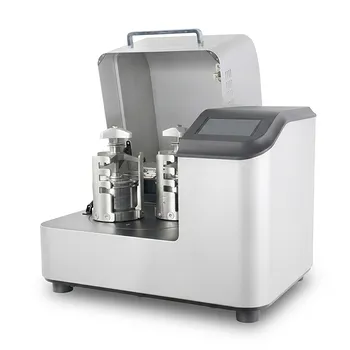
High Energy Planetary Ball Mill for Nano Scale Grinding and Mechanical Alloying
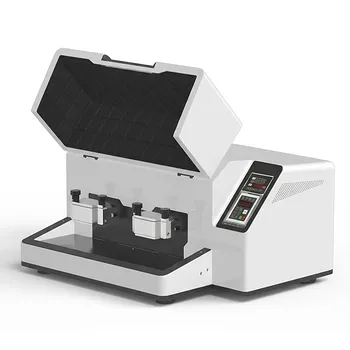
Nanoscale High-Energy Vibratory Ball Mill for Laboratory Sample Preparation, Mechanochemistry, and Mechanical Alloying
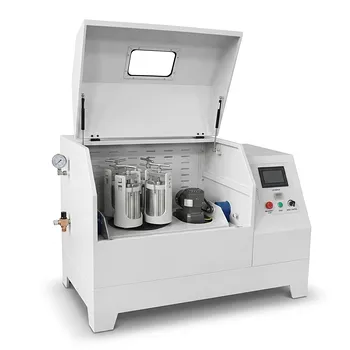
Vertical Production Planetary Ball Mill for High Throughput Powder Processing

High Energy Laboratory Planetary Ball Mill for Nano Grinding and Material Science Sample Preparation
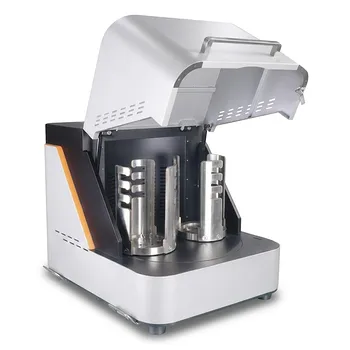
High Energy Laboratory Planetary Ball Mill for Nano Grinding and Colloidal Mixing of Hard and Brittle Materials
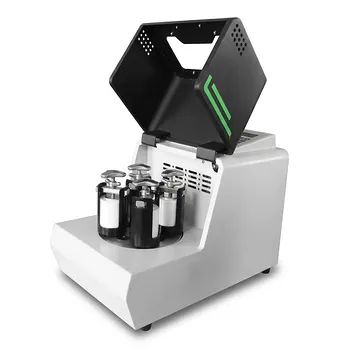
Miniature Planetary Ball Mill with Vacuum Grinding and High Efficiency for Laboratory Sample Preparation
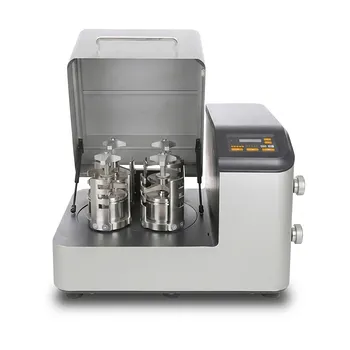
High Energy Planetary Ball Mill for Nano Scale Grinding and Colloidal Mixing in Material Science Research
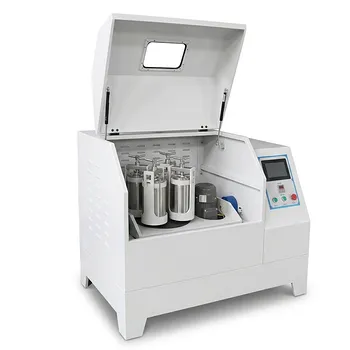
360° Rotating Omnidirectional Laboratory Planetary Ball Mill for Homogeneous Ultra-Fine Grinding and Mixing

Single Tank High Energy Vibratory Ball Mill for Laboratory Grinding and Mixing
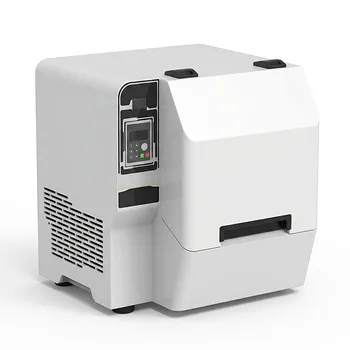
Nano High Energy Vibratory Ball Mill for Laboratory Sample Preparation
Dual Station Planetary Ball Mill 24L

High Energy Omnidirectional Planetary Ball Mill 16L
Planetary Ball Mill 12L
Laboratory Nano High Energy Ball Mill Ultrafine Grinding Mechanical Alloying
Multi-Platform Nanoscale High-Energy Vibratory Ball Mill