How do vibratory sieve shakers and test sieves contribute to the raw material analysis of waste tire rubber granules?
Updated 4 months ago
Vibratory sieve shakers and test sieves are the primary tools for determining the particle size distribution of waste tire rubber granules. By applying mechanical vibration to a vertical stack of mesh screens with varying apertures, these instruments physically classify rubber particles into precise hierarchical grades. This quantitative data—often ranging from 63 μm to over 5 mm—is essential for ensuring raw material consistency and optimizing the efficiency of subsequent processing stages like pyrolysis, granulation, or composite manufacturing.
Core Takeaway: Vibratory screening transforms bulk waste rubber into a standardized feedstock by providing the precise granulometric data required to control chemical yields and physical material properties. This process is the foundation for optimizing industrial parameters and ensuring final product quality.
Quantifying Particle Size Distribution (PSD)
Hierarchical Classification of Granules
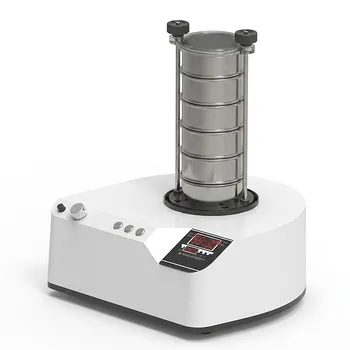
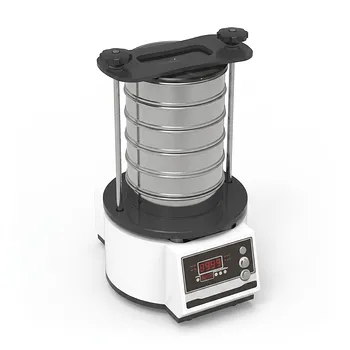
Vibratory sieve shakers use a stack of standard test sieves to separate tire wear particles into distinct size fractions. The high-frequency vibration forces particles through progressively smaller mesh apertures, allowing for a precise hierarchical classification of the raw material.
Key Metrics: $D_{50}$ and Cumulative Distribution
This equipment allows technicians to calculate the average particle size ($D_{50}$) and the cumulative distribution percentage. These metrics are vital for understanding the proportion of material passing through specific thresholds, such as a 250-micrometer sieve, which determines the "fineness" of the rubber powder.
Consistency in Raw Material Input
By analyzing the geometric mean diameter and standard deviation, manufacturers ensure the consistency of shredded rubber. Maintaining a uniform input size is a critical prerequisite for studying how particle dimensions impact the durability and quality of recycled products.
Optimizing Downstream Pyrolysis and Chemical Yields
Controlling Coke and Oil Yields
The particle size of rubber granules directly influences the efficiency of the pyrolysis process. Sieve shakers ensure that raw material dimensions meet specific requirements—such as maintaining a majority of particles within a 3.15 to 5.0 mm range—to optimize the recovery of coke and oil.
Impact on Pyrolysis Product Composition
Precise classification enables researchers to perform quantitative analysis on how particle size affects specific chemical outputs. Data obtained from sieving is used to track the abundance ratios of valuable pyrolysis products, including isoprene and diterpenes.
Enhancing Material Engineering and Granulation
Packing Density and Structural Uniformity
In the production of rubber-cement composites, sieve analysis is used to optimize aggregate packing density. Ensuring a specific grading of rubber particles and sand is essential for achieving structural uniformity and the desired mechanical strength in the final material.
Validating Granulation Outcomes
Technicians use sieving post-granulation to quantify how the initial raw material size influenced the final result. This allows for the optimization of process parameters, ensuring that the granulated rubber adheres to strict industrial specifications.
Understanding the Trade-offs and Limitations
Challenges with Non-Spherical Particles
A primary limitation of mechanical sieving is that it assumes particles are spherical. Because tire rubber granules are often irregular or elongated, they may pass through the mesh at specific orientations, potentially leading to slight inaccuracies in the recorded size distribution.
The Risk of Sieve Blinding
Rubber is a high-friction material that can cause sieve blinding, where particles become wedged in the mesh openings. This requires careful selection of vibration frequency and sometimes the use of sieving aids, such as tapping lids or cleaning balls, to maintain accuracy.
How to Apply This to Your Project
To maximize the value of vibratory sieve analysis, your approach should align with your specific industrial or experimental goals:
- If your primary focus is Chemical Recovery (Pyrolysis): Prioritize maintaining a tight distribution between 3.15 mm and 5.0 mm to maximize oil and coke yields while ensuring consistent reaction kinetics.
- If your primary focus is Composite Manufacturing: Focus on calculating the $d_{50}$ and grading curve to ensure optimal packing density and structural integrity within cement or polymer matrices.
- If your primary focus is Process Quality Control: Use cumulative distribution percentages (e.g., % passing 250 μm) to monitor the wear of granulation equipment and ensure the fineness of the rubber powder meets customer specifications.
Effective sieve analysis turns raw waste into a predictable, high-value technical resource.
Summary Table:
| Key Feature | Application in Rubber Analysis | Impact on Production |
|---|---|---|
| PSD Measurement | Determines $D_{50}$ and cumulative distribution | Ensures feedstock consistency for pyrolysis. |
| Hierarchical Grading | Classifies granules from 63 μm to >5 mm | Optimizes packing density in composite materials. |
| Yield Control | Maintains specific ranges (e.g., 3.15–5.0 mm) | Maximizes recovery of oil and chemical products. |
| Process Validation | Quantifies granulation efficiency | Monitors equipment wear and maintains fineness standards. |
Optimize Your Material Science Workflow with Precision Equipment
At [Brand Name], we provide complete laboratory sample preparation solutions tailored for the demanding needs of material science and recycling industries. We specialize in high-performance powder processing and compaction equipment designed to turn raw waste into high-value technical resources.
Our extensive product lines include:
- Sieving Excellence: Vibratory and air-jet sieve shakers with a full range of test sieves for precise particle size analysis.
- Milling & Crushing: Jaw/roll crushers, liquid nitrogen cryogenic grinders, and planetary ball, jet, or rotor mills.
- Advanced Compaction: A full spectrum of hydraulic presses, including Cold/Warm Isostatic Presses (CIP/WIP), vacuum hot presses, and XRF pellet presses.
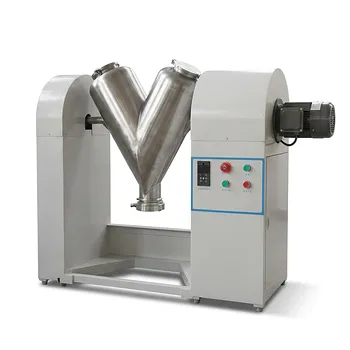
- Mixing Solutions: Powder mixers and vacuum defoaming mixers for structural uniformity.
Whether you are refining tire pyrolysis yields or engineering rubber-cement composites, our expertise in powder processing ensures your materials meet the highest industrial specifications.
Ready to enhance your lab’s analytical precision?
Contact our technical team today to find the perfect solution for your application!
References
- Sebastian Bogdahn, Danka Katrakova-Kr黦er. Production and Characterization of Recovered Carbon Black (rCB) by Waste Tire Pyrolysis as a Potential Carbon Black (CB) Substitute. DOI: 10.70322/amsm.2025.10007
Mentioned Products
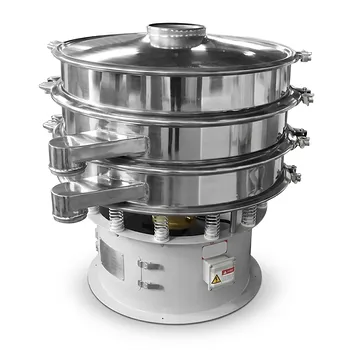
- Three Dimensional Rotary Vibrating Sieve
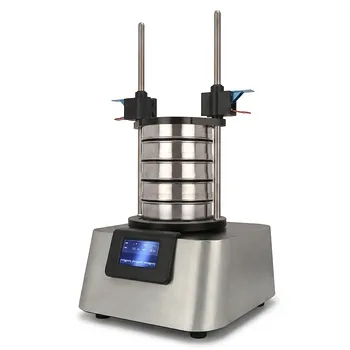
- Vibratory Sieve Shaker Electromagnetic 3D Motion Powder Particle Size Analyzer for Dry and Wet Sieving
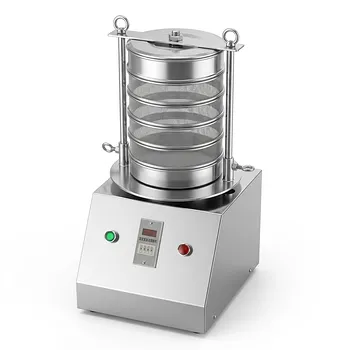
- Stainless Steel Laboratory Vibratory Test Sieve Shaker
- Dry Three Dimensional Vibratory Sieve Shaker
- Laboratory Dry and Wet Three Dimensional Vibratory Sieve Shaker for Particle Analysis
People Also Ask
- How do multi-dimensional vibratory sieve shakers contribute to the testing of grain particle size distribution? mPS Guide
- What is the role of vibratory sieving systems in ISRU feedstock preparation? Optimize Your Space Resource Processing
- What is the purpose of using 0.038 mm sieves in magnetite grinding? Quantify Kinetics and Boost Grinding Efficiency
- How does a 3D vibratory sieve shaker fractionate sorghum flour? Optimize Texture & Nutritional Quality
- Why is a 0.08mm standard sieve required for testing the fineness of cement? Optimize Recycled Pervious Concrete Quality

Tech Team · PowderPreparation
Last updated on Jun 03, 2026
Related Products
Three Dimensional Rotary Vibrating Sieve
Vibratory Sieve Shaker Electromagnetic 3D Motion Powder Particle Size Analyzer for Dry and Wet Sieving
Stainless Steel Laboratory Vibratory Test Sieve Shaker
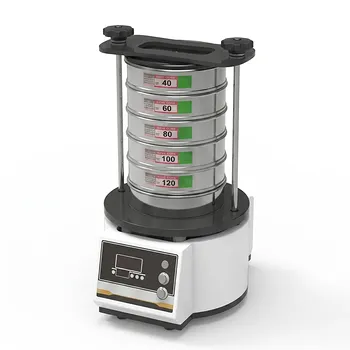
Dry Three Dimensional Vibratory Sieve Shaker
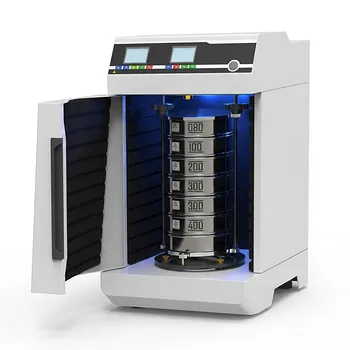
Laboratory Dry and Wet Three Dimensional Vibratory Sieve Shaker for Particle Analysis
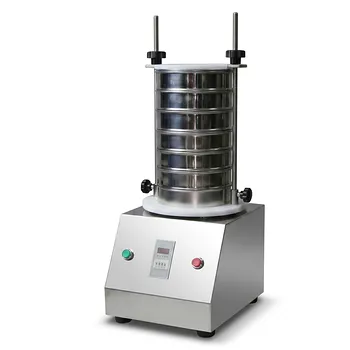
Small Laboratory Vibratory Sieve Shaker for Powder Gradation and Particle Size Analysis
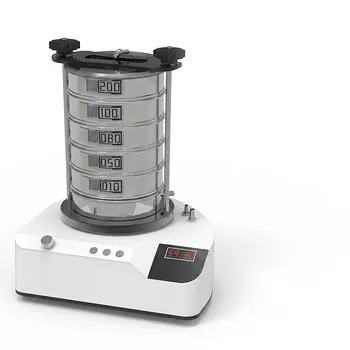
Heavy Duty Dry Three Dimensional Vibratory Sieve Shaker for Particle Separation
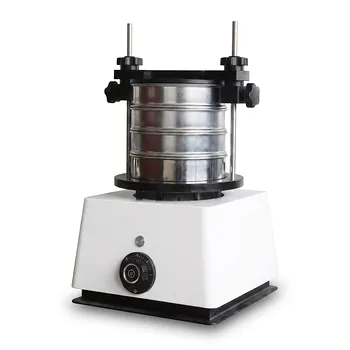
Small Laboratory Vibrating Sieve Shaker for Precise Particle Size Analysis
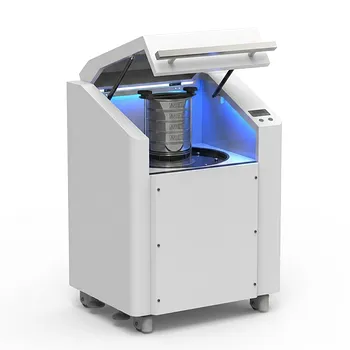
High Frequency Cabinet Type Three-Dimensional Rotary Vibrating Sieve Shaker for Dry Sieving and Particle Classification
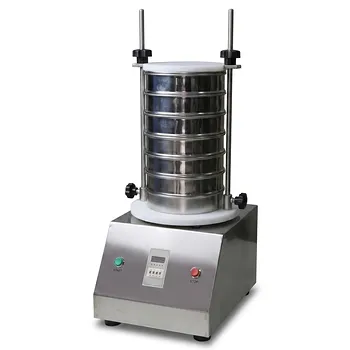
Laboratory Vibratory Test Sieve Shaker for Precision Particle Size Analysis and Powder Grading
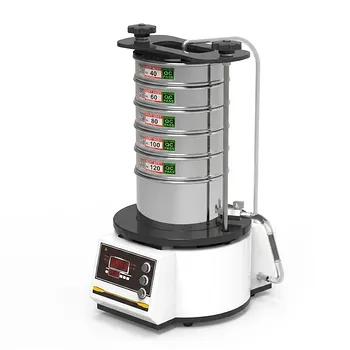
High Frequency Wet Three-Dimensional Vibrating Sieve Shaker for Dry and Wet Particle Size Analysis
三维电磁微量振动筛分仪
Tapping Oscillating Sieve Shaker for Dry and Wet Particle Size Analysis
Stainless Steel Rotary Vibrating Sieve High Precision Circular Vibratory Separator Industrial Powder Grading Machine Multi Layer Sifting Equipment
Automatic Vibrating Powder Feeder for Laboratory Material Processing Precision Vibratory Hopper Feeder for Granular and Powder Material Handling Industrial Grade Vibrating Tray Feeder for Consistent Material Sample Preparation
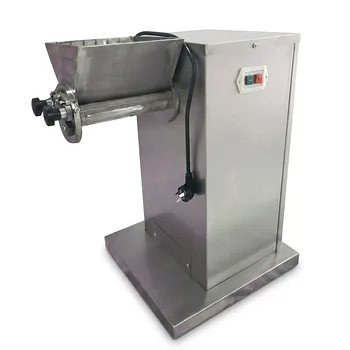
Small Laboratory Oscillating Granulator for Wet and Dry Granulation Processing